
I like to update this older post from 2018 as it is often the case, we come searching for a big monument to see and end up seeing a lot more of what the town has to offer. This is the case with nice Vitré, where we heard of the castle and came to see it, however, we found out many nice things to tell. This is the times to update/revise this old post on the Château of Vitré, part I !!! Hope you enjoy the post as I.
Of course Vitré is in the Ille et Vilaine dept 35 of my lovely Bretagne. It occupies the Marche region in upper Bretagne. It is label City of Art and History and the inscription to the list of the most beautiful detours of France. Vitré is the 37th French town with the most historical monuments and comprised 14% of the historical monuments of the department. She was promoted to flower town or “Ville Fleurie”, on 3 flowers label and has two stars in the green Michelin Guide. There what are you waiting for?
Vitré is located 275 km from Paris, 132 km from Caen, 104 km from Nantes, 62 km from Mont-Saint-Michel and 35 km from Rennes. The Paris-Brest Expressway N157-E50, which extends the A11 expressway to Vitré. It, also a railway node, to Vitré was opened in 1857 on the Paris-Brest line. Then, a second line in the direction of Fougréres was opened in 1867 a viaduc spanning the valley of the Vilaine was built to the west of the city, and finally in 1874, a third line to the La Guerche-de-Bretagne. The construction of the train station was carried out in 1855 in the form of a small Gothic Castle in brick and Tufa, in the city center, just south of the walled city.
All around Vitré, the chouannerie develops in the countryside, in particular the division of Vitré, member of the Catholic and Royal army of Rennes and Fougéres led by Alexis Louis Gordien du Bouays de Couësbouc on the one hand, and the Knights Catholics, led by Joseph de Puisaye and René Augustin de Chalus. In 1799, the Battle of Argentré occurred, still in the surrounding of Vitré countryside. A legitimitist Royal insurrection, hostile to the new regime of the July monarchy, broke out in 1832 in the country of Vitré, marked in particular by the Battle of Toucheneau. During his trip to Brittany in 1858, Napoleon III and the Empress Eugénie stopped for a few moments in Vitré, the last Breton town visited before their return to Paris via Laval. Vitré also had its haussmannisation with the piercing of streets in its medieval center such as Rue Garangeot, rue Bertr and rue Argentré, rue Bordie and Boulevard Saint-Martin.
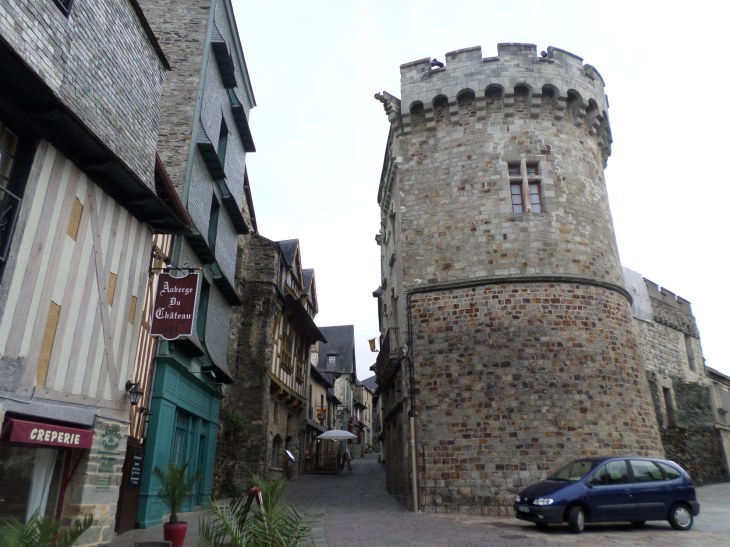
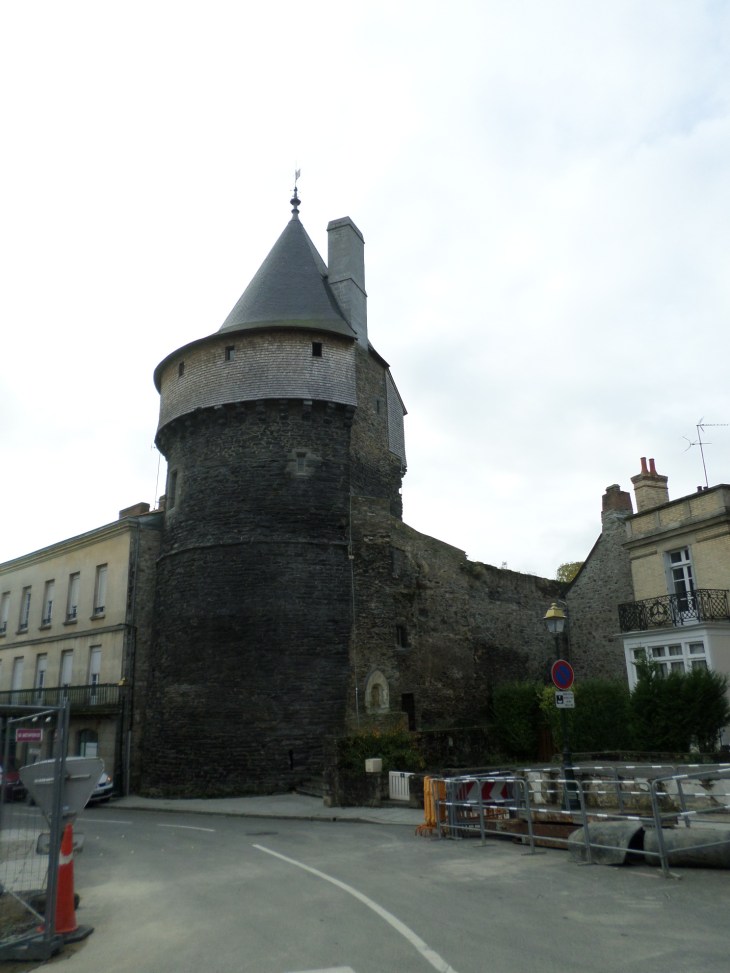
The museum in the Château de Vitré includes an exterior visit and the interior with paintings, tapestries, sculptures, and natural history museum. There is the Museum or Musée Saint-Nicolas located about 500 meters from the Castle with a collection of religious jewerly from the end of the 19C and early 20C (Unique in France and of National reference). The museum or Musée Saint-Nicolas is really the chapel depending and next to the convent of Augustinians built in the 17C; it has a beautiful cloister of the times. The castle present square was the courtyard or farmyard of the castle: there were the collegiate church, the stables and the common. The entrance is defended by a drawbridge and a mighty Châtelet flanked by two large towers in machicolations. At the south corner stands the dungeon or St. Lawrence Tower, at the northeast corner of the Madeleine Tower, at the northwest corner of the Montafilant tower. These various works are connected by an enclosure reinforced by other towers. Only one wall enclosure was built in the 13C. Today only the north and east ramparts (the broken tower) and the south wall between the Tour de Claviers (keyboards tower) tower and the Bridole tower remain. Finally, part of the Porte d’Embas is still standing. This set of ramparts is among the oldest and best preserved in Brittany.
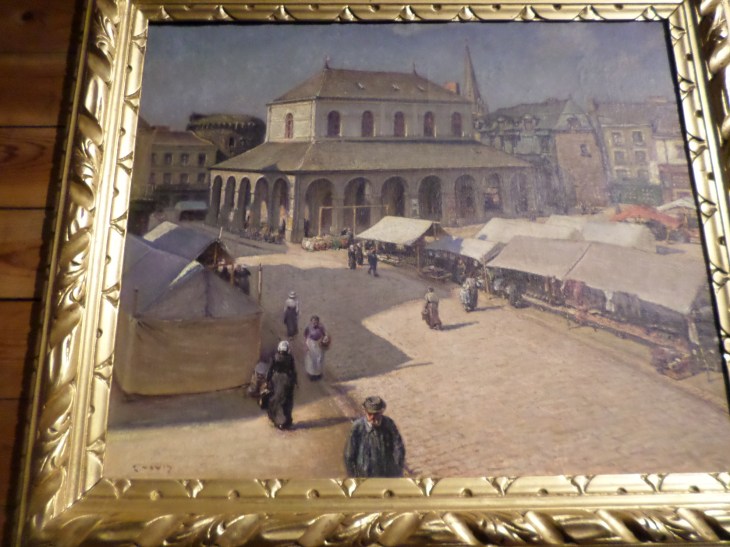


The references to Vitré are numerous in the literature. Here are some examples with sometimes great authors: Madame de Sévigné, famous epistolary, has precisely described in her famous letters, the urban life of Vitré in the 17C. Honoré de Balzac, Les Chouans, First Chapter L’embuscade, (the paperback book, pages 40 – 41). and Victor Hugo, as well as others in music literature, painting, and folklore. The Carnival of Gais Lurons, the biggest carnival in Brittany. The parade occurs every year on Palm Sunday. Every year, this great popular event attracts visitors from all over the west of France. Traditionally, the Vitré carnival is characterized by big heads of paper mache and the use of confetti.
A bit of history I like tell us that in Breton history, Vitré is part of the country Rennais (Bro-Roazhon in Breton) and the traditional cultural country of Vendelais (Gwennel in Breton). The city is located on the sunken slopes of the Vilaine valley and is cut into three parts: the northern districts, the historic city center and the southern districts. The Vitré name is attested in various forms Vitriacum in 987 and 1037, Vitrei en 1050, Ecclesia Vitriacensis in 1070, Vitreium in 1335. of Gallo-Romanesque origin, this toponym is derived from the Latin Victorius (carried by a Gaul) and the suffix of Location-Acon, (from the common Celtic -Āko ). The primitive meaning is therefore “the domain of Victorius”. This means that a Gallo-Roman farm was located on the town’s territory.
Vitré is in the Middle Ages the seat of a barony, of 1008, Riwallon was the first baron between 1008 and 1040 and until 1254, when the lordship passed in the hands of the second house of Laval until 1547, then of Montfort-Laval until 1605 and finally the Trémoille-Laval until the French revolution. The Castle was built by Robert I who soon became Lord, beneficiary of a banal power, a major princely authority. He’s close to the Duke of Brittany. The castle is referenced in 1047 in the cartulary of Redon where we learn that Robert is the keeper of Vitré and not the owner. Another stone castle was built in 1047 by Robert I. The castle is built on its current location, on a rocky spur dominating the Vilaine river. Then, in the 13C, the castle was enlarged and the “Old Town” with the Notre-Dame Church developed on the eastern plateau. The place du Chateau, which was considered as a front yard, was actually urbanized. The city was surrounded by ramparts and outside ditches. It was then that the enclosed town took its present form. At the same time, “privileged villages”, i.e. suburbs born at the request of the Baron, have developed around the enclosed town. As early as the 13C, Vitré brought together all the elements of the city.
In the 15C, the castle was transformed with the progress of artillery such as the gunboats. From 30 June to 2 July 1488, the French army camped at the Pont Étrelles, a few days before the Battle of Saint-Aubin-du-Cormier, which provoked the end of Breton independence. During the wars of religion at the end of the 16C, the Protestant city was besieged for 5 months between 22 March 1589 and 14 August 1589 by the league troops under the command of the Duke of Mercœur, governor of Brittany, aided by inhabitants of 53 villages of the Barony of Vitré. The meetings of the States of Brittany were held in Vitré in 1655, 1671, 1697 and 1705 when Rennes was ravaged by the plague or insurgents. Madame de Sévigné had at that time a residence in the vicinity of Vitré, the Chateau des Rochers (of the rocks) where she stayed at least four times between 1671 and 1690, these four travels representing a total of six years of residence and she wrote almost three hundred of her letters. She attended these States of Brittany and made numerous references in these famous letters. It was during the 17C that the barons deserted the city to prefer the Court of Versailles.
The official Castle of Vitré: http://chateau.vitre.bzh/
The city of Vitré on its heritage: https://www.mairie-vitre.com/-Town-of-Art-and-History-label-.html
The Vitré tourist office on the castle: https://en.bretagne-vitre.com/le-chateau-de-vitre/
There you go a wonderful town of Vitré indeed and really worth a visit , one of those towns passed by many times and when finally came in inside it hits me , lovely place. Again hope you have enjoy this post on the Château of Vitré, part I as I.
And remember, happy travels, good health, and many cheers to all !!!

 Paris1972-Versailles2003