
The town of Brec’h (breton) Brech (French) was the first town I lived when came to the beautiful Morbihan dept 56 of the lovely Bretagne in 2011. For short, I lived in Corn er Hoët (Breton, French would be Orée du Bois meaning edge of the woods). It really packs a lot of monuments with nice architecture and history for a small town, I was lucky to lived in it briefly ; see other posts, Therefore, let me tell you again on the Chartreuse Saint Michel of Brec’h, part III !!! Hope you enjoy the post as I.
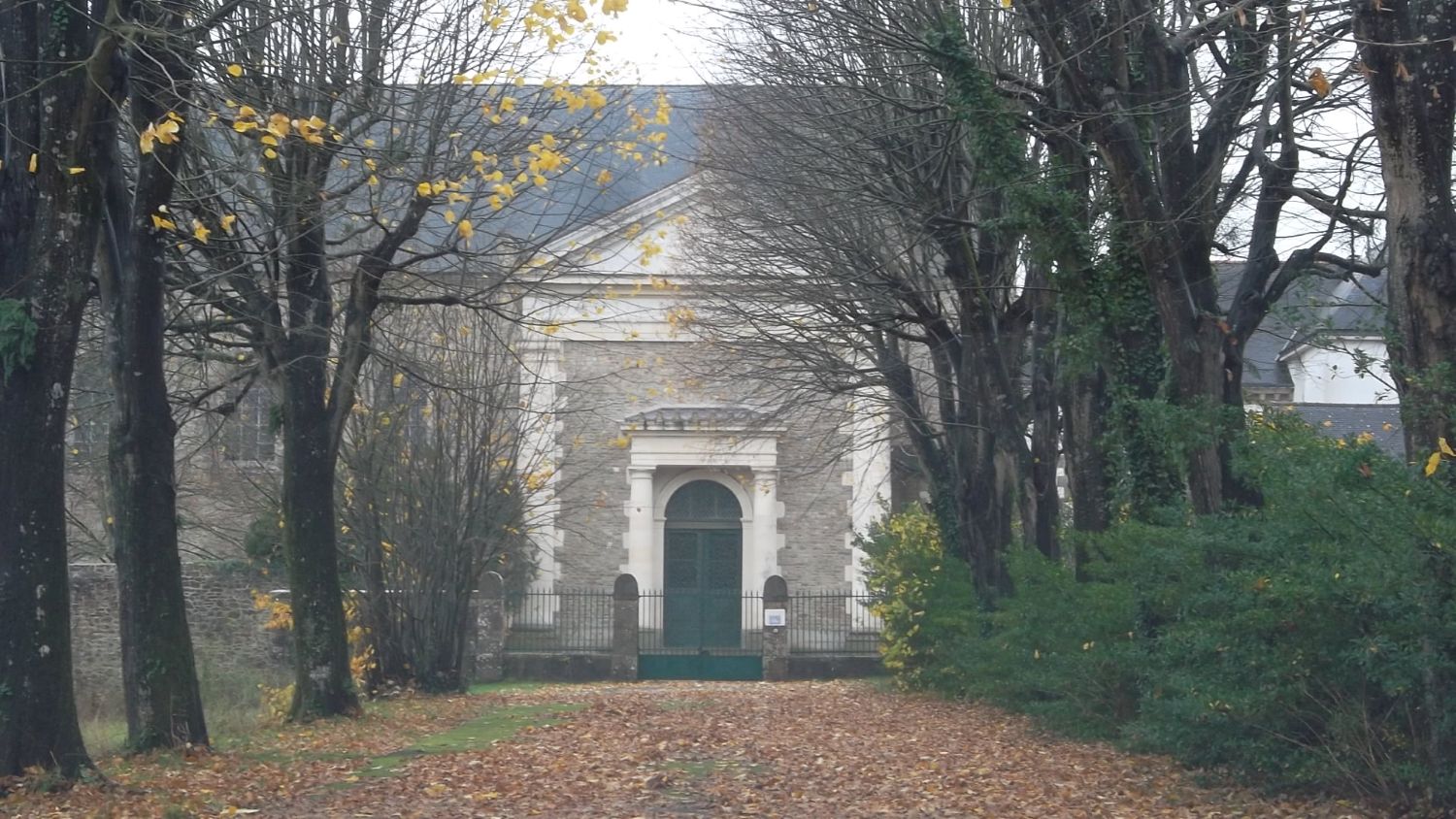
The Carthusian monastery of Auray aka Saint-Michel du Champ Carthusian monastery in reference to a previous collegiate church of the same name is located in the town of Brec’h, The Chartreuse Saint Michel has a cloister dating from the 17C. The chapel was built around 1720. The refectory, built around 1630, is covered with a paneled vault painted and decorated around 1750, and retains woodwork at the base of the walls. The sepulchral chapel communicates with the church by a large arcade, the sides of which are adorned with two bas-reliefs in white marble.
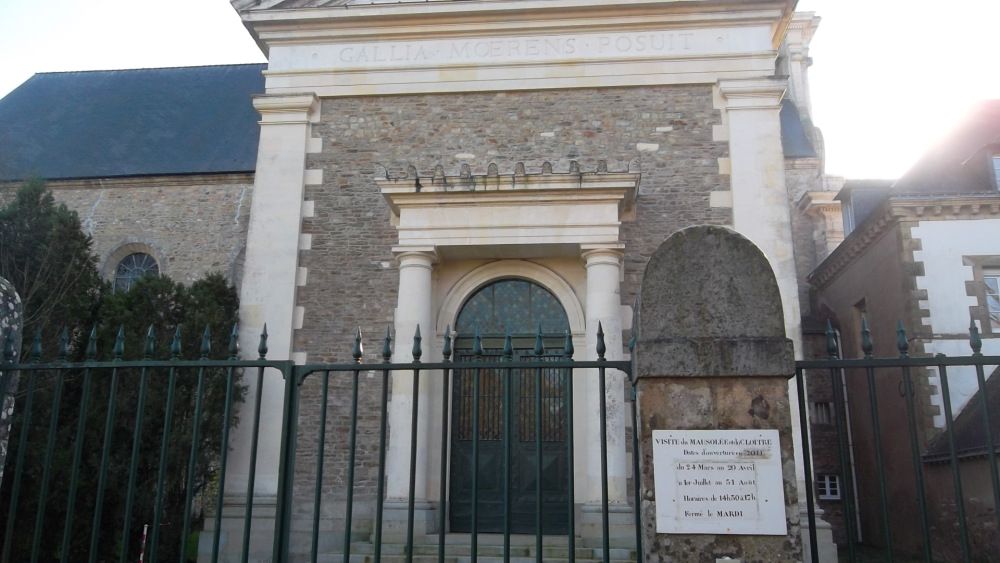
This is a wonderful historical noble site revered by Bretons and as written on it before will just translate mostly their text from the site, As history I like so here it is do come to see it !
In 1341, Jean (John) III, Duke of Brittany, died without issue or a designated successor. Two potential heirs then vied for the duchy: Joan of Penthièvre, his niece, and John of Montfort, his half-brother. Joan of Penthièvre was married to Charles of Blois, nephew of King Philip VI of Valois of France. The king officially sided with Joan of Penthièvre and Charles of Blois, while John of Montfort was militarily supported by the King of England, John of Montfort died in 1345. His son, also named John of Montfort, followed in his father’s footsteps, aided by England, where he had spent his childhood. Despite truces and negotiations, the War of Succession raged for 23 years. In 1364, John of Montfort and Charles of Blois, the two claimants to the Duchy of Brittany, clashed on the lands near the Carthusian monastery. In the midst of the Hundred Years’ War, this final battle of the Breton War of Succession proved decisive for the future of the duchy. On September 29, 1364, the feast day of Saint Michael, the two armies confronted each other on the lands overlooking the Kerzo marsh. Chroniclers estimate 3,500 to 4,000 Franco-Bretons against 1,800 to 2,900 Anglo-Bretons. The bloody clash cost Charles of Blois his life. John of Montfort then became Jean (John) IV, Duke of Brittany, recognized by the Treaty of Guérande on April 12, 1365. However, Brittany remained divided between the two factions.
As a sign of reconciliation, in memory of the battle and the fallen, John IV had a chapel built on the site of the battlefield. He dedicated it to the archangel Saint Michael, the warrior angel whose feast day is celebrated on September 29, the day of the Battle of Auray. In 1371, the chapel became a collegiate church, served by a dean and eight canons. The collegiate church of Saint Michael formed a square comprising the chapel and three buildings surrounding a small cloister. In 1480, Francis II, Duke of Brittany, requested that Pope Sixtus IV transform the collegiate church of Saint-Michel into a Carthusian monastery. On March 29, 1482, a prior and twelve monks arrived to replace the canons. The Carthusians lived there until the French revolution. The Carthusians form a semi-hermitical order, considered one of the most austere. Their rule prescribes almost perpetual enclosure, near-absolute silence, frequent fasting, and abstinence from meat. The life of the Carthusian monasteries is organized around a vast cloister providing access to individual cells. In Brec’h, the Carthusians began constructing this large cloister in 1574. Now gone, it was surrounded by about twenty cells, each with its own garden. The current layout of the buildings corresponds to the one developed by the Carthusians in the 17-18C. At the beginning of the 18C, 17 paintings illustrating the life of Saint Bruno, founder of the Carthusian Order, were installed in the small cloister. They are still visible today. The monks were expelled in 1791. The Carthusian monastery was sold as national property. Its new owner demolished the large cloister to salvage the building materials. Sadly
In 1790, the Constituent Assembly passed the Civil Constitution of the Clergy, which placed religious figures under the authority of the State. Refractory priests, who were the vast majority in Morbihan, were arrested and executed. The resulting discontent plunged the country into civil war. The insurgent populations organized themselves to restore the monarchy and religious freedom. Thus, the Chouannerie was born. In the Auray region, the Chouans were led by Georges Cadoudal,(see post) born in the village of Kerléano, near Auray (his house still there). From 1794 onwards, the State took several measures to appease the situation. Negotiations led to the Treaty of Mabilais, but few royalist leaders, and none from Morbihan, agreed to sign it. In Western France, populations disillusioned by the consequences of the Revolution organized the Counter-Revolution, commoly called the War of the West, (as included down to the Vendée) , On June 27, 1795, the landing at Quiberon, launched from England with the aim of overthrowing the Republic, was a failure. The Quiberon landing was the last significant attempt of the Counter-Revolution. The operation, led by the Count of Puisaye, aimed to organize the landing of émigrés (officers, soldiers, priests, and nobles) from England to Brittany, with the financial and logistical support of the English (which did not come). This landing is known as the Quiberon Expedition. On July 27, 1795, ships carrying more than 5,000 men and equipment landed on the beaches of Carnac and Quiberon. More than 12,000 Chouans, forming the Catholic and Royal Army of Brittany, awaited them. However, the expedition turned into a disaster due to the lack of promised support from England. On July 21, 1795, 6,232 émigrés and Chouans were taken prisoner. Tried partly in Auray, the majority were released or remained detained. 750 were condemned to death. Among them, 206 were shot near the Kerzo marshes in Brec’h and summarily buried on the spot. This place is now called the Field of Martyrs. (see post)
In 1808, Gabriel Deshayes and Mathurin Legal purchased the Carthusian monastery with the financial assistance of Joseph-Marie Barré. Gabriel Deshayes brought in teachers from Paris and the Daughters of Wisdom to establish a school for deaf children. This school would open a class for visually impaired children in 1896. In the mid-20C, their educational mission declined, giving way to a retirement home for elderly and infirm nuns. In 1814, the remains of those executed were transferred to the Carthusian monastery at the request of Gabriel Deshayes, a priest from Auray. That same year, the Duke of Angoulême came to pay his respects before the remains of the victims. He was the son of the future Charles X and the husband of Marie-Thérèse of France,(see post), the only surviving child of Louis XVI and Marie-Antoinette. With the authorization of Louis XVIII, the construction of a monument dedicated to the victims of Quiberon was planned. Ultimately, two monuments were erected starting in 1825: a mausoleum at the Carthusian monastery and an expiatory chapel at the Field of Martyrs. Their inauguration took place on October 15, 1829, in the presence of 15,000 Bretons, numerous elected officials, and bishops from Brittany. Adjacent to the Saint Michael Chapel, the funerary chapel houses the marble mausoleum under which the remains of those executed were placed in a crypt. It is the work of David d’Angers and Louis Petitot, his student. The names of 952 victims are inscribed on the facades, and portraits of the main officers of the expedition are sculpted there. The expiatory chapel stands in the Field of Martyrs, located 1 km from the Carthusian monastery in the direction of Sainte-Anne-d’Auray.
The city of Brec’h on the Chartreuse : https://www.brech.fr/a-voir/le-patrimoine-historique/la-chartreuse/la-grande-histoire-de-la-chartreuse/
The Bay of Quiberon tourist office on the Chartreuse: https://www.baiedequiberon.co.uk/to-see-to-do/culture-and-heritage/chapels-and-churches/the-charterhouse-1
The Morbihan dept 56 tourist office on the Chartreuse : https://morbihan.com/a-voir-a-faire/suivez-le-guide/la-chartreuse-brech-fr-4412205/
There you go folks, another dandy spot in my beautiful Morbihan and sentimental Brec’h Nowedays we passed by my old Corn er Hoët every day, and the memories continue. Again, hope you enjoy this post on the Chartreuse Saint Michel of Brec’h, part III as I
And remember, happy travels, good health, and many cheers to all !!!

 Paris1972-Versailles2003