
I have a lot of posts on my wonderful capital City of Vannes in my blog. In my quest to have more from my latest road warrior or rather walking warrior trip to the city for you and me, the memories of always ,The city has a gorgeous original architecture untouched by wars, one of the most beautiful harbors in the world (conde nast, great bays etc) which of course takes you into the Atlantic ocean. Let me bring you up to date on Vannes,in my beautiful Morbihan dept 56 of my lovely Bretagne and in my belle France. Therefore, here is my take on the streets of Vannes , part IV !!! Hope you enjoy it as I.
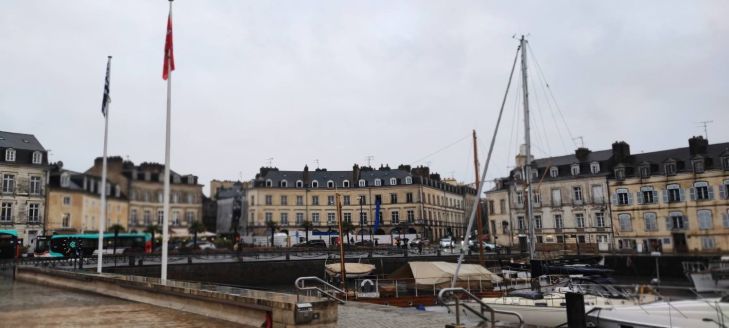
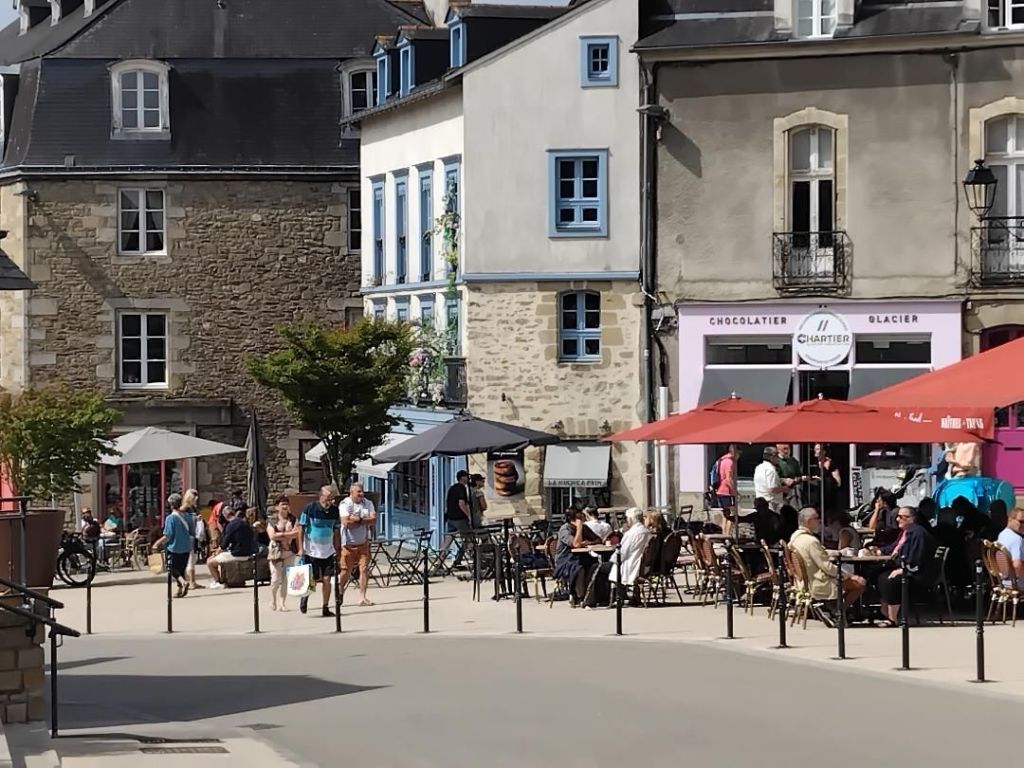
The place Gambetta, of hemispherical plan, marks the end of the port of Vannes and puts it in contact with the historic center by the Porte Saint-Vincent. The square was created in 1835 in order to clean up a low zone corresponding to the old ditches of the city, in which the wastewater accumulated. The construction of the houses of the former Place du Morbihan ended in 1843. The place was restored in 1976, which gave rise to the destruction of the remaining arches of the old Saint-Vincent bridge. The free space is almost entirely used by cafes and restaurant terraces.
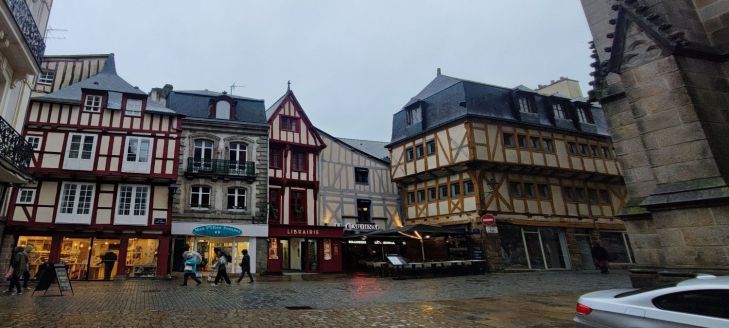
The Place Saint Pierre square has a few old houses adjoining La Cohue (fine arts museum), opposite the St Peter’s Cathedral (see posts). La Cohue designating the old partly Romanesque halls, remains dating from the 16C. The ground floor was occupied by the stalls of merchants, mostly butchers and the first floor reserved for courts of law. TheParliament of Brittany sat there when it was exiled to Vannes. In the last century, a theater occupied the first floor which now houses the museum. At No. 9 Place Saint Pierre is one of the oldest houses in the city, recognizable by its many small windows, testimonies of civil architecture from the beginning of the 15C. Of course, the must visit in town is that here you have the Cathédrale Saint Pierre (see posts) or St Peter’s Cathedral built in the 13C-15-16C-19C.
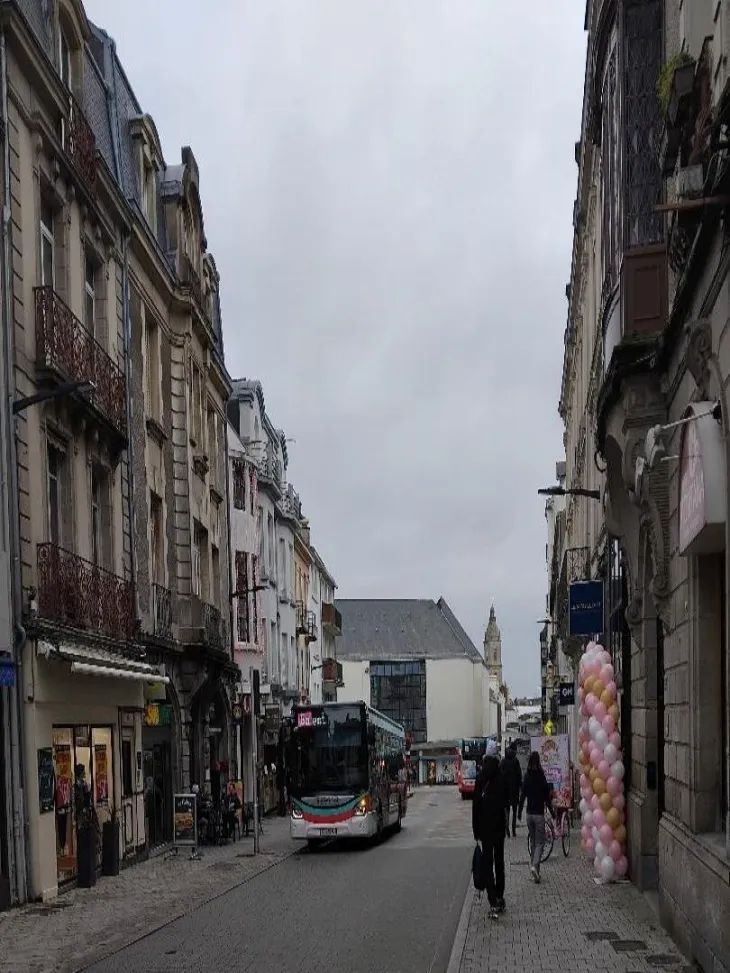
Thé place Marchais (former place du marché) and the rue Hoche (former rue Saint-Yves) on the upper part of the street was named rue Joseph Le Brix in 1931. As a result, the numbering of the houses on the street has changed Today it starts at the place Joseph Le Brix and continue to the confluence of rue du Lieutenant Colonel Maury, rue Saint Nicolas, and rue Francis Decker. The street is full of shopes , The building at nos, 8, 10 built at the end of the 19C in the gardens of the ancient ditches affected by the rampart, destroyed, on a site until 1840, but built of two houses from 1863.

The Rue Saint-Patern is the main artery of the district. It bears the name of the first bishop of Vannes, Saint Patern who lived in the 5C. Located on the hill of Boismoreau, the Saint-Patern district is the oldest and most important in the city. Archaeological excavations have revealed many vestiges of the ancient agglomeration, when the city was the capital of the Gallo-Roman city of the Vénètes, You see several half timbered houses here with one special at 16 rue Saint-Patern;it dates back to the 16C with a more recent elevation.
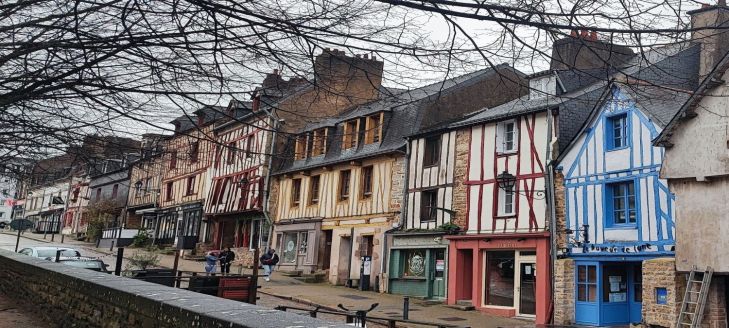
The Rue Joseph le Brix at its western part, which joins by a curve the Place Marchais (former Place du Marché) and rue Hoche,( former rue Saint-Yves), was name Rue Joseph Le Brix in 1931, Some remarkable buildings here are at nos 8, 10 was built at the end of the 19C in the gardens of the ancient ditches affected by the rampart, destroyed, on a virgin site until 1840, but built with two houses, The first was before 1897, You have the city hall municipal administrative center at 7 Rue Joseph Le Brix(the actual working city hall), Then a traveler’s hotel called the Modern Hotel, at no, 17 , The hotel was rebuilt in the 1920s, at the site of several built plots appearing on the cadastral plan of 1844 The hotel became a bookstore run by Fred Régnier, artist -painter, designer, who closed in 1974. The old cinema that has become bookstore, at no 19 in the mid-30s, And of course our Dreams Donuts at no 2, Joseph Marie Le Brix was a French sailor, pilot of maritime aviation. He was born on February 22, 1899 in Baden (Morbihan 56) and died on September 12, 1931 in Oufa, region of Urals, Russia, wanting to rally Paris to Tokyo on a non -stop flight.
The Place du Poids Public or public weight square.It is the former place du Poids du Roi, The name of this traditionally commercial square is linked to the verification of the weights and measures of goods which was carried out there. It was part of the new developments during the expansion of the city to the south at the end of the 14C. The half-timbered houses in the square bear witness to the first urbanization in the 15-16C. Along with that of the Lices, this square is the site of a famous market which is held every Wednesday and Saturday of the week. Some of its half-timbered houses have been preserved, the others having been rebuilt in the 17-18C and at the end of the 19C. (see post)
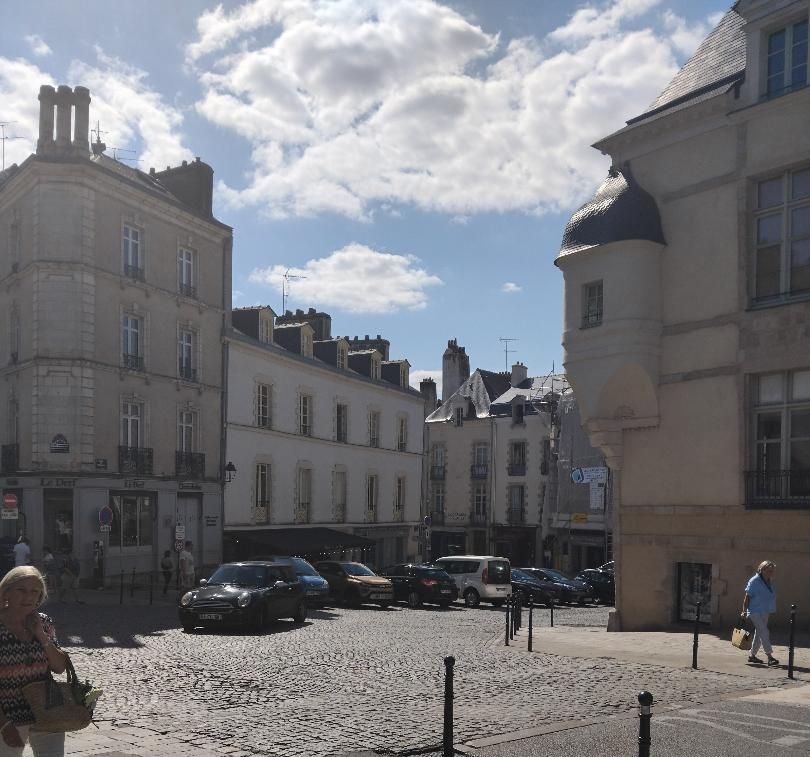
The Place des Lices is originally a former free space devoted to tournaments and other outdoor exercises that took place in the Middle Ages. The Lices, a term which was used to designate the field or the enclosed land surrounded by palisades, intended for these activities, recall this first use of the premises. This space was created in the 14C during the accession of Jean IV,(John) Duke of Brittany. The Place des Lices, formerly Place de la Réunion, is the main public square in downtown Vannes , It is lined with half-timbered houses in the heart of the historic center and a few meters from the ramparts and their gardens. It was on this site in the 14C arranged to coincide with the jousts and tournaments organized by the Dukes of Brittany whose residence was nearby. On Wednesday and Saturday mornings. the flea market of Vannes, It is spread over the Place des Lices and the Place du Poids Public, that offer you all the fresh products you want: fish, delicatessen, caterer, dairy slag, cellar. From 8h to 13h. As well as the Halles des Lices covered market (see posts).
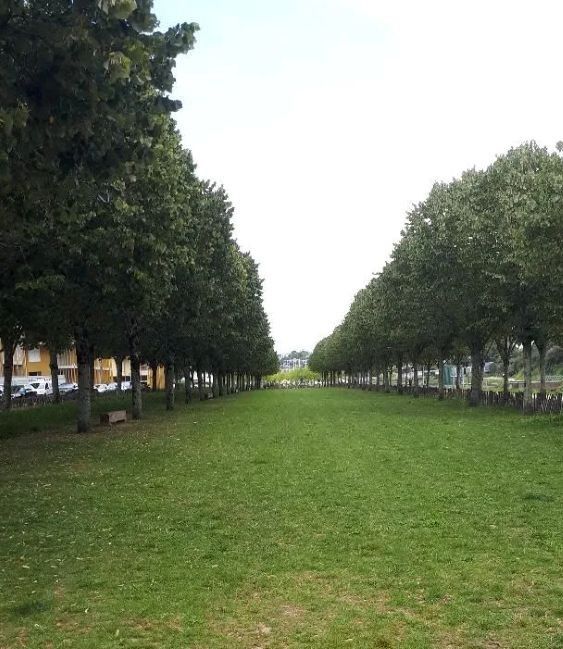
The impecable Promenade de la Rabine located on the right bank of the port, the Promenade de la Rabine is made up of a long alley of trees that stretches for nearly 800 meters between the port esplanade and the north and the quays of the commercial port to the south. The term rabine is of Breton origin, it means “alley planted with trees”.
The City of Vannes on the Place du Poids Public: https://www.mairie-vannes.fr/place-du-poids-public
The City of Vannes on the Place des Lices : https://www.mairie-vannes.fr/place-des-lices
The City of Vannes on place Gambetta : https://www.mairie-vannes.fr/le-port-et-la-place-gambetta
The city of Vannes on its heritage: https://www.mairie-vannes.fr/decouvrir-le-patrimoine-vannetais
The local Gulf of Morbihan tourist office on Vannes: https://www.golfedumorbihan.co.uk/explore/meet-the-exceptionnal/visit-vannes/
The Morbihan dept 56 tourist office on Vannes: https://morbihan.com/decouvrir/le-morbihan-et-ses-perles-bretonnes/destination-golfe-du-morbihan/vannes-entre-art-et-histoire/
There you go folks, a bit of up close and personal post of the wonderful historically sublime streets of Vannes, We take the road warrior approach seriously and are on the move every day, This is one post for the memories of always, Again, hope you enjoy this post on the streets of Vannes , part IV !!! as I.
And remember, happy travels, good health, and many cheers to all !!!


