
And I continue taking you to off the beaten paths of my belle France on a wonderful nostalgic saga of quant beautiful villages/towns, After passing by it and briefly stopping there I picked couple pictures that found in my cd rom vault and they should be in my blog for you and me, Therefore, here is my take on this is Malicorne sur Sarthe !!! Hope you enjoy the post as I.
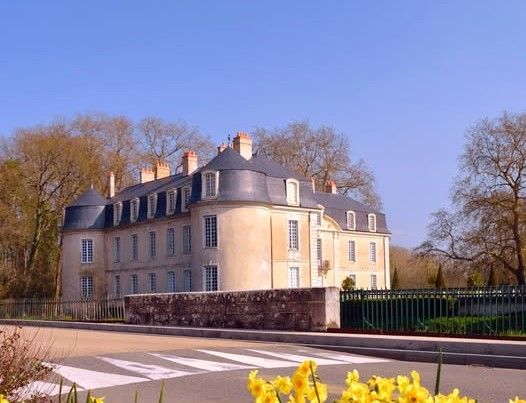
The village of Malicorne-sur-Sarthe is located in the Sarthe department no 72 of the Pays de la Loire region, and in my belle France. The village is part of the historical province of Maine. It is particularly known for its earthenware and holds the “City and Crafts” label. It is 16 km from La Flèche, 63 km from Angers, 32 km from Le Mans, 224 km from Versailles, and 267 km from my current home from which we came on my road warrior trails along the N24 to Rennes, ring road N136 to connect with the N157 highway dir Le Mans continue bearing right onto the D57 dir Laval at roundabout bear all left then right onto toutes directions on the D900 road going around Saint Berthevin continue on same road dir Le Mans entered City center Laval on Bd Arago continue onto the D962 road at next roundabout bear all left then right onto the D21 road dir Tours passing City center Meslay du Maine continue crossing into the Sarthe dept 72 road becomes the D306 road or Route de Laval continue passing City center Sables sur Sarthe and over the Sarthe river continue bearing left onto D309 road or Rue du Mans dir Le Mans before enterint Pacé sur Sarthe bear right onto the D8 road bearing right dir Malicorne and see castle on your right hand side,
The ancient fortress of Malicorne was intended to defend the gates of Maine. In 1368, the castle fell into the hands of Robert Knolles, then was recaptured from the English by Ambroise de Loré in 1425. Construction of Malicorne Castle began in the 12C on the site of a marsh. Located on the border between Maine and Anjou, this fortress served as a guard for the gates of Maine. From the Renaissance onwards, it became a popular meeting place for the kingdom’s nobles, such as the writer Madame de Sévigné. In poor condition, the medieval castle was rebuilt in the 18C with Mansard roofs, it houses a crucifix. The Château de Malicorne-sur-Sarthe is open to visitors from July 1st to August 31st.
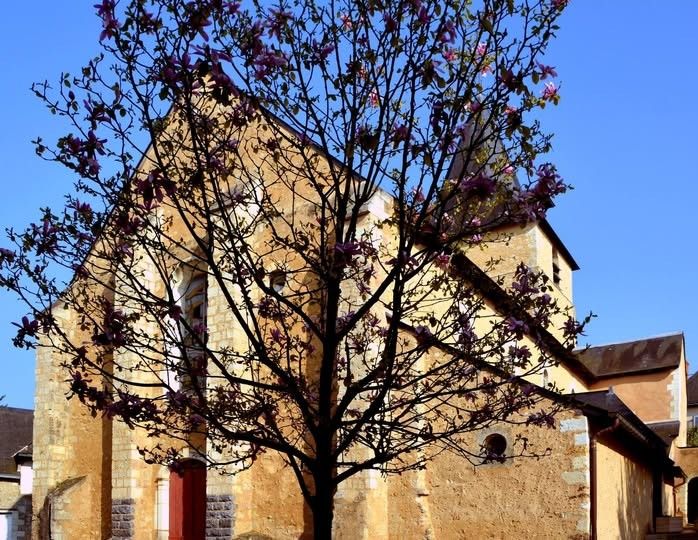
The Church Saint Sylvestre goes back to the 11C to 12C. Characteristic of the Romanesque style, it is one of the oldest churches in the Maine The church was built around 1080, before becoming a parish church, it was dependent on the priory of the monks of Saint-Aubin d’Angers, founded in the 10C by the lord of Malicorne. It has a 15C tomb of a lord of Malicorne from the Chaources (or Sourches) family discovered in the burial vault beneath the Lords’ Chapel ,is a rare example of funerary art. A 17C altarpiece, two terracotta sculptures including a 16C Pietà, and several other works. The church is open to the public and was renovated in 2009. The Chapel of Saint Anne, founded in 1511
Other things to see here are the Malicorne Faience Museum is dedicated to the Malicorne faience collections. There is also an 18C color mill and two flour mills dating from 1831. The Notre-Dame de Chiloup Chapel, built in 1697, was a place of worship during the French Revolution, and later a place of pilgrimage on Easter Monday until the mid-20th century.
A bit of history I like tell us that a castle, built at the beginning of the 11th century during the time of Count Fulk Nerra of Anjou, stood on the banks of the Sarthe River, from which it controlled navigation. This fortress initially served to protect Anjou before guarding the gateway between Anjou and Maine. Malicorne was part of the Angevin seneschal’s court of La Flèche and the former province of Anjou. Under the Ancien Régime and until the French Revolution, Malicorne was part of the La Flèche district. In the 17th century, the Marquise de Sévigné visited the Marquise de Lavardin there. In the 18th century, the château notably belonged to the Duke of Choiseul. From the late 18th century onward, Malicorne developed a thriving earthenware industry with several renowned factories, the first of which was founded in 1747. At that time, and subsequently, it was considered “the largest ceramics center in the Sarthe region.” During the French Revolution, the town, like all those in the La Flèche district, was attached to the new department of Sarthe. In 1801, with the Concordat, the parish was detached from the diocese of Angers and transferred to that of Le Mans.
The village of Malicorne sur Sarthe on its heritage :https://www.ville-malicorne.fr/tourisme/patrimoine/
The local Vallée de la Sarthe on the Malicorne castle: https://www.sarthevalley.com/touristic_sheet/chateau-de-malicorne-sur-sarthe-malicorne-sur-sarthe-en-2705850/
The Sarthe dept 72 tourist office on the earthenware of Malicorne : https://www.sarthetourisme.com/en/decouvrir/artisanat-et-savoir-faire/malicorne-capitale-de-la-faience/
The Pays de la Loire region tourist office on the Church Saint Sylvestre : https://www.atlantic-loire-valley.com/visits/religious-heritage/eglise-saint-sylvestre
There you go folks , this is a brief stop in this quant village and it was worth the detour, me think. Again, hope you enjoy this post on this is Malicorne sur Sarthe !!! as I
And remember, happy travels, good health, and many cheers to all !!!


