
This was a pleasant side trip as we were by Dieppe decided to stretch the run a bit to take a peek of Le Tréport, and all worth it ; looking forward to be back eventually, I found me some pictures in my cd rom vault that made me do this post for you and me, The town is 35 km from Dieppe from where we came from along the D925 road all the way to the entrance of the town, then bear left onto the D940 road or Rue des Ecoles and continue thru City center Flocques continue on same road now Route de Dieppe continue until a sharp left turn onto Rue Suzanne continue now on the D78 road continue bearing rigtht then quick left onto Quai François Ier with the port on your right hand side continue until Place de la Batterie on your right hand side parking and the beach is right there, A return is planned worth it, me think, The beach resort of Le Tréport is located in the Seine-Maritime department no 76 in the Normandie region of my belle France. The town has a pebble beach at the foot of chalk cliffs and a harbor. A seaside resort, the town boasts a casino, restaurants, and brasseries. Therefore, let me tell you a bit on this is Le Tréport !!! Hope you enjoy the post as I.
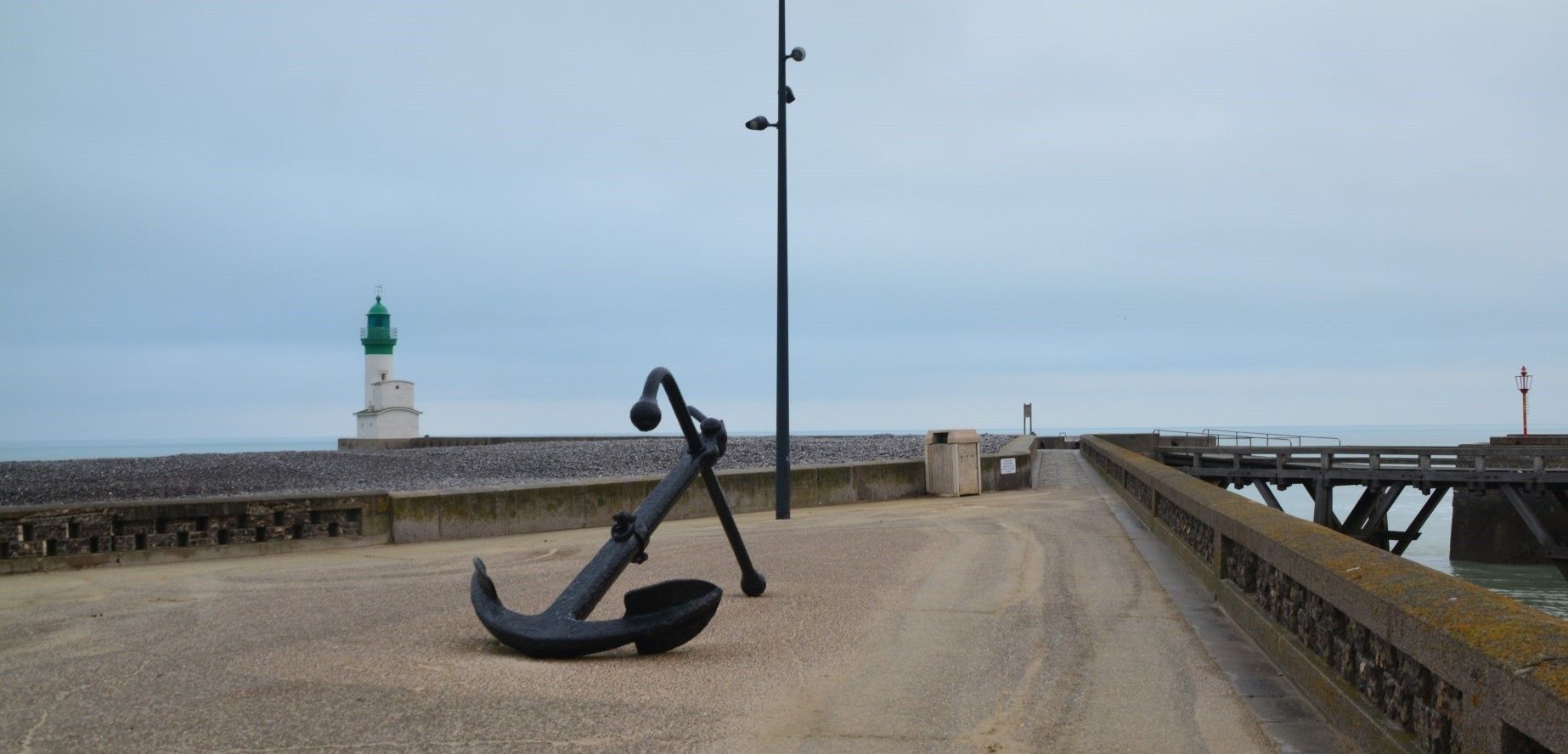
We were on our road warrior trails and came up from Dieppe for a peek, just around taking a stroll along the seafront, and sometimes on the foreshore the cliffs, taking advantage of the moment to wander along the quays.
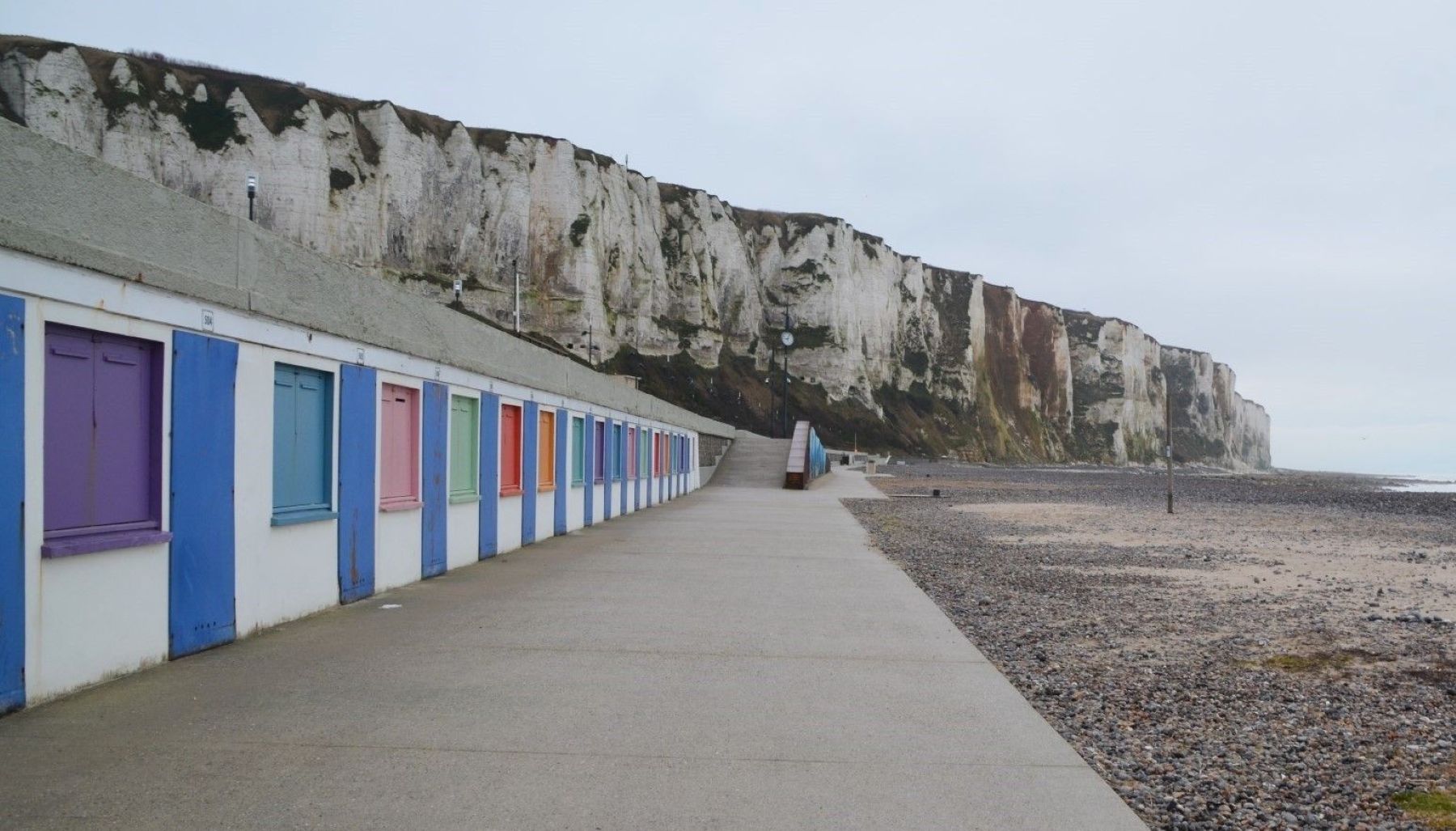
However, many things to do here and in summer even better, these are my favorites to come back eventually, The Old Tréport Museum, located in the former City/Town Hall, presents the history of Le Tréport across five levels: tourism during the era of sea bathing, the lives of fishermen, shipwrecks and rescues at sea, and traditional activities such as pebble gathering, fish smoking, and shipbuilding. Explore the cliffs ,and follow the volunteers who will tell you the story of Kahl Burg through its maze of galleries. These tunnels were dug during WWII under Nazis orders. Located 60 meters above sea level and carved into the cliff face some 20 meters deep, the Kahl-Burg comprises 32 rooms with various functions, spread over nearly 300 meters. The corridors include approximately 225 steps leading to the four levels: an access block and technical rooms, barracks rooms and observation posts, a firing post still containing its 75mm cannon, and a command post for the Nazis army (245th and 348th Infantry Divisions). Since 2001, it has been restored and preserved by a small group of volunteers. Information and mandatory reservations at the Tourist Office. Practical information: Not recommended for claustrophobic individuals – Wear flat shoes and warm clothing. Indeed something worth coming back, The Cordiers Quarter is not very old, barely more than two centuries. It is a district reclaimed from the sea, built at the foot of the cliffs, on a bed of pebbles. The first inhabitants were fishing families. Too poor to fish with nets, these “cordiers” (rope makers) fished using long lines baited with hooks and baited with sea worms. Numerous small businesses enlivened this area: fish smokehouses, cider houses, cafes, grocery stores The Quai François 1er ; as François I of Cleves then commissioned improvements to the port, including the construction of quays to improve the berthing of boats. It was in 1872 that it truly came into being. The breakwater, with its two ramps on either side and small shops below, stands majestically in the middle of the Quai François 1er, giving Le Tréport its distinctive character. The Funicular offers a unique experience: a superb journey through the cliff between the panorama of Le Tréport and the ropewalks. Dating from 1908, the tunnel was reopened in 2006 and equipped with 4 new cabins that operate on the principle of an inclined elevator.
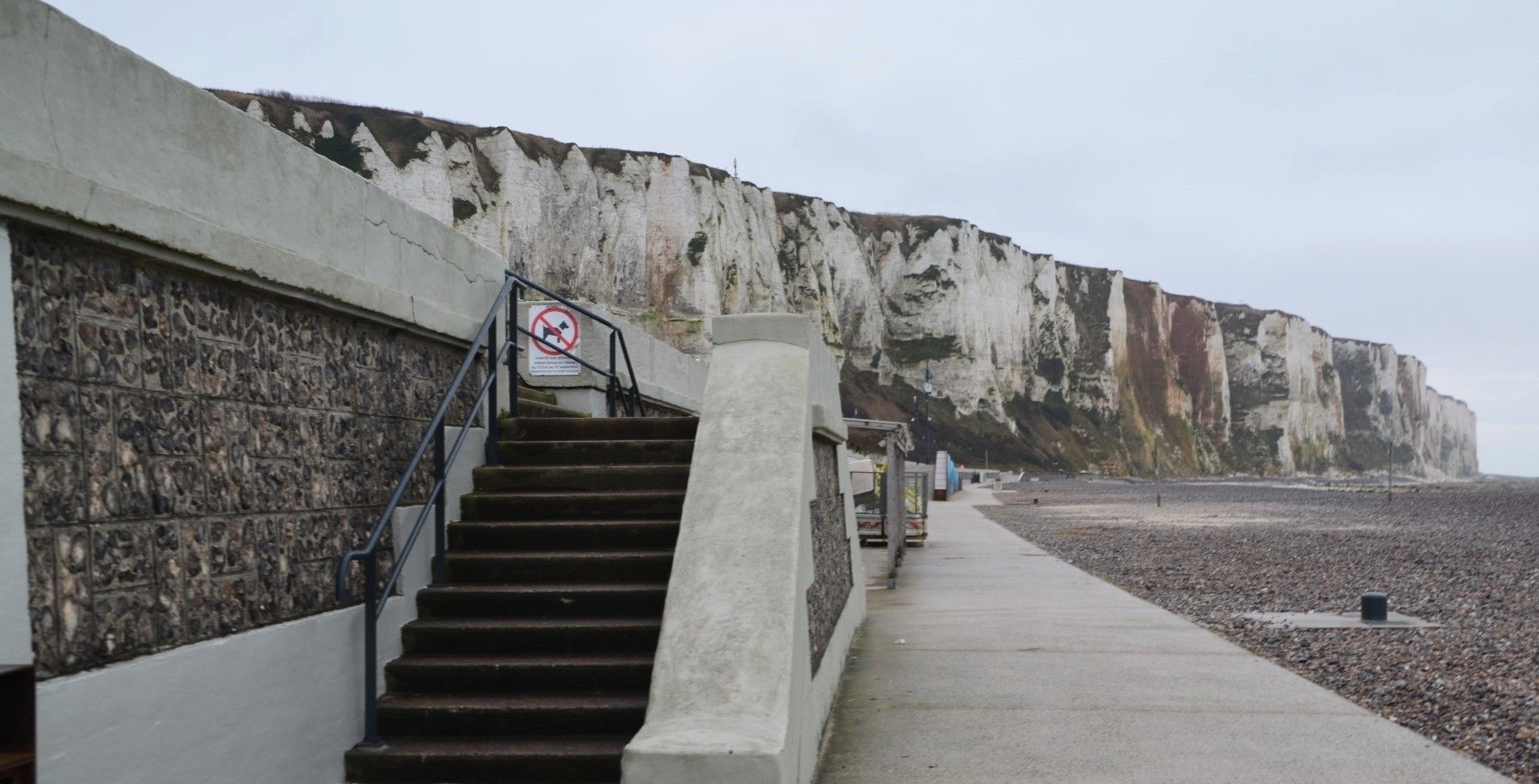
A bit of history I like tell us that in 911, the Treaty of Saint-Clair-sur-Epte between the French king Charles the Simple and the Viking leader Rollo established the northern border of Normandy at the Bresle River, which flows into the sea at Le Tréport. Rollo’s descendants settled in the region. In 1036, Robert, Count of Eu, founded the Abbey of Saint-Michel du Tréport, a counterpart to the Abbey of Mont Saint-Michel, to place Normandy, from the Bresle to the Couesnon, under the protection of the Prince of Heaven’s armies. In 1339, at the beginning of the Hundred Years’ War, sailors from the Cinque Ports set fire to the town. In 1545, the English burned the town. It was at this time that François I of Clèves, Count of Eu, had a large sandstone tower built to defend the town. Only the vaulted gateway of the old City/Town Hall remains. Around 1770, the écluse des chasses or flush lock was built on the orders of the Duke of Penthièvre to combat the silting up of the port. It completed the basin excavated at the beginning of the 16C. From 1830 to 1848, under Louis Philippe, King of the French, the dredging and widening of the channel further improved the port. He welcomed the young Queen Victoria of England to the quays of Le Tréport before traveling to the Château d’Eu to establish the Entente Cordiale. He had the Pavillon d’Orléans built on the beach and launched the popularity of sea bathing. Le Tréport’s status as a seaside resort began during the reign of Louis-Philippe, when the king’s family, who regularly resided in Eu, popularized sea bathing. During the Great War or WWI, a British military hospital was opened in the Hôtel du Trianon, and the vast Tréport-Terrasses camp had up to 10,000 beds for treating wounded soldiers. From June 1940 to September 1, 1944 in WWII ; Le Tréport suffered nazis occupation; the entire seafront was destroyed and the town was awarded the Croix de Guerre ,and totally or partially damaged 30% of its buildings, the Parisian upper class did not delay in building villas on the seafront and leading a worldly life there until the eve of WWII. Most of the villas were destroyed during the military operations of 1944, which explains the presence of typical Reconstruction architecture, particularly along the seafront. Throughout the WWII, the nazis army, fearing a Normandy landing, had several tunnels cut into the cliff to build defenses facing the sea. These tunnels, collectively known as Kahl-Burg, are accessible and open to visitors today.
The local Le Tréport-Mers tourist office on Le Tréport : https://www.destination-letreport-mers.uk/the-destination/our-municipalities/le-treport/
The local gov sister towns or villes sœurs on Le Tréport : https://www.villes-soeurs.fr/decouvrir-et-sortir/28-communes/le-treport/
The town of Le Tréport on its history : https://www.ville-le-treport.fr/histoire
There you go folks, a wonderful visit to a nice beach resort town of Le Tréport, It is worth a detour, and we are looking forward to be back, eventually. Again, hope you enjoy the post on this is Le Tréport !!! as I And remember, Happy travels , good Health, and many cheers to all !!!


