
I am again to tell you about more streets of my eternal Paris. I have many many posts on Paris and several on the streets of the most beautiful city in the world. I have come up with a picture from cd rom vault that should be here for you and me. This is a memorable street several years by it or on it as used to work not far and came from the Saint Lazare train station, As always thank you for following my blog some since Nov 26, 2010. Therefore, here is my take on the Rue Lafayette of Paris !!! Hope you enjoy it as I.
The Rue Lafayette runs through the 9éme and 10éme arrondissements of Paris. Almost 3 km long, the street is one of the main thoroughfares on the rive droite or right bank. It is the longest straight street in the city. It connects Boulevard Haussmann to Place de la Bataille-de-Stalingrad, where it continues as Avenue Jean-Jaurès. This street is named after the Marquis de Lafayette, a hero of the American Revolutionary War. A lively thoroughfare, it boasts numerous restaurants and bars. Also, one of my historical streets as early in my life in France living in Versailles came by the Gare Saint Lazare (see post) nearby, The street passes near the Gare de l’Est and Gare du Nord train stations (see posts) and ascends to the neighborhoods surrounding Place de la Bataille-de-Stalingrad and the Quai de Valmy, which runs alongside the Canal Saint-Martin.(see post),
The Rue Lafayette is serve by metro Line 7 roughly follows the route of the street, which is served by the following stations: Chaussée d’Antin – La Fayette (lines 7 and 9); Le Peletier (line 7); Cadet (line 7); Poissonnière (line 7); Gare de Magenta (RER line E); Gare du Nord (lines 4 and 5); Gare de Paris-Nord (RER lines B and D); Louis Blanc (lines 7 and 7bis); Jaurès (lines 2, 5 and 7bis); and Stalingrad (lines 2, 5 and 7).
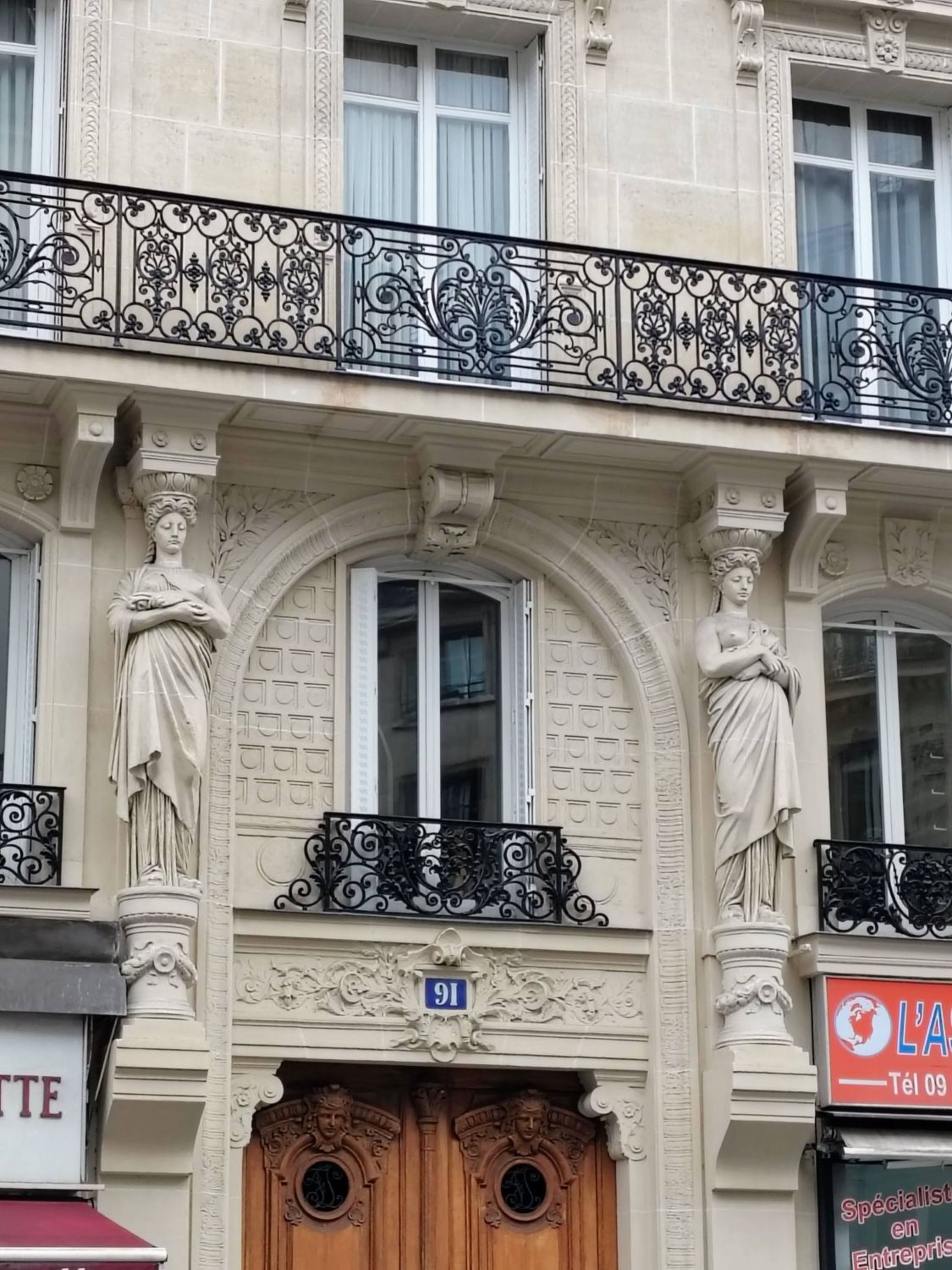
Notable buildings here are the former Hôtel de Montesson: located at the corner of Rue Lafayette and Rue de la Chaussée-d’Antin (on the site of the present-day Cité d’Antin), it was built by Alexandre-Théodore Brongniart (see palace post) around 1770 for Madame de Montesson, mistress of the Duke of Orléans. A long vaulted passageway connected the street to the courtyard. Facing Rue Taitbout, the garden façade was punctuated by Ionic pilasters. The building, which housed the Austrian embassy during the First Empire, was the site of a fire in 1810. Nos. 18 to 22: the gardens of the Hôtel de la Reine-Hortense extended to this point. Square Montholon (see post), the only green space located along the street. No. 61: former Hôtel du Petit Journal which at the turn of the 19C and 20C, and until WWI was one of the four largest French daily newspapers. The street crosses the tracks of the Gare de l’Est train station on the Pont La Fayette, a reinforced concrete bridge built in 1928. No 63 (see pic) by kiosque de presse by metro Cadet line 7,corner of Rue Cadet, No. 91: (see pic) building facade adorned with a pair of full-length caryatids, 1865 – 1870 , The two caryatids are placed at the transom of the portal, at mezzanine level. In architecture, a caryatids is a statue, often female, serving as a support for a load. It makes it possible to replace with nobility, style, and creativity columns, pilasters engaged in a wall or any other architectural element. First used as colonnades, they gradually took over the facades to decorate porches, balconies and windows An early work by Jules Dalou, a French sculptor. No. 145: facade of a dummy building belonging to the RATP (Parisian public transport operator), intended to house ventilation shafts for line B of the RER (regional express network) in the Île-de-France region. No. 169: Well-digger’s house, built at the end of the 19C as an access point to the Canal de l’Ourcq water aqueduct. No. 214: Access to the Church of Saint-Joseph-Artisan (see post). Formerly the church of the Germans, then of the Alsatians-Lorrainers and Luxembourgers of Paris.
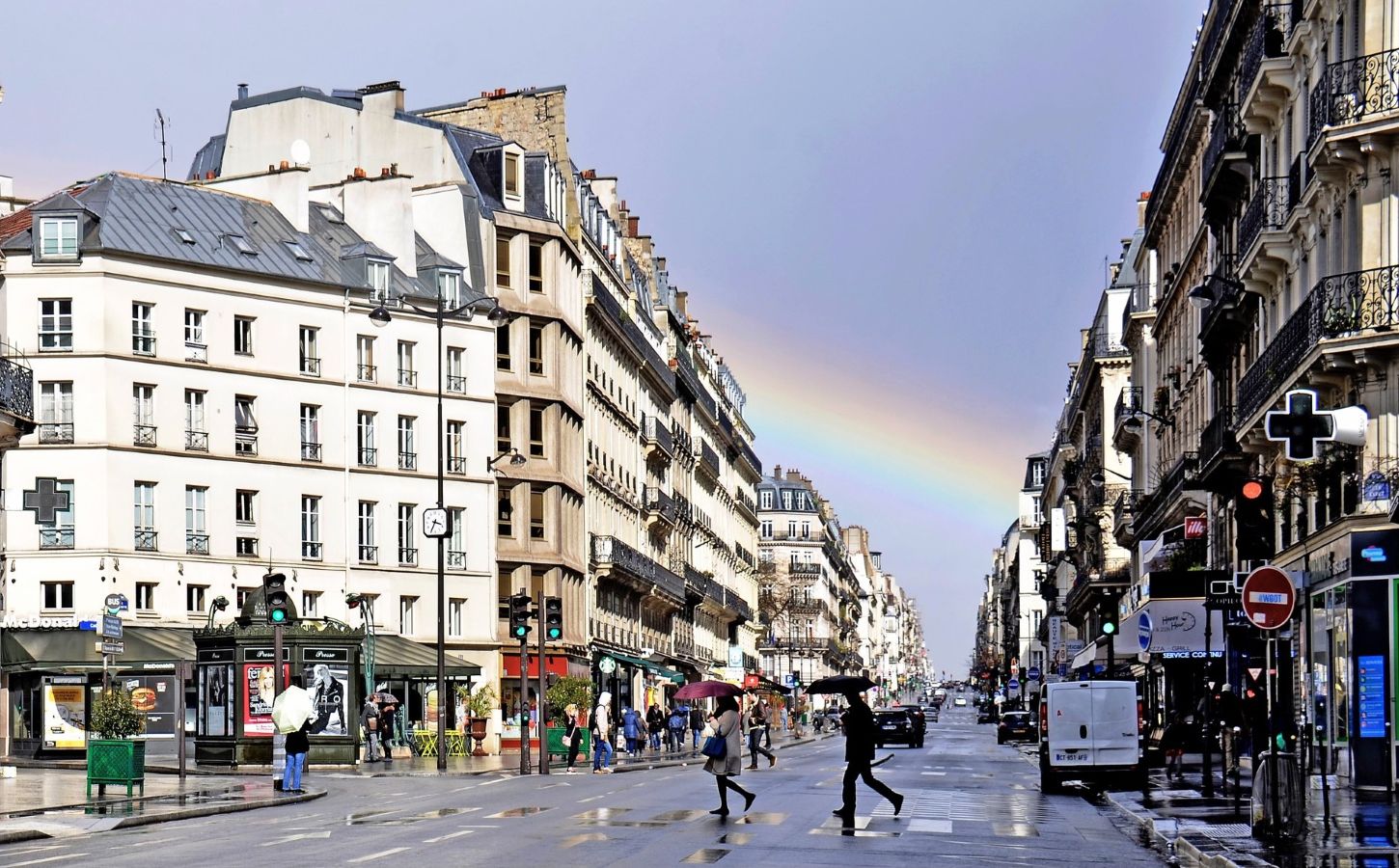
A bit of history on the Rue Lafayette tell us that in 1821, a group of bankers and architects purchased the land of the Enclos Saint-Lazare enclosure in order to subdivide it and create the Nouvelle Poissonnière quartier/neighborhood. It was opened, between Rue du Faubourg-Saint-Martin and Rue du Faubourg-Poissonnière, in 1823, on land that had belonged to the Saint-Lazare enclosure before the French revolution. In 1830, after the July revolution (Trois Glorieuses); this first section was renamed Rue Lafayette. By ministerial decree of August 28, 1849, a second section was added from the rue du Faubourg-Saint-Martin to the Rond-Point de la Villette, connecting the rue du Chemin-de-Pantin to the rue La Fayette. By decree of public utility of August 27, 1859, a third section was created from the rue du Faubourg-Montmartre to the rue du Faubourg-Poissonnière. By decree of public utility of March 19, 1862, a fourth and final section was created from the rue de la Chaussée-d’Antin to the rue du Faubourg-Montmartre.
The Paris tourist office on the 9éme arrondissement de Paris : https://parisjetaime.com/eng/article/explore-paris-s-9th-arrondissement-a828
The Paris tourist office on the 10éme arrondissement de Paris : https://parisjetaime.com/eng/article/explore-paris-s-10th-arrondissement-a843
There you go folks, another dandy beautiful memorable street of my eternal Paris. I have criss cross it many times, and always full of wonderful times, Again, hope you enjoy this post on the Rue Lafayette of Paris !!! as I.
And remember happy travels, good health, and many cheers to all !!!


