
We have driven in the area and would like to have an imprint in my blog on the wonderful towns of my belle France, There is so much to see , doing my best, now transposing in my blog with new pictures foung in my cd rom vaults for you and me, Memorable moments passing and visiting Châteauroux, Therefore, here is my take on this is Châteauroux !!! Hope you enjoy the post as I.
The city of Châteauroux is located in the Indre department no 36 in the Centre-Val de Loire region of my belle France, It is serve by the D920 D925 D943 D956 D990 roads, and the N151 and passing by the A20 highways. It is 3 km from Déols, 29 km from Issoudun ,61 km from Vierzon, 122 km from Limoges, 265 km from Versailles, 427 km from my current home, We came here from Versailles on our road warrior trails dir Toulouse and then Spain ,all along the N12, A86 ,N118 ,then the A10 dir Bordeaux passing Orléans getting on the A71 dir Vierzon,bearing left onto the A20 dir Toulouse , then bear right onto the D956 road dir Châteauroux going under the A20 autoroute L’Occitane continue on D956 becoming Avenue de Blois becoming Avenue Jacques Chirac becoming Avenue du 6 Juin 1944 Débarquement Allié at rondpoint bear left onto Avenue Charles de Gaulle at rondpoint Louis Deschizeaux bear left onto Rue Porte Neuve to Church Notre Dame parking on left Place Roger Brac
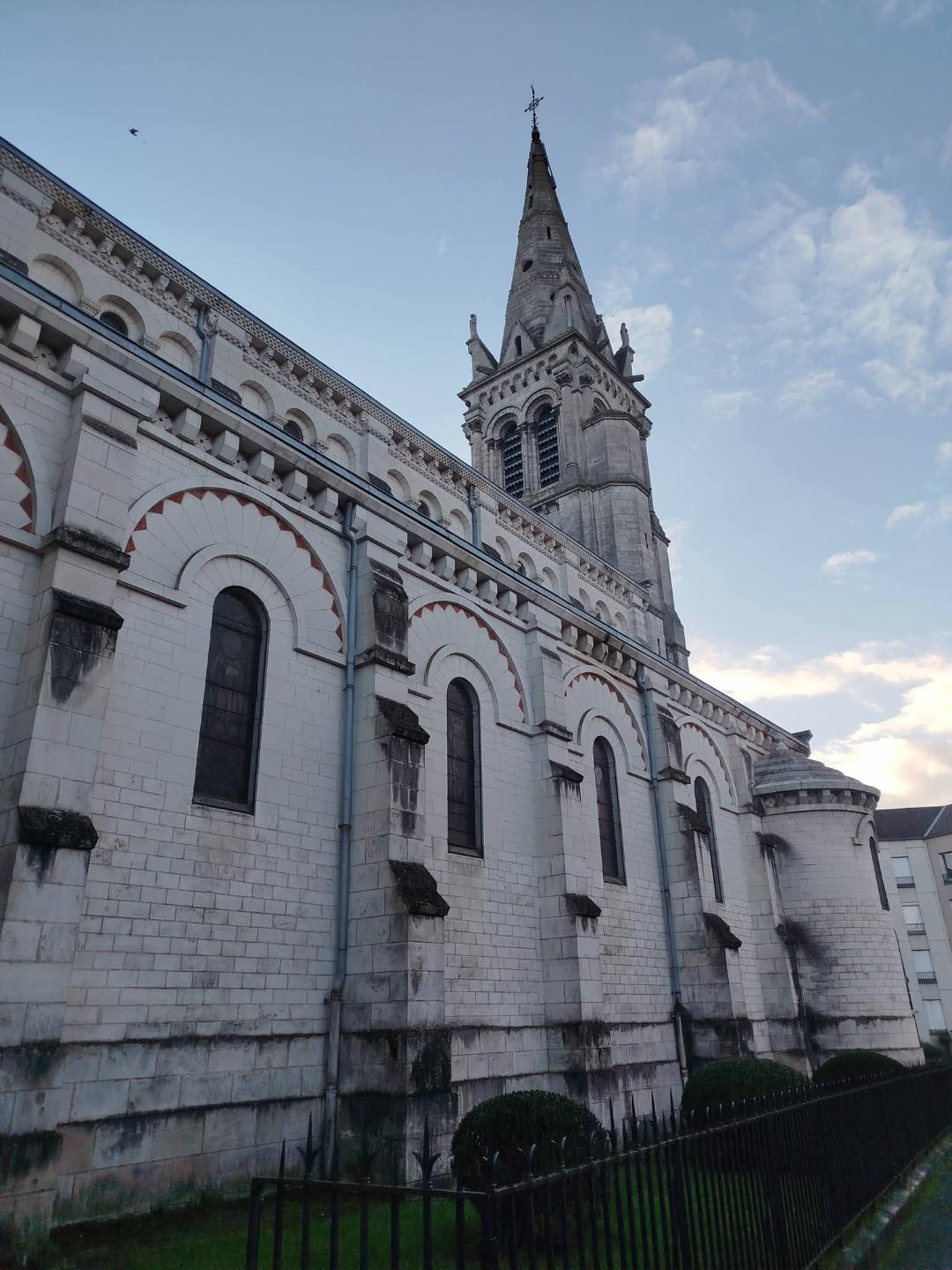
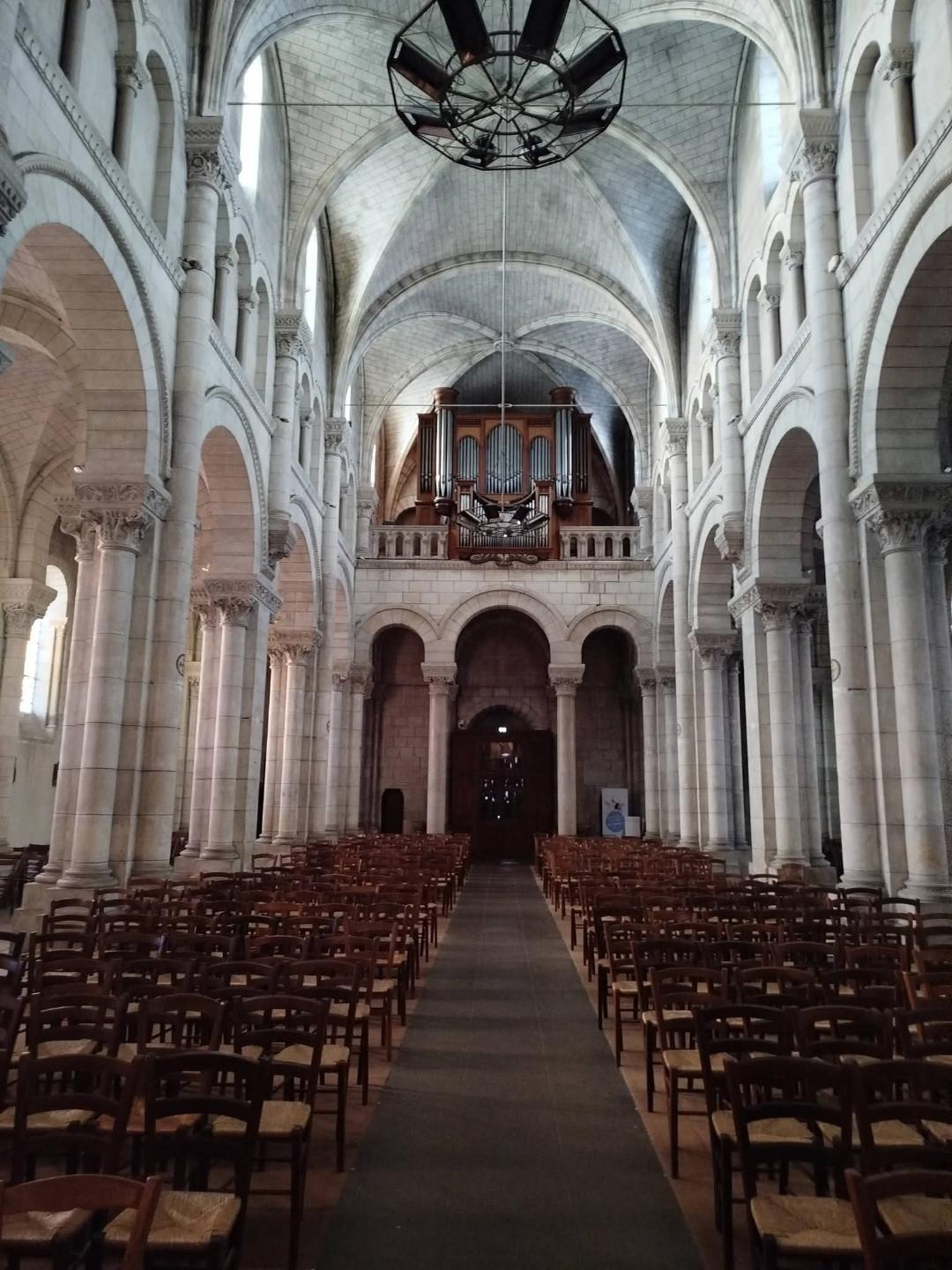
The Notre-Dame Church was built starting in 1877, completed in 1882, and was consecrated in 1892. The influence of the Auvergne Romanesque style is particularly evident in the use of materials and polychromy, achieved through the use of stones of different colors and textures. The interior elevation has three levels: large arcades, blind arcades, and clerestory windows. A large number of capitals illustrate sacred stories. The sculptures were created and the stained-glass windows installed in 1882. The grand organ was built by the workshop of Aristide Cavaillé-Coll in 1890. The choir organ was built in 1964. The Church of Notre-Dame dome houses a six-meter-high gilded copper statue of the Virgin Mary. The bell tower rises 50 meters. The interior consists of three naves leading to the transept, which is crowned by a dome. Beyond the transept, the semicircular choir, around which five chapels radiate, is supported by eight monolithic marble columns. A Pietà dating from the early 16C adorns one of the chapels.

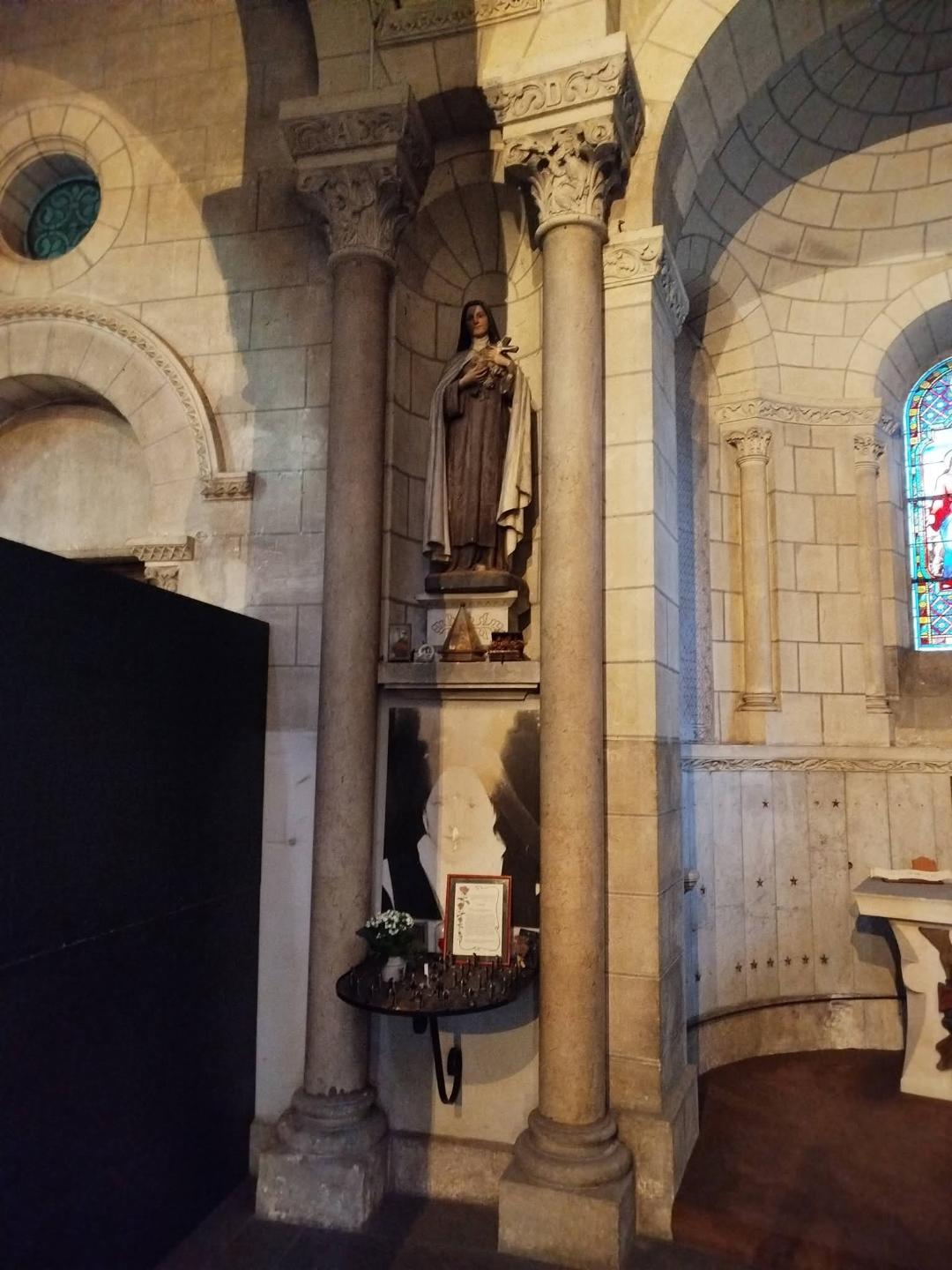
Other things to see here are the Château Raoul from the 10C overlooks the banks of the Indre river. It belonged to the lords of Déols. It was rebuilt in the 15C and restored in the 19C. The chapel of Touvent Castle was built in 1855. It is modest in size and oriented. The chapel has a single nave of five bays, flanked by very narrow side aisles, and ends in a semicircular apse. The Cordeliers Convent is a former 13C Franciscan convent located on Place Sainte-Hélène. Today, it houses part of the School of Fine Arts and contemporary art exhibitions. The Saint-Martial Church is on Rue Grande. Saint-André Church is on Place Voltaire. The Saint-Martin chapel, located on Place Roger-Brac, already existed at the beginning of the 10C, as evidenced by the charter of the founding of Déols Abbey in 917, which designates it as being next to Déols Castle. Several streets in the town center , particularly Rue de la Gare are home to 19-20C townhouses. The Post Office building is an Art Deco structure completed in 1928. The Bertrand Museum (18C): housed in a former 18th-century townhouse that once belonged to General Bertrand, it contains Napoleonic collections, memorabilia of General Desaix, fine examples of 17C Flemish painting, and works from regional schools of painting and sculpture of the 19-20C, including the sculptor Ernest Nivet. The Maison des Arts et Traditions Populaires du Berry (House of Arts and Popular Traditions of Berry) is located in the heart of Balsan Park. This museum brings together collections based on the theme of Berry culture, as well as rural life in Berry. Photographs, engravings, headdresses, and objects of all kinds bring to life the lives of the peasants of yesteryear, in the heart of this old province of France.
Châteauroux was America. In the aftermath of Victory in WWII, everything seemed possible in Châteauroux. Everything was changing, everything was accelerating: Cadillacs, jazz cafés, chewing gum, and newly arrived GIs disrupted the daily lives of the people of Berry. Legend has it that the famous hamburgers from across the Atlantic were offered for the first time in France in 1952 , in an establishment then a must for locals, and visitors like me, this was Joe from Maine, located at the time at 23 rue Ledru-Rollin in the heart of town, Run by three generations of the Gagné family, the business closed its doors on September 29, 2013. Joe and Annette Gagné, originally from Augusta, Maine (USA), his daughter ran for a while afterward until finally closed, sadly, The Building Saint-Cyran, an impressive thirteen-storey tower built to accommodate the generals of the NATO still recalls those glorious days when Chateauroux lived at the frantic pace of the 10 Americans installed at the airport of Châteauroux-Deols (today Châteauroux Centre) and in the database at the Martinerie. In the agglomeration, entire neighborhoods are springing up to accommodate these new inhabitants, as in Brassioux whose urban landscape still looks like an American city. Because from 1951 to 1967, Châteauroux is also a bit of all of that, of this American way of life which always fascinates locals. Even today, the inhabitants speak with nostalgia of the time of the Americans and the Franco-American friendship is strengthened each day a little more, as evidenced by the twinning between Châteauroux and the city of Fresno, California. Do relive the golden age of the American period in Châteauroux by visiting the U.S. Museum. Association Châteauroux was America exhibits a number of period objects, photos and films. 1 place de la Gare, Free admission, The departmental house of military memory run by the association Friends of La Martinerie, invites you to relive the military past of the department of Indre and, in particular, that of the former military base of at the Martinerie. Located at Route du Régiment Normandie-Niémen (formerly Lignières road), in the nearby town of Déols Free admission.
A bit of history tell us that around 920, the monks of the Abbey of Saint-Gildas de Rhuys (Rhuys peninsula see posts), near Vannes (Morbihan 56 see posts), sought refuge with Ebbes the Noble, Prince of Déols, to protect the relics of Saint Gildas from the Norman occupation of southern Brittany between 919 and 939. They founded an abbey under the same name in what is now the Saint-Christophe district. Their Breton abbey was revived in 1008 by monks from the Abbey of Fleury in Saint-Benoît-sur-Loire. Raoul the Large, the first Baron of Châteauroux, abandoned his palace at Déols, and had a fortress built opposite the Abbey of Saint-Gildas, on a hillside on the left bank of the Indre river. From 1112 onward, this castle was called “Château Raoul,” after the common first name among the lords of Déols, which gave rise to the name Châteauroux. The castle and the town were captured by Philip Augustus in 1188. Despite its distance from the Spanish border, Châteauroux found itself caught up in the Spanish Civil War. Refugees began arriving in 1936 and were housed in the slums of the Bitray housing project. Between January 29 and February 8, 1939, more than two thousand Spanish refugees fleeing the collapse of the Spanish Republic before Franco’s troops arrived in the Indre department. Unlike neighboring departments that relied on local towns, the Indre grouped them together.
The City of Châteauroux on its heritage : https://www.chateauroux-metropole.fr/le-territoire/the-area-in-a-nutshell/monuments-1
The Châteauroux tourist office on the Notre Dame Church : https://www.chateauroux-tourisme.com/en/culture-heritage/Notre-Dame-Church/
The association Friends of La Martinerie : https://www.les-amis-du-site-militaire-de-la-martinerie.org/en-us/la-martinerie-2/history-of-the-military-base
The Châteauroux tourist office on the US Museum : https://www.chateauroux-tourisme.com/culture-patrimoine/us-museum-1951-1967/
The Châteauroux Centre (Deols) airport on its history : https://chateauroux.aeroport.fr/aeroport/#
There you go folks, a dandy area to explore and enjoy with the family, Memorable moments in my belle France, driving all over in my road warrior trails brings out sublime awesome spots with nice memorable family visits of yesteryear always remember and always looking forward to be back, eventually. Again hope you enjoy the post on this is Châteauroux !!! as I.
And remember, happy travels, good health, and many cheers to all !!!


That’s interesting – I’m planning to visit Châteauroux soon, so this is a fascinating read. Thank you very much!
LikeLiked by 1 person
It is historical indeed. Glad it encourages you to visit worth it me think. Thanks for stopping by Cheers
LikeLiked by 1 person