
This is hugely gratifying to update in my blog. Many memories of walking by it , after a round of jogging in the gardens of the Domaine of Versailles! Many family trips living not far from it! I found me new pictures in my cd rom vault that should be in my blog for you and me, This is my beloved Versailles, a city I lived for 9+ years!! I have to tell you again of this wonderful monument which is a must to visit while in my belle France. Therefore, let me bring you in to the Hameau de Marie Antoinette in Versailles, part II !!! Hope you enjoy the post as I
The Hameau de la Reine ( hamlet of the Queen) was born from the imagination of Marie-Antoinette. Bored by the Versailles court, she wanted to build a farm by bringing animals and peasants not far from the Palace of Versailles, to teach nature to her children. But this secret garden will finally be destined for walks and sumptuous receptions, to which she invites her loved ones. Of the vine, a farmhouse and its farmyard, cottages, and a mill surround an artificial lake.
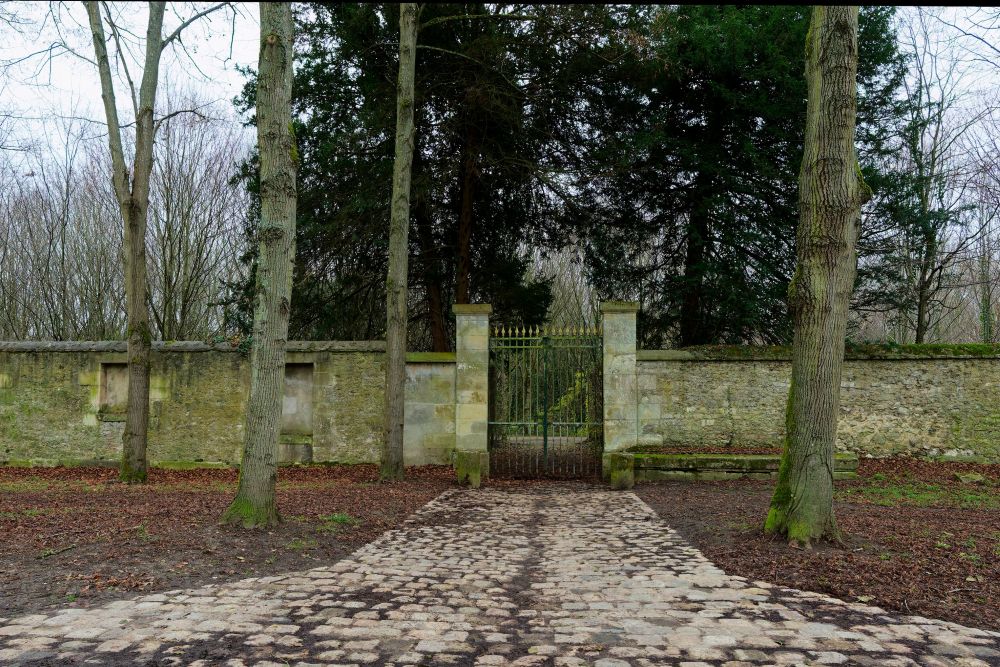
The Queen’s Hamlet: a few architectural elements are visible in winter when you walk around the large park, along the high walls or moats built to maintain peace for the kings and queens. The educational farm is one of the few buildings that provides direct access to Marie Antoinette’s hamlet. If you venture off the beaten track into the grounds of the Palace of Versailles, (see posts) you can enjoy its 815 hectares, more than twice the size of Central Park (NYC) ! One of the least known and most surprising perspectives awaits you at the end of the Grand Canal,(see post) 2 km long, at the end of which you can admire the palace, sitting on the grass away from the crowds.
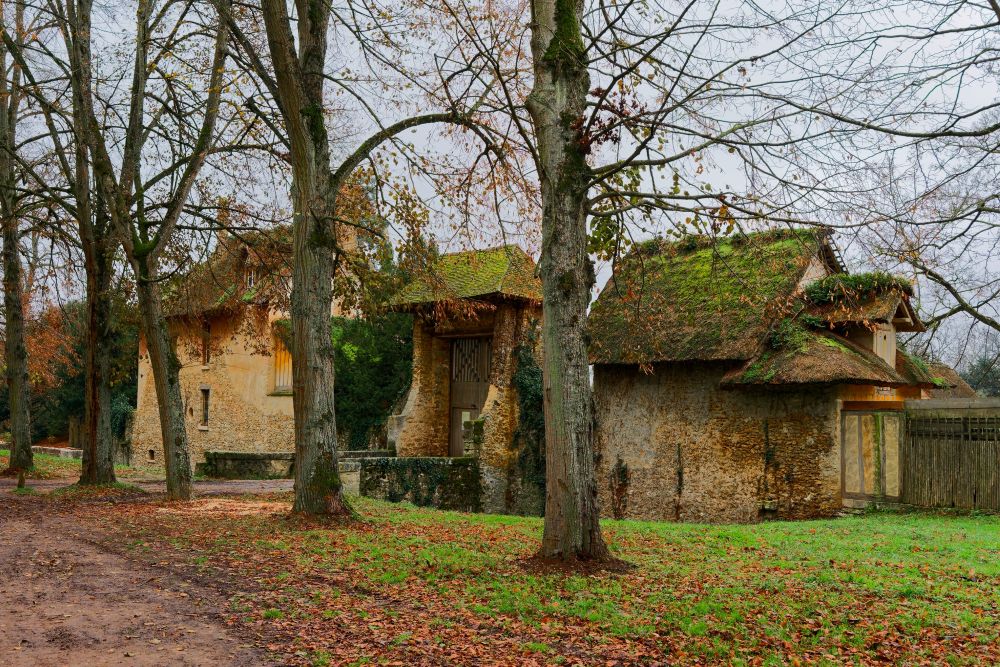
As early as 1624, Louis XIII had a farmyard, known as a menagerie established near the château to supply the royal table. Louis XIV added an exotic touch with his own menagerie, and Louis XV, by creating a new menagerie in the French garden for Madame de Pompadour, encouraged a return to domesticated animals. Marie Antoinette’s farm was established, slightly removed from the hamlet, as a fully operational farm. The various buildings that comprised it were constructed between 1784 and 1789, with numerous modifications to the plans during construction: stables, a sheepfold, a pigsty, rabbit hutches, and a henhouse. Valy Bussard was the farmer appointed by the Queen to manage both the farm and the dairy. He arrived from Touraine on June 14, 1785, and his family joined him on December 27. Their residence, built in 1787 and comprising three bedrooms, a kitchen, and a dining room, is, like all the houses in the hamlet, decorated in the “rustic style.” A milkman and a cowherd assist them with the farm. Valy, also in charge of managing the farm, occupies an office above the stable. In 1787, the construction of a new barn within the farm’s grounds allowed the original barn to be converted into a ballroom. A bridge over the ditch provides access from the Allée des Rendez-Vous driveway, via a large arched gate. The farmyard includes a watering trough and a well. Towards the hamlet stands another gate made of masonry and dressed stone, surmounted by two large spheres. During the French revolution, the farm was rented for a few months to a tenant farmer, but quickly fell into disrepair due to neglect and a fire that destroyed one of the buildings. Most of the complex was destroyed during the First Empire (Napoléon 1er) , and the remainder was used as a guardhouse for the Emperor and for horses. The complete restoration of the estate to its 1789 state began in 1992 and was completed in 2006.
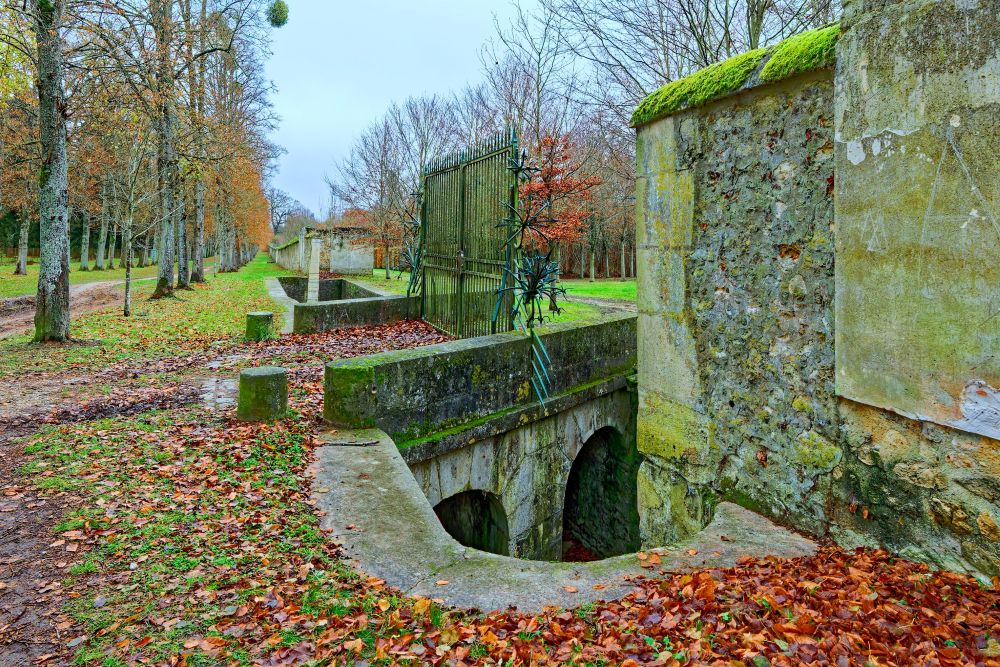
Beyond an initial wall, one can see an immense reservoir, larger than an Olympic swimming pool, 66 meters long and 17 meters wide, which holds nearly 2.5 million liters. It has remained unchanged since the time of Louis XIV. It is a vast labyrinth of vaulted galleries made of dressed stone. Beyond the Grand Trianon, the Gally plain and the grounds of the Grand Parc begin. High walls and hedges surround the Trianon estate as well as the Petit Parc. In the 17C, François Mansart placed these hedges at the ends of the garden paths to open up the view while blocking access.
The Queen’s Hamlet is a dependency of the Petit Trianon located in the park of the Palace/Museum of Versailles; this hamlet of pleasure was commissioned during the winter of 1782 – 1783 by Queen Marie Antoinette with the nostalgia for a more rustic life, in a decor of nature inspired by the writings of Rousseau, a small paradise where the theater and the feast would make her forget her condition as Queen. This rural place, which was also a farm, marked the influence of the ideas of the physiocrats and philosophers of the Enlightenment of the aristocracy of the time.
The official Château de Versailles on the Queen’s Hamlet: https://en.chateauversailles.fr/discover/estate/estate-trianon/queen-hamlet
The Versailles tourist office on the Queen’s Hamlet: https://en.versailles-tourisme.com/queen-s-hamlet.html
The City of Versailles on its heritage : https://www.versailles.fr/65/decouvrir-versailles.htm
There you go folks, a hugely beautiful place to visit anytime and is a must while in France This is the Hameau of Marie Antoinette ,glorious; a must to visit. Beautiful , wonderful, things to see all around the domaine of Versailles, just gorgeous after all the nice restorations. Again ,hope you enjoy this post on the Hameau de Marie Antoinette in Versailles, part II !!! as I.
And remember, happy travels, good health, and many cheers to all !!!


