
We have driven and walked in my eternal Paris, and would like to have an imprint in my blog on the wonderful family times we had there, There is so much to see , doing my best, and glad found me these pictures in my cd rom vault ,which now transposing in my blog for you and me, This was my former worked city, so glad to post more memorable spots on it, I thank you for your readership over the years and to bear with my rants! After Paris is to rant, shout and yelled about, me think. Therefore, here is my take on curiosities of Paris , part LX !!! Hope you enjoy the post as I.
The Rue Charlot is located in the 3éme arrondissement of Paris. Today, this street begins at Rue des Quatre-Fils and ends at Boulevard du Temple. It is served by the Filles du Calvaire line 8, Temple,line 3, and Saint-Sébastien – Froissart line 8 metro stations. It owes its name to Claude Charlot, a wealthy tax collector who developed the area in the 17C. The Hospitallers of the Order of Saint John of Jerusalem owned a large plot of land there, and in 1608, they leased the Temple marshland “on a perpetual lease and rent” to Claude Charlot, who would subdivide it according to the plans of the Grand Surveyor, in order to create a new neighborhood. This subdivision of part of the Couture du Temple was linked to the Place de France project launched in 1607 by Henry IV (a project abandoned after the king’s assassination in 1610). Located in the heart of the Marais district, Rue Charlot was formed, by a ministerial decree of February 18, 1851, by the merging of four streets opening onto the Couture du Temple: Rue d’Orléans-au-Marais, Rue de Berri, Rue d’Angoumois, and Rue Bosc. On March 8, 2007, the intersection of Rue de Turenne, Rue Charlot, and Rue de Franche-Comté was named Place Olympe-de-Gouges in honor of Olympe de Gouges, a French writer, playwright, and politician who was guillotined on November 3, 1793, in Paris. Author of the Declaration of the Rights of Woman and of the Female Citizen in 1791, she left behind numerous writings and pamphlets advocating for women’s civil and political rights and the abolition of slavery in the colonies.
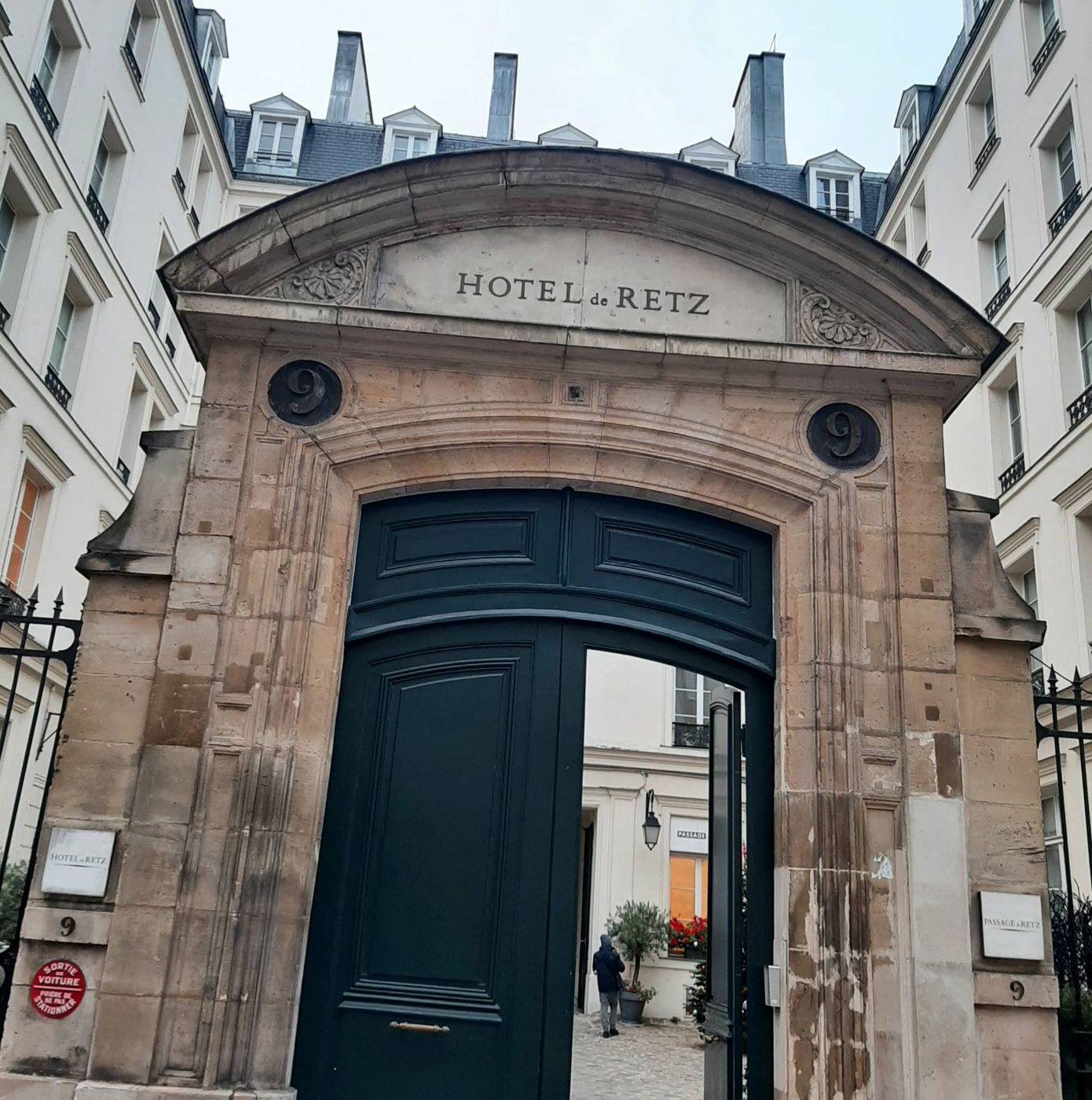
Notable buildings here are at No. 6 ter: Church of the Armenian Eparchy of the Holy Cross of Paris (since 1970), now called the Armenian Catholic Cathedral of the Holy Cross of Paris. This is the former chapel of the Capuchin convent in the Marais quartier or neighborhood, built in the 17C on the site of a former tennis court. No. 9: Hôtel de Retz,(see pic) purchased before 1649 by Pierre de Gondi de Retz, elder brother of the famous coadjutor. Jean-François Paul de Gondi, aka Cardinal de Retz. The author Nestor Roque was born here in 1804. No. 12: Hôtel de Brossier, Treasurer of the Wars, with a sculpted portal. This building hosted the eighth season of Star Academy, a musical reality TV show broadcast on TF1 TV, at the end of 2008. Nos. 33 bis and 35: Marché des Enfants-Rouges, the oldest Parisian market still in operation. No. 35: Lambert, the night-shift gas station attendant, played by Coluche, lives at this address in the film Tchao Pantin. No. 70 bis: Boucherat Fountain, built in 1699; it overlooks what became Place Olympe-de-Gouges in 2007. No. 73: Tower of the Temple enclosure. It was built in 1240 at the northeast corner of the wall, which it overlooked from a corbel. Lazare Carnot, a French mathematician, physicist, officer, and statesman, and Jean-Baptiste Pigalle, a French sculptor (who also sculpted the bodies of great intellectuals such as Voltaire and Diderot, whose granddaughter he was, according to a letter from Diderot to his wife in late October 1773, godfather), lived on this street. So I read,,,
The Paris tourist office on Paris Centre (arrond 1-4) : https://parisjetaime.com/eng/article/explore-the-centre-of-paris-a846
The Place Édouard-VII is located in the 9th arrondissement of Paris. The area is served by metro lines 3, 7, and 8 at the Opéra station, and by lines 8, 12, and 14 at the Madeleine station. It is named after Edward VII, sovereign of the United Kingdom and the Dominions, son of Queen Victoria. The square received its current name in 1912. The café terraces fill up as soon as spring arrives, under the covered arcades where a piano sometimes plays. The theater attracts a diverse audience, the restaurants offer elegant yet unpretentious cuisine, and the square becomes the ideal setting for a sunny break between sightseeing. Place Édouard-VII is a discreet symbol of the Parisian art of living, a blend of heritage and a relaxed lifestyle.
From 1921 onwards, the premises were gradually occupied and privatized by the central services of Société Générale, and Rue Edouard VII became a private road closed off by barriers. Following the relocation of Société Générale’s offices to the suburbs in 1992, the area underwent rehabilitation from 1995 to 1999. In 1942, the statue was toppled and thrown to the ground by a group of about fifty demonstrators. In 1996, a team of architects took over the area with the mission of “reviving” the Edouard VII block by pedestrianizing the street and square, re-establishing businesses, and allowing more light to penetrate the space. Notable buildings: The square is adorned with the equestrian statue of Edward VII by Paul Landowski unveiled on January 26 ,1914. The future Edward VII always preferred Belle Époque Paris to the refined manners of his native England. The eldest son of Queen Victoria, he had to wait 60 long years before succeeding his mother. In short, whenever he could, Edward stayed in Paris. Theaters, cabarets, fashionable salons, restaurants… The Prince enjoyed all the Parisian charms. He is even said to have launched the fashion for the tuxedo, much more practical than the cumbersome tails. Opened in 1911, the Rue Edward VII and its square pay homage to the most Parisian of English kings. And the statue by Paul Landowski depicts a sovereign nobly leading his horse by the bridle. No. 7: the Hôtel Edouard VII opened at this address in April 1913. In 1921, an auction was held of the furniture furnishing the hotel’s 60 Louis XVI-style rooms and salons. No. 10: the Théâtre Édouard-VII, which opened in 1916. A sign on the facade indicates that “on the stage of the Théâtre Édouard-VII,(see post) from 1920 to 1948, Sacha Guitry created 15 of his finest plays.”
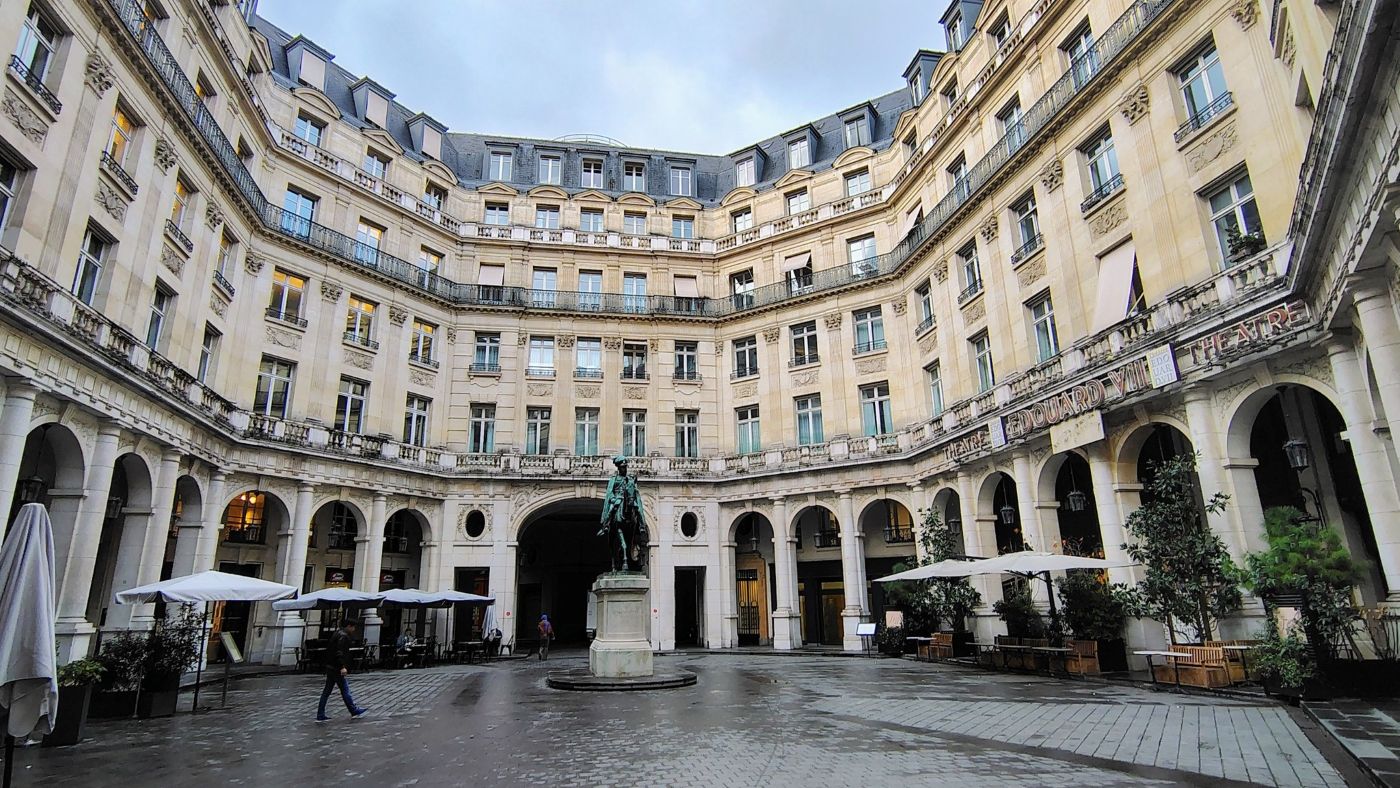
The Rue Édouard-VII goes into the square above. It is a private street ,and begins at 16-22 Boulevard des Capucines and ends at Place Édouard-VII. The area is served by metro lines 3, 7, and 8 at the Opéra station, and by lines 8, 12, and 14 at the Madeleine station. It is named in honor of King Edward VII of the United Kingdom, who died just one year before the street was built. The street was created between 1911 and 1913 at the initiative of the entrepreneur Arthur Millon and his partner Henry Wiener on a municipal plot of land formerly known as Rue Basse-du-Rempart. The property complex originally comprised buildings with shops on the ground floor and offices on the upper floors, a hotel and the Édouard VII theatre.(see post), Initially, the street joined the rue de Caumartin but, in 2010, the part of the street which runs from the place Édouard-VII to the rue de Caumartin was renamed “rue Bruno-Coquatrix”.
The City of Paris on the favorite City of the monarchs of the UK : https://www.paris.fr/pages/paris-the-favorite-city-des-souverains-britanniques-23380
The Paris tourist office on the 9éme arrondissement de Paris : https://parisjetaime.com/eng/article/explore-paris-s-9th-arrondissement-a828
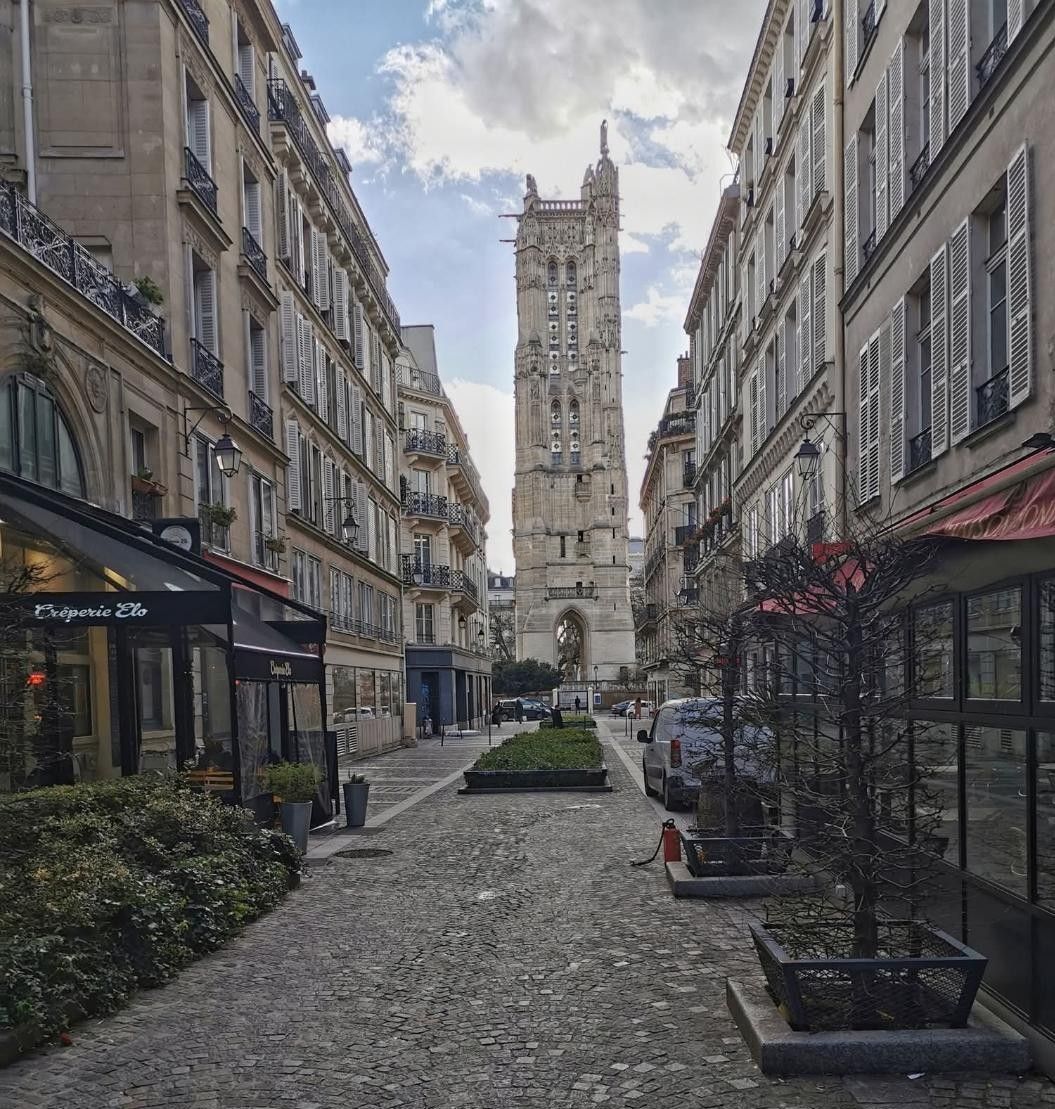
The Rue Nicolas-Flamel is located in the 4éme arrondissement of Paris. It begins at 88 Rue de Rivoli and ends at 7-13 Rue des Lombards. It is named after Nicolas Flamel, a 14C Parisian bourgeois, public scribe, copyist, and sworn bookseller, who lived at the corer of this street and Rue des Écrivains (former street demolished in 1856 to create Rue de Rivoli ) . In 1254 and 1273, the land on which this street, as well as the small Rue Marivaux, was built was called “Fief Marivas.” The origin of the name “Marivaux” is thought to mean “marais.” or marsh The street was fully built up by 1280. It was also called “Grande Rue Marivaux” and “Rue du Grand-Marivaux” before taking the name “Rue Marivaux-des-Lombards.” It is mentioned as “Rue de Marivault” in a manuscript from 1636. In 1817, the “Rue Marivaux-des-Lombards” was located in the former 6éme arrondissement, Lombards quartier or neighborhood, and began at 14-16 Rue des Écrivains and ended at 11-13 Rue des Lombards. The street received its current name by ministerial decree on February 18, 1851. At the end past Rue de Rivoli you see the Tour Saint Jacques (see post) See pic here,
The Paris tourist office on the Paris Centre (arrond 1-4) : https://parisjetaime.com/eng/article/explore-the-centre-of-paris-a846
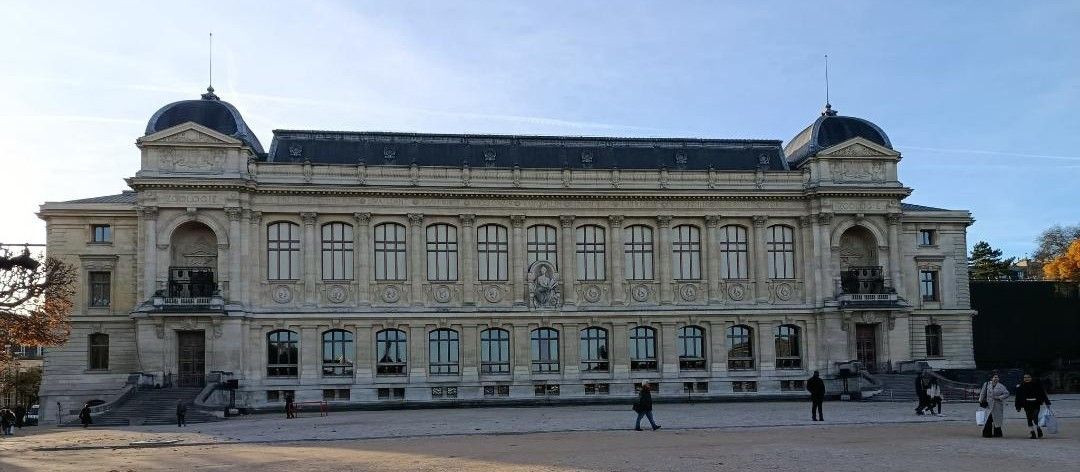
The Jardin des Plantes is located in the 5éme arrondissement of Paris, This is a botanical, ecological and zoological park, the headquarters and main site of the National Museum of Natural History, which also has other sites in Paris and elsewhere. In addition to the green spaces typical of a garden , the Jardin des Plantes (see post) also has a menagerie, greenhouses, and scientific exhibition buildings including a Mineralogy Gallery and a Paleontology Gallery. The garden itself is open to the public free of charge during the day; the Museum galleries and the Menagerie are subject to a fee. It is accessible through twelve gates leading, in a clockwise direction and starting from the north, onto the Quai Saint-Bernard along the Seine, the Place Valhubert, a very short section of the Boulevard de l’Hôpital, and the Rue Buffon ,Rue Geoffroy-Saint-Hilaire and Rue Cuvier, which delimit an area of 23.5 hectares to which are added 3.5 hectares to the south of the Rue Buffon, See pic, the Grande Galerie de l’Évolution bldg,
The official Jardin des Plantes of Paris: https://www.jardindesplantesdeparis.fr/en
The Paris tourist office on the Jardin des Plantes: https://parisjetaime.com/eng/culture/le-jardin-des-plantes-museum-national-d-histoire-naturelle-p3604
The rue des Irlandaisis located in the in the Val-de-Grâce quartier or neighborhood of the 5éme district or arrondissement of Paris. It bears this name because the former Irish College was located at no, 5 on this street. Formerly known as “Rue du Cheval-Vert” around 1600, it was renamed “Rue des Irlandais” on February 6, 1807, at the request of the headmaster of the Irish College. This college had been home to many Irish people since 1769, following its relocation from the Collège des Lombards on Rue des Carmes, where it had been located since 1677. It is now the Irish Cultural Centre of Paris. Notable buildings: At no, 5, the Irish Cultural Centre of Paris,(see pic) formerly the Irish College The street leads to the Constant Burg research buildings of the Curie Institute.
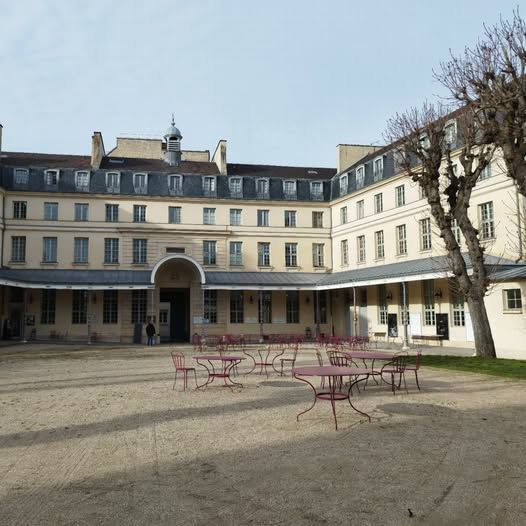
The official Centre Culturel Irlandais of Paris : https://www.centreculturelirlandais.com/
The Paris tourist office on the 5éme arrondissement de Paris: https://parisjetaime.com/eng/article/explore-paris-s-5th-arrondissement-a820
There you go folks, a dandy city to explore and enjoy with the family, Memorable moments in my eternal Paris, driving and walking all over in my road warrior trails brings out sublime awesome spots with nice memorable family visits of yesteryear always remember and always looking forward to be back, eventually. Again hope you enjoy the post on curiosities of Paris, part LX !!! as I.
And remember, happy travels, good health, and many cheers to all !!!


I love that you’ve featured the Irish Cultural Centre of Paris – it’s the place to go in Paris for St Patrick’s Day.
LikeLiked by 1 person
And oh so many! Thanks for stopping by Cheers
LikeLiked by 1 person