
As usual lately, digging into my cd rom vault of memories found me pictures on the church , and that led me to do this post for you and me. The town of Gisors is located in the Eure department 27, in the Normandie region of my belle France. It sits on the edge of the French Vexin region, bordering the Oise department 60, its architectural heritage bears witness to the bitter struggle between the Capetian and Plantagenet rulers during part of the Middle Ages. Therefore, this is my take on the Church Saint-Gervais et Saint-Protais of Gisors !!! Hope you enjoy this post as I.
The Church Saint-Gervais et Saint-Protais has a powerful western façade, blending Gothic and Renaissance styles, is framed by two towers. It features a filigree architecture with a central portal in the form of a triumphal arch. It alternates between the Doric and Ionic monumental orders in a profusion of sculptures evoking the Baroque style. The north façade of the transept still features finely carved wooden doors, which remain the earliest examples of the use of Renaissance motifs in the church. Its oldest part is the central tower, which rises above the crossing of the transept. It dates from the last quarter of the 12C. The chancel was built during the first half of the 13C in the Île-de-France Gothic style. Between the late 15C and mid-16C, the church was enlarged and partly rebuilt in the Flamboyant Gothic style. The second aisles of the chancel, the pseudo-ambulatory, the chapels at the east end, the transept arms, the nave, its double side aisles, and the tower to the left of the facade date from this period.
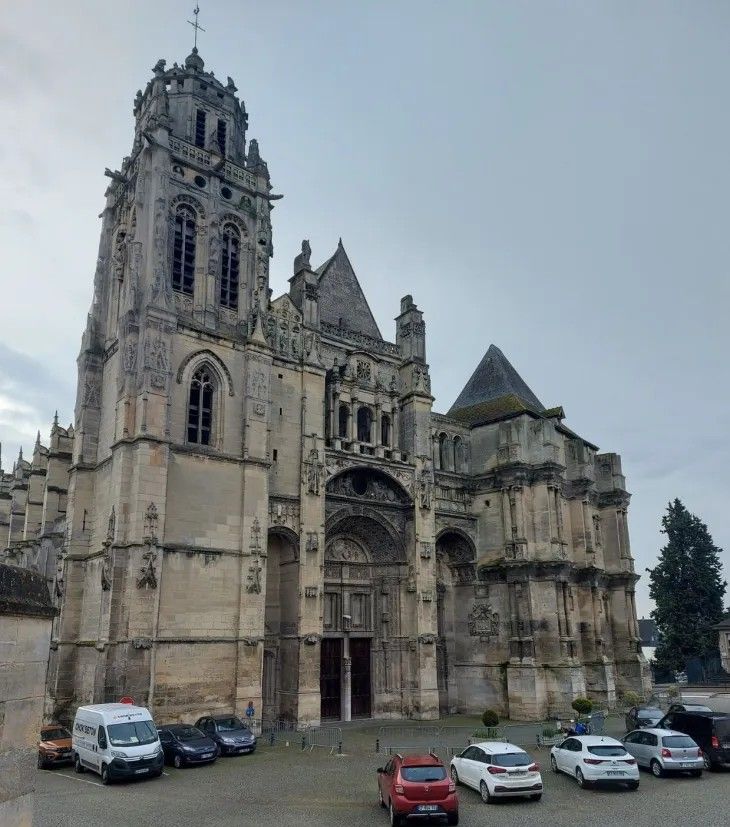
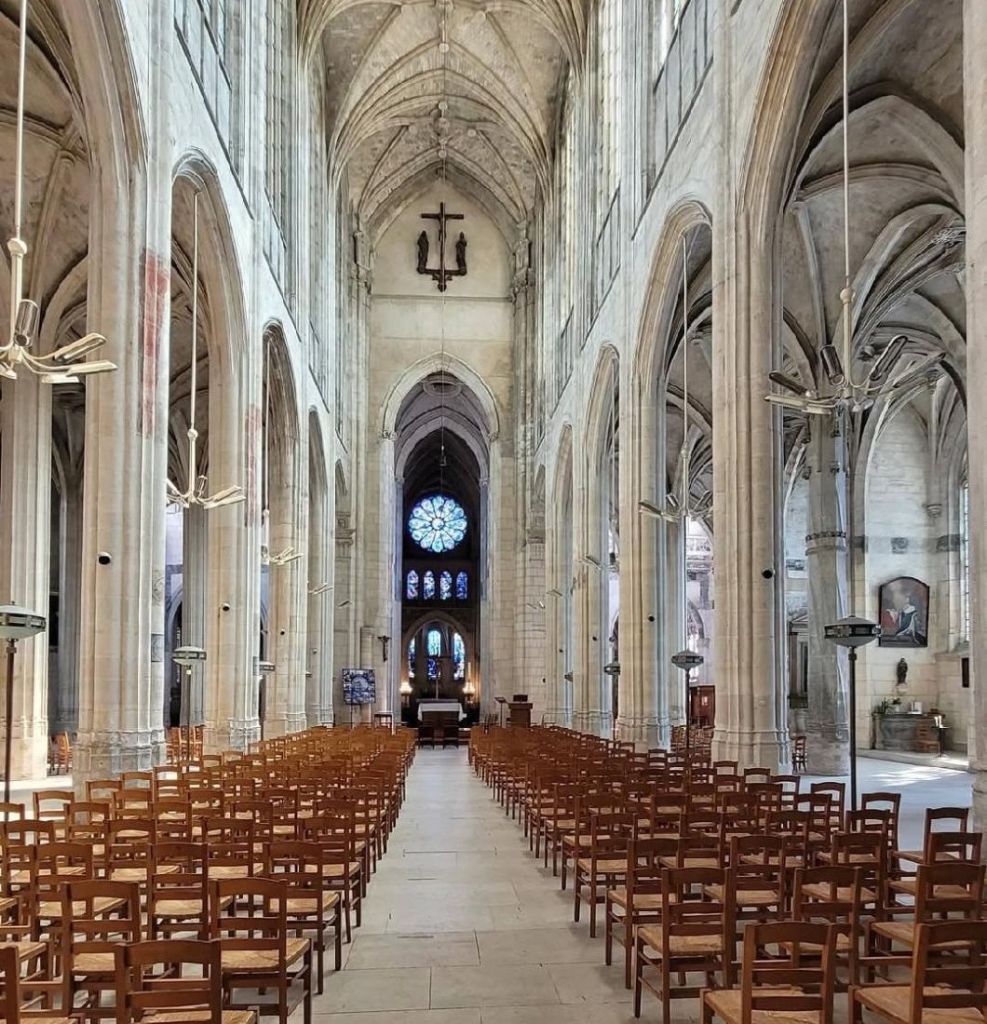
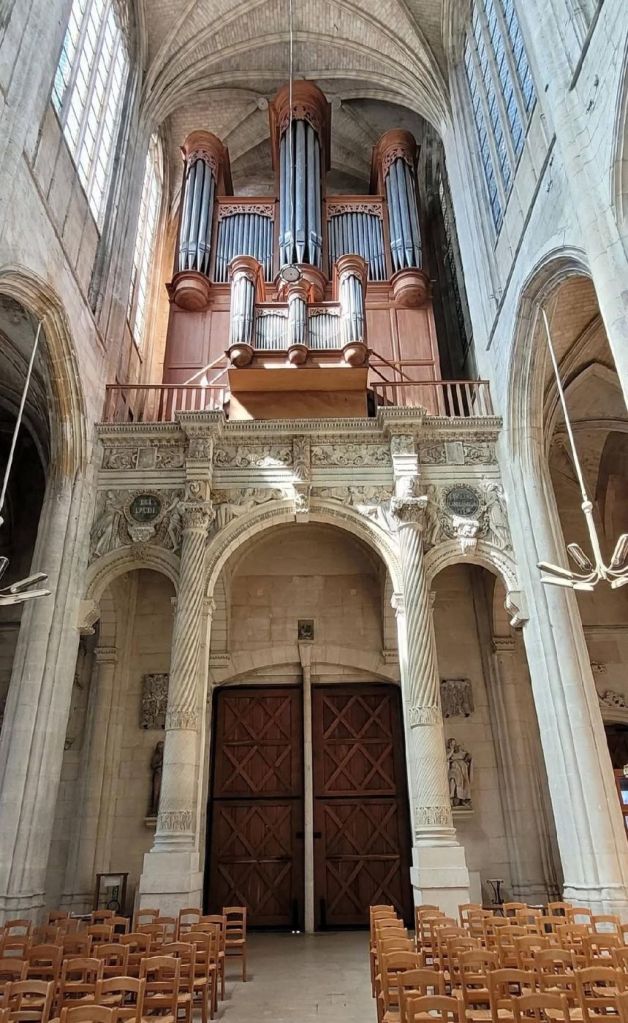
The nave has six bays and is accompanied by double aisles. The entire church is nearly 70 meters long. The height of the nave is 24 meters below the top of the vaults. In the nave, rebuilt from the 15C in the flamboyant Gothic style, we see the disappearance of the triforium. In the aisles of the nave, completed at the beginning of the 16C, we see the Louis XII style. The organ is a post-classical instrument still imbued with the style of the 18C, with some pre-Romantic influences.
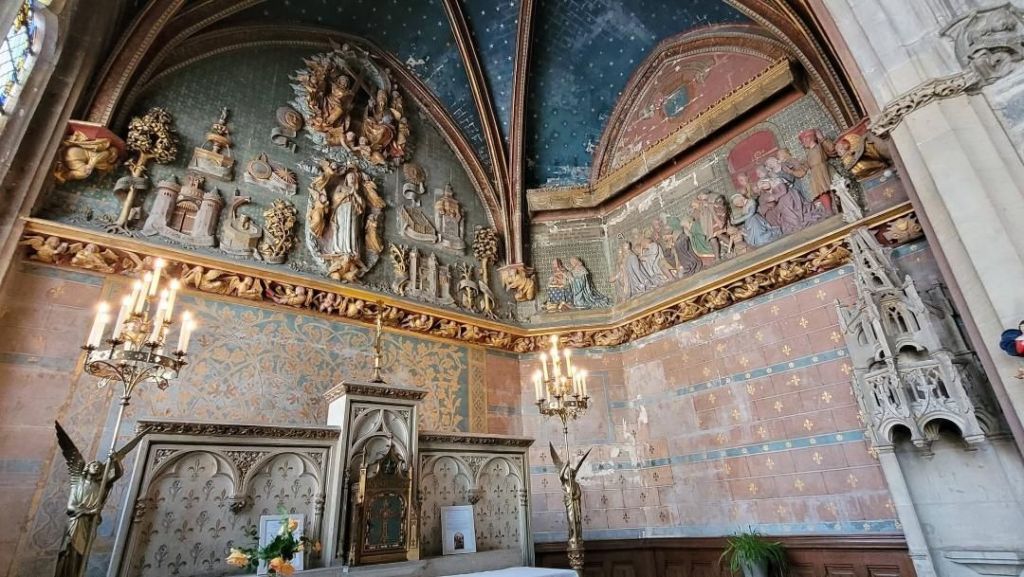
The side chapels have large bays with stained glass windows in light tones. In the south aisle of the nave, there are three beautiful sculpted pillars: the pillar of the dolphins marked with fleurs-de-lis and the dolphin, symbol of the King of France Saint Louis, the pillar of Saint-Jacques (Santiago) with shells connected by a cord and the pillar of Saint-Claude representing the work of the tanners and the life of the saint. In the south aisle, in the Chapel of Saint Cler, a transi statue sculpted in high relief is set into the wall. Dated 1530, in the southern part of the choir, the Chapel of the Virgin features a grisaille stained-glass window depicting the Life of the Virgin. The Chapel of the Assumption,(see pic) dedicated to the Virgin Mary, was built by a royal confraternity established in 1360 by Charles V. A large bas-relief, painted in vibrant colors of blue background and golden fleurs-de-lis depicts the King and Queen, followed by the three estates in procession: nobility, clergy, and commoners. To the south is the Chapel of the Virgin, which houses a Mannerist-style stained-glass window dated 1545. In the third chapel on the north side of the nave, a beautiful stained-glass window dedicated to Saints Crispin and Crispinian is still visible. It was created in 1530,
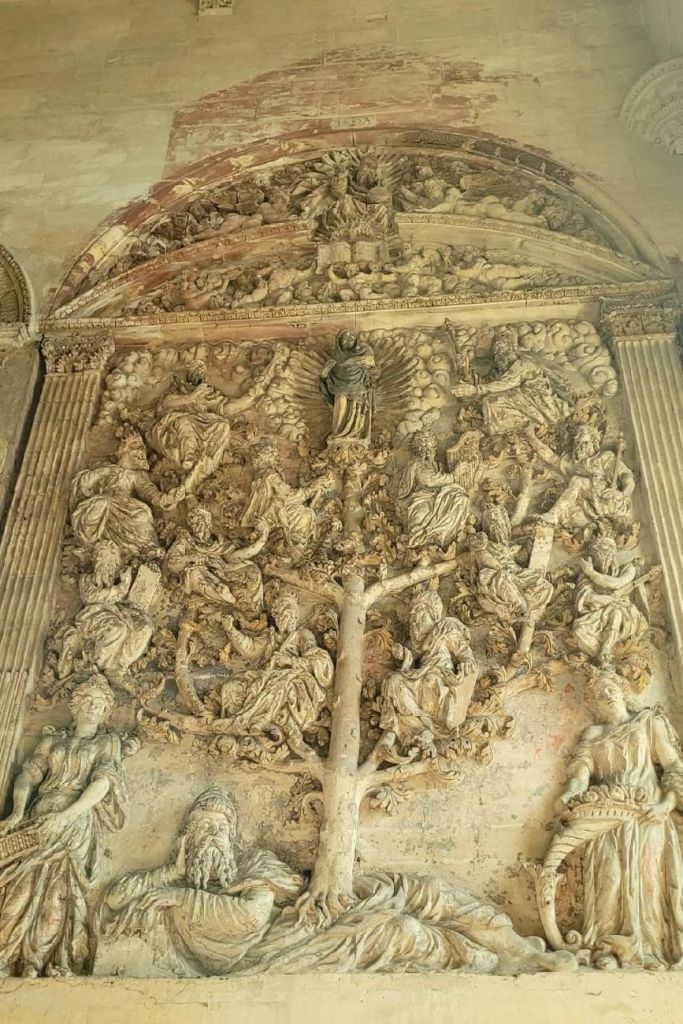
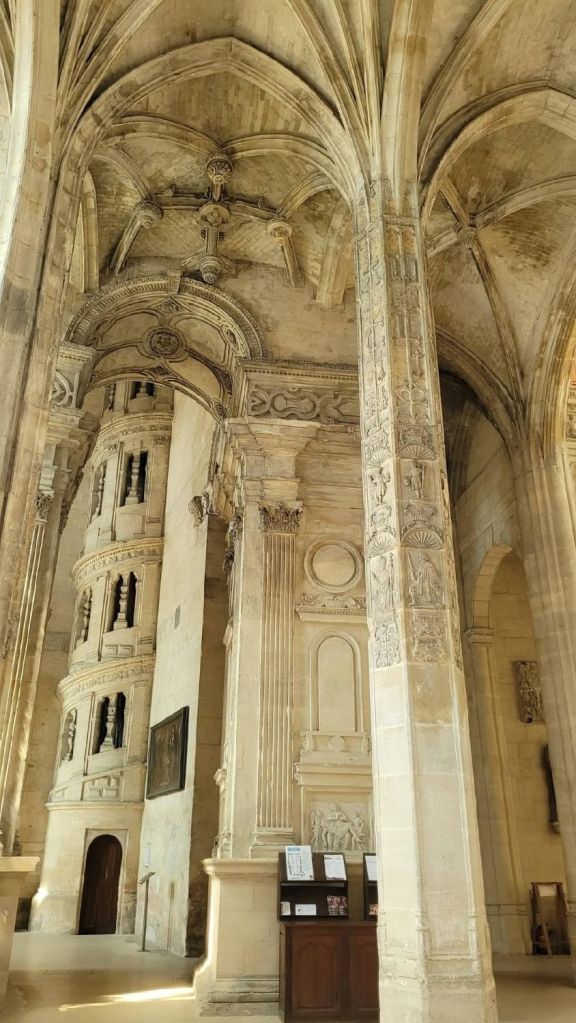
The base of the Grosse Tour, also called the Rosary tower, presents a superb Tree of Jesse in bas-relief, bearing the date of 1593, evoking the genealogy of the ancestors of Jesus Christ. A spiral staircase in the Renaissance style provides access to the organs. Its oldest part is the central tower, which rises above the transept crossing. It dates from the last quarter of the 12C. The choir was built during the first half of the 13C in the Gothic style of the Île-de-France region. Between the late 15C and mid-16C, the church was enlarged and partially rebuilt in the Flamboyant Gothic style. The second aisles of the choir, the pseudo-ambulatory, the chevet chapels, the transept crossings, the nave, its double aisles, and the tower to the left of the façade date from this period.
A bit of history I like tell us that the Church Saint-Gervais-Saint-Protais barely consecrated in 1119 by Pope Callistus II, the sanctuary suffered the fire that destroyed the city in 1124. However, reconstruction work on the ravaged nave only began under Louis VII the Younger around 1160. Thanks to funding from Queen Blanche of Castile, a Gothic choir was finally consecrated in 1249.
The town of Gisors on the church: https://www.ville-gisors.fr/l-eglise
The local Vexin Normand tourist office on the church in Gisors : https://en.vexin-normand-tourisme.com/discover/visit-gisors/gisors-church/
The Eure dept 28 tourist office on the church: https://www.eureka-attractivite.fr/patrimoine-culturel/eglise-saint-gervais-saint-protais-de-gisors-pcunor0271000044/
The Normandie region tourist office on the church: https://www.normandie-tourisme.fr/sites-lieux-de-visites/eglise-saint-gervais-saint-protais-de-gisors/
There you go folks, another quant off the beaten path trip in my old backyard. Oh yes there is more to see an ever ending source of wonderful architecture and history in my belle France, I am working on it ! Gisors is nice and walking its main streets is a delight. Again, hope you enjoy the post on the Church Saint Gervais et Saint Protais of Gisors !!! as I.
And remember, happy travels, good health, and many cheers to all !!!


