
The village of Priego is located in the province of Cuenca, in the autonomous community of Castilla-La Mancha, and in the kingdom of Spain. With a population of 925 inhabitants (INE 2024), it is located in the area of the Alcarria Conquense, on the border from where you access the Serranía de Cuenca (see post). Many memorable moments over the years when came with my dear late wife Martine ! Therefore, here is my take on this is Priego !!! Hope you enjoy the post as I.
The presence of two imposing mountains, the Rodenal and Valseco mountain ranges the latter known as La Degollá which rise above 1,200 meters. Between them runs the Escabas river, which descends its mountain waters from the El Hosquillo Natural Park and makes its way to the Alcarria through the Strait of Priego, a gorge with high limestone walls that serves as home to a large community of griffon vultures and where Bonelli’s eagles also nest, among many other species. The village of Priego is 56 km Cuenca, 57 km from Las Majadas, 78 km from Molina de Aragon, 159 km from Madrid, and 1180 km from my current home, We came from our rental house in Las Majadas, coming down from 1400 meters on the CUV 9113 road to Villalba de la Sierra (see post), then going back up on the CUV 9114 road dir Portilla, Arcos de la Sierra ,Castillejo Sierra, Fresneda de la Sierra, connects with the CUV 9116 road to La Frontera, to connect with the CM 210 to Cañamares, to connect with the CM 2023, to Priego, FYI these are high mountain roads and do not look down ,,,,,but what a thrill of the road warrior was and always looking forward to be back,eventually,
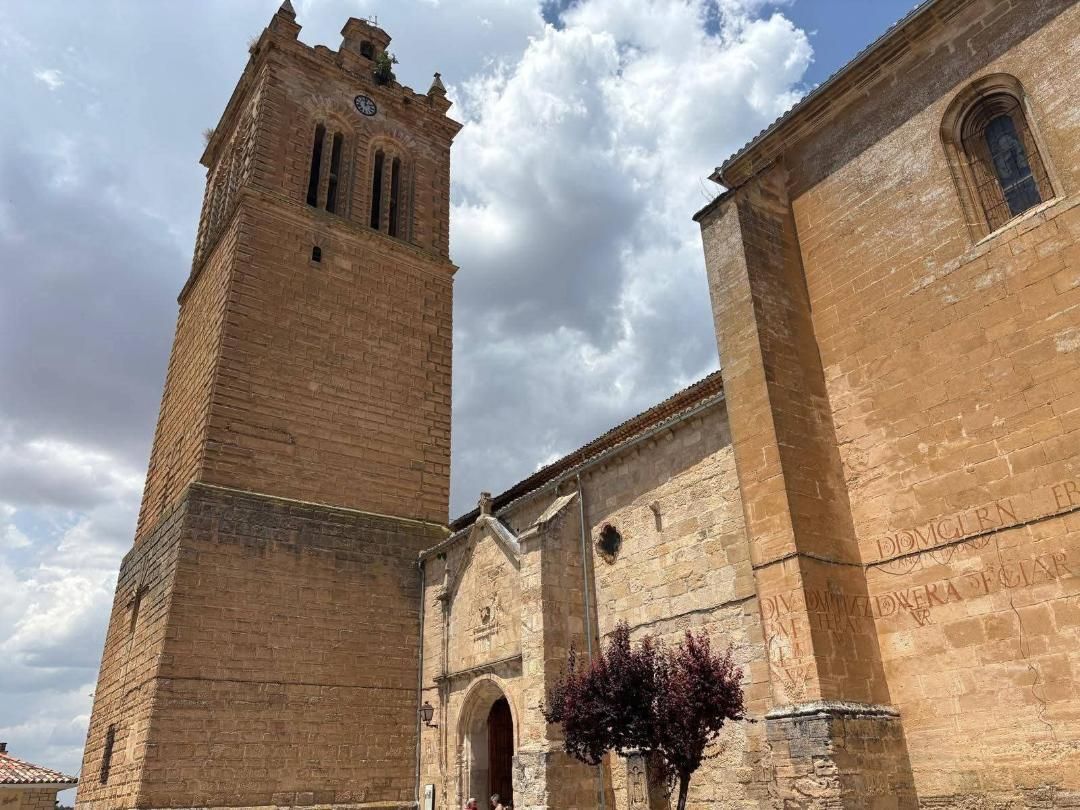
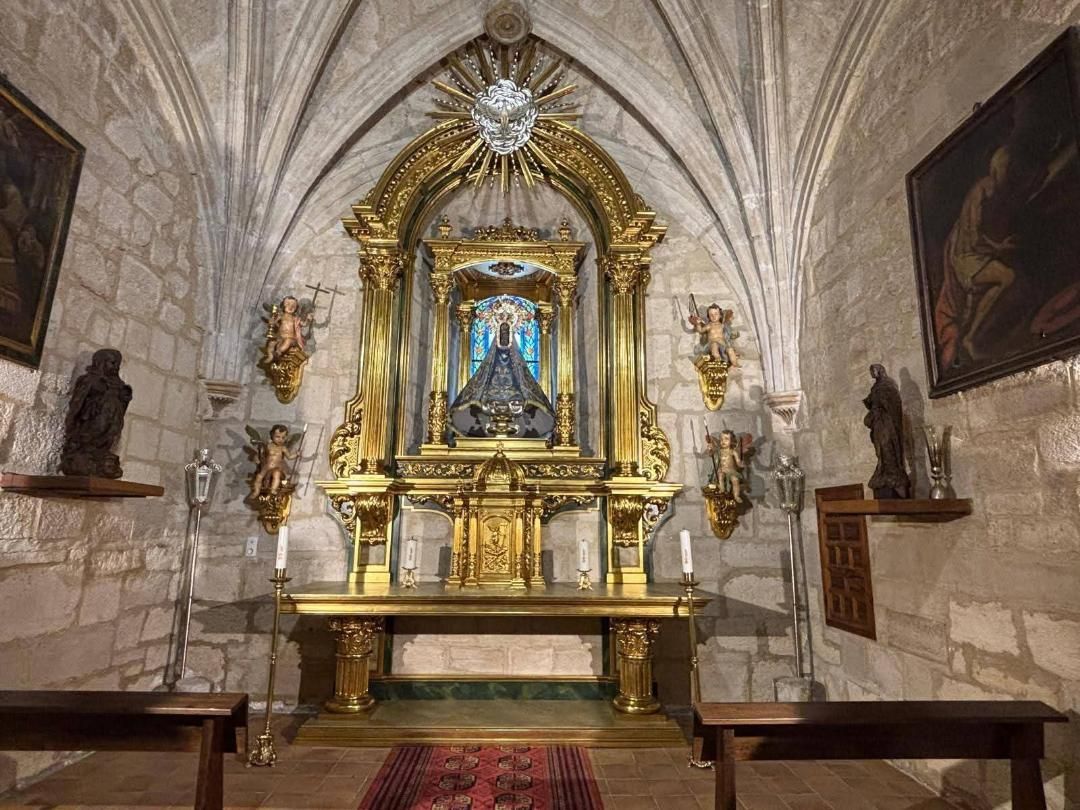
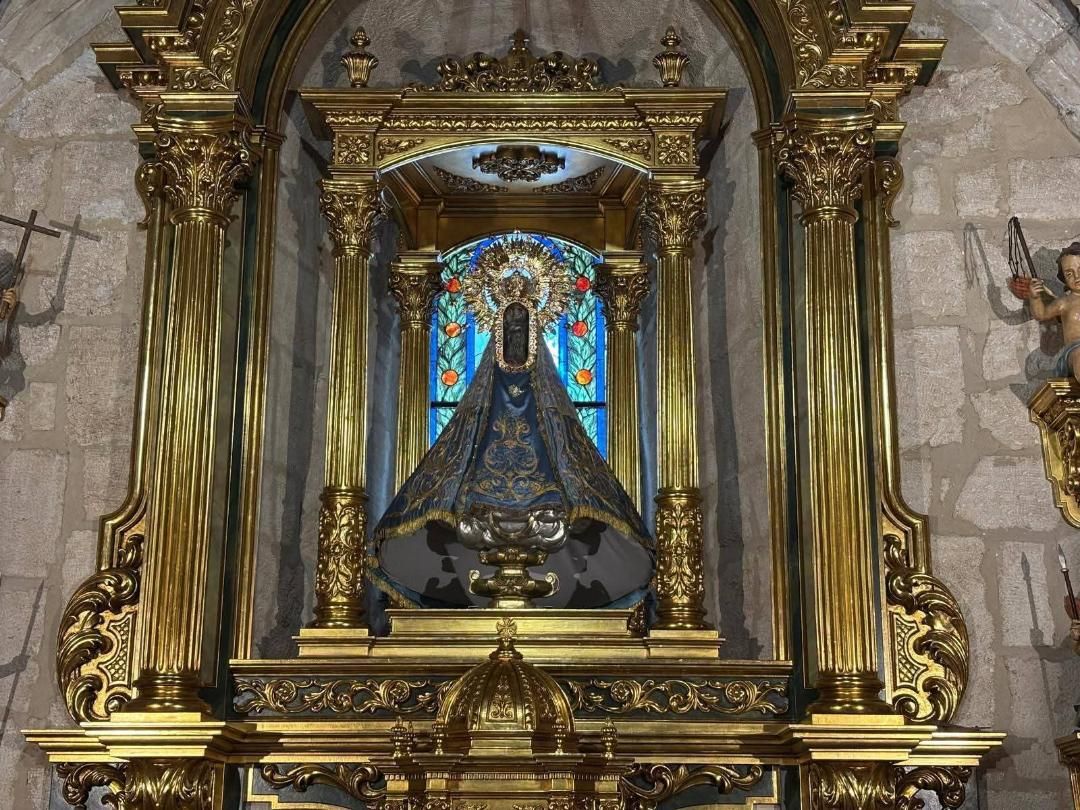
The Church of San Nicolás de Bari, late Gothic from the 16C. It was inaugurated on Saint John’s day in 1541. Inside it has enormous pillars that support the complex ribbed vaults of each of the three naves in which it is structured. The impressive square tower is later, from 1562, in Renaissance style with Florentine padding. It rises to more than 30 meters in height and has a perfect prismatic shape. At the top of the tower are the clock and the bell tower, visible from all over the town. The church had to be rebuilt after a fire that caused significant material damage in 1839 during the Carlist Wars. The main altarpiece burned down in the Spanish Civil War and the current one is from 1991, in neoclassical style. This altarpiece was made to house the images that were in the Convent of San Miguel. The side altarpieces of “La Dolorosa” (1991) and “San Nicolás” (1995) are also neoclassical in style and house Baroque sculptures dating from around 1770. The three naves lead into the transept, where three imposing altarpieces stand decorated with paintings and sculptures, including 8 wooden carvings 1650, and 14 canvases. At the base of the tower is the Chapel of the Virgen de la Torre, patron saint of the town. It is a carving barely 15 cm in size that, according to tradition, was found by those who excavated the foundations of the tower. Some of the oldest pictorial and architectural works kept in the parish of Priego are on display in its chapel.
The Plaza de los Condes de Priego is a rectangular square dominated by the façade of the Palace of the Counts or Condes on the shorter side and a series of two- to three-story houses on the longer sides. The 18C decorated facades stand out on the eastern side, with Baroque doorways and plant-like murals.
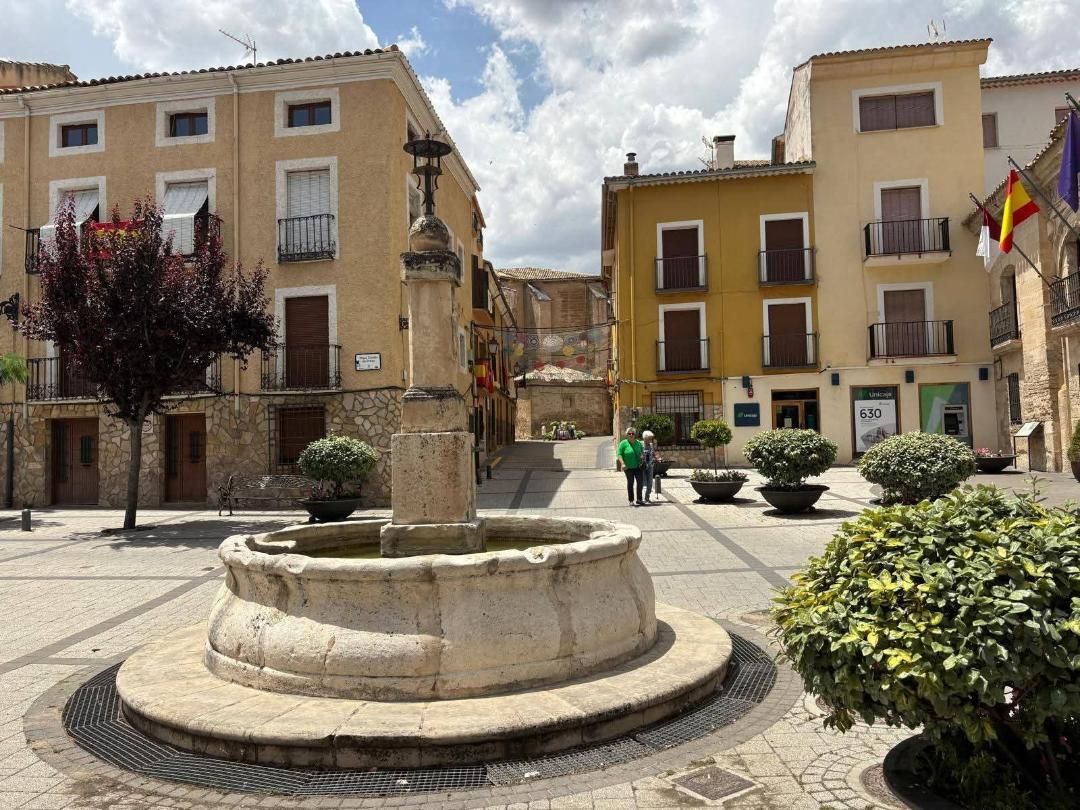
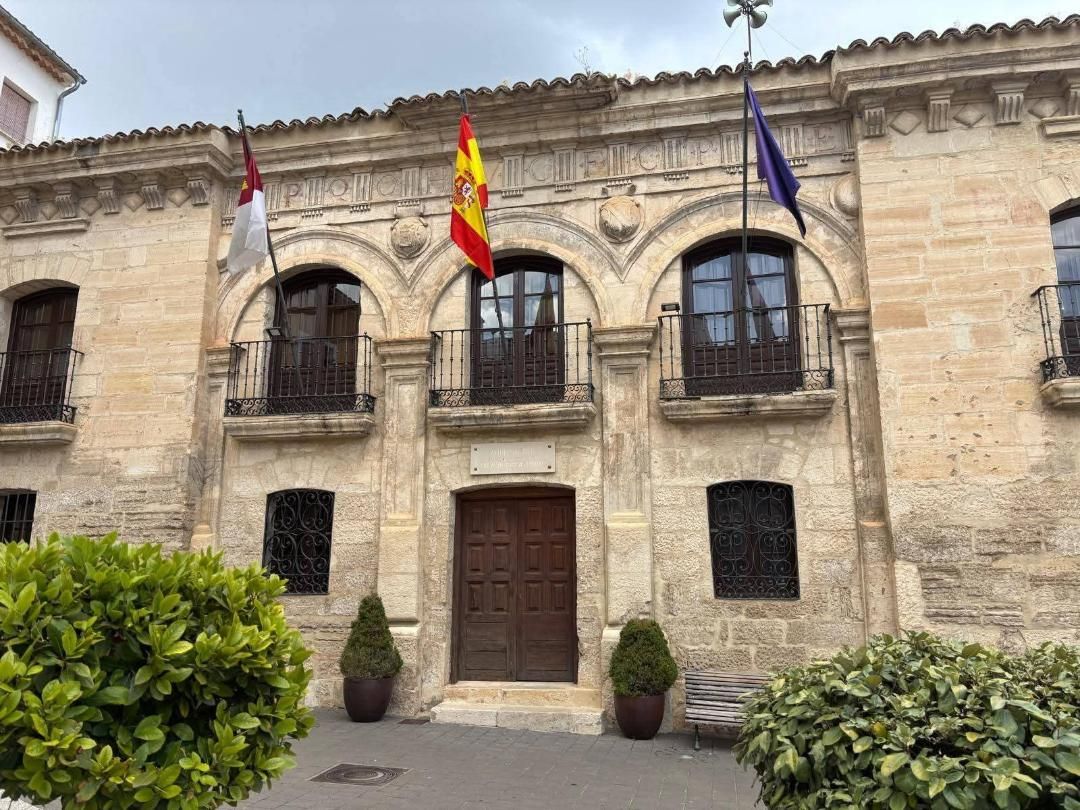
The ayuntamiento or City/town hall, or palace of the Condes de Priego, is today, the seat of the Town Council. It is located in the town’s main square, the Plaza de los Condes de Priego, to whom it once belonged. The 16C building is in the Renaissance style and is characterized by its sober and elegant decoration. Its notable features include windows with segmental arches and classicist pediments, on which several inscriptions were carved about the origin of the construction, commissioned by Fernando Carrillo de Mendoza y Villarreal, sixth Count of Priego, in 1553.
Other things to see here are ( a lot for a small village!) : The Convento del Rosal Convent, a Conceptionist convent built in 1525 on the initiative of Diego Carrillo de Mendoza, parish priest of Zaorejas and precentor of the cathedral of Cuenca, and brother of Luis Carrillo de Mendoza, VII Count of Priego. It is located 2 km from Priego, next to the road that leads to Alcantud. Of it, the Gothic church that was part of a much larger convent that stood until the beginning of the 20C is preserved, although in a state of ruin. The arches of what was the cloister of the convent also remain, Originally, the Rosal Convent was occupied by the Order of the Franciscan Conceptionist Sisters The legend that the people of Priego know and tell says that the image of the Virgin appeared in this convent next to a rosebush that was in the entrance courtyard. The plant, they say, always remained green, even in the cold winter months. The convent of San Miguel de la Victoria is located 3 km from Priego, on the slopes of Mount Rodenal. The convent that stands today was built between 1772 and 1777 after a rockfall destroyed part of another convent located a few meters away and inhabited by Discalced Franciscans. This one came earlier, founded in 1577 by Fernando Carrillo de Mendoza, Count of Priego who participated in the Battle of Lepanto and chief steward to Juan de Austria. The count swore that if he and his children returned from the war alive, he would order the construction of a convent, which eventually happened. The Franciscan monks lived in this new building until 1808, when the French invasion forced them to leave. At the end of the Peninsular War, the monks returned. However, their stay was brief, as they had to abandon the convent when the general exclaustration was decreed, and the building was auctioned off. Since no one bought it, in 1851 it was awarded to the Cuenca Missionary Association, which used it as an educational center for missionaries heading to the Holy Land. When this service moved to Santiago de Compostela in 1887, the convent became a Latin and humanities school belonging to the Cuenca Seminary. Later, the school closed, and San Miguel de la Victoria became a nursing home. The Despeñaperros Tower is the only remaining vestige of the Arab fortress in the town. It has a prismatic shape and is very deteriorated. The lower part does not communicate with the upper part; to go up there was an external staircase, so that when the enemy came with the battering ram, the inhabitants were safe at the top. There were at least two more towers, of which a small stretch of wall remains. In the lower part of the tower is the so-called “Cave of the Moor,” related to a 13C legend. According to this legend, the cave was the dwelling of a young Muslim princess, Zobeya, who was turned into a snake by sorceresses on the orders of the Christian lord of the castle, upon learning of her love for his son. According to tradition, anyone who dared to enter the cave to see Zobeya was turned to stone. The tower welcomes visitors arriving in the town from Cuenca and Madrid. It is located opposite Luis Ocaña Park. The Liende Bridge is reached from the town by going down a paved road that barely runs for 1 km before reaching it. Documentation found in the National Historical Archive places the origin of the bridge in the 16C, when Charles V, according to a royal provision written in 1548 . The bridge consists of a single arch that completely crosses the river, on which it stands to a height of 8 meters. The Museum of Ethnography and Popular Arts located on Calle de la Cruz, in a building from 1690 that was the home of a commissioner of the Inquisition. Its ashlar façade is presided over by a beautiful Baroque coat of arms that indicates its noble origins. It consists of a lobby and four rooms with permanent exhibitions that remind us of Priego’s ancient trades and bring us back in time. The exhibitions include: Pottery; Wool and Blankets; Crocheters; and Wicker. In the lobby, we can enjoy a photographic exhibition of old prints of everyday life in Priego, many of them from the first quarter of the 20C.
A bit of history I like tell us that the Lordship of Priego has been held since 1298 by the Carrillo family by privilege of Ferdinand IV to Alonso Ruiz Carrillo, first Lord of Priego and descendant of Garci Gómez Carrillo. The title of Counts of Priego was granted by Henry IV of Castile to Diego Hurtado de Mendoza, husband of Teresa Carrillo, VI Lady of the town of Priego, in 1465. Since then, the Carrillo lineage changed its surname to Carrillo de Mendoza. The matrimonial alliance between the two allowed them to extend their family heritage and their manorial domain over lands in Guadalajara and Molina de Aragón (see posts), including manorial rights over various trades and incomes in Guadalajara city. Priego obtained the title of city in 1440 from King John II of Castile, father of Isabel I, the Catholic. The seventh Count of Priego, Fernando Carrillo de Mendoza y Villarreal, was ambassador of King Philip II in Portugal, as well as chief steward of John of Austria during his minority.
The Castilla La Mancha regional tourist office on Priego : https://en.www.turismocastillalamancha.es/patrimonio/priego-40531/descripcion/
The village of Priego on its heritage : https://priego.dipucuenca.es/index.php/layout/layout-three
There you go folks, the enormous memorable sentimental road warrior trail in my province of Cuenca and Priego. This is as said an off the beaten path site but worth the detour, me think, Again, hope you enjoy the post on this is Priego !!! as I
And remember, happy travels, good health, and many cheers to all !!!


