
I came across several pictures in my laberynth cd roms vault that should be in my blog for you and me. The tour of Castilla La Mancha is very sentimental and always will remain so, just see the posts. I came upon Alcalà del Jùcar on my road warrior trails and glad have pictures to show the town in my blog, I like again to thank you for reading me over these last 15 years! Therefore, this is my take on this is Alcalà del Jùcar !!! Hope you enjoy the post as I.
The village of Alcalá del Júcar is located in the province of Albacete, within the autonomous community of Castilla-La Mancha of my dear Spain. Its population is 1,148 (INE, 2022). It is 54 km from Albacete, 126 km from Valencia, 135 km from Cuenca, and 288 km from Madrid. We came from the old castle of Cuenca passing old City center and getting on the N320a which becomes the local CM220 going thru glorious local scenes dir Almodovar del Pinar (see post) where it becomes the CM211 road more rural scenery passing Puebla del Salvador dir Minglanilla for a short ride on the N3 road to connect with the local CM3201 road and you go underneath the A3 Autovia del Este (Madrid-Valencia) , continue on the CM3201 dir Alcahozo continue passing Villamalea ,and go around Casas Ibañez and continue on the CM3201 road go thru the village of Las Eras and continue same road to the castle of Alcalà del Jùcar ! Sublime ride we love it !
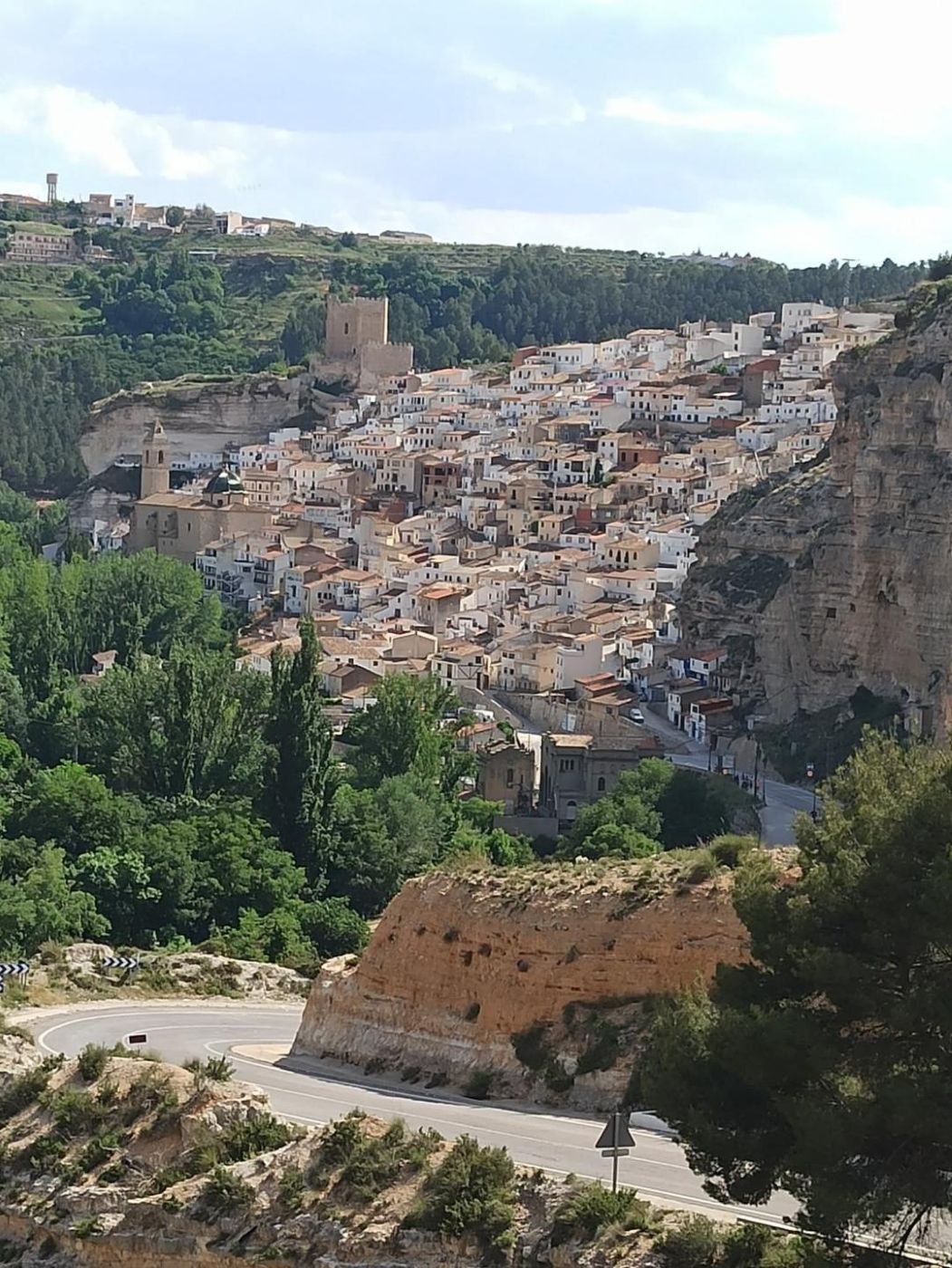
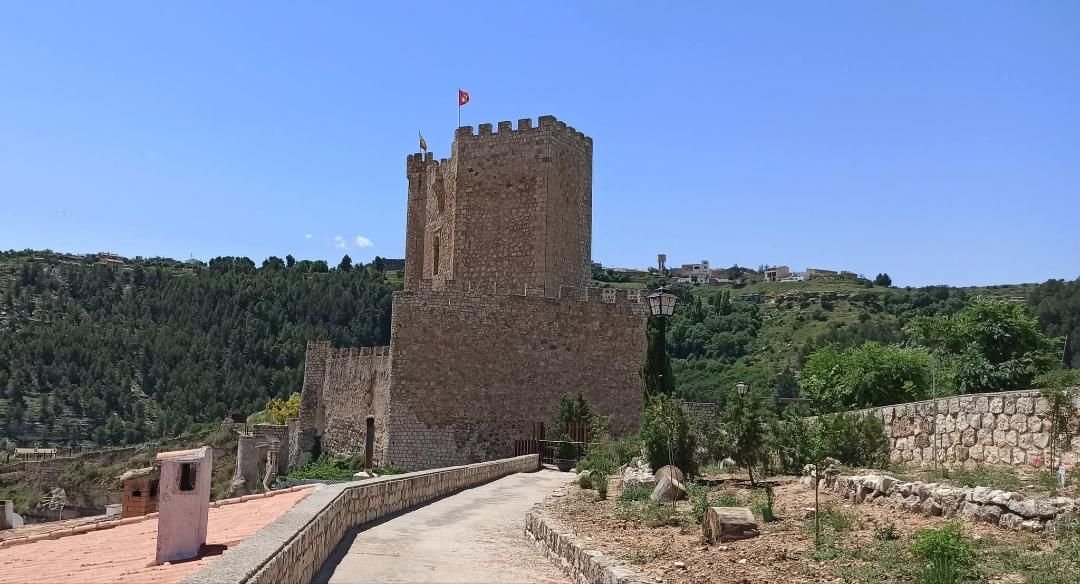
The castillo or castle was built by the Almohads between the 12C and 13C and is located on a rock formed by the gorge of the Júcar River, from where the entire town can be seen. An imposing defensive tower from the Almohad period, built at the same time as the rest. In its day it was built to be an impregnable fortress, however Alfonso VIII of Castile, in 1213, finally recovered it for his crown. It is a good example of Islamic architecture although it has undergone some renovations later, such as that of the tower. This element as we know it today has a pentagonal shape with two small circular towers, arranged in three levels and is the work of Juan Pacheco in the 15C. Remains of an ancient wall surround the fortress. Its spectacular location and large pentagonal tower, the result of medieval reforms, are noteworthy.
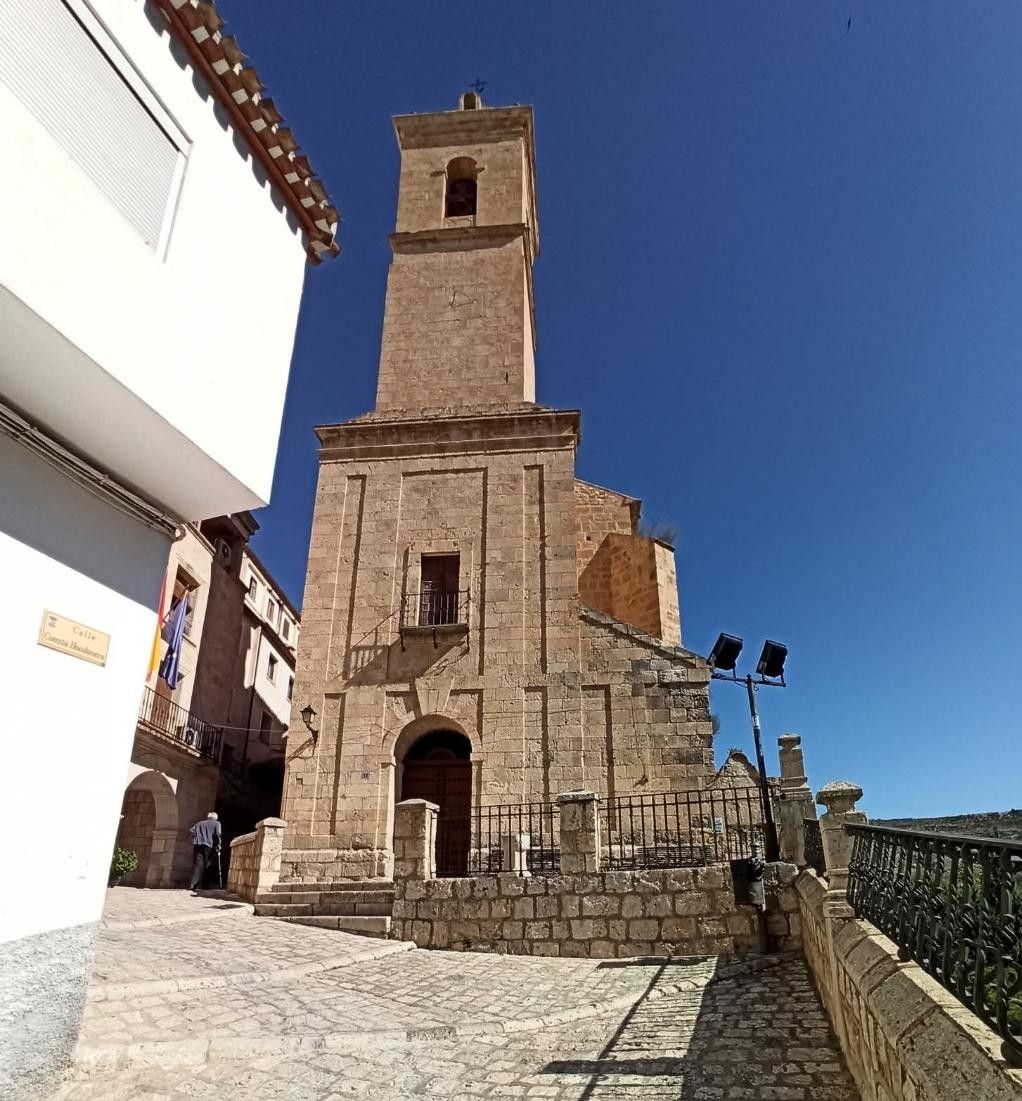
The Church San Andrés, along with the castle, is the first building visitors encounter upon arriving in Alcalá del Júcar. The church appears imposing upon cresting the steep Hondonera slope, once they have crossed the Puente Romano or Roman bridge that crosses the Júcar River. These three elements, the church, the Roman bridge, and the Júcar river make up one of the most beautiful views of Alcalá del Júcar. There are two gateways crowned by semicircular arches: the main gateway that opens onto the Hondonera slope and where we find the parapet, a small esplanade with benches and a fountain, and the side gateway that opens onto Calle del Pósito, where the current City/Town Hall is also located. The church has a Latin cross, that is, a central nave and a transept. The naves that make up the church are covered with barrel vaults. The internal reinforcements consist of a series of transverse arches, and the external reinforcements consist of thick walls and buttresses. The bell tower’s 70-meter !
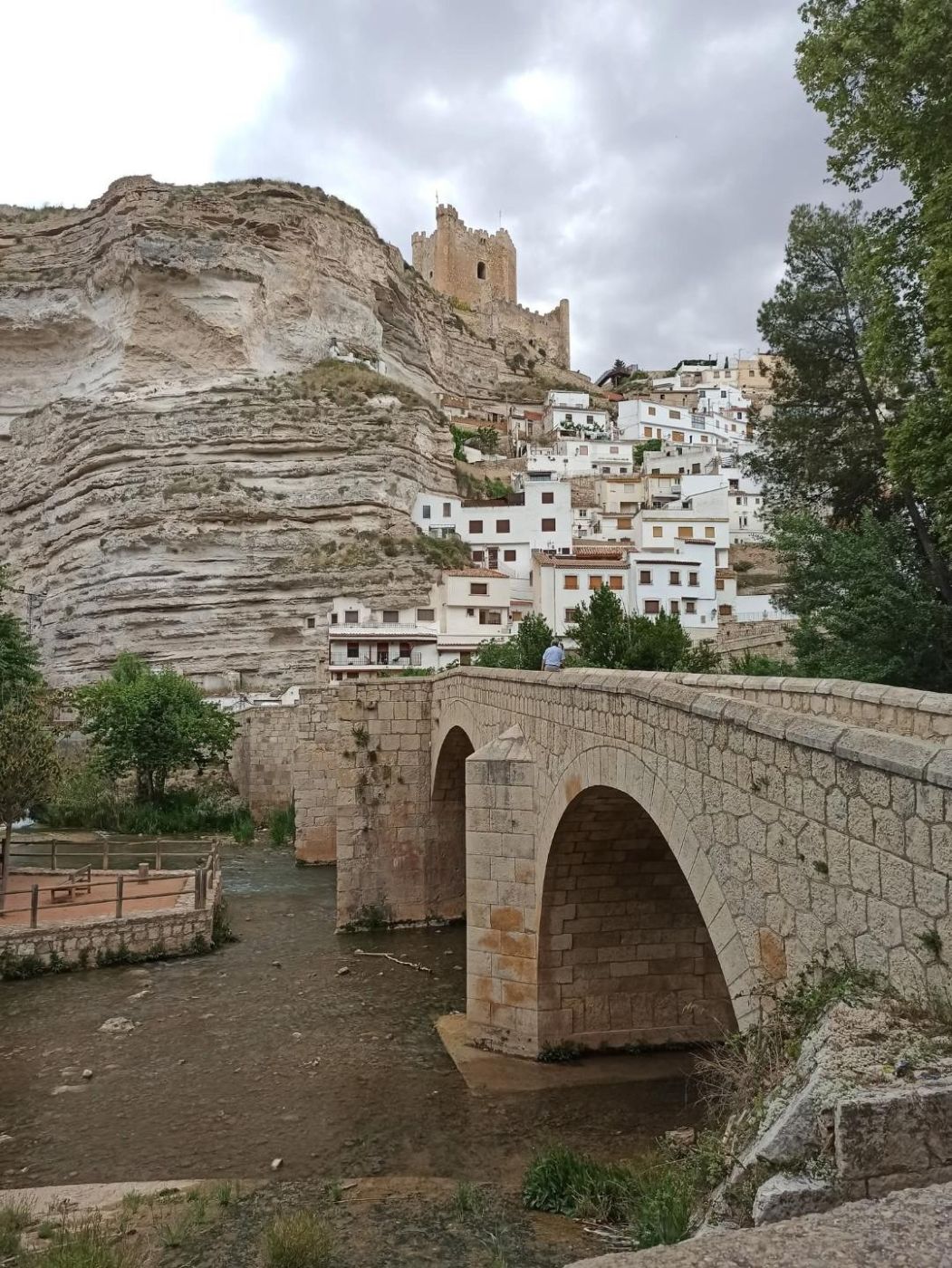
The Puente Romano or Roman bridge, called “Roman” because of its appearance, not because of its origin, style, or architectural requirements. During the 14-15C, the Roman bridge gained great importance, becoming a dry port or customs post on the so-called Royal Road from Castile to Levante in the 14-15C. The Júcar river forced its restoration at various times. The most recent took place in 1990. The bridge was rebuilt in the 18C and allows us to access the eclectic Parish Church of San Andres.
Other things to see here, me think with more time are the so-called Cueva del Diablo or Devil’s Cave. Today, used as a bar, restaurant, and nightclub, this cave runs through the entire hill. You enter on one side and can have a beer on the other. The decor is truly unusual. It’s best to see it for yourself because it’s spectacular. I entered the Devil’s Cave, but from what I understand, you can explore the tunnels of the Masagó and Duende Caves (also used as a bar and restaurant) or the Garadén Cave. The town’s old cinema is a beautiful building now converted into an exhibition space. It preserves several rows of seats, the projector, the bar counter, and a host of other objects, serving as an ethnographic museum. It’s owned by Juan “El Diablo,” and a visit to the caves is included with the entrance fee. The Plaza de Toros or bullring, one of the oldest bullrings in Spain. The uneven terrain itself is what has led to this completely irregular and unique construction. The miradores or viewpoints of Alcalá del Júcar have an excellent vantage point on the road that leads to the hamlet of Las Eras. Between curves and always ascending, you will find various lay-bys from which to obtain fantastic panoramic views. The mirador of Alcalá del Júcar is located at the foot of the CM-3201 road, within the Barranco de la Noguera and a few meters from reaching the town, is one of the most complete and overwhelming.
A bit of history tell us that in 1211, a lightning expedition by King Alfonso VIII managed to seize the strongholds of Garadén, Jorquera and Alcalá from the Muslims for the Crown of Castile, effectively ensuring their domination two years later when the victory over the Almohads at Navas de Tolosa (1212) and Alcaraz (1213) broke all Arab defences and left all the lands of La Mancha and the current province of Albacete free for repopulation. Its name, of Arabic origin, Al-ka-la (castle), shows the military character of this village in the heart of a rural landscape. We only have written information about it since its conquest by Alfonso VIII of Castile in 1213. Like other strongholds of the Marquisate of Villena, its peak was in the 15C, when its lords were the great protagonists of the noble struggles of Castile. Initially, Alcalá was a village of Jorquera, until April 18, 1364, the king of Castile Pedro I the Cruel, signed a document in the Grao de Valencia, granting Alcalá del Júcar the status of town and segregation with respect to Jorquera, with the assignment of the Fuero de las Leyes, municipal ordinance and other rights. It belonged to the Kingdom of Murcia, within the Crown of Castile, until the new territorial configuration of Spain by the minister Javier de Burgos in 1833, when the province of Albacete was created. Likewise, its membership in the episcopal demarcation would correspond to the diocese of Cartagena until the creation of that of Albacete in 1949. At the end of the 20C, the dissemination of the different Ways of Saint James (Santiago) that run through the province of Albacete, including the Wool Route, became very important. This route connects the cities of Alicante with Burgos, where it joins the French Way, and runs through the province of Albacete from Almansa to Villamalea, also passing through the villages of Bonete, Alpera, Alatoz, Alcalá del Júcar and Casas-Ibáñez. It has been listed as One of the Most Beautiful Villages in Spain since 2014 and has since then belonged to the association of the same name.
The village of Alcalà del Jùcar on its heritage : https://alcaladeljucar.net/que-visitar/
The Castilla La Mancha regional tourist office on Alcalà del Jùcar : https://www.turismocastillalamancha.es/es/destinos/encanto-rural/albacete/alcala-del-jucar
The Province of Albacete tourist office on its heritage : https://www.turismoenalbacete.com/es/26/7/0/21/Alcala-del-Jucar.html
There you go folks, a wonderful deep town in the wonderful Castilla La Mancha region, this is quant, architecturally and historical Alcalà del Jùcar. Again, hope you enjoy the post on this is Alcalà del Jùcar !!! as I.
And remember, happy travels, good health, and many cheers to all !!!

 Paris1972-Versailles2003
Such a wonderful post that I have added it to my trip planning in Spain draft. One small note: your first two outside links don’t work, the last one https://www.turismoenalbacete.com/es/26/7/0/21/Alcala-del-Jucar.html does…
LikeLiked by 1 person
Thanks for letting me know. Will check soonest. Cheers
LikeLike
ok thanks again. They change these sites but now updated. Thanks for stopping by Cheers
LikeLike