
I am back to my eternal Paris, oh well yes indeed. If someone invented the idea of a city then it definitively should have taken Paris as a model. We are at the museums, well my weak spot ! I am doing this post from my findings in my cd rom vault that should be in my blog for you and me. This is a special museum that really needs to be visited more including me. I am glad to have found me this picture as told you below I am donor for many years of a wonderful work indeed. Therefore, here is my take on the Musée Curie of Paris !!! Hope you enjoy the post as I.
The Musée Curie or Curie Museum is located in the heart of the Curie Campus in the Val-de-Grâce quartier or neighborhood of the 5éme district or arrondissement of Paris, It is very near the Panthéon, where Pierre and Marie Curie have been buried since 1995.
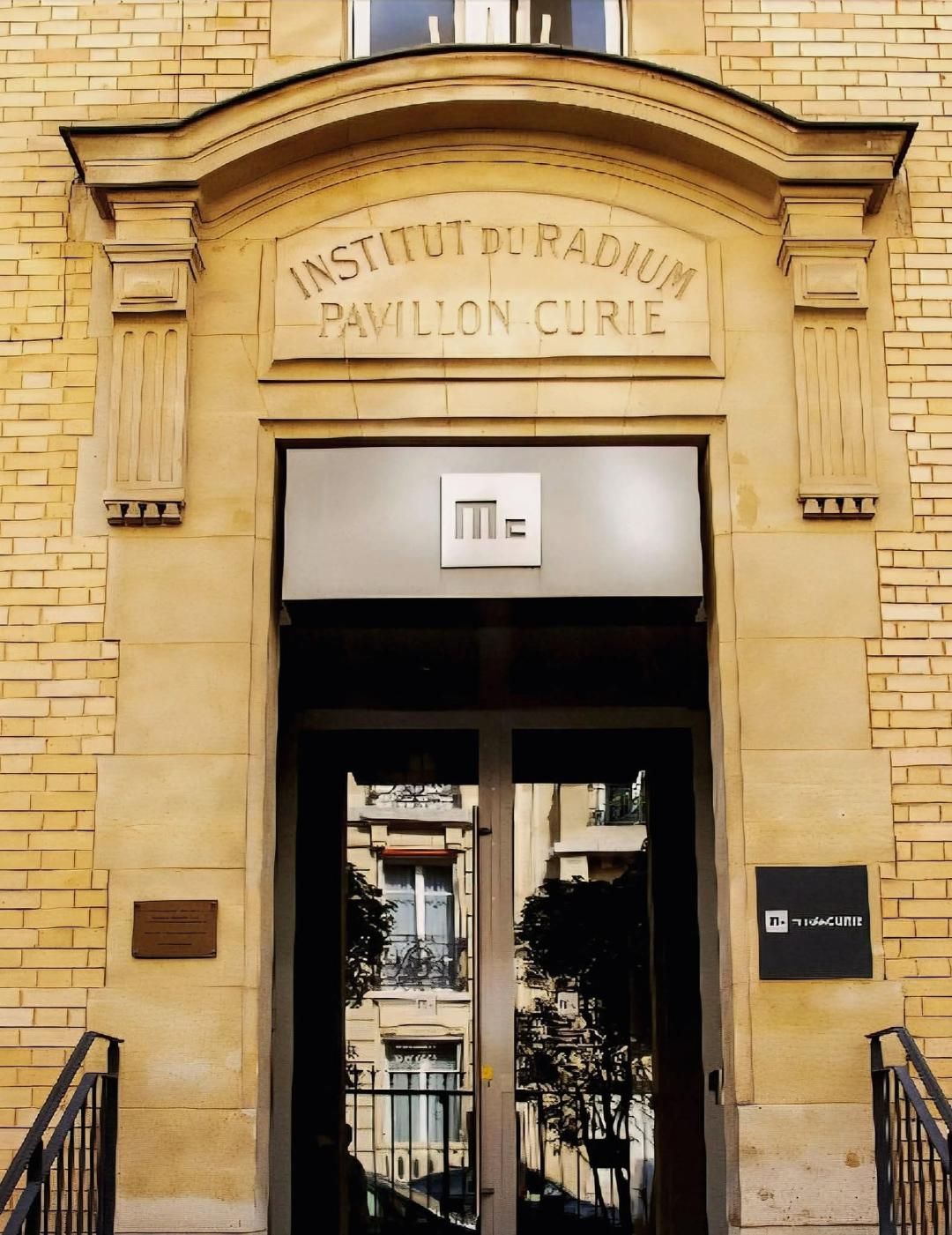
The Curie museum comprises a permanent exhibition space and an archive center, it offers the public the opportunity to discover the history of the discovery of radioactivity and its first medical applications in radiotherapy. This museum, a place of remembrance and knowledge about the history of science, occupies the “Curie Pavilion” and is managed by the CNRS and the Institut Curie,(proud to say I am a donor for many years) which also occupies the neighboring “Pasteur” and “des Sources” pavilions.
The Radium Institute was inaugurated in July 1914, on the eve of the Great War or WWI. It comprises two buildings facing each other. On one side, the Pasteur Pavilion, directed by her friend, Professor Claudius Regaud, which houses a biological research laboratory on the medical applications of radiation, under the supervision of the Institut Pasteur (proud to say I am a donor for many years); on the other, the Curie Pavilion, directed by Marie Curie and housing her laboratory, specialized in the chemical and physical study of radiation, and placed under the supervision of the University of Paris. Today, Marie Curie’s office and her personal chemistry laboratory are preserved. They constitute the historic heart of the museum within the Curie Institute. In 1934, in this same laboratory, Frédéric and Irène Joliot-Curie discovered so-called artificial radioactivity, for which they received the Nobel Prize in Chemistry the following year. After Frédéric Joliot’s death in 1958, the directors of the Curie laboratory decided to preserve the director’s office as it was; An office occupied successively by Marie Curie (1914 to 1934), André Debierne (1935 to 1945), Irène Joliot-Curie (1945 to 1956), and finally by Frédéric Joliot.
The collection of objects, documents, and archives belonging to Marie Curie, André Debierne, Irène, and Frédéric Joliot-Curie was enriched thanks to family donations and the work of the Curie and Joliot-Curie Association. The museum’s collections focus on the history of radioactivity and its early medical applications. The archives center houses numerous documents on the Curie and Joliot-Curie families, as well as their colleagues. The Curie Museum also houses a collection of scientific instruments used at the Radium Institute between 1910 and 1960, as well as unusual objects illustrating the many uses of radioactivity in the early 20C.
This campus Curie is served by RER line B arrêt/stop Gare du Luxembourg station, Metro line 7 of Monge station), and bus line 24 arrêt/stop Musée and Institut Curie stations.
The official Musée Curie : https://musee.curie.fr/
The Paris tourist office on the Curie museum : https://parisjetaime.com/eng/culture/musee-curie-p999
There you go folks, a must while in Paris. This is the wonderful Musée Curie is a wonderful off the beaten path jewel of my eternal Paris, It will take more than a post to tell you all about museums, but working on it. Again, hope you enjoy this post on the musée Curie of Paris !!! as I.
And remember, happy travels, good health and many cheers to all !!!


