
Let me take you to an off the beaten path town of my belle France that is so close to popular places just needed to stop by in my road warrior trails, Happy to have found me pictures in my cd rom vault to show in my blog for you and me, Therefore, here is my take on this is Montivilliers !!! Hope you enjoy the post as I
The town of Montivilliers is located in the Seine-Maritime department no, 76, in the Normandie region of my belle France. It is 12km from Le Havre, 24 km from Honfleur, 33 km from Fécamp, 83 km from Rouen, and 185 km from Versailles from where we came along the A13 autoroute de Normandie dir Rouen to exit/sortie 28 to connect with the A131 crossing the Seine river dir Le Havre to exit/sortie 30 go over the Pont de Tancarville (see post) to get onto the N182 road which takes you back to the A131 highway bearing right to Harfleur onto the D6382 road getting around Harfleur and becoming the D489 road and get off at panel D925 road Montivilliers bear left onto Rue Léon Gambetta ,then quick left onto Rue René Coty ,then right to Rue de la Commune de 1871 and right again onto rue de la République to parking by Place François Mitterrand ,front of church ,and easy walk to the abbey,
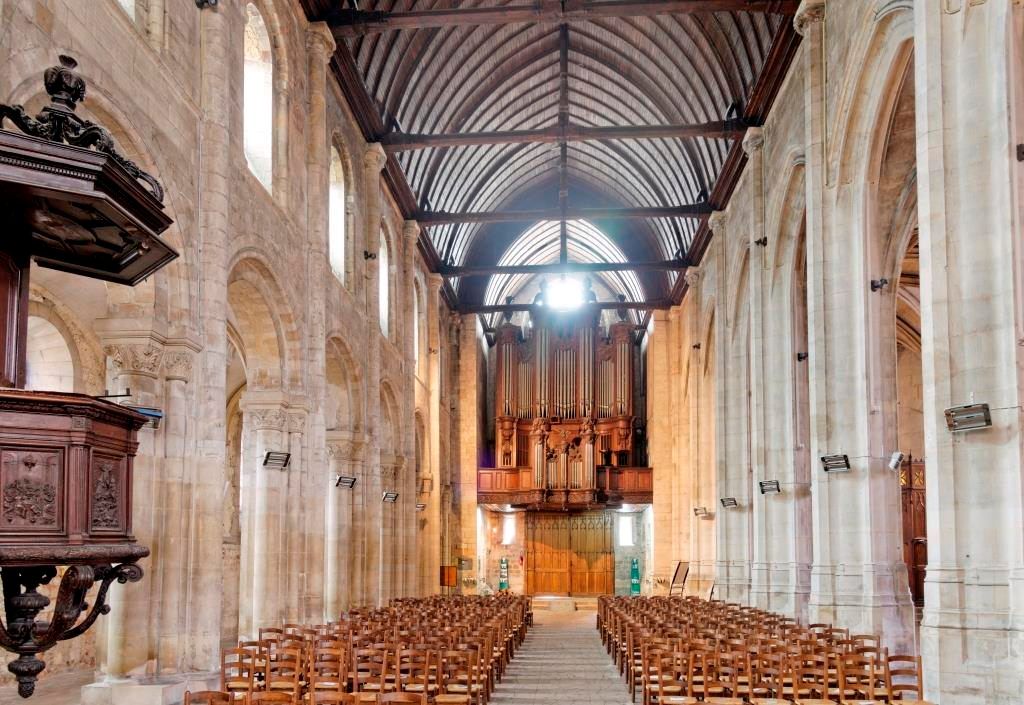
The original plan of the 11C Abbey Church of Montivilliers, of the Benedictine type, was modified in the 15C. At the crossing, the church has, however, retained a monumental bell tower from the end of the 11C. The façade dates from the first half of the 12C. In the nave, only the south side, restored in the 19C, is still Romanesque. In the flamboyant Gothic style, the nave is lit by the large windows of six adjoining chapels. At the crossing, a 17C vault masks the 12C vault. The arms of the transept are covered with archaic-style ribbed vaults, without keystones, separated by a band decorated with broken sticks. The semicircular arch that opened onto the southern apse features twenty keystones sculpted with anecdotal scenes or stylized animals. The choir, three bays deep and extensively modified in the 17C, still hints at its early Romanesque structure, particularly in the tall columns that marked the beginning of the apse’s semicircle. The abbey church organ is a Louis Debierre, whose centenary was celebrated on September 27, 1992.
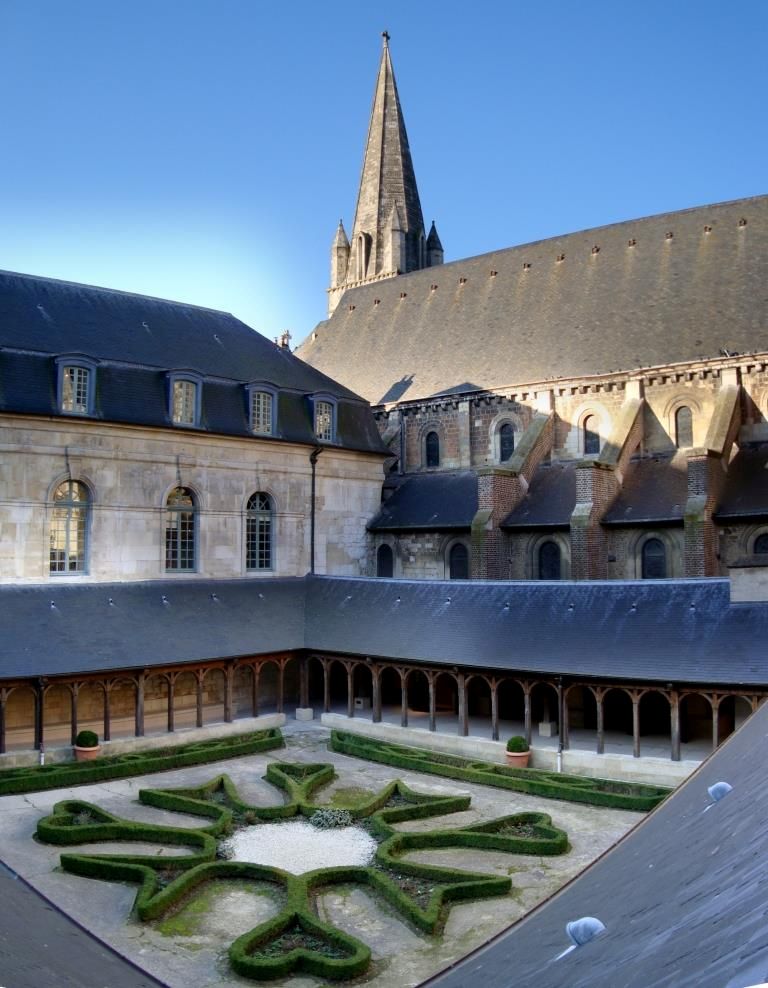
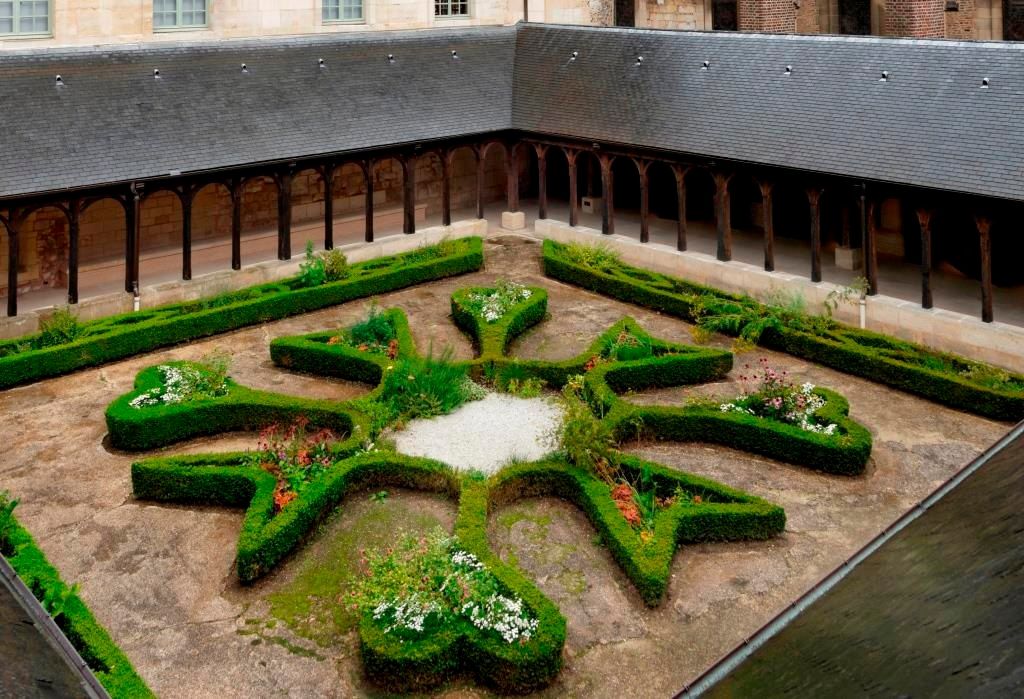
The Montivilliers Abbey is a former Benedictine women’s monastery, founded between 682 and 684 by Saint Philibert. The monastery was completely destroyed by the Vikings in the 9C. The abbey was rebuilt in 1025 when Richard II of Normandy placed it under the control of Fécamp Abbey, this time with men. On January 13, 1035, during an assembly held in Fécamp, Duke Robert the Magnificent granted autonomy to the monastery, which became a women’s abbey again, for the benefit of his aunt Beatrice of Normandy. From the 16C to the 18C, the abbey continued to enjoy great influence, particularly under the abbacy of Louise de L’Hospital. It was under her abbacy that the abbey was reformed in 1602. Abandoned by the nuns in 1792 during the French revolution, the abbey underwent intense and multifaceted occupation during the revolutionary period with uses as offices, prison, garrison, stores, stables, etc. Before and after their sale in 1811, the buildings were used throughout the 19C for industrial purposes and subsequently converted into warehouses, garages and residential premises. The first phase of the work will allow the installation in 1994 of the Condorcet library in the Logis des Abbesses. The second phase, carried out from 1997 to 2000, allowed the restoration of the spaces in their original architecture, the creation of the Cœur d’Abbaye show trail and the development of a temporary exhibition room in the Gothic refectory.
Other things to see here are the Protestant temple of Montivilliers , From 1530, services were celebrated there. In 1787, on the occasion of the Edict of Tolerance of King Louis XVI, the wealthy Protestant community of Montivilliers had a stone temple built outside the city walls, on land belonging to the Barnage family. A true jewel of Louis XVI architecture, the oldest temple north of the Cévennes still in use. The floor tiles form Huguenot crosses. It was inaugurated on November 29, 1803. Medieval ramparts and the medieval Vattelière turret. The Brisgaret choir is a rare example of a medieval choir in France that has retained its original purpose. It is very special due to its structure, which includes a Gothic cross, a chapel, an ossuary gallery whose wall is decorated with macabre decoration and sculpted representations. The Épaville manor.
A bit of history I like tell us that between 682 and 684, during a trip to Jumièges, Saint Philibert founded a women’s monastery here at the request of Saint Ouen, Bishop of Rouen. This monastery was completely destroyed by the Vikings and did not rise again until the beginning of the 11C, this time with men, placed under the control of the Abbey of Fécamp. No architectural trace of this monastery has been found and the geographical location of this monastery in the city is unknown. In 1035, Duke Robert the Magnificent (was Duke of Normandy from August 1027 until his death in the Holy Land on July 2, 1035, during a pilgrimage. He was the father of William II of Normandy, the future William the Conqueror.) granted autonomy to the monastery, which once again became a women’s abbey, endowed in the region with numerous assets that enabled it to undertake, under the abbacy of Elizabeth in the second half of the 11C, the construction work of the great church, an excellent example of Norman architecture at the time of William the Conqueror. The reconstruction and development of the Montivilliers abbey church led to economic development in the area, which soon attracted the population to the abbey, leading the Duke of Normandy to grant it the status of a town by letter dated July 8, 1202. The 14C marked the height of the city’s economic and cultural influence. The Hundred Years’ War marked a dramatic era for France, and even more so for Montivilliers. Montivilliers capitulated on January 23, 1419, and the nuns, subject to the English, returned to the monastery. It was not until the end of 1449 that the English left the city, and the Christmas celebrations of 1449 were marked by a spirit of freedom.
The Reformation enjoyed relative success in Normandy. In 1544, there is already evidence of the presence of Protestants in Montivilliers. From 1557, the writings of Martin Luther and John Calvin spread in the Pays de Caux and Lower Normandy. In 1787, on the occasion of the Edict of Tolerance of King Louis XVI, the wealthy Protestant community of Montivilliers had the current magnificent temple built outside the city walls, on land belonging to the Barnage family, a true jewel of Louis XVI architecture, the oldest temple north of the Cévennes still in use. During the Phoney War and the French Campaign in May and June 1940, Montivilliers hosted Alpine infantry garrisoned in the houses on Rue Vattelière. Around the town, troops of the 51st Highland Division were stationed and often visited the town. There was no fighting during this period. Nazis troops arrived in the town of Montivilliers on June 13, 1940. On September 1, 1944, around 15h (3 p.m.), Troop 1 of the Armored Squadron of the Piron Brigade arrived in Montivilliers to observe. Relieved on September 2 by the 49th West Riding Division, the Piron Brigade, although the first Allied troop on Montivilliers soil, did not participate in the liberation of the town. They left for Brussels, which they liberated on the 4th. The date chosen for the anniversary of the liberation of the city remains September 2nd because it was on this day that the first English motorcyclist arrived in the city center on reconnaissance.
The town of Montivilliers on its heritage : https://www.ville-montivilliers.fr/bouger-sortir/histoire-et-patrimoine/#
The official Abbey of Montivilliers : https://abbaye-montivilliers.fr/
The local Le Havre-Etretat tourist office on the abbey : https://www.lehavre-etretat-tourisme.com/en/discover/all-towns-and-villages/montivilliers/montivilliers-abbey/
The local Le Havre-Seine cultural heritage site on the abbey : https://www.lehavreseine-patrimoine.fr/patrimoines/patrimoine-funeraire-et-religieux/abbaye-de-montivilliers
The Seine Maritime dept 76 tourist office on the abbey : https://www.seine-maritime-tourisme.com/en/offers/abbaye-de-montivilliers-montivilliers-en-5132830/
The Normandie region tourist office on the abbey : https://www.normandie-tourisme.fr/sites-lieux-de-visites/abbaye-de-montivilliers/
There you go folks, a quant town with lots to see and worth the detour, me think. Looking forward to be back in the area, eventually. Again, hope you enjoy this post on this is Montivilliers !!! as I
And remember, happy travels, good health, and many cheers to all !!!


