
It’s a place that I have been by several times, as used to drive around it to go to work or to avoid trafic, and going from Versailles to Paris, I am lucky to find me a picture in my cd rom vault from a private visit with the Friends of the Palace of Versailles that should be in my blog for you and me, Therefore, here is my take on this is Rueil-Malmaison !!! Hope you enjoy it as I.
The City of Rueil-Malmaison is located in the Hauts-de-Seine department no, 92, in the Île-de-France region of my belle France, Until 1928, the city was called Rueil. It is the largest city in the Hauts-de-Seine department. Located on the left bank of the Seine, it borders Nanterre, Suresnes, Saint-Cloud, Garches, and Vaucresson in the Hauts-de-Seine dept 92, and La Celle-Saint-Cloud, Bougival, Croissy-sur-Seine, and Chatou in the Yvelines dept 78. There are two major roads that cross Rueil-Malmaison ; the A86 running through a tunnel under the city, parallel to the Seine river, sometimes above ground, sometimes covered. It has several exits in the city, including the main one at La Jonchère, on the western edge of Rueil-Malmaison. The D913 road ,formerly N13) leaves from La Défense and crosses the city via Avenue Napoléon-Bonaparte, running along the city center, Bougival, to head towards Saint-Germain-en-Laye and Chambourcy, etc. The City is 3 km from Suresnes, 5 km from Saint Cloud, 11 km from Paris, 8 km from Saint Germain en Laye, and 11 km from Versailles from where we came, along the Rue de la Paroisse, right on Rue des Reservoirs continue on Bd du Roi towards Place de la Loi roundabout bearing right onto the Rue de Versailles thru the City of Le Chesnay (now Le Chesnay-Rocquencourt) past under the A13 autoroute de Normandie to become the D321 road or Avenue Lucien René Duchesne continue thru the forest of La Celle Saint Cloud becoming same road Avenue Charles de Gaulle and the road D174 continue into Avenue de la Jonchére or D173 road thru the City of La Celle Saint Cloud continue passing over the A86 beltway highway of outer Paris continue on the D913 road already in Rueil-Malmaison becoming Avenue Napoléon Bonaparte continue turn right at Avenue Méhul to the Château de Malmaison if gate open you can come all the way in and if not parked on street and walk in the parc de Malmaison, I must add for the memories of always that I took this road many times on my way to work on the D321 road just bearing right on the D307 road which became the D907 road bearing left onto the D985 road passing by the Hippodrome of Saint Cloud into the City of Suresnes ! Sublime !
The origin of the name Malmaison is poorly understood. In 1244, the presence of a barn in the parish of Rueil, named Mala domus (bad house), is recorded, supposedly due to the arrival of the Vikings in the 9C, who settled on this estate. The property, which was at that time only a small manor house, came by inheritance into the hands of Christophe Perrot, a parliamentary advisor, who transformed it into a castle that still forms the basis of the current castle, and whose park soon gained the reputation of being one of the most pleasant around Paris. Inside the Château de Malmaison, the various rooms, richly decorated with marble, gilding, and mosaics, present a rich collection of works dating from the early reign of Napoleon I. Furniture, paintings, porcelain, weapons, and more form a Napoleonic museum collection of prime importance. The museum also showcases the daily life of the couple and their children during their stay in the château. Various rooms from the period have been recreated, such as Napoleon’s mahogany library and the oval room where Josephine died in 1814. Please note that due to major restoration work, the visitor route may be affected during the 2025-2026 academic year.
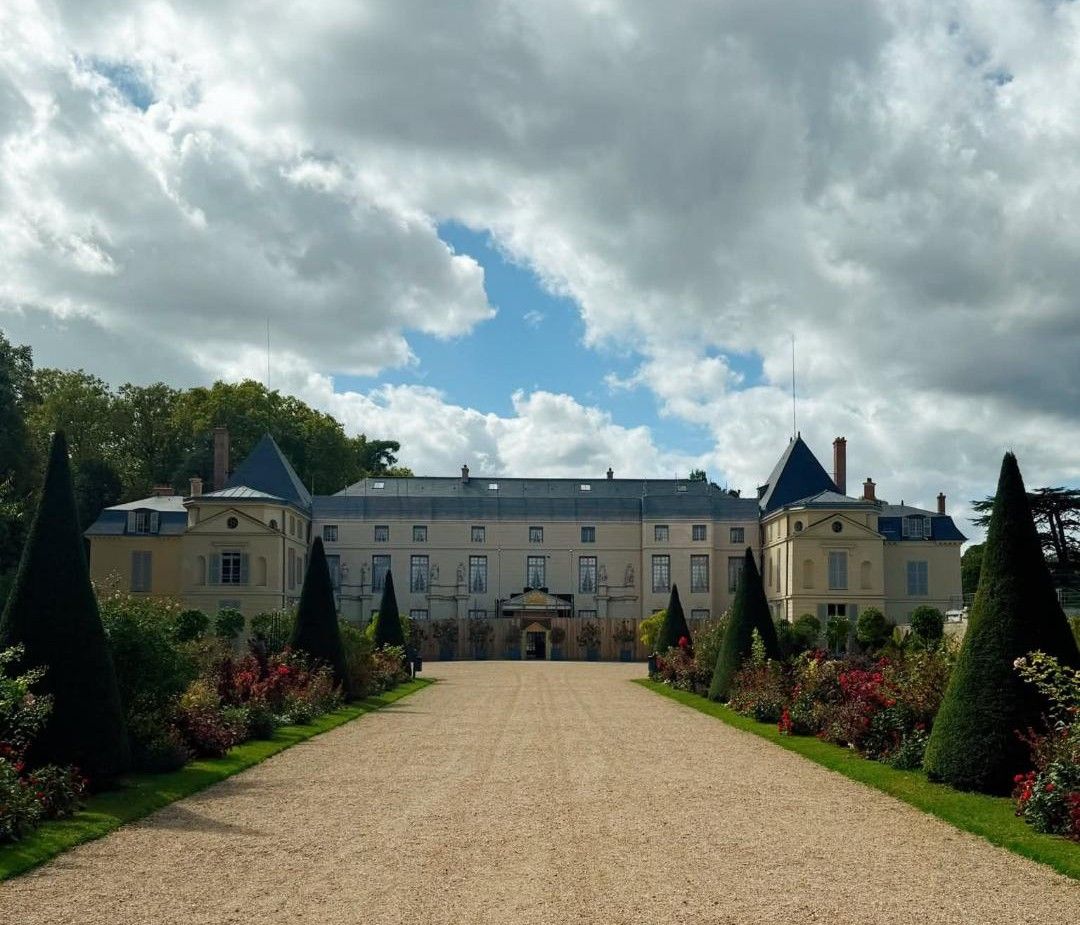
A bit of history I like on the castle tell us that in 1792, sold as national property, it was purchased by Jean-Barthélémy Le Couteulx de Canteleu, who, the following year, sold it to Joséphine Tascher de la Pagerie, widow of Alexandre de Beauharnais, who married Napoleon I on March 9, 1796.After their divorce in 1809, Joséphine lived at Malmaison and died there on May 29, 1814. Malmaison was Napoleon I’s last official residence in France. He arrived there on June 25, 1815, and left on the 29th for Rochefort-sur-Mer. Malmaison was prodigiously embellished by Joséphine’s care and taste. After belonging to Eugène de Beauharnais, Marie-Christine of Spain, Napoleon III, and then Daniel Iffla, it became a museum when the latter donated it to the State (France). The estate of Empress Josephine, who lived in Rueil from 1799, covered an area of 726 hectares at her death in 1814. It was divided into subdivisions during the 19C. Among its main parts: Château de Malmaison (Napoleonic Museum see pic); Château de la Petite Malmaison, the former greenhouse of the Malmaison estate, built between 1803 and 1805 (accessible exceptionally); Château de Bois-Préau (accessible – annex of the Napoleonic Museum where temporary exhibitions are located); Domaine de Vert-Mont (accessible exceptionally), Temple of Love (not accessible) and Mausoleum of the Prince Imperial (not accessible) Unlike official residences, such as the Tuileries Palace or the châteaux of Saint-Cloud, Fontainebleau and Compiègne, Malmaison remained until Josephine’s death in 1814, an intimate home, renowned for the beauty of its gardens and the rare species of plants, several hundred, which were acclimatized there.
Other things to see in Rueil-Malmaison are the Maison du Père Joseph or House of Father Joseph, eminence grise of Cardinal Richelieu, Church of Saint-Pierre-Saint-Paul (tombs of Josephine de Beauharnais and her daughter Queen Hortense, crypt), Swiss Guards Barracks or Guynemer Barracks, housing the Swiss Guards Museum, Rueil-Malmaison Local History Museum, in the former City/town hall, Chemin Joséphine and Napoléon Bonaparte, route symbolized by golden nails marked with the imperial bee.
A bit of history of the City of Rueil-Malmaison tell ust that the first historical mention of Rueil, or rather of Rotoialum villae, dates back to the 6C. It was a pleasure and hunting ground for the Merovingian kings from the 6C to the 8C. Charles the Bald, around 870, gave this estate to the Abbey of Saint-Denis. At the end of the 12C, Benedictine monks built a chapel dedicated to Saint Cucufa in the former Béranger Woods, which after the 18C would become the Bois de Saint-Cucufa. During Edward III’s Ride in 1346, Rueil was burned and devastated from top to bottom by the Black Prince. It took a very long time to recover from this disaster. In 1584, Antoine de Portugal, in exile in France, lived in Rueil and laid the foundation stone of a church on the site of the old one, which was falling into ruin. In 1622, Christophe Perrot, an advisor to the Parliament of Paris, had a castle built on the site called Malmaison, an estate that would become the property of the future Empress Josephine in the following century. The monks sold the estate in 1633 to Cardinal Richelieu, who settled in the Château du Val, built for Jean Moisset, financier under Henry IV. Far from the cabals and noise of the city, he made it his favorite residence. It was Richelieu who financed the completion of the Saint-Pierre-Saint-Paul Church by having its facade built. Upon the cardinal’s death in 1642, his niece, the Duchess of Aiguillon, inherited it. The château was once a refuge for the court during the Fronde: Louis XIV, his mother Anne of Austria, and Cardinal Mazarin were housed there. It was here that the Peace of Rueil was signed on March 11, 1649. In 1691, the Marquise de Maintenon, (Madame) ,the king’s secret wife, rented a house in Rueil to receive poor children and give them a little education. This was the beginning of the institution that she eventually established at Saint-Cyr l’école (see post), closer to Versailles. During the French revolution, the Château de Rueil (formerly Richelieu’s property), which had become national property, was sold in 1793 and later purchased by Marshal Masséna, Duke of Rivoli, Prince of Essling. The Rueil barracks (now the Guynemer barracks, next to which is located the Swiss Guards Museum) are still in operation; they are the only ones remaining of the three former Swiss Guard barracks.
On April 21, 1799, the Château de Malmaison was acquired by General Bonaparte, née Mairie-Josèphe Tascher de la Pagerie, widow of the Viscount de Beauharnais and wife of General Bonaparte, who, out of jealousy, named it “Joséphine.” It was here that decisions were made, for example, on the sale of Louisiana and the institution of the Legion of Honor. After the divorce, the Emperor retained his wife’s title of Empress and Malmaison. Josephine, who was very fond of the place, had heated greenhouses built to indulge her passion for botany. It was in Rueil, where she had welcomed Tsar Alexander I of Russia, whom she sought protection from, The former Empress died on May 29. Her remains were buried in the Church of Saint-Pierre-Saint-Paul. The following year, after the Hundred Days, the Anglo-Prussians captured and pillaged Rueil. While the English devastated Malmaison, the Prussians entered Masséna’s estate, ravaging the park, stripping the château of all easily transportable objects, and smashing the furniture. In 1866, with the Empire restored and the town growing, it was decided to build a new City/town hall. It was also at this time that Emperor Napoleon III had the Saint-Pierre-Saint-Paul Church restored, partly from his own funds, housing the tombs of his mother and grandmothers, which were in a pitiful state. Rueil was also the home of the Infanta of Spain, Maria Isabela of Spain, the eldest daughter of Queen Isabel II of Spain, and her husband, Prince Gaetan of Bourbon-Siciles, when the 1868 revolution drove the Spanish royal family out. During the Siege of Paris in 1870-1871, during the Franco-Prussian War of 1870, Rueil, the surrounding villages and the Château de Buzenval were the scene of several battles, in particular on October 21, 1870 and January 19, 1871 during the First and Second Battles of Buzenval between the French troops leaving Paris and the Prussian soldiers entrenched on the heights of Garches. In 1899, a couple of American patrons, Mr. and Mrs. Tuck, settled in Rueil at the Vermont estate, and did much for the town ; the construction of the Stell Hospital (Mrs. Tuck’s maiden name), schools, help in saving Bois Préau and the Château de Malmaison. Occupied by the Nazis in 1940, the city was the scene of executions of resistance fighters by the nazis at the Mont-Valérien fort (see post). The city was liberated on August 19, 1944.
The City of Rueil-Malmaison on its heritage : https://www.villederueil.fr/fr/decouvrir/sites-et-monuments
The Rueil-Malmaison tourist office on its heritage : https://www.rueil-tourisme.com/destinations/patrimoine-historique-et-culturel/
The Hauts de Seine dept 92 tourist office on Rueil-Malmaison : https://destination.hauts-de-seine.fr/chateau-malmaison-rueil-malmaison.html
The Île de France region tourist office on Rueil-Malmaison : https://www.visitparisregion.com/en/inspiration/itineraries/relive-the-splendours-of-the-first-empire-for-a-day-in-rueil-malmaison
The Imperial cities site on Rueil-Malmaison : https://www.ville-imperiale.com/villes/rueil-malmaison/
There you go folks, another dandy in my belle France for the memories of always, worth the detour, me think, I have wonderful memories of riding by here, Again, hope you enjoy this post on this is Rueil-Malmaison as I.
And remember, happy travels, good health, and many cheers to all !!!

 Paris1972-Versailles2003
quel histoire!! It’s incredible to think of the complex and powerful cast of characters who developed and lived in this place. There’s a whole story alone in the lives of resistance fighters who were killed there by the Nazis.
LikeLiked by 1 person
History to do better these places remind us. Thanks for stopping by .cheers
LikeLiked by 1 person