
This is one of those towns we came for its glory monument and glad we did, in my road warrior trips in my former dept 78 of Yvelines, the choices are endless just here alone. It is a rather long post but worth it me think and glad found me a picture in my cd rom vault that made me do it for you and me. Therefore, here is my take on the Musée National de Port Royal des Champs, former abbey in Magny les Hameaux !!! Hope you enjoy the post as I.
The town of Magny-les-Hameaux is located in the Yvelines department no 78 in the Île-de-France region of my belle France, It is located 37 km from Paris, 13 km from Versailles, 25 km from Rambouillet, and 456 km from my current home, The main roads here are the D938, which passes through Cressely, leading to Châteaufort and Versailles, and to Saint-Rémy-lès-Chevreuse. Also, the D195, known as the Route de Port-Royal des Champs, which begins in Cressely and La Mérantaise, before ending at D91 road, which crosses the town and connects Magny-les-Hameaux to Voisins-le-Bretonneux and Chevreuse via Port-Royal. On the Toussus-le-Noble plateau,the D36 road serves the hamlet of Bois des Roches, connecting it to Montigny-le-Bretonneux and Saclay. We came here from Versailles, from the rue de la Paroisse right onto Rue du Maréchal Foch continue on Avenue de l’Europe continue onto Avenue du Général de Gaulle (D10 road), continue to Rue Royale turn right here onto Rue Albert Samain ,then turn left onto Rue du Maréchal Joffre (D91 road) continue same road name Avenue Clément Ader to connect with the N12 highway by exit/sortie 4 continue same road until exit/sortie 6 onto Avenue des Garennes turning right on the D36 road or Route de Trappes continue same road name Route de Guyancourt bear right onto D36 again and a quick left onto D91 road name here Route de Port Royal continue dir Chevreuse until on right hand side see small panel for the Abbaye de Port Royal follow the country road until the abbey of Port Royal.
Magny-les-Hameaux is a town that has existed since the 10C, has continued to evolve and transform over the centuries to become a town with a dual identity. Located in the heart of the Haute Vallée de Chevreuse Regional Natural Park and the Saint-Quentin-en-Yvelines Urban Community, The town is particularly notable for the history of the Port-Royal des Champs Abbey; the Granges de Port Royal National Museum, dedicated to the history of Jansenism, located in the Petites Écoles building, and the Augustin Gazier Room, which displays various objects from the abbey near the ruins of the abbey church.
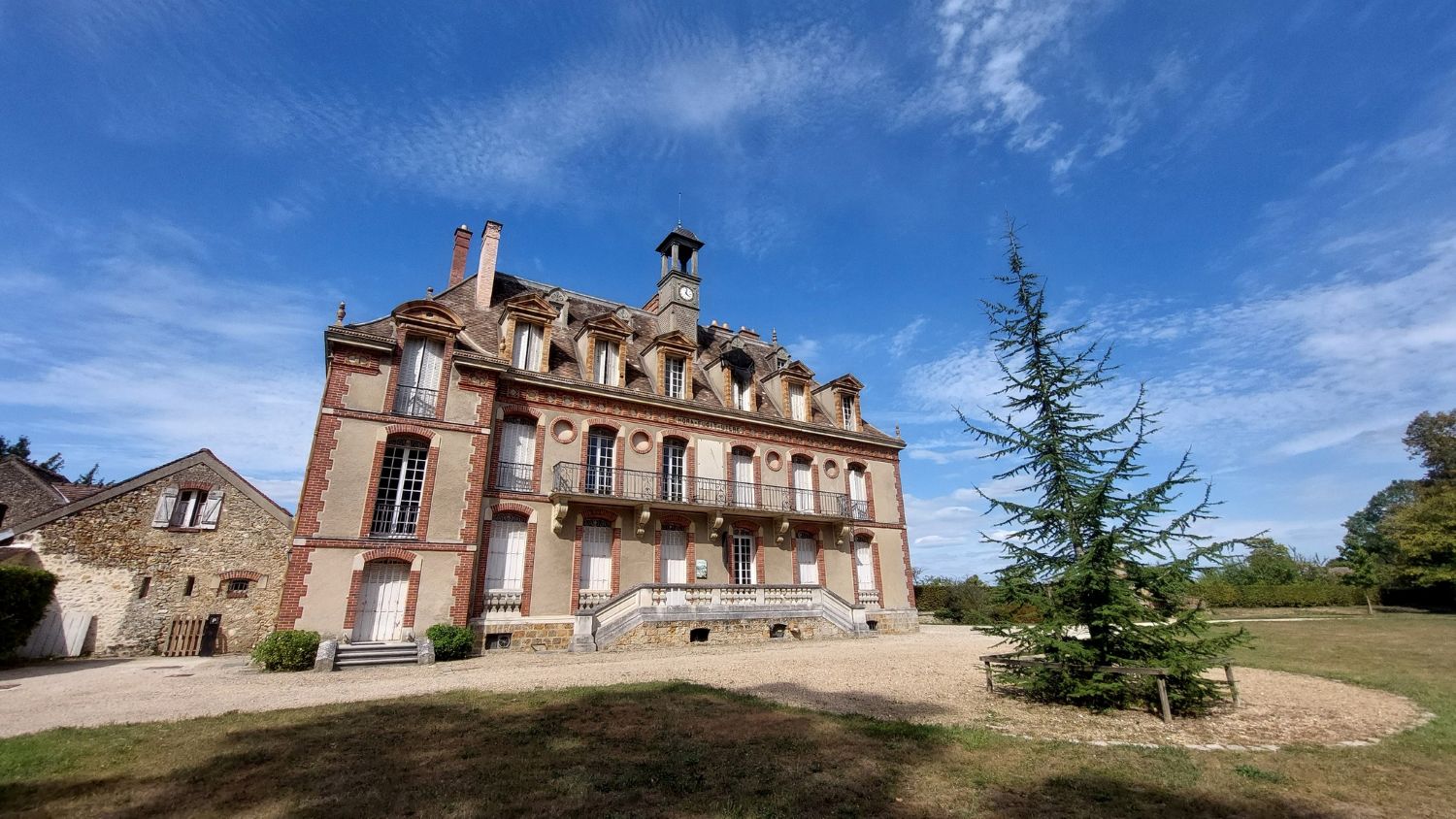
Other things to see here are the “Bonheur” house, headquarters of the town’s cultural service and a place dedicated to the visual arts. It belongs, among others, to Auguste Bonheur, brother of Rosa Bonheur. Ruins of the 11C fortified castle dungeon. The Saint-Germain Church: Gothic-style church from the 12C and 15C, The Porte de Mérantais (see post) ; this is one of the 43 gates that pierced the surrounding wall of Louis XIV’s “Grand Parc de Versailles”, the king’s hunting grounds that covered 10 times the area of the current Versailles Park known as Petit Parc, Where the Domaine de Versailles is located.
The town of Magny-les-Hameaux on its heritage : https://magny-les-hameaux.fr/tourisme-et-loisirs/visiter-magny-les-hameaux/patrimoine-historique
The Parc Naturel Regional de la Haute Vallée de Chevreuse on Magny les Hameaux : https://www.parc-naturel-chevreuse.fr/un-territoire-preserve/le-patrimoine-dans-les-55-communes/la-carte-des-communes-du-parc/magny-les
The Yvelines dept 78 tourist office on Magny les Hameaux : https://www.destination-yvelines.fr/?s=&_search=Magny-les-Hameaux&_land_yvelines=chevreuse-la-verte
However, the main thing to come here, me think is the former Port-Royal des Champs abbey, a complex consisting of the ruins of the Port-Royal Abbey, the Port-Royal des Champs National Museum, formerly the Granges Museum, and a forest and landscaped area. This is a huge history and description that will need to cut to fit my post, see the links for more info including wikipedia.
This place was the scene of an intense religious life first, intellectual and political life. Initially a simple female Cistercian abbey in the heart of the Paris Basin, Port-Royal became in the 17C one of the high places of the Catholic reform and then one of the symbols of the Jansenist controversy. From the original site, only the farm of Granges de Port-Royal, and the building of the Petites Écoles (17C) remain standing, which has housed the National Museum of the Granges de Port-Royal since 1962. All that remains of the abbey is the pond from which the Rhodon flows, a small stream which has its source in the Bois de Trappes and flows into the Yvette; the mill, the dovecote, part of the enclos that the Duchess of Longueville had built there, the fountain of Angélique Arnauld, and the foundations of the church walls with the bases of the pillars and columns. In a small pavilion (19C) which occupies the site of the apse of the church, a collection of plans, engravings of the old abbey, and tomb debris has been piously gathered. The current museum, which is the smallest of the French national museums, contains mainly pictorial works. These are mainly paintings by Philippe de Champaigne and engravings from the 17-18C, which retrace the life of the monastery. One can also see the death mask of Mother Angélique Arnauld, as well as various Jansenist devotional objects. The interest of this museum is mainly to retrace the history of the monastery. One room is dedicated to old books, mainly those written by the Solitaires.
The long history I like abbreviate as much as possible as said to fit my post tell us that today, almost nothing remains of this monastery founded in 1204, once a witness to the history of the abbey of Port-Royal and Jansenism. The abbey was therefore linked to royal power from its beginnings. The abbey of Port-Royal was founded in 1204 by Mathilde de Garlande. Related to the royal families of France and England, she decided to create this abbey with funds that her husband, Mathieu de Marly, who was leaving for the Fourth Crusade, had made available for pious works. In 1223, Pope Honorius III granted her the privilege of celebrating Mass even in the face of a nationwide ban.
Port-Royal’s belonging to the Cistercian lineage, evident from its beginnings even if it was not official until 1240, determines the general organization of the place. The only elevation is that of the church bell tower, which was completed in 1229. The cloister is attached to the south side of the church, as in most Cistercian abbeys. The chapter house and the refectory, itself surmounted by the dormitory, form the east side of the cloister, in the extension of the transept. The church has the shape of a Latin cross with a square base, the outline of which only includes straight lines intersecting at right angles. The abbey comprises a nave of six bays flanked by side aisles, and its total length is 55 meters. The projecting transept is 28 meters wide. The sanctuary is quite short ,only two bays, and ends in a flat chevet. At Port-Royal, the choir occupies the third, fourth and fifth bays, and ends with a grille. To the west of the church, a dovecote, still visible today, was built in the 13C. took place mainly in the 16C under the impetus of Abbess Jeanne II de La Fin, who had the church repaired and partially rebuilt the cloister, the dormitory and the infirmary. The chapter was then moved to the right arm of the transept, the large arcade of which was walled up. It was also at this time that stalls and sculpted woodwork were installed in the choir, considered very beautiful two centuries later when they were sold to the Bernardines of Paris before the demolition of the church. This woodwork disappeared during the French revolution.
As a result of acquisitions, the abbey’s territory adjoined the park of Versailles, which could be a source of disagreement with the king, particularly on the question of control of springs. The abbey then entered a period of relative decline. The Hundred Years’ War was particularly destructive for Port-Royal. Epidemics followed one another, the unsanitary conditions, the decline in vocations and economic difficulties led to the belief for a time that the monastery would close. Despite the Concordat of Bologna, which allowed the king to appoint the bishops, abbots, and abbesses of France, Port-Royal initially continued to elect its own abbesses. The year 1609 marked a turning point in the history of the Port-Royal Abbey. Indeed, Angélique Arnauld reestablished the community of property between nuns. The monastic enclosure was also reinstated. Port-Royal returned to a true monastic life which presupposed separation from the world, with no more exceptions for the abbess than for the nuns. Mother Angélique left the monastery from 1618 to 1623, making it her mission to also reform the neighboring abbey of Maubuisson. With the nuns no longer present on the site of Port-Royal des Champs, it became a place of attraction for men wishing to temporarily withdraw from the world. This was the beginning of the period of the Solitaires at Port-Royal des Champs in 1638. For about ten years, young and old men came to retire to Port-Royal, attracted by the taste of solitude and penance. Among the Solitaires installed at the top of the hill were Louis-Isaac Lemaistre de Sacy, Antoine Arnauld, Claude Lancelot, Jean Hamon, Pierre Nicole and others less famous. It was in this context that Blaise Pascal came to spend two short retreats at Les Granges in 1656. This period was the golden age of Port-Royal, despite the beginning of the Fronde. The Solitaires, about twenty in number, remained to guard the abbey and Les Granges. It was during this period that the Duke of Luynes had a castle built on the abbey’s grounds, the Château de Vaumurier.
Port-Royal entered history with the Jansenist controversy. The Solitaires attracted a number of former rebels, including their leaders, the Duchess of Longueville and the Prince of Conti. At Port-Royal, the Solitaires, the teachers of the Petites écoles and the children had to leave the Granges. Shortly before, Blaise Pascal, who had come to retire for a few days, began writing the Provinciales, regular and scathing pamphlets against the Jesuits. Louis XIV, who had personally exercised power since his majority, forbade the community of Port-Royal from receiving novices and boarders. Those that were present were dispersed. This was the death warrant of the abbey, since the community could not continue without recruitment. Then, in 1707, Louis XIV confiscated their income. Under this regime, the abbey could no longer survive or recruit. Its closure was no more than a formality. However, the destroyed sanctuary later established itself as a place of memory, tarnishing that of the Sun King. The Solitaires and friends of Port-Royal, like the Duchess of Longueville, returned to settle at Les Granges or at the abbey. Many works were undertaken, notably the completion of the four galleries of the cloister. This was extended to the infirmary and the children’s buildings. The work was completed in 1671. On April 15, 1679, the Duchess of Longueville, the main protector of the monastery, died, which, as cousin of King Louis XIV, she had made almost untouchable. The monastery was then almost complete: there were ninety-two professed sisters, thirteen postulants and forty-two boarders. . During these years, the great figures of Port-Royal gradually disappeared. In 1699, the last abbess of Port-Royal was elected. She was Mother Sainte-Anne, born Élisabeth Boulard de la Roncière, previously prioress of Mother Agnès Racine. She had to face a resurgence of theological debates at the Sorbonne. Louis XIV was very irritated by this resistance. In 1706, Mother Elisabeth of Sainte-Anne Boulard de Denainvilliers died. The following year, Louis XIV gave the order to give the revenues of Port-Royal des Champs to the abbey of Port-Royal de Paris. This meant, in the very near future, the death of the abbey. On March 27, 1708, a papal bull withdrew the use of the nuns’ land, leaving them only the church and the monastery. A second bull, dated September, ordered the suppression of Port-Royal des Champs. The Archbishop of Paris confirmed the suppression of the monastery on July 11, 1709. On October 26, he also ordered the expulsion of the nuns. A few months later, in January 1710, the Council of State ordered the demolition of the abbey. During 1713, the abbey was razed to the ground. Its stones were sold or recovered by the local inhabitants, sometimes as relics but most often as building material.
From the moment of its destruction, the site of Port-Royal became a place of pilgrimage and remembrance. The transport of the bones of the nuns and relatives of Port-Royal, during the destruction, was so rapid that the faithful of the monastery still had many “relics” to collect. While the physical presence of Port-Royal ceased, memory took over. Thus begins the second story of Port-Royal, that of its inscription in the collective memory. A large part of the manuscripts of Port-Royal was recovered, just before the expulsion of the nuns, by Marguerite de Joncoux, a lay friend of Mother du Mesnil. She was able to remove them from the monastery and preserve them. Thanks to her action, these manuscripts were then given to the Abbey of Saint-Germain-des-Prés in Paris, then to the National Library in Paris. The paintings, for their part, were for the most part taken to the monastery of Port-Royal in Paris. Throughout the 18C, followers of Jansenism, whether they were convulsionaries or not, came on pilgrimage to the ruins. The estate legally belonged to the monastery of Port-Royal-de-Paris, but the nuns had abandoned the ruins. They only extracted resources from the agricultural land. The pilgrimages gave rise to numerous writings lamenting the ruin of the monastery. From the 17C onwards, Port-Royal des Champs inspired writers and artists, whether to deplore the recurring problems of the monastery or to revive, in a more or less truthful manner, the site and its occupants. Similarly, Jean Racine, in his Abridged History of Port-Royal, sought to edify future readers. Literature linked to Port-Royal appeared from the beginning of the 19C. Thus Henri Grégoire, in Les Ruines de Port-Royal des Champs (1801 and 1809), paints a romantic picture of the site, Chateaubriand, in La Vie de Rancé, compares La Trappe to Port-Royal in these terms.
The official Societé de Port Royal : https://www.bib-port-royal.com/societegen.html
The official Friends of Port Royal : https://amisdudehors.org/jardins-de-port-royal-2-2-2/
The Yvelines dept 78 tourist office on the museum of Port Royal : https://www.destination-yvelines.fr/parcs-et-jardins/domaine-national-de-port-royal-des-champs/
The Parc Naturel Regional de la Haute Vallée de Chevreuse on the museum of Port Royal : https://www.parc-naturel-chevreuse.fr/musee-national-de-port-royal-des-champs
The Paris tourist office on the museum of Port Royal : https://parisjetaime.com/eng/culture/musee-national-de-port-royal-des-champs-p943
The private site Yvelines on the Port Royal des Champs history : https://yveline.org/port-royal-des-champs/
The town of Magny-les-Hameaux on the abbey of Port Royal : https://magny-les-hameaux.fr/equipement/abbaye-de-port-royal
There you go folks a dandy visit to be back for more of the architecture and history of my former Yvelines ! The site is worth a return, eventually, Again, hope you enjoy this post on the Musée National de Port Royal des Champs former abbey in Magny les Hameaux !!! as I.
And remember, happy travels, good health, and many cheers to all !!!

 Paris1972-Versailles2003