
I am again to tell you about more streets of my eternal Paris. I have many many posts on Paris and several on the streets of the most beautiful city in the world. I have come up with pictures from cd rom vault that should be here for you and me. As always thank you for following my blog some since Nov 26, 2010. Therefore, here is my take on the streets of Paris, part XXX !!! Hope you enjoy it as I.
The Rue Lafayette goes thru the 9éme and 10éme arrondissements of Paris. Over 2.8 km long, The street is one of the important axes of the Right Bank ,and is the longest straight road in Paris (memories forever walking and driving as worked not far). It connects Boulevard Haussmann to Place de la Bataille-de-Stalingrad, where it is extended by Avenue Jean-Jaurès. Very lively, it has many restaurants and bars, but it is best known for the famous Galeries Lafayette (see post), located at the corner of Rue de la Chaussée-d’Antin and Boulevard Haussmann. The street passes near the Paris-Est and Paris-Nord (see posts) train stations and climbs to the neighborhoods surrounding the Place de la Bataille-de-Stalingrad and the Quai de Valmy, which runs along the Canal Saint-Martin. This street is named after the Marquis de La Fayette, a hero of the American Revolutionary War. It is connected by the Metro Line 7 roughly follows the route of the street, which is served by the stations: Chaussée d’Antin – La Fayette (lines 7 and 9); Le Peletier (line 7); Cadet (line 7); Poissonnière (line 7); Gare de Magenta (RER Line E); Gare du Nord (lines 4 and 5); Gare de Paris-Nord (RER lines B and D); Louis Blanc (lines 7 and 7 bis); Jaurès (lines 2, 5, and 7 bis) and Stalingrad (lines 2, 5, and 7). A bit of history tell us that in 1821, a group of bankers (André and Cottier) and architects (Auguste Constantin) purchased the land of the Saint-Lazare enclosure in order to subdivide it and create the “new Quartier Poissonnière.” It was opened, between Rue du Faubourg-Saint-Martin and Rue du Faubourg-Poissonnière, in 1823. In 1830, after the July Revolution, this first section was renamed “Rue Lafayette.” By ministerial decree of August 28, 1849,a second section was added from the rue du Faubourg-Saint-Martin to the rond-point de la Villette by joining the rue du Chemin-de-Pantin to the rue La Fayette. By public utility decree of August 27, 1859, a third section was cut from the rue du Faubourg-Montmartre to the rue du Faubourg-Poissonnière. By public utility decree of March 19, 1862, a fourth and final section was cut from the rue de la Chaussée-d’Antin to the rue du Faubourg-Montmartre.
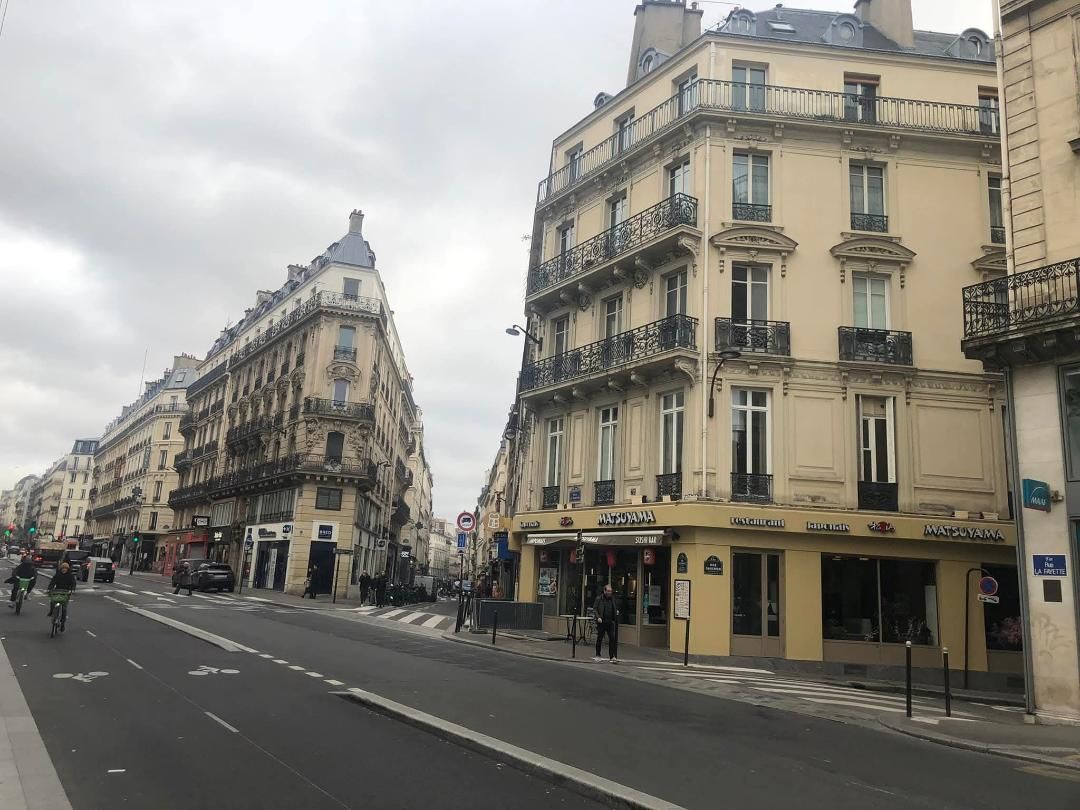
Notable buildings here are at Nos. 18 to 22: the gardens of the Hôtel de la Reine-Hortense extended to this spot. Nos. 31 and 33: site of the Hôtel Thellusson, destroyed in 1823. No. 52: home of the composer Isaac Albeniz from 1880 to 1884. Square Montholon: the only green space located on the route of the street. No. 60 and Nos. 9 and 11, rue Cadet: former Hôtel Cromot du Bourg. No. 61: former Hôtel du Petit Journal. No. 91: building facade decorated with a pair of caryatids (circa 1865), an early work by Jules Dalou. No. 145: fake building facade belonging to the RATP, intended to house air vents for line B of the RER. This setting is described by Umberto Eco in Foucault’s Pendulum as giving “the impression of being before the mouth of Hell.” No. 214: Access to the Saint-Joseph-Artisan Church. Formerly the church of the Germans, then of the Alsatians-Lorrainers and Luxembourgers of Paris. Other anecdotes of the street tell us that the street crosses the tracks of the Gare Paris-Est on the Pont La Fayette, a reinforced concrete bridge built in 1928. Former Hôtel de Montesson: Located at the corner of Rue Lafayette and Rue Chaussée-d’Antin (on the site of the current Cité d’Antin), it was built by Alexandre-Théodore Brongniart around 1770 for Madame de Montesson, mistress of the Duke of Orléans. A long vaulted passageway connected the street to the courtyard. Towards rue Taitbout, the facade on the garden was punctuated by Ionic pilasters, like the hotels built in the district;here, also, was the headquarters of the Austrian Embassy under the First Empire (Napoléon Ier), No. 103: home of the painter Geoffroy Dauvergne in 1944, when he was a student of Jean Dupas at the École nationale supérieure des beaux-arts ,The La Fayette theater, whose existence was brief, was opened in this street in 1867.
The Paris tourist office on the 9éme arrondissement de Paris : https://parisjetaime.com/eng/article/explore-paris-s-9th-arrondissement-a828
The Paris tourist office on the 10éme arrondissement de Paris : https://parisjetaime.com/eng/article/explore-paris-s-10th-arrondissement-a843
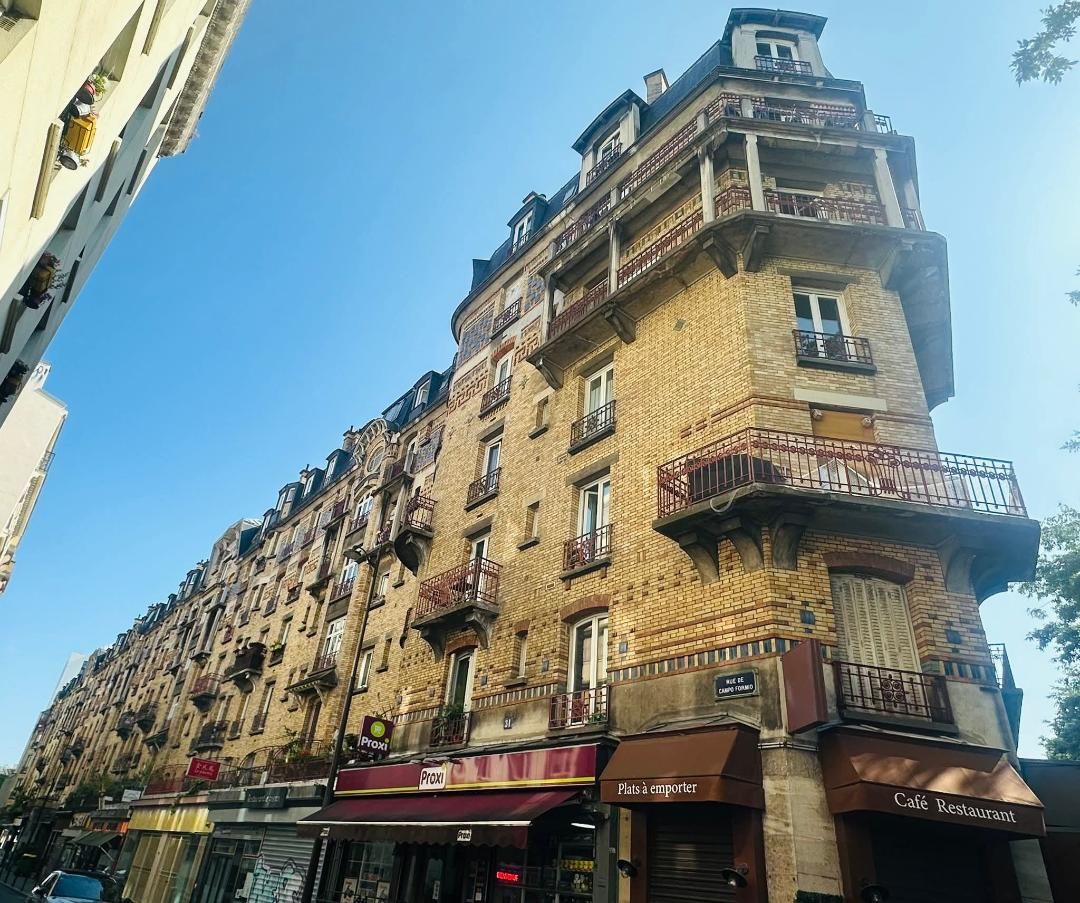
The Rue de Campo-Formio is located in the 49th quartier or neighborhood Salpêtrière of the 13éme arrondissement or district of Paris. This street is named in memory of the famous Treaty of Campo-Formio concluded between the Emperor of Austria and the French Republic on October 17, 1797 during the French revolution. The street is between Place Pinel, next to Boulevard Vincent Auriol and Boulevard de l’Hôpital. The street is accessible by metro line 5 at the Campo-Formio (Guimard) station. The station is located under Boulevard de l’Hôpital, at the exit of Rue de Campo-Formio.Also, metro line 6 at the Nationale station on Bd Vincent Auriol, This street is part of the old axis called “on the road from Paris to Ivry” Formerly “rue du Chemin des Étroites-Ruelles”, then “petite rue d’Austerlitz”, it was traced in the form of a path from the 18C in what was then called the village of Austerlitz, A ministerial decision of February 3, 1821 and a royal ordinance of June 11, 1847 fixed its width at 10 meters. It took its current name by ministerial decision of March 29, 1851, and was numbered on June 16, 1893. A notable building here is at No. 23, there is an interesting grilled door building, now residential housing. At No. 29, there is the Zenpark Campo-Formio – Citadines underground parking lot. The quartier or neighborhood Salpêtrière is bordered to the north by Boulevard Saint-Marcel and Boulevard de l’Hôpital, to the east by the Seine, to the south by Boulevard Vincent-Auriol, and to the west by Avenue des Gobelins. In this district, we find the Pitié-Salpêtrière Hospital, the Paris-Austerlitz train station, and the northern part of the rive gauche of Paris. The quartier Salpêtrière owes its name to the famous Pitié-Salpêtrière University Hospital.
The Paris tourist office on the 13éme arrondissement de Paris : https://parisjetaime.com/eng/article/a-walk-through-the%20villages-of-the-13th-arrondissement-a775
The Paris tourist office on innovating monuments in the 13éme arrondissement de Paris : https://parisjetaime.com/eng/article/at-the-heart-of-innovation-in-the-13th-arrondissement-a777
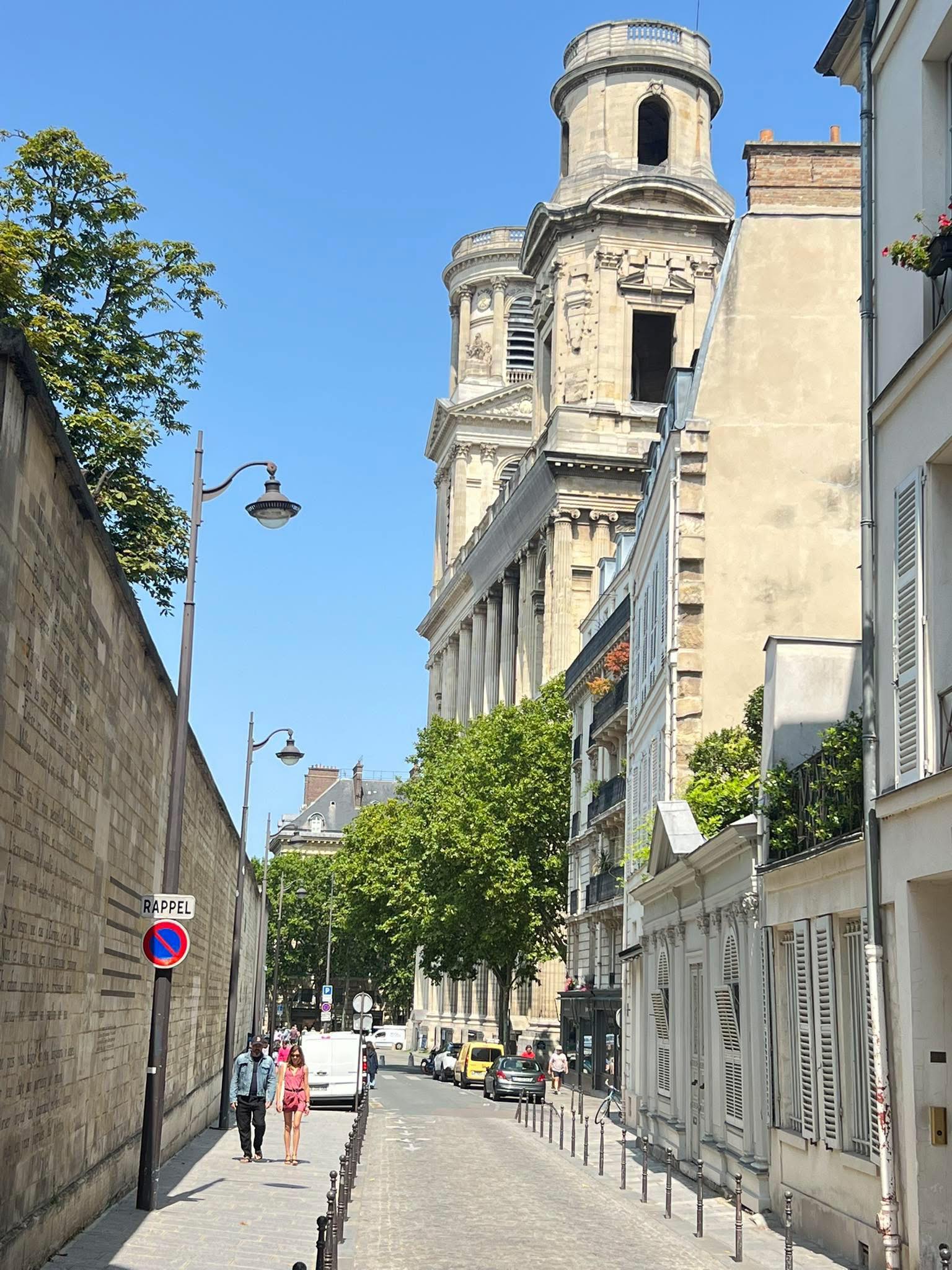
The Rue Férou is located in the Odéon quartier or neighborhood of the 6éme arrondissement or distric of Paris, mainly known in the 21C as the rue du Bateau ivre. It begins at 3, rue Henry-de-Jouvenel and 2, rue du Canivet and ends at 48, rue de Vaugirard, opposite the Luxembourg Gardens. it is 120 meters long, and takes its name from Étienne Férou, prosecutor at the Châtelet and owner of the land on which it was opened. The nearest metro is Saint-Sulpice line 4. The Rue Férou existed before 1517. The first section of the street, up to the intersection with Rue du Canivet, was renamed and was used to create Rue Henry-de-Jouvenel, about 20 meters long and with three house numbers. The street extended in the past to the intersection with the old Rue des Aveugles (now part of Rue Saint-Sulpice), Notable buildings here me think are at Nos. 2 and 4: between these numbers, the site of an old street which has disappeared, opened in 1540 under the name “Rue Saint-Pierre”, then named “Rue des Prêtres”, converted into a dead end in 1724, renamed “Cul-de-sac Férou” opening under an arcade at 2, Rue Férou. This alleyway ran alongside and served the minor seminary of Saint-Sulpice (community of Robertians). On his return from the United States of America in 1792, François-René de Chateaubriand lived here with his wife and two sisters. From 1793 to 1822, Reine Philiberte de Varicourt, Marquise de Villette by marriage, who had been in her time the “beautiful and good” protégé of Voltaire, lived in this alleyway, where she spent the years of her widowhood. She died here in 1822. No. 2 bis: from 1951 until his death, Man Ray, painter, photographer and film director lived and worked here in his studio with his second wife Juliet Man Ray, née Browner. No. 4: Hôtel Mahé de La Bourdonnais. The poet Jacques Prévert lived there during his childhood, in an attic, with his parents. The writer Michel Déon lived in one of the apartments for twenty years. The magazine Les Temps Modernes had its headquarters there. No. 5: Hôtel de Beauveau then de Breteuil built in 1730, No. 6: Hôtel de Luzy, built at the end of the 17C and remodeled by Jean-François Chalgrin in the 18C. The American writer Ernest Hemingway (see post) lived there from 1929. The author couple Zelda and F. Scott Fitzgerald also lived there. No. 10: former Hôtel de la Trémoille rebuilt from 1771 to 1774. No. 11: former Hôtel Fénelon from the 18C. The writer Ernest Renan stayed there, No. 15: Henri Fantin Latour, French painter and lithographer. rented a room there without completely leaving his parents’ home
An interesting spot near the place Saint Sulpice and the church where rue Férou ends you see the fresco The Drunken Boat by Arthur Rimbaud, In this discreet alleyway that slopes gently from the Luxembourg Gardens towards Place Saint Sulpice spreads the words of the man with soles of wind across the city. The hundred verses of the poem, transcribed in full, are inscribed on a long blank wall belonging to the building of the General Tax Directorate, formerly the Saint Sulpice seminary where Talleyrand studied. The fresco dedicated to Rimbaud brings the verses of The Drunken Boat written during the summer of 1871 to the surface. The choice of location is historically justified. Arthur, at the invitation of Paul Verlaine, joins Paris without telling his family. The young runaway is seventeen years old. Breaking with the norm, the radical, provocative, cynical, and anti-establishment teenager wants to shine when he arrives in the city, ragged, after weeks on the road. He wants to meet the poets of Parnassus and dazzle them with his verses. Among his writings, he chooses The Drunken Boat, twenty-five quatrains of Alexandrines, which shake up all the codes and reinvent poetry, a flamboyant work that is now iconic. On September 30, 1871, Rimbaud recited his poem for the first time at the Denogeant café-restaurant , there is a plaque at the corner of Rue Bonaparte and Rue du Vieux Colombier ;during a dinner of the Vilains Bonshommes. This group of iconoclastic artists, poets, writers, and painters, active from 1869 to 1872, originally consisted of Paul Verlaine, Léon Valade, Albert Mérat, Charles Cros and his brothers Henry and Antoine, Camille Pelletan, Émile Blémont, Ernest d’Hervilly, and Jean Aicard. They were joined at festive gatherings by the painters Fantin-Latour and Michel-Eudes de L’Hay, the writer Paul Bourget, the photographer Étienne Carjat, the designers André Gill and Félix Régamey, the Parnassian poets Léon Dierx, Catulle Mendès, Théodore de Banville, Stéphane Mallarmé and François Coppée. A major literary figure, Arthur Rimbaud did not achieve recognition during his lifetime. All of his works, written between the ages of fifteen and twenty, were added to the Pléiade collections in 1979.
The Paris tourist office on the 6éme arrondissement de Paris :https://parisjetaime.com/eng/article/explore-paris-s-6th-arrondissement-a823
The Manuscripts editors Saints Péres on Arthur Rimbaud : https://www.lessaintsperes.fr/25_arthur-rimbaud
There you go folks, another dandy beautiful set of glorious streets of my eternal Paris. I have criss cross them many and have many in my blog already, Again, hope you enjoy this post on the streets of Paris, part XXX !!! as I.
And remember happy travels, good health, and many cheers to all !!!

 Paris1972-Versailles2003