
I bring you back again to the wonderful Côtes d’Armor , and its coastal towns/villages. I am finding nice pictures mix in in other posts that should have a post of its own for you and me. We love our road warrior trails here, and will be back ,eventually, Therefore,let me tell you about this is Fréhel !!! Hope you enjoy the post as I.
The village of Fréhel is in the Côtes-d’Armor department 22 of the region of Bretagne ,and in my belle France. The town is made up of the following towns/villages such as Fréhel, le Nouveau Bourg , Pléhérel-Plage, le Vieux Bourg, Sables d’Or les Pins a beach resort town, and Port-à-la-Duc (share with Plébouille). The town is 36 km from Dinan, 4 km from Plévenon, 40 km from Saint Brieuc, 31 km from Dinard and 124 km from my current home from where we came along the D768 road dir Pontivy continue on the D700 road to go around Loudéac to briefly connect with the N164 highway and come back to the D700 road dir Saint Brieuc , then bear right back into the D768 road passing thru La Motte continue and past thru Plouguenast-Langast continue and past by Lamballe-Armor and continue on the D768 road then bear right on the D14 road passing by Saint Aaron continue passing thru La Bouillie and then bear left onto the D52 road bearing right by Plurien, and the D786 road continue to City center Fréhel, and we headed later to the coast on the D34 road,
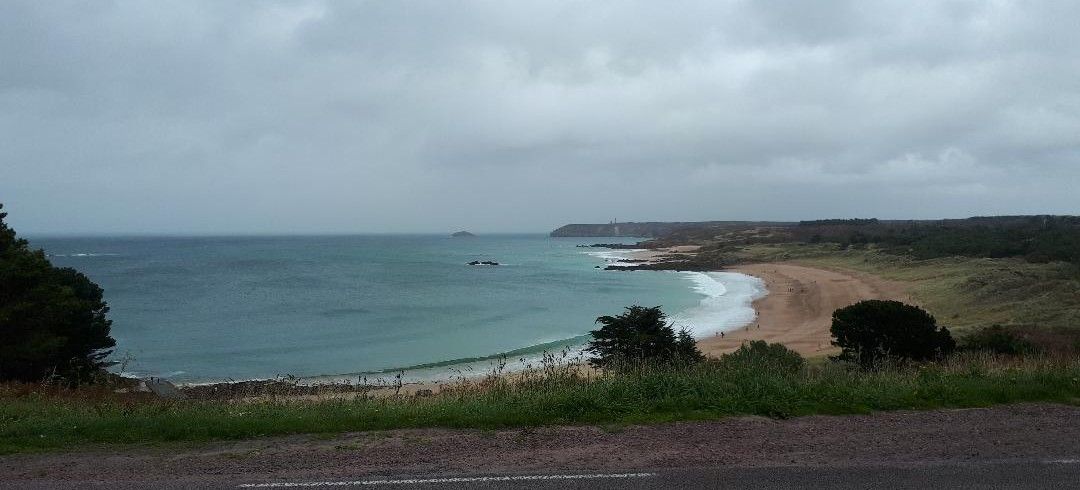
The Anse du Croc beach is a dream spot for lovers of unspoiled nature and waves, and boasts a superb view of Cap Fréhel. Crescent-shaped and 800 meters long, it leads directly to the Pont de l’Étang municipal campsite, a Natura 2000 protected area. The GR34 hiking trail runs alongside the beach. In the summer, the large parking lot overlooking the beach hosts a café-snack bar, a night market, as well as concerts and traditional Breton dances (fest-noz). The library offers a reading and games area on the beach every other Thursday afternoon. The beach is supervised in July and August. A beach wheelchair is available for people with disabilities at the lifeguard station.
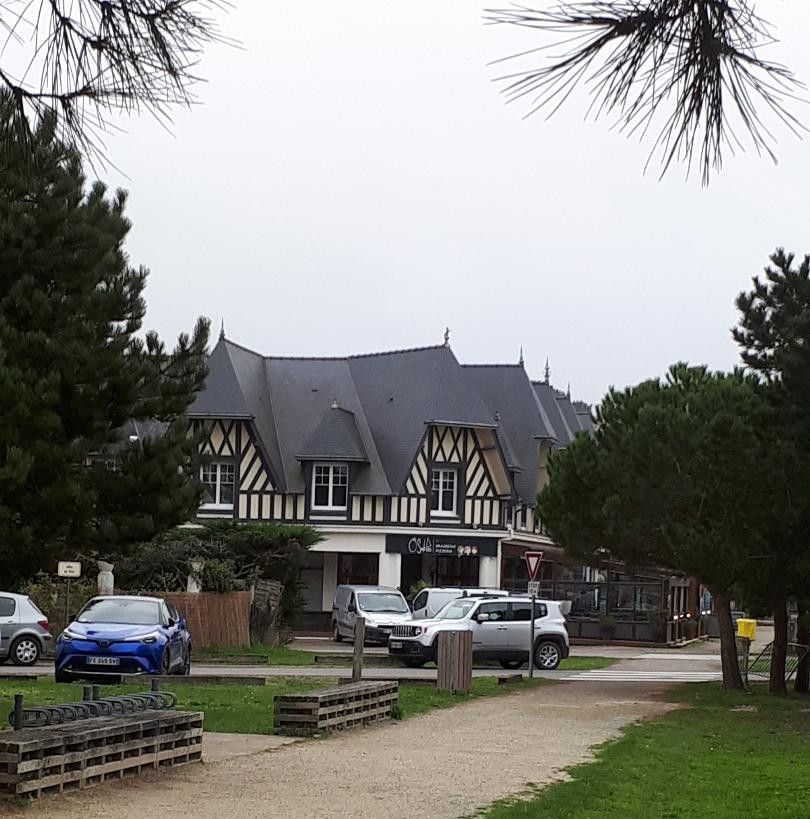
And of course, many anglo norman and belle epoque period mansions which took away one of each for the memories of always, At the end of the day, we walked to escape into the alleys surrounded by beautiful and old villas built in 1922. These Anglo-Norman houses were designed to attract English customers and to compete with the Deauville resort. Today you can still admire the architecture and splendor of these large buildings, which date back to the Belle Epoque period.
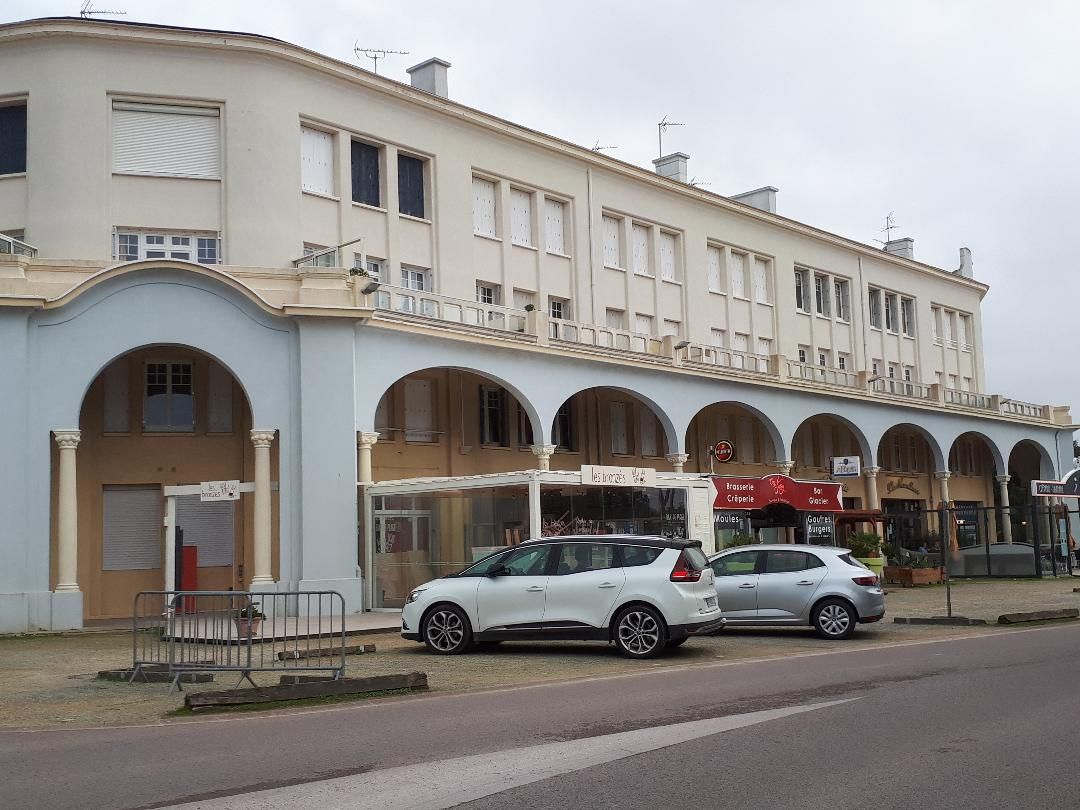
Other things to see here me think are the Sables-d’Or-les-Pins seaside resort (see post) created in the 1920s on the dunes along the large beach of Minieu between Pléhérel Plage and Plurien; Vieux Bourg or Pléhérel Plage beach; Vieux Bourg Chapel, near the sea, choir of a former parish church which was the village church until the demolition of its nave at the end of the 19C, restored between 2003 and 2005; Saint-Sébastien Chapel, 16C Gothic style, located south of the town at the bottom of a valley. A place of pilgrimage since the 16C, it features polychrome wooden statues of Saint Sebastian, Saint Anthony, and Saint Roch. The Villa Collignon, with its central plan and flat roof, is built of granite rubble and concrete. It comprises a basement level, a raised ground floor, and a first floor with a balcony at each corner. Built in 1925, it reflects a blend of various styles: classical, art deco, and even a certain regionalism. The former parish church (14-15C) or Saint-Hilaire Chapel, located in the Old Town of Pléhérel and rebuilt in 1786. The parish church (16C to 18C) was reduced to a chapel in 1870. The Saint-Hilaire Church is located in the new town. The church is in the shape of a Latin cross. As the old town of Pléhérel was on the coast and quite far from the parish center, it was decided in the 19C to build a more centrally located church near the Abbey farm. The foundations were laid on May 5, 1866, and the first stone was blessed on April 21, 1868. The unfinished church was blessed on Christmas Day 1870. The tower and the facade were built on October 16, 1875. It contains ancient statues of Saint Sebastian and Saint Fabian , and a modern statue of Saint Brieuc. The Saint-Sébastien Chapel (1536), located in Pléhérel. Likely built by the Knights Hospitaller of St. John of Jerusalem, it was rebuilt at the beginning of the 16C and completed in 1536. Fort La Latte,(see post) built in the mid-14C by the Goyon-Matignon family. The building, which is mentioned in 1379, crowns a rocky promontory east of Cap Fréhel. The Château de la Ville-Roger, located in Pléhérel, is the property of the La Moussaye family. Marquis Louis de la Moussaye, its owner, was successively a member of parliament, a peer of France in 1835, and finally, ambassador to Russia. The Château du Vaurouault or Vau-Rouault (1643), located in Pléhérel, is the property of the Goyon-Vaurouault family, a junior branch of the Goyon-Matignon family. This manor is mentioned in writings from the 14C. The private chapel of Vaurouault, dedicated to Our Lady of Joy, was built in 1643.
A bit of history I like tell us an abbey once stood on the mound where the new town was built in 1870. Known as Glayo Abbey, it is mentioned in 1159 as being dependent on Saint-Aubin des Bois Abbey, having been ceded from Saint-Jacut Abbey. By prefectoral decree of December 29, 1972, Fréhel was formed by the merger of two villages, Pléhérel, where the main town is located, and Plévenon, an associated village. Pléhérel and Plévenon are ancient parishes. Pléhérel is mentioned around 1092 in connection with several donations to the Abbey of Saint-Jacut. Pléhérel appears as a parish as early as 1159 in a cartulary of Saint-Aubin-des-Bois. The church of the parish of Pléhérel used a seal as early as 1254. Certain place names in Pléhérel, such as L’Hôpital, seem to reveal the presence of the Knights Templar and the Knights Hospitaller of St. John of Jerusalem. An old almshouse, belonging to the Hospitallers and mentioned in a document from 1160, is recorded in the village of L’Hôpital. Another almshouse, belonging to the Templars and mentioned in 1182, is recorded at Port-à-la-Duc. Under the old monarchy, the parish of Pléhérel belonged to the diocese of Saint-Brieuc. Plévenon appears for the first time around 1214 in records of donations to the Abbey of Saint-Aubin des Bois. The parish of Plévenon is mentioned as early as 1240. It is also cited several times in the cartulary of the Abbey of Saint-Aubin des Bois. In 1870, the village of Fréhel relocated, moving away from the coast. In 1924, the seaside resort of Sables-d’Or-les-Pins was established.
The town of Fréhel on its heritage : https://www.frehel.info/fr/rb/219494/decouvrez-frehel
The Grand Site de France on Cap d’Erguy and Cap Fréhel on things to do https://grandsite-capserquyfrehel.com/en/grand-site-cap-derquy-cap-frehel/lesprit-des-lieux-et-les-patrimoines-en/
The Côtes d’Armor tourist office on Fréhel: https://www.cotesdarmor.com/a-voir-a-faire/patrimoine/villes-et-villages-classes/les-stations-balneaires/frehel/
The Bretagne region tourist office on cap Fréhel: https://www.brittanytourism.com/destinations/the-10-destinations/cap-frehel-saint-malo-mont-saint-michel-bay/cap-frehel-and-fort-la-latte/
This is a wonderful beautiful area which you can tell we like a lot and will be back with more time. It always amaze me the beauty of my belle France and especially my lovely Bretagne and its coast. Again, hope you enjoy the post on this is Fréhel !! as I
And remember, happy travels, good health, and many cheers to all !!!

 Paris1972-Versailles2003