
And coming back to my old stumping road warrior area ,and catching up on my many photos ,most in my cd rom vault to bring you new areas and ideas to visit my belle France, here is a new one. Therefore, let me tell you a bit about this is Le Perray en Yvelines !!! Hope you enjoy the post as I.
The village of Le Perray-en-Yvelines is located in the Yvelines department no 78 , in the Île-de-France region of my belle France. It is 4 km from Rambouillet, 47 km from Paris, with a train station on the Paris Montparnasse-Rambouillet line. The town is served by the road N10, which connects Saint-Quentin-en-Yvelines to Rambouillet, the road D910, which is the original route of the N10, and the D61 towards Houdan.
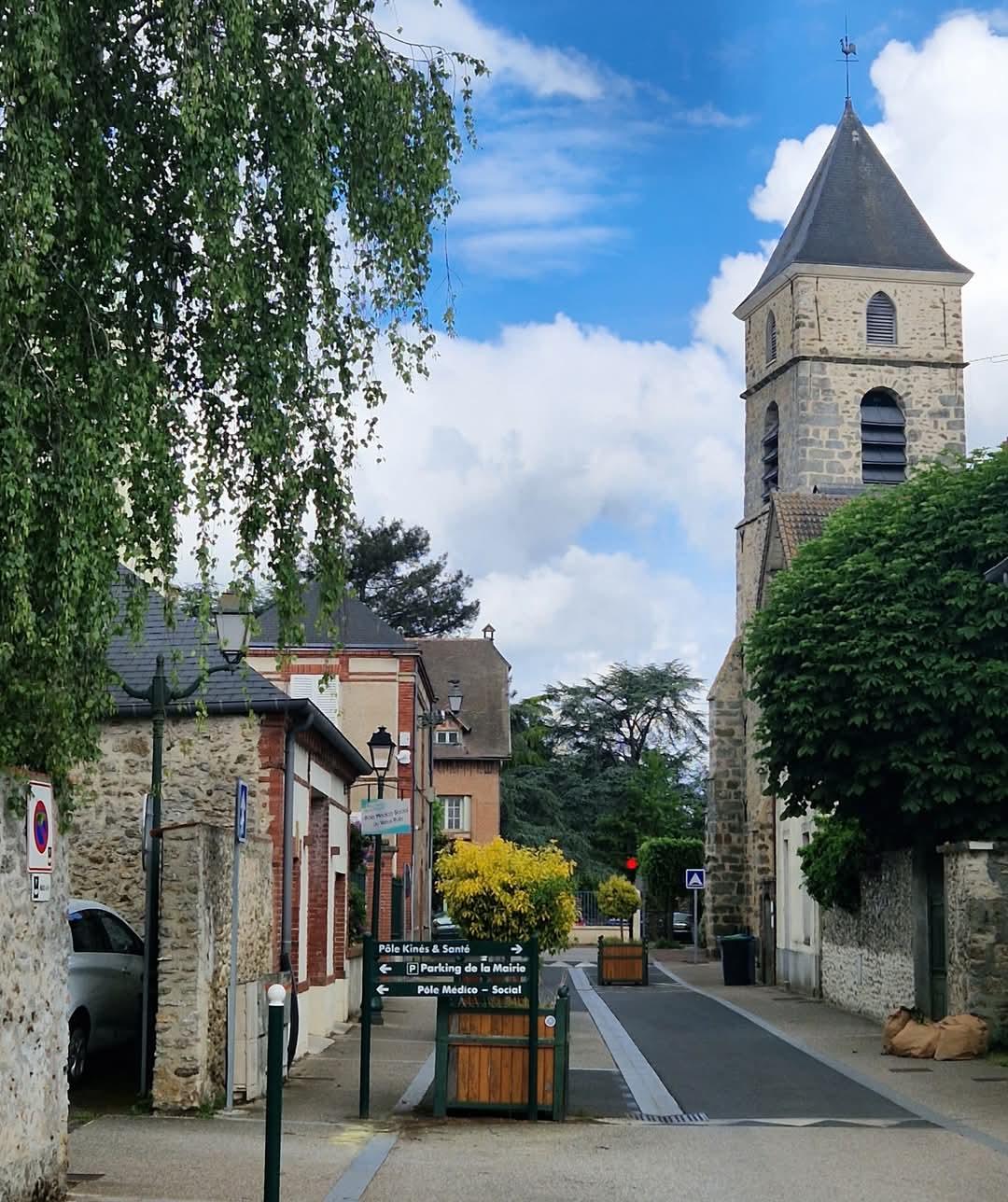
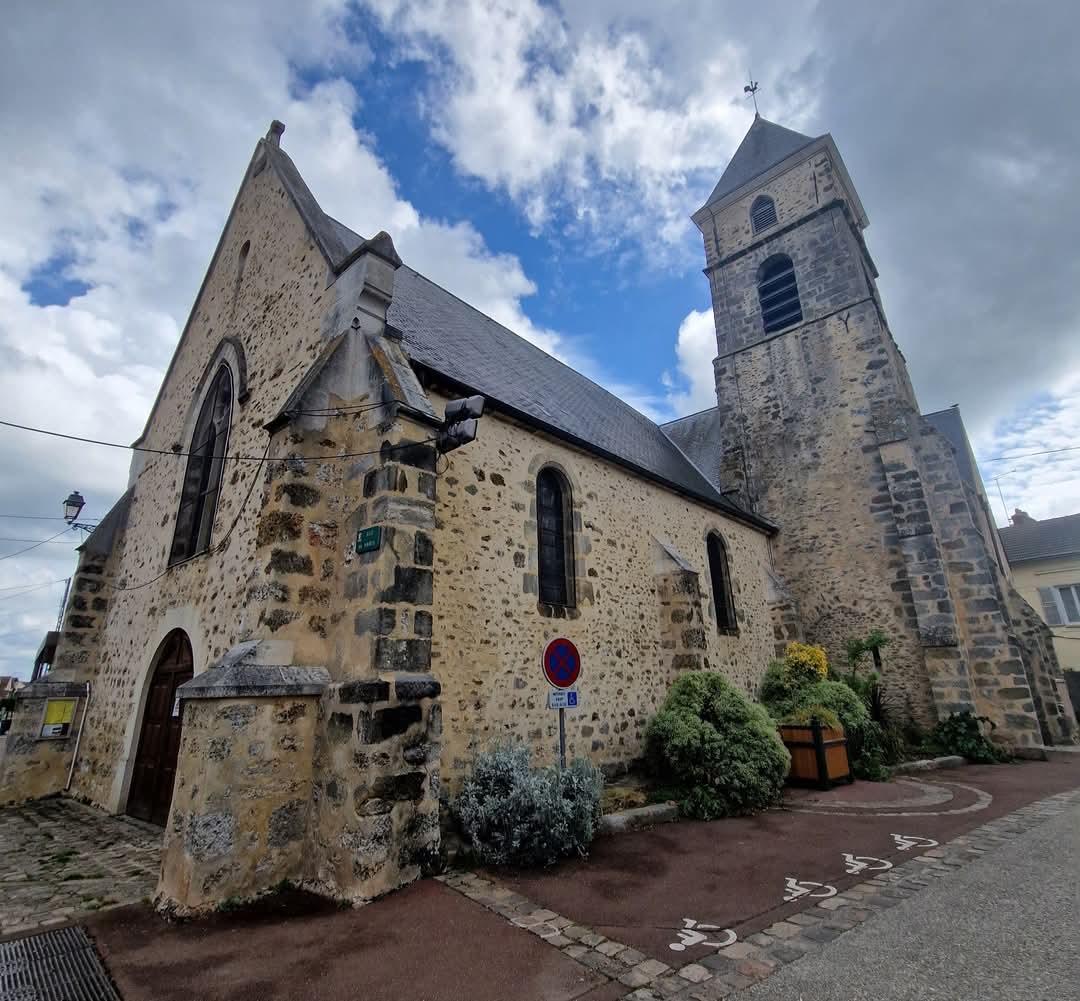
Things to see here are the parish Church Saint-Éloi ,a cartulary attests to the presence of a place of worship on this site in 1238. However, the parish was not erected until November 7, 1242. The church probably dates from the second half of the 13C, but the bases of the bell tower seem to date back to the 12C, and would in fact be the remains of an older church. The bell tower was restored in 1779, raised by ten meters in 1818, then reduced to twenty meters in 1836. Very often rehabilitated and enhanced twice in the first half of the 19C.
The Croix Saint-Jacques, a cross marking the way to Santiago de Compostela, whose current obelisk shape dates from Louis XV who thus preserved it in his time. Park of the former castle of Saint-Hubert, a former royal castle built by Ange-Jacques Gabriel for Louis XV between 1755 and 1759, then enlarged between 1763 and 1774. It was decorated with sculptures by Guillaume Coustou (son) or Jean-Baptiste Pigalle. The castle, abandoned by Louis XVI, was completely demolished in 1855. The site, private property currently consisting of a bank on the pond, a vegetable garden and a concierge’s lodge. The Pont Napoleon bridge, aka the Pont Royal bridge or the Pourras Causeway, built between the Pourras Pond and the Saint-Hubert Pond, was commissioned by Louis XVI. Repaired around 1808 at the request of the Emperor, as mentioned on a plaque. The Emperor’s Hunting Rendezvous or Pourras Pavilion located at the place called Pourras, built for Emperor Napoleon I in 1808 unnecessarily, since he never came there,felled into ruins by 1840 and was partially restored in 1967. On its territory is the Perray Pond as well as the fascinating Saint-Hubert lake, a mirror set in greenery. Louis XV fell in love with it and had a castle built on one of its banks. Today, only the foundations of the terrace remain.


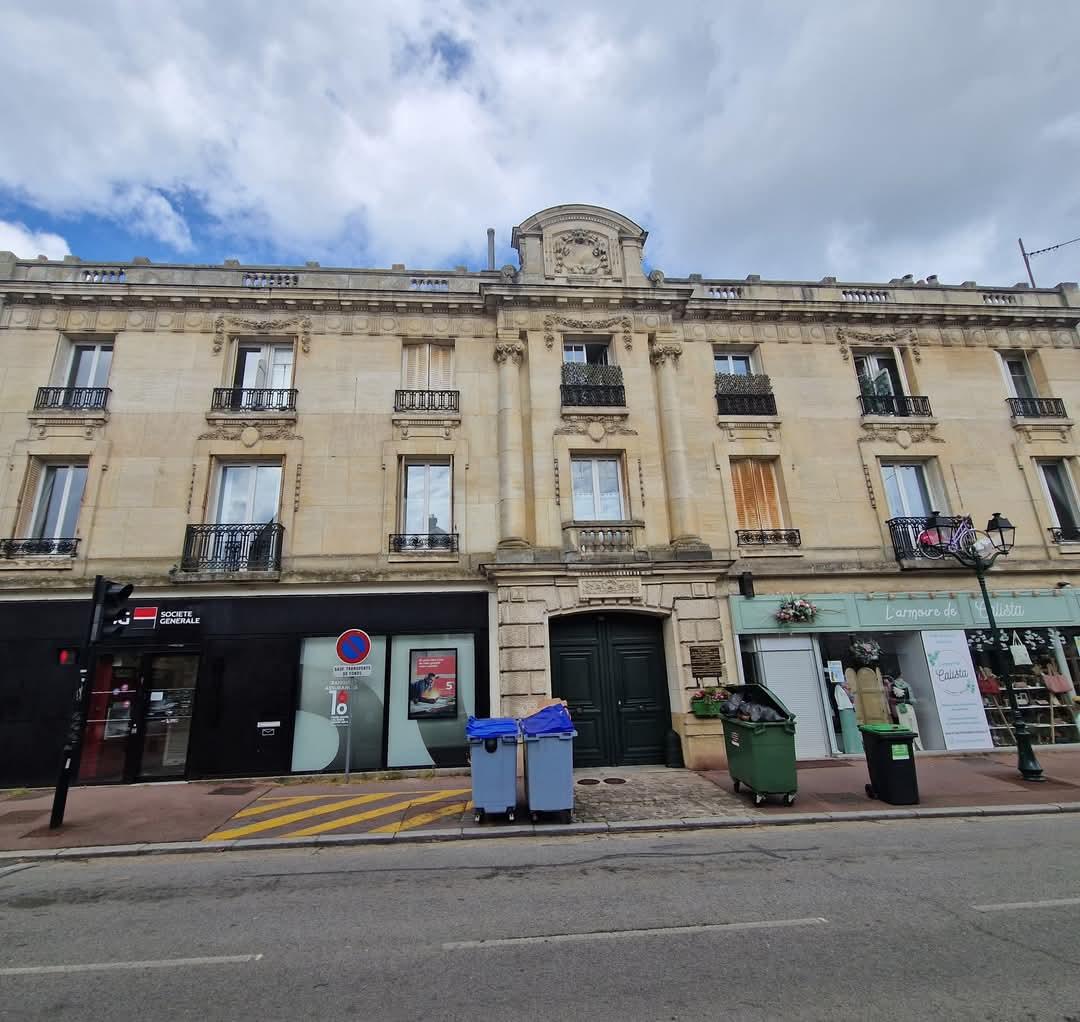
Dr. Israel Garfunkel, a doctor who settled in Le Perray en Yvelines in 1935, was deported because he was Jewish on 07/10/1943, convoy No. 60, and died after his return on 29/12/1946. His wife, Mary, and their children Bernard and Irène were all three deported without return, executed upon their arrival at Auschwitz on 10/10/1943. At 86 rue de Paris, the Garfunkel family, lived in this home from May 1935 to September 28, 1945. Unfortunately, in our world the atrocities and genocides continue on both sides,sadly, we never learned.
A bit of history tell us that during the reign of Louis IX (Saint-Louis), a new village was born from the stone road between Paris and Chartres: “villa nova de Pereio in Aquilina”. The new village is located on the old Roman road that led from Orléans (Cenabum) to Poissy (Pinciacum) from the Carnutes forest to the Seine. This village will develop along this road, to Bayonne, whose development dates first from the pilgrimages to Santiago de Compostela. Francis I used it to reach his castle of Rambouillet. The creation of the post houses by Henry III saw the installation of the first wheelwrights and farriers at Le Perray. Louis XIV took it to marry Marie-Thérèse of Austria in June 1660 on his way to Saint Jean de Luz. Louis XV, a great hunter and close friend of the Duke of Penthièvre, knew it well. It was in the 18C that the road helped to develop local activity such as inns, hostelries, wheelwrights, farriers, carters, carters. The Imperial Route No. 11 would become Royal Route No. 11, then No. 10, and, as the French Republic required, the N 10. It was to supply water to the Palace of Versailles in 1685 that Louis XIV had a ten-hectare pond dug at Perray-en-Yvelines called the Etang du Perray fed by a system of channels and the chain of ponds on the route of the Peissonnier stream. This allowed the rather marshy territory of the town to be cleaned up, good agricultural land to be obtained, large farms to be created and thus the village to develop. During the Great War or WWI, the auxiliary military hospital no. 292 was set up in the hunting lodge on the property of Count Felix-Nicolas Potocki (Polish native,and French in 1905). Wounded or sick soldiers evacuated from the front were treated there.
The town of Le Perray en Yvelines on its heritage (see bottom patrimoine) : https://leperray.fr/carte-didentite/
The Rambouillet tourist office on Le Perray en Yvelines : https://www.rambouillet-tourisme.fr/en/communes/le-perray-en-yvelines/
There you go folks, the area of my first official home in France and always remember fondly, my nostalgic Yvelines the cradle of the kingdom of France and lovely towns all over with great architecture and history, Again, hope you enjoy this post on this is Le Perray en Yvelines as I.
And remember, happy travels, good health, and many cheers to all !!!

 Paris1972-Versailles2003
Wow! Lots of history right there 😀
LikeLiked by 2 people
History is all over here! thanks for stopping by Cheers
LikeLiked by 1 person