
We have driven and walked in my eternal Paris, and would like to have an imprint in my blog on the wonderful family times we had there, There is so much to see , doing my best, and glad found me these older pictures in my cd rom vault ,which now transposing in my blog for you and me, This was my former worked city, so glad to post more memorable spots on it, I thank you for your readership over the years and to bear with my rants! After Paris is to rant, shout and yelled about, me think. Therefore, here is my take on curiosities of Paris , part XXXIV !!! Hope you enjoy the post as I.
The Auteuil-Boulogne train station was located in the 16éme arrondissement of Paris. Created in 1854, it is part of the Pont-Cardinet to Auteuil – Boulogne line or simply Auteuil line, integrated in 1867 into the Petite Ceinture line.Its building has been preserved and now houses a restaurant (Auteuil Brasserie), while its old platforms have now been transformed: part has been divided up and another part is part of the Petite Ceinture du 16e, a pedestrian promenade that continues to Passy. It is by the Place de la Porte-d’Auteuil, at the end of Boulevard Exelmans and Rue d’Auteuil, (many times drove by here into inner Paris!) near their intersection with Boulevards Suchet and Montmorency and Rue Poussin. The line closed on January 6, 1985, due to construction work on the RER C. In 2007, the disused tracks to the north were opened to pedestrians: redeveloped into a tree-lined promenade, they now house the Petite Ceinture du 16e. It is serve by metro line 10 Porte d’Auteuil.

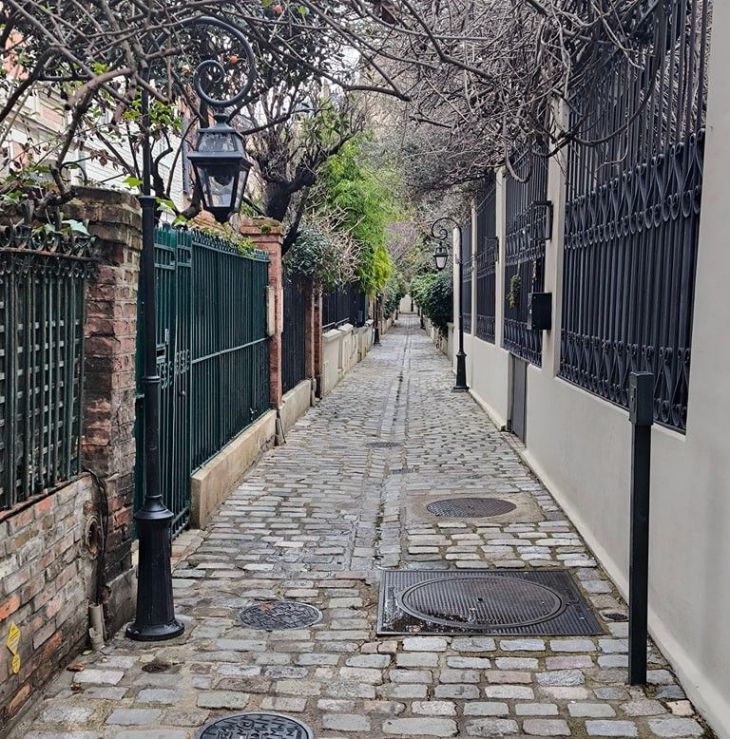
The Villa Dietz-Monnin is a private road in the 16éme arrondissement of Paris. It is named after the politician Charles Dietz-Monnin, a member of the National Assembly and then a senator. The Villa Dietz-Monnin is included in the Villa Mulhouse. It begins at 10, Villa Cheysson and ends at 6, rue Parent-de-Rosan. It is 114 meters long. It is served by line 9 at the Exelmans metro station. This private road included in the Villa Mulhouse was initially the “Passage Dietz-Monnin”, the first constructions of which, dating from 1882, were built to accommodate workers. All these houses are built according to the model of the workers’ cities of Mulhouse. It was from the 20C that the pavilions began to be raised. It took its current name in 1937. The Villa Mulhouse is a group of private roads delimited by Rue Claude-Lorrain, Rue Boileau, Rue Parent-de-Rosan and Avenue de La Frillière. The Villa Mulhouse includes 67 houses along roads named after famous Alsatians: Avenue Georges-Risler, Villa Dietz-Monnin, Villa Cheysson, Villa Émile-Meyer. Since January 12, 1953, the association Sauvegarde de la villa Mulhouse has aimed to safeguard the uniqueness and specificity of this site, I walked by this area and took the pictures incognito fyi,
The Paris tourist office on the 16éme arrondissement or district: https://parisjetaime.com/eng/article/a-la-decouverte-du-16e-arrondissement-de-paris-a830
The Place de Passy is located in the Muette quartier (must say my favorite) or neighborhood of the 16éme arrondissement or district of Paris. It is at the intersection of Rue de Passy, Rue de l’Annonciation, Rue Duban, and Rue Bois-le-Vent. It is approximately 30 meters by 34 meters. It takes its name from its proximity to Rue de Passy, which was the main street of the former village of Passy. This former lumberjack hamlet has retained its old-world charm with its small country streets, such as Rue Berton, and its small secret gardens that blend in very well with the private mansions, fashion boutiques, and other businesses on Rue de l’Annonciation and Rue de Passy. The church, in the center of the village, completes the decor! It is served by metro line 9 at La Muette station and metro line 6 at Passy station. As well as Bus 32 Place de Passy and RER C Boulainvilliers, A bit of history I like tell us that on November 5, 1793 during the French revolution, on the “Place d’Armes” (the square’s former name), titles, information, and papers relating to lordship rights were burned. Before the formation of the square in 1834, it was only a passage between rue de Passy and rue de l’Église (now rue de l’Annonciation). The Petite Ceinture line (1854) and the river shuttles on the Seine (1860s) then greatly contributed to bringing Passy closer to Paris, finally integrated into the city in the new 16éme arrondissement. Formerly the “place de l’Hôtel de Ville” of the village of Passy, it was created on the right-of-way of the streets that border it such as rue Bois-Le-Vent, rue de l’Annonciation and rue Duban. It owes its first name to its proximity to the village City/town hall, then located at 67 rue de Passy. In 1848, it was renamed “place Béranger” and then returned to its original name. It was classified as a Parisian street by the decree of May 23, 1863 and took its current name by a decree of February 26, 1867, The best thing to come here is to browse and shop at the covered market of Passy, with the market name written in large red letters on the outside and part of its facade in glass tiles, dates from the 1950s. It houses around twenty stalls, where quality products are displayed There are other market gardeners, butchers, caterers..It is located at the Place de Passy. Open Tuesday to Friday from 8h to 13h and from 16h to 19h; Saturday from 8h to 13h, and from 15h30 to 19h; Sunday from 8h to 13h.

The Paris tourist office on the marché couvert de Passy : https://parisjetaime.com/eng/shopping/marche-couvert-de-passy-p2269
The Paris tourist office on the 16éme arrondissement de Paris : https://parisjetaime.com/eng/article/a-la-decouverte-du-16e-arrondissement-de-paris-a830
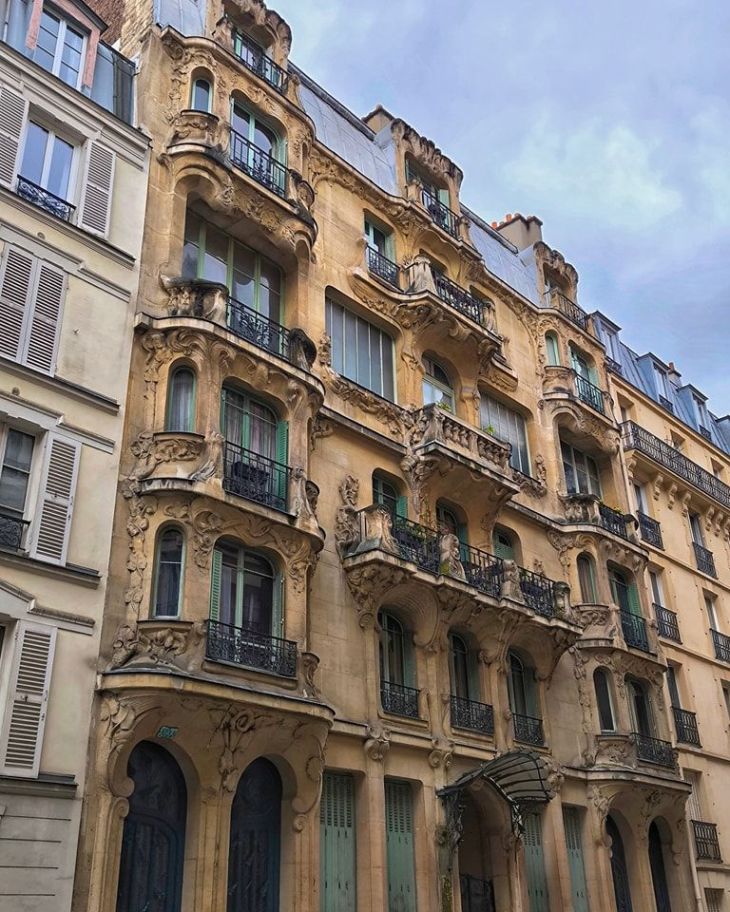
The Rue du Champ-de-Mars is in the 7éme arrondissement of Paris. It is named after its proximity to the Champ-de-Mars. It begins at 18, rue Duvivier and ends at 91, avenue de La Bourdonnais. The district is served by metro line 8 at the École Militaire, The section between rue Cler and avenue de La Bourdonnais was opened under its current name by a decree of February 13, 1852. Extended between rue Duvivier and rue Cler, this part was classified as a Paris road by a decree of June 9, 1931. Notable buildings No. 24: building where the writer François Le Lionnais lived from 1935 to 1952 (5th floor). No. 33: Les Arums building in Art Nouveau style, built by Octave Raquin, awarded in 1902 in the façade competition,
The Paris tourist office on the 7éme arrondissement or district : https://parisjetaime.com/eng/article/explore-paris-s-7th-arrondissement-a825
There you go folks, a dandy city to explore and enjoy with the family, Memorable moments in my eternal Paris,driving and walking all over in my road warrior trails brings out sublime awesome spots with nice memorable family visits of yesteryear always remember and always looking forward to be back, eventually. Again hope you enjoy the post on curiosities of Paris, part XXXIV !!! as I.
And remember, happy travels, good health, and many cheers to all !!!

 Paris1972-Versailles2003