
I am again to tell you about more streets of my eternal Paris. I have many many posts on Paris and several on the streets of the most beautiful city in the world. I have come up with pictures from cd rom vault that should be here for you and me. As always thank you for following my blog some since Nov 26, 2010. Therefore, here is my take on the streets of Paris, part XXI !!! Hope you enjoy it as I.
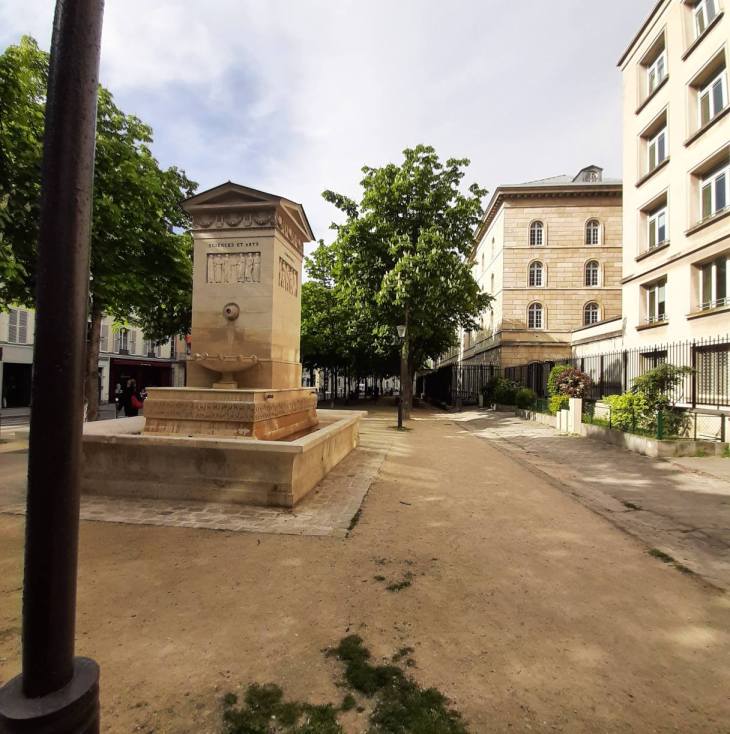
The promenade de l’allée du Séminaire – Jean-Jacques-Olier is a green space in the 6éme arrondissement of Paris. The promenade is located between Rue de Vaugirard, around no 56, and Place Saint-Sulpice and runs along Rue Bonaparte, leading you on one side to Place Saint-Sulpice and on the other to the Luxembourg Gardens. The promenade was inaugurated in 1936. It is served by metro line 4 at the Saint-Sulpice station. Its name pays homage to Jean-Jacques Olier, a French mystic and priest. He established the first French seminary following the Council of Trent and founded the Society of Priests of Saint-Sulpice. Its community participated in the growth of missions in the French countryside, the development of seminaries in France, and the evangelization of Canada. It features a fountain, the Fontaine de la Paix or fountain of peace framed by chestnut trees. The Fountain of Peace is one of fifteen fountains specifically commissioned by Napoleon, it is decorated with bas-reliefs symbolizing agriculture, commerce, science, and the arts. To the south of the promenade is a memorial space for the dead of several military conflicts involving France. The Community of the Daughters of Christian Instruction was once located along the promenade. It leads to Rue de Vaugirard, the longest street in Paris, which once connected Lutetia to Dreux. It also led to the village of Vaugirard, which had belonged to the Abbey of Saint-Germain-des-Prés since 558.
The Paris tourist office on the 6éme arrondissement of Paris : https://parisjetaime.com/eng/article/explore-paris-s-6th-arrondissement-a823
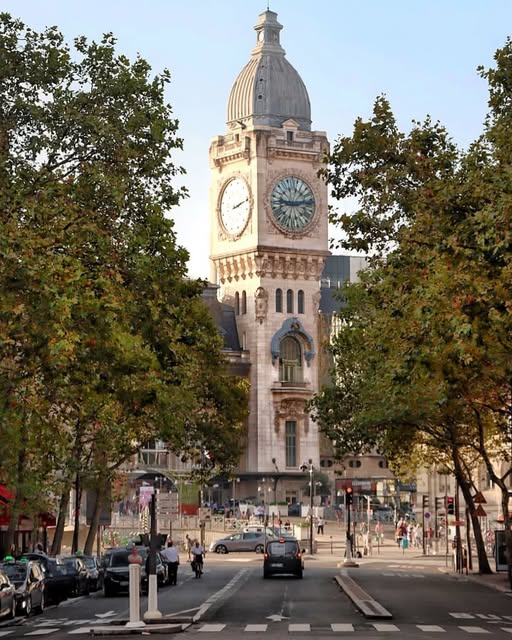
The Rue de Lyon is located in the Quinze-Vingts quartier or neighborhood of the 12éme arrondissement or district of Paris. It begins at Place des Combattants-en-Afrique-du-Nord, located at the intersection with Boulevard Diderot, in front of the Gare de Lyon from which it takes its name, and heads towards Place de la Bastille along the Bastille Opera, after crossing Avenue Ledru-Rollin and being joined by Avenue Daumesnil. On November 27, 1847, a royal decree decided to open a street between Place de la Bastille and the new train station. The area is not very urbanized and is occupied, mainly, by market gardeners. This street takes its current name from the beginning. Its creation led to the elimination of Rue Treilhard. Notable buildings and places tell us that this street runs alongside the Bastille Opera House and leads to Place de la Bastille and the July Column. The Promenade Plantée on the Viaduc des Arts. At no. 12 UGC Lyon Bastille cinema, formerly UGC Gare de Lyon.
The Paris tourist office on the 12éme arrondissement of Paris : https://parisjetaime.com/eng/article/explore-paris-s-12th-arrondissement-a824
The Quai François-Mitterrand is located along the Seine river alongside the Musée du Louvre. (see posts) This is on the 1er arrondissement of Paris, Its name, which dates back to July 8, 2003, comes from the union of part of the Quai des Tuileries and part of the Quai du Louvre. This quay now of 700 meters long between Avenue du Général-Lemonnier and Rue de l’Amiral-de-Coligny, at the foot of the Louvre Palace, pavillon de Flore, and above the Port du Louvre, runs along the Seine and meets 3 bridges: the Pont Royal, the Pont du Carrousel and the Pont des Arts. This part of the Louvre is occupied in particular by the Grande Galerie, built on the initiative of Henri IV between 1595 and 1609 ; (the king’s monogram appeared on the facades) to connect the old part of the Palais du Louvre to the Palais des Tuileries (now gone see post). The western part of this gallery was demolished under Napoleon III in 1861-1864 and rebuilt by the architect Hector Lefuel up to the Pavillon de Flore. To accommodate traffic on a major north-south axis planned at the time, he created a triple passage for cars, separated by pedestrian crossings. The monogram of Emperor Napoleon III, replacing that of Henri IV, attests to its reconstruction. This provided the opportunity to create large openings, allowing traffic to pass north. See pic the Porte des Lions (one of my best entry to the museum) leading to the jardin Carrousel.

The Paris tourist office on Paris Centre (arrond 1-4) : https://parisjetaime.com/eng/article/explore-the-centre-of-paris-a846
There you go folks, another dandy beautiful set of glorious streets of my eternal Paris. I have criss cross them many and have many in my blog already, Again, hope you enjoy this post on the streets of Paris, part XXI !!! as I.
And remember happy travels, good health, and many cheers to all !!!


