
So here I am again on my road warrior mode in the beautiful Morbihan. My dept 56 doing all kinds of trips all over. The views on the roads are wonderful and all is very close to home. So let me bring out Plumergat again with new pictures found in my cd rom vault for you and me. The town is 18 km from Vannes, 127 km from Rennes, and 11 km from my current home, I like to tell you more on the Chapelle Saint Servais, Chapelle de la Trinité of Plumergat !!! Hope you enjoy the post as I
Plumergat is one of the primitive parishes in my lovely Bretagne created around the 6C, during the immigration of Bretons from the Isles of Britain (present-day Great Britain) to Armorica (present-day Bretagne). Christianity has left its mark on the town which still has 11 churches and chapels. The population, fleeing the invasions of the Saxons, found in Armorica a sparsely populated land with Celtic and pagan beliefs. In Armorica, they transposed their structure. They formed themselves into neighborhoods and placed themselves under the protection of a saint honored in a chapel. Around the 9C, these small communities grouped together in parishes bearing the prefix Plu, Plo or Plou. All the towns which, like Plumergat, bear this prefix are the old parishes which were created at the time. Plumergat is a valuable witness to this historical organization. Christianity has strongly marked the town which still has 11 churches and chapels. It is also nicknamed “the town with three bell towers” in reference to the three religious buildings that stand side by side in City center around the place Joseph Corfmat, These are the Chapelle Saint Servais, and the Chapelle de la Trinité.
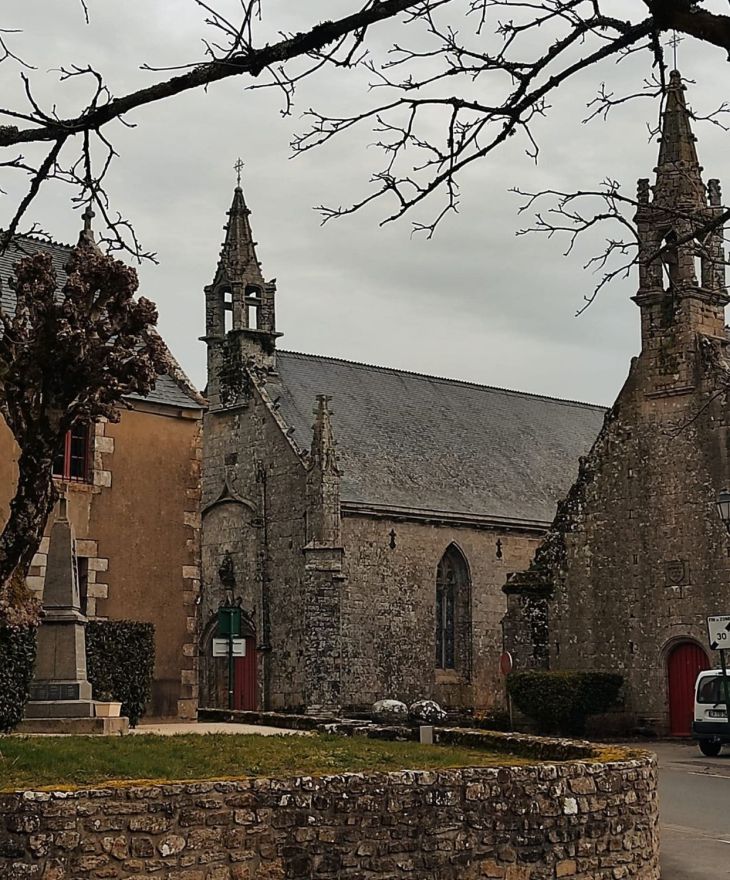
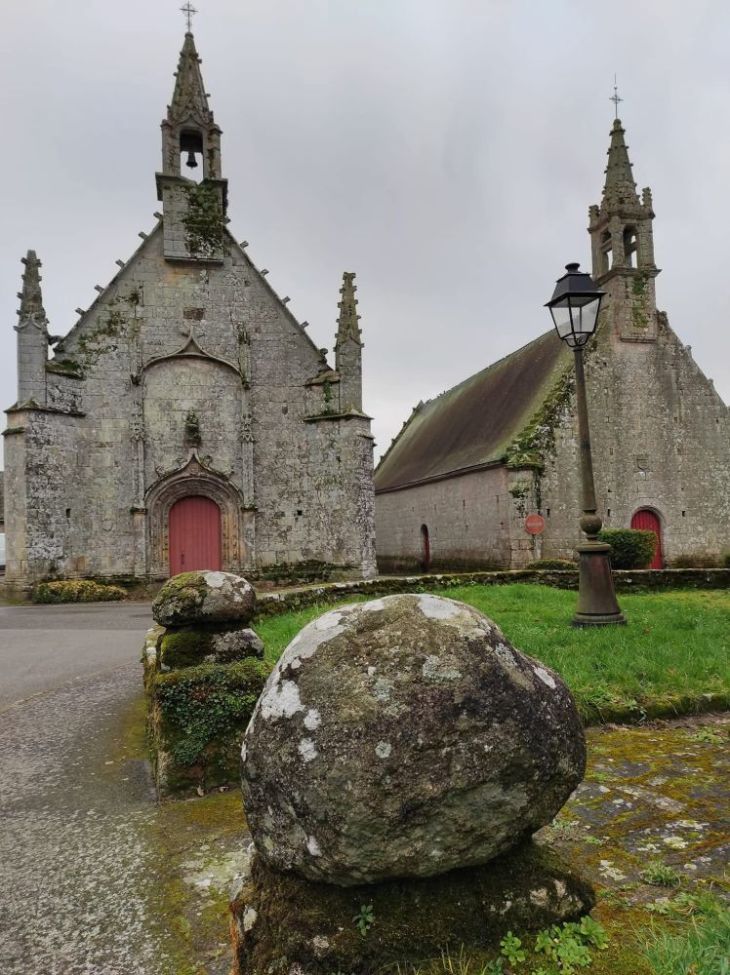
The Chapelle Saint-Servais chapel (see post) is located at rue des Sabotiers, located immediately next to the Chapel of the Trinity, and immediately to the Saint-Thuriau Church . The chapel was built in 1610 and dedicated to Servais de Tongres, protector of sailors. It owes its construction to the will of a peasant from the village who made several pilgrimages to the saint’s tomb in Maastricht. The chapel was built entirely in granite, according to a rectangular plan. A single nave occupies the interior space. A square steeple with spire, pilasters and pinnacles caps the western gable. A stone bench surrounds the exterior. The frame has crocodile-headed ties and a sandpit dating from 1610.
Dating from the 15C, the Chapelle de la Trinité or Trinity Chapel (see post) is a fine example of the flamboyant style. Its drip edges and sand pits abound with sculptures with various motifs: animals, sometimes in strange poses or playing bagpipes, fantastic characters and monsters. A rood screen used to separate the choir from the nave.
The town of Plumergat on its heritage (pdf file): https://www.plumergat.fr/wp-content/uploads/2021/12/1-Historique_Plumergat.pdf
The local Bay of Quiberon tourist office on Plumergat : https://www.baiedequiberon.co.uk/plumergat
The local Bay of Quiberon tourist office on the Chapelle de la Trinité : https://www.baiedequiberon.co.uk/to-see-to-do/culture-and-heritage/chapels-and-churches/chapelle-de-la-trinite
The Religiana religious site on the Church Saint Thuriau : https://religiana.com/fr/church-saint-thuriau-plumergat
There you go folks, another roundabout of beauties in my neck of the woods. Always something to see in my beautiful Morbihan, just need more time!!! Again, hope you have enjoy the post on the Chapelle Saint Servais, Chapelle de la Trinité of Plumergat !!! as I.
And remember, happy travels, good health, and many cheers to all !!!

 Paris1972-Versailles2003