
Here I am again on my road warrior ways in the neighbor Finistére, This is heaven with so many and long coast and pretty towns alongside. There are so many do not think will see them all in my lifetime !! Anyway, I keep on trying and besides some familiar ones, I dwell into new ones such as Châteaulin. Let me give you my take on this is Châteaulin !!! Hope you enjoy the post as I.
The town of Châteaulin is located in the Finistère department no. 29, in my lovely Bretagne region of my belle France. The town is surrounded by the hills of the Armorican Massif, the Monts d’Arrée, the Montagnes Noires and the Ménez Hom. Châteaulin is a crossroads town: the N 165 (by me is voie express ) linking Nantes to Brest via Vannes, Lorient and Quimper and the N164 linking Châteaulin to Rennes via Carhaix and Loudéac which communicate with each other thanks to the Pouillot interchange; In addition, the D 788, which leaves from the same interchange and crosses the town, is one of the two main roads providing access to the Crozon peninsula.
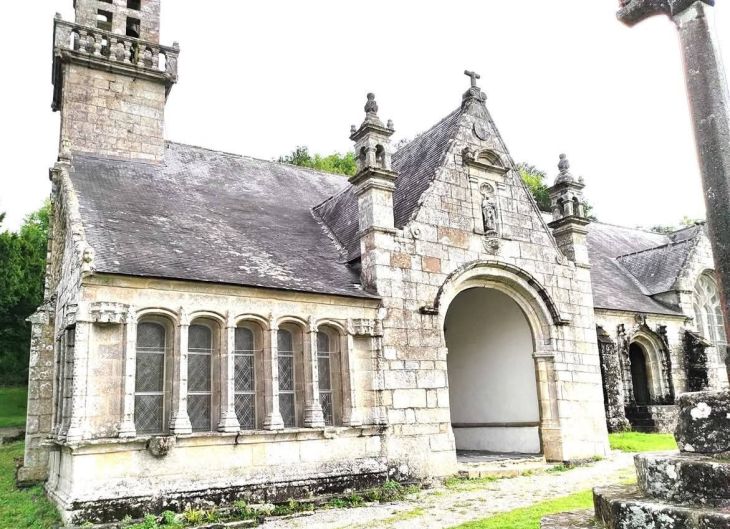
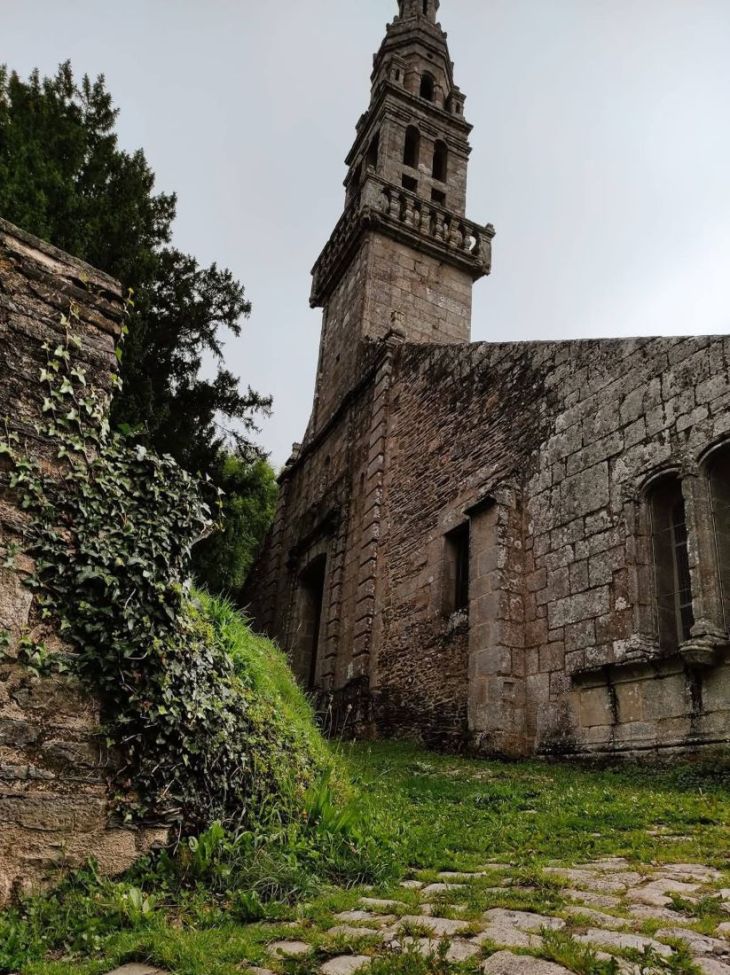
The Chapelle Notre-Dame , included with the triumphal arch, the cross and the ossuary are 13C, partly rebuilt in 1721 and 1753 and restored in 1860. This is the former chapel of the former castle. It includes a nave of six bays with side aisles, a transept and a choir. The oldest parts of the chapel date back to the last quarter of the 13C and have been remodeled at several times, notably in the 15-16C, and 17-18C. It contains the tombstone of Jeanne de Trésiguidy, Viscountess of Faou (dated 1324). The monumental entrance dates from the end of the 15C. The bell tower with domes and lanterns dates from 1753. The exterior walls date from the 16C. The southern porch, restored in 1726, dates from 1722. The six-bay nave dates from the 13-14C. The Beaumanoir-type canted apse bears the date 1691 at the bottom of the southern gable. Inside the porch, above the chapel door, is a beautiful wooden statue of the Virgin Mary 18C. The western portal dates from 1753. The altarpiece of the high altar is late 17C. The altar of the rosary altarpiece dates from the 17C: it was redone in 1815. The Saint Barbara altar comes from Pont-de-Buis. The confessional and the communion table date from the 18C. The Chapelle Notre Dame contains beautiful statues from the 15-18C: Saint Herbot (in stone, 15C), Saint John the Baptist (in stone), Saint Crispin, Saint Crispinian, Virgin Mother (in wood, 17C), Pietà (in wood, 17C), Saint Nicholas (in wood, 16C), Saint Maudez (in stone, 15C), Saint Gregory (in wood, 16C) and a stone group of Saint Anne and the Holy Virgin, holding the infant Jesus on her knees (15C).
Other things to see here, me think are : the parish Church Saint-Idunet, completely rebuilt in 1869 in the neo-Gothic style on the site of the former priory church. The Chapelle Saint-Compars de Lospars. This chapel, which dates from the 16C, was restored in 1989. the Chapelle Notre-Dame de Kerluan in the shape of a Latin cross, it dates partly from 1653, but has undergone many restorations since then; the Calvary of the enclosure, which dates from 1639, the keep of the former Château de Châteaulin dates from the 10-11C. The Nantes-Brest canal and its locks: Guillec, Pen-ar-Pont, Prat-Hir, Toul-ar-Rodo, Coatigrac’h, Châteaulin; Near the latter, an aquatic observatory allows a descent into the bed of the Aulne river (observation of white fish, and in particular salmon at the time of their migration) and to see the fish pass, inaugurated in 1996.
A bit of history tell us that in the region of Châteaulin, several megalithic monuments have been discovered. In the Celtic era, the Osismes, a very powerful people, occupied approximately the current territory of Finistère. The only remains they left in the region are a triple-enclosed camp in the Nevet mountain length of 422 meters in Locronan ( see posts). Two Roman roads passed through Châteaulin: the strategic road (via militaris) linking Le Mans to Camaret via Rennes and Carhaix, crossed the Aulne on a ford at the height of the current bridge; It roughly followed the route of the Grand-Rue and the old road to Pleyben; and the local road (via vicinalis) leaving from Châteaulin (or Carhaix) for the Cap Sizun peninsula. It is estimated that it passed through Cast and ended at the Baie des Trépassés where curious remains of Roman buildings remain. Around 485, Saint Guénolé built his monastery at the mouth of the Aulne. Around 500, while he was going up the banks of the river called Hamn to the mountain called Nin, he met a holy man named Idunet. The latter gave him the lands he had received from King Gradlon, namely “the truce of Dinan, the truce of Cuhin, Caer, Choc, Lan-lunctat, half of Gumenech”. Little is known about Idunet: he is said to have lived in a cave in a place called “Nin”, from which comes the toponym Castel-Nin, today Châteaulin. A former ducal bar, the town became, after the duchy was annexed to the Kingdom of France in 1532, the seat of a royal seneschal’s court whose jurisdiction extended over 27 parishes. The chaplaincy of Kerjean was founded by the Templars who settled in Brittany in 1130. It depended on the commandery of Quimper, which itself depended on that of La Feuillée.
In December 1593, during the Wars of the League, the Count of Magnane, captain of the Duke of Mercœur, obtained permission from the commander of Quimper to pass through Châteaulin with his troops. During the Wars of the League, in December 1593, after having sacked the town of Le Faou, for fifteen days, the parishes of Châteaulin, Plomodiern, Plounévez, Quéménéven, Locronan, were in a way bled white by a frenzied soldiery. It was in a difficult economic context that the stamped paper revolt broke out in 1675. The population was overwhelmed by the increase in taxes. From 1664 to 1675, twelve new taxes were created to meet the needs of Louis XIV. On the morning of June 9, 1675, the tocsin rang from the bell towers of Châteaulin and the surrounding parishes. Peasants from around thirty parishes rose up and marched towards the town, armed with pitchforks, iron-tipped sticks, rifles and muskets. This revolt was one of the bloodiest in the history of Brittany: the Stamped Paper Revolt, also called the bonnets rouges or Red Cap Revolt in reference to the colour of the caps worn by the peasants.
Châteaulin was occupied by the nazis on June 19, 1940. The town occupied a strategic position because it was at the time a railway junction allowing, among other things, access to the Crozon peninsula and the transport of materials necessary for the construction of the Atlantic Wall. On August 10, 1944, the nazis mined the Châteaulin bridge in order to slow the progress of the Allied troops and cover their retreat towards the Crozon peninsula; The town was liberated on August 11, 1944 by the 2nd “Stalingrad” battalion, formed of FTPF resistance fighters from the Saint-Goazec – Spézet maquis, commanded by Auguste Le Guillou, who also created the Penarpont maquis.
An anecdote as I follow the races, The small cycling race of pardon, the “Grand prix de Châteaulin”, created in 1933 was renamed “Circuit de l’Aulne” in 1935 among its winners Louison Bobet in 1949 and 1953, Rik Van Steenbergen in 1952, Rik Van Looy in 1962 and 1963, Raymond Poulidor in 1967, Jacques Anquetil in 1968, Eddy Merckx in 1966, 1969 and 1975, Bernard Hinault in 1978 and 1979, etc.). Not bad at all,,,, What was the region’s biggest criterium was replaced in 1999 by “Les Boucles de l’Aulne – Grand Prix Le Télégramme”. The French road cycling championships were held in Châteaulin in 1955. Stages of the Tour de France cycling race Châteaulin against the clock saw victory by Charly Gaul in 1958 and Raymond Poulidor in 1965 and two road stages finished in Châteaulin in 1965 and 1982.
The town of Châteaulin on its heritage : https://chateaulin.fr/se-divertir/#h2-4
The local Menez Hom Atlantique tourist office on Châteaulin : https://www.menezhom-atlantique.bzh/en/decouvrir-menez-hom-atlantique/nos-17-communes/chateaulin/
There you go folks, another dandy road warrior ride, Châteaulin is a wonderful architectural and historical town to visit, worth the detour. We shall be back, eventually. Again, hope you enjoy this post on this is Châteaulin !!! as I.
And remember, happy travels, good health, and many cheers to all !!!

 Paris1972-Versailles2003