
Here I am again on my road warrior ways in my beautiful Morbihan, This is heaven with so many and long coast and pretty towns alongside; another town passed by and finally came into city center. There are so many do not think will see them all in my lifetime !! Anyway, I keep on trying and besides some familiar ones, I dwell into new ones such as Billiers. Let me give my take on curiosities of Billiers !! Hope you enjoy the post as I.
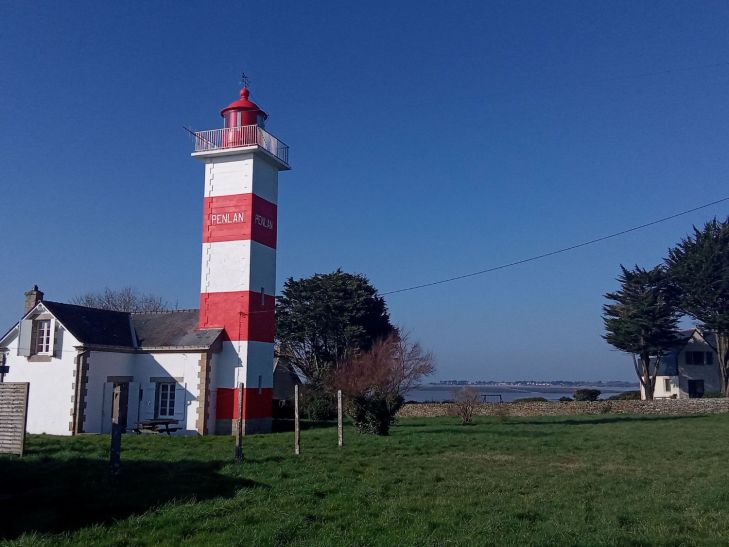
The Billiers estuary offers the curious a variety of maritime landscapes that mix the waters of the Vilaine estuary with those of the ocean. the Thora car park at the entrance to the town and run along the estuary and its old salt marshes that have been unexploited since 1930, The presence of the surrounding wall and the tower of the old Cistercian Abbey of Prières. It was founded in 1252 by the Duke of Brittany Jean 1er le Roux. The port of Pen Lan is dominated by a red and white lighthouse that rises 26 meters above sea level. At the beginning of the 19C, rowboats gradually replaced the “chates” de Billiers, working sailboats on the Atlantic. Until 1930, fishing was carried out with a beam trawl and small coastal shipping. Walkers can continue in the coastal path and discover a beautiful panorama over the Vilaine estuary to the listed natural site of the Grays cairn, located on a coastal meadow. The cairn and its Crapaud dolmen bear witness to the occupation of the site in the Neolithic period.
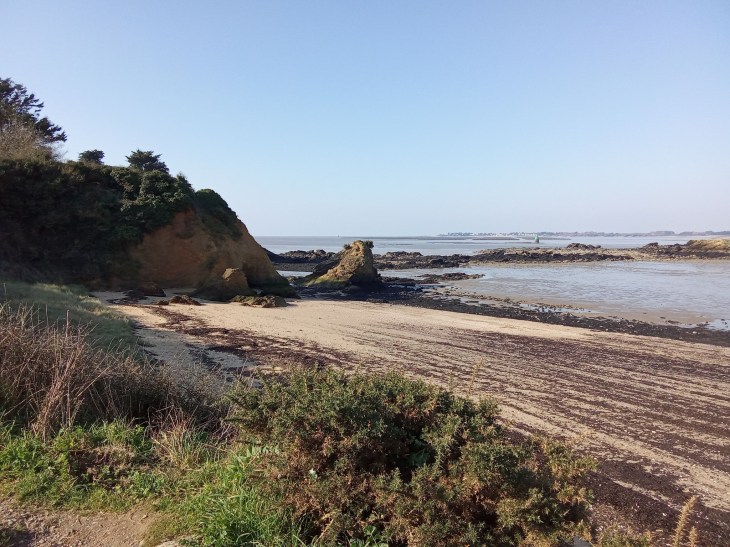
The Pointe de Pen Lan is a rocky peninsula jutting out into the Atlantic Ocean, part of the town of Billiers. It constitutes the northern limit of the Vilaine estuary, as well as the limit of the mouth of the Saint-Éloi river. The rocks of the point are once again witnesses to the passage of the longships in 919. They are led by Bjarnhard, “Strong as a bear”. Going up the river, the Viking leader decides to settle on a rocky promontory located about 16 km from the mouth, which will become, many years later, the town of La Roche-Bernard (see posts). The Domaine de Rochevilaine built around a 19C house and a former powder magazine. The site, transformed in the 1950s, and decorated with chapels and manors, now houses a “Relais et Châteaux” hotel renowned for its gastronomy and its balneotherapy center. The industrialist Henri Dresch, founder of the company Dresch Motors, a shipowner in Lancieux in the Côtes d’Armor (dept 22) who owns the island Dumet, a stone’s throw from the coast of Billiers, bought the premises between 1950 and 1955 and began work to restore it. In 1965, a project aimed to build a new restaurant and to reconstruct a Renaissance-style manor house. A monumental gate from the Coët By manor in Guégon was reassembled at the entrance to the hotel complex, which was expanded and given the name Domaine de Rochevilaine. This property is now private and is a Relais & Châteaux located on the Pointe de Pen Lan.
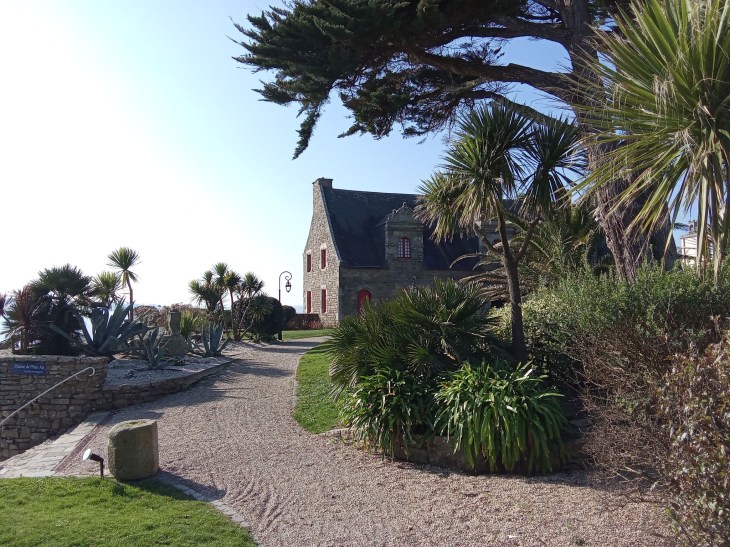
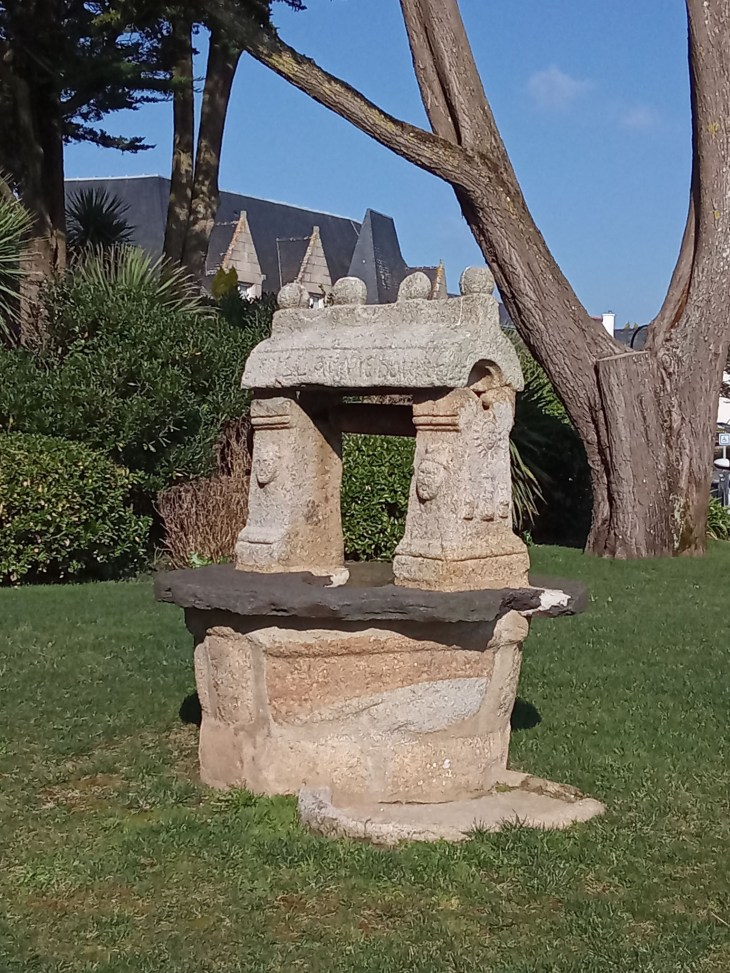
A bit of history I like tell us that as early as 1941, the Führer mentioned his project for an “Atlantic Wall” Initially, the nazis naval artillery occupied the old guard posts on the Atlantic coast. At the mouth of the Vilaine estaury, these were the posts of Kervoyal (Damgan), Pen Lan (Billiers) and Halguen (Pénestin). At Pen Lan, these covered the entire point which was covered with various constructions. Two main areas of fortifications appeared at Pen Lan. We can thus distinguish an area corresponding to the current Rochevilaine estate and another under a villa on the opposite side of the lighthouse, which was the home of Charles Geniaux. The Saint-Quentin family, owners of the premises in 1921, speak of an underground passage leading from the sea to the lighthouse, passing under the current Rochevilaine estate. This underground passage was used by smugglers so as not to be spotted by customs officers stationed in the building still present behind the old Celtic hotel at the entrance to the peninsula. This underground passage has partially collapsed at the level of the lighthouse. The nazis will reuse this underground passage, which is still visible to this day. Its roof is currently under the lawn of the Domaine de Rochevilaine garden.
Very close to the Domaine de Rochevilaine,you have the the Penn Lann lighthouse, after many modifications it has finally fully fulfilled its watch function on the entrance to the Vilaine. The Pointe de Pen Lan has a lighthouse built in 1837. 18 meters high, it is fully automated. Its light, provided by a halogen bulb and concentrated by a Fresnel lens, is white for boats that are in the port entrance channel, green when navigation is possible, but with a limited draft, red when navigation is dangerous , due to the presence of many rocks,
An anecdote here tell us that during the Third Chouannerie, (war vs French revolution in Brittany) ,the Pointe de Pen Lan was the place chosen by Georges Cadoudal (gen army royal and catholic of Brittany) and the English minister Windham to organize a landing of gold, weapons and munitions. This was to happened of November 28 to 29, 1799, however, it felled during the immigrant Breton from England landing in Quiberon (see post).
The town of Billiers on its heritage : https://www.billiers.fr/patrimoine
The local Damgan-La Roche Bernard tourist office on Billiers : https://www.damgan-larochebernard-tourisme.com/lieux-incontournables/billiers-et-la-pointe-de-pen-lan/
The Morbihan dept 56 tourist office on the Pointe de Pen Lan : https://morbihan.com/a-voir-a-faire/suivez-le-guide/les-sites-naturels/pointe-de-pen-lan-a-billiers-billiers-fr-4389599/
The official Domaine de Rochevilaine hotel : https://www.domainerochevilaine.com/en/the-domaine.html
There you go folks, another dandy road warrior ride in my beautiful Morbihan ! It really is beautiful. I have finally entered the town of Billiers, and worth the detour and back visit me think. Again, hope you enjoy this post on curiosities of Billiers !! as I.
And remember, happy travels, good health, and many cheers to all !!!

 Paris1972-Versailles2003