
I have a lot of posts on my wonderful capital City of Vannes in my blog. In my quest to have more from my latest road warrior or rather walking warrior trip to the city for you and me, the memories of always ,The city has a gorgeous original architecture untouched by wars, one of the most beautiful harbors in the world (conde nast, great bays etc) which of course takes you into the Atlantic ocean. Let me bring you back to my capital City of Vannes,in my beautiful Morbihan dept 56 of my lovely Bretagne and in my belle France. Therefore, here is my take on the streets of Vannes , part VII !!! Hope you enjoy it as I.
The Place des Lices is originally a former free space devoted to tournaments and other outdoor exercises that took place in the Middle Ages. The Lices, a term which was used to designate the field or the enclosed land surrounded by palisades, intended for these activities, recall this first use of the premises. This space was created in the 14C during the accession of Jean IV,(John) Duke of Brittany. The square is about 200 meters long, with an average width of 25 meters. A bi-weekly public market is held here on Wednesdays and Saturdays and there is a covered market or halle 700 m2. Among the buildings on the square that are of architectural or heritage interest are the Hôtel de Francheville 17C (see post), remarkable for its watchtower, and the house at No. 11, which has a tower with a staircase notice. Many of my favorite shops are located here ! (See posts)
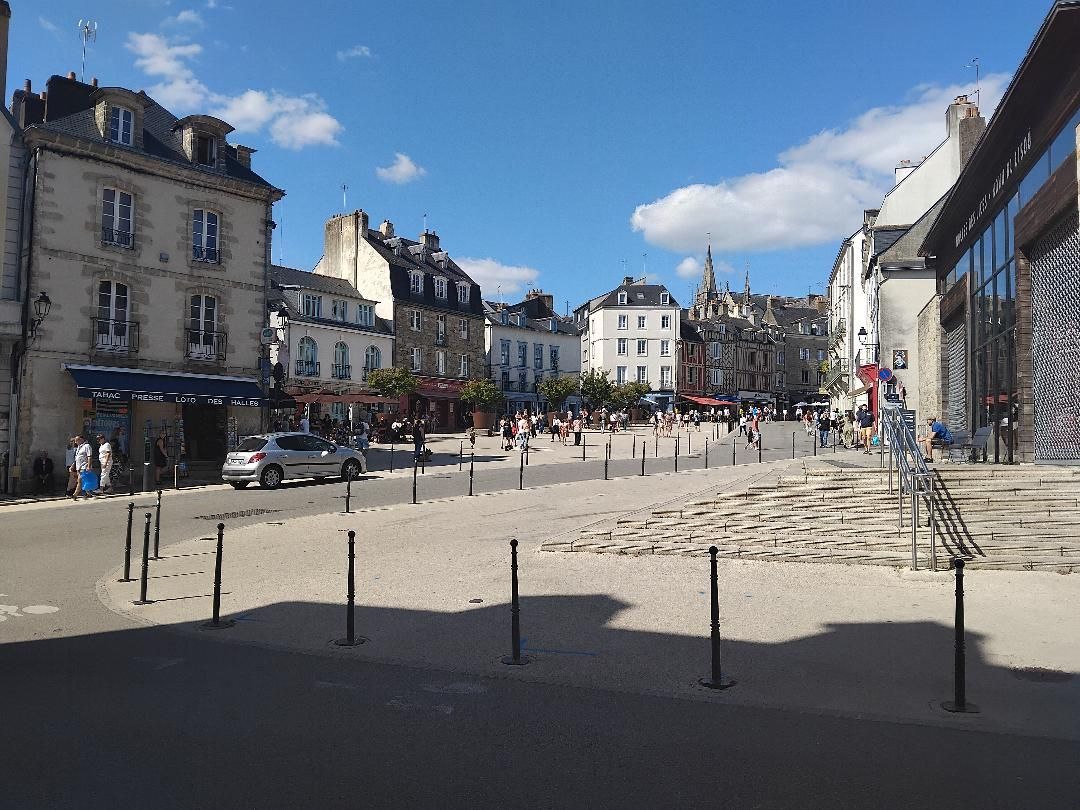
The Place du Poids Public or public weight square.It is the former place du Poids du Roi, The name of this traditionally commercial square is linked to the verification of the weights and measures of goods which was carried out there. It was part of the new developments during the expansion of the city to the south at the end of the 14C. The half-timbered houses in the square bear witness to the first urbanization in the 15-16C. Along with that of the Lices, this square is the site of a famous market which is held every Wednesday and Saturday of the week. Some of its half-timbered houses have been preserved, the others having been rebuilt in the 17-18C and at the end of the 19C. (see post)
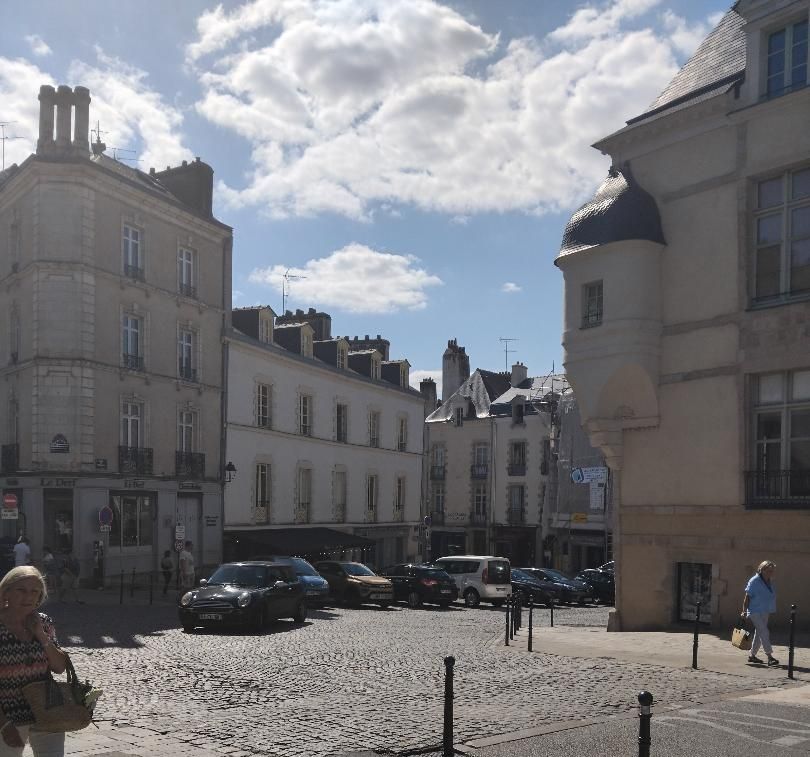
Place Henri-IV is a square located in the inner city on the heights of the Mené hill. It communicates with the Place Saint-Pierre and the St Peter’s Cathedral,(see post) and to the rue Saint-Salomon (see post) and to the rue des Chanoines and the rue Émile-Burgault. The square measures about 20 meters per side, or an area of about 400 m2. Most of the houses in the Place Henri IV are listed as historic monuments of France. This is the case for houses located at no.1 (corner of Place Saint-Pierre), at no. 2 ( corner of Place Saint-Pierre), at no.5 (corner of rue Saint-Salomon),and at no.6 (corner of rue des Chanoines). (see post)
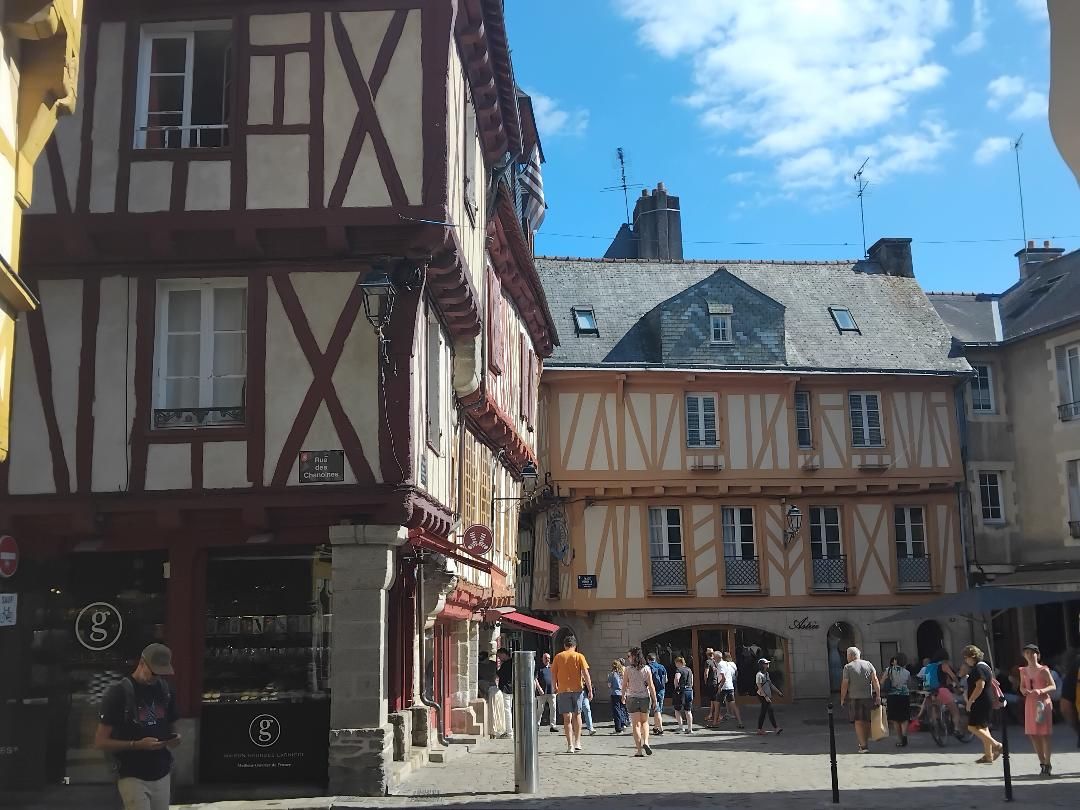
The rue du Bienheureux Pierre-René Rogue ,the history tell us that in the rentier of 1455, the part corresponding to the rue du Bienheureux Père René Rogue was the street of “lapaticerie” and of the “Leterie” at a certain time. This corresponds to the activities of the inhabitants of the street in the Middle Ages. In the 17C, research showed that the street was occupied by external students of the Saint-Yves college (middle school), This explains its name, Rue Latine, before its current name. It is a street that still contains many medieval stone and timber-framed dwellings. These dwellings underwent extensive alignment work in the 19C, which led to the removal of corbels and stalls when wooden shop fronts were installed. A good example is the house at No. 3 with a gable end on the street, built on a narrow plot with a courtyard and well. The courtyard is separated from the street by a boundary wall pierced by a chamfered round-arched door. It is a half-timbered house with corbels preserved only for the slate-lined gable. The house has two square floors and an attic floor that connected to the neighboring house via a valley in the roof, all on a stone base. The house still has a wooden staircase with balusters and an old fireplace with columns on a drip wall upstairs. The facade includes a two-story lean-to gallery. The other facade features the famous round busts of Vannes et ces Femmes or Vannes and his wife (see post).
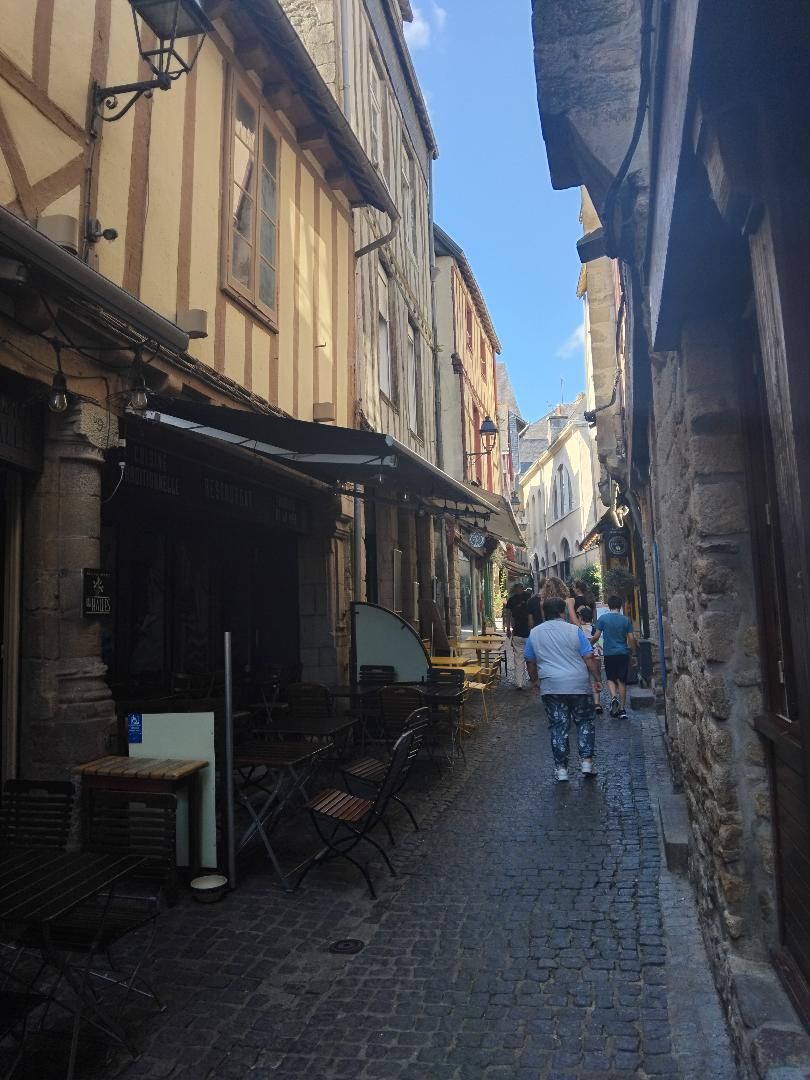
I need to tell you who is name for this street a very vivid story that you can actually see inside the St Peter’s Cathedral in Vannes, (see posts), Pierre René Rogue was born in Vannes on June 11, 1758, on Rue de la Monnaie (near Place des Lices). He was baptized that day at the cathedral. His father died while traveling and never saw his son. His mother moved to 31 Place des Lices. At 17, he completed his brilliant studies at the Collège St. Yves (now the Collège Jules Simon). In 1776, he entered the Grand Séminaire (now the Foyer du Mené). To reach the cathedral, the Porte St. Jean was opened for the seminarians. This seminary has been entrusted to the Vincentians Congregation of the Mission since 1702.This community of priests is responsible for the parish of Notre Dame du Mené. On September 21, 1782, Pierre René Rogue was ordained a priest in the church of Notre Dame du Mené. He became chaplain of the Women’s Retreat. He entered the Congregation of the Mission (disciples of St. Vincent de Paul) on October 25, 1786. In 1787, he was appointed professor of theology at the Vannes seminary. On December 16, 1790, under the inspiration of Pierre René Rogue, Bishop Amelot summoned his diocesans to Sainte Anne d’Auray (see posts) to ask them to obey the Pope rather than the State. The priests of Vannes therefore refused the oath. On February 14, 1791, the superior of the seminary was forced to leave Vannes, and Pierre René replaced him. On February 28, the bishop was arrested and imprisoned. On April 30, 1791, the parish of Notre-Dame du Mené was abolished. Eight months later, on January 2, 1792, Pierre René took refuge with his mother. From then on, he gradually went into hiding. He frequently changed his address to be able to discreetly exercise his ministry. On December 24, 1795, around 21h, Pierre René was arrested while carrying viaticum to a sick person, at 9 rue Emile Burgaut, not far from the cathedral. He was immediately imprisoned at Porte Prison (see post). During his incarceration, he found the strength to give courage to his companions. Two months later, in the Notre-Dame du Mené church, then transformed into a Revolutionary Tribunal, Pierre-René was sentenced to death as a “refractory priest” on March 2, 1796. On March 3, he was guillotined on the Place de l’Hôtel de Ville, opposite the St. Yves chapel. On May 10, 1934, Pierre-René Rogue was beatified as a martyr of the Eucharist. Since then, his body has rested in the Saint Peter’s Cathedral.
The city of Vannes on its heritage: https://www.mairie-vannes.fr/lieux-remarquables
The local Gulf of Morbihan tourist office on Vannes: https://www.golfedumorbihan.co.uk/explore/meet-the-exceptionnal/visit-vannes/
The Morbihan dept 56 tourist office on Vannes: https://morbihan.com/decouvrir/le-morbihan-et-ses-perles-bretonnes/destination-golfe-du-morbihan/vannes-entre-art-et-histoire/
There you go folks, a bit of up close and personal post of the wonderful historically sublime streets of Vannes, We take the road warrior approach seriously and are on the move every day, This is one post for the memories of always, Again, hope you enjoy this post on the streets of Vannes , part VII !!! as I.

 Paris1972-Versailles2003
I was there two weeks ago, amazing city.
LikeLiked by 1 person
Yes indeed good that you had visited. Thanks for stopping by Cheers
LikeLiked by 1 person
Ah you didn’t told me we could have met finally! this is my capital city I am there every week at least.
LikeLike