
We have driven and walked in my eternal Paris, and would like to have an imprint in my blog on the wonderful family times we had there, There is so much to see , doing my best, and glad found me these older pictures in my cd rom vault ,which now transposing in my blog for you and me, This was my former worked city, so glad to post more memorable spots on it, Therefore, here is my take on curiosities of Paris , part XVII !!! Hope you enjoy the post as I.
The Cour du Commerce Saint André reach it by the rue Saint André des Arts boulevard Saint Germain and rue de l’Ancienne Comédie,Many celebrated cafés such as Procope, here lived Danton and held meetings Marat, Desmolin, Cambacérés etc, Here too worked the doctor Guillotin of the famous machine, The rue du Jardinet and the cour du Commerce Saint André link with the cour de Rohan to give you successive squares of great medieval value, Remarkable building are the remains of the enclosure of Philippe Auguste visible in a store at No 4. The Porte Saint-Germain gate was located there. The cour du Commerce-Saint-André gives access to the Cour de Rohan. Among the famous brands of the cour du Commerce Saint André are the Le Procope, the oldest café de Paris, founded in 1684, as well as the Relais Odéon. In No. 2, a plaque recalls that Sainte-Beuve lived there from 1831 to 1841. In No. 8, Marat had established the editorial and printing of the friend of the people. Concomitantly, at No 9, at the carpenter Schmidt, housed Joseph Ignace Guillotin, who then experimented his guillotine on sheep. At no 20, moved in August 1787 Danton. This building disappeared when the boulevard Saint-Germain opened.
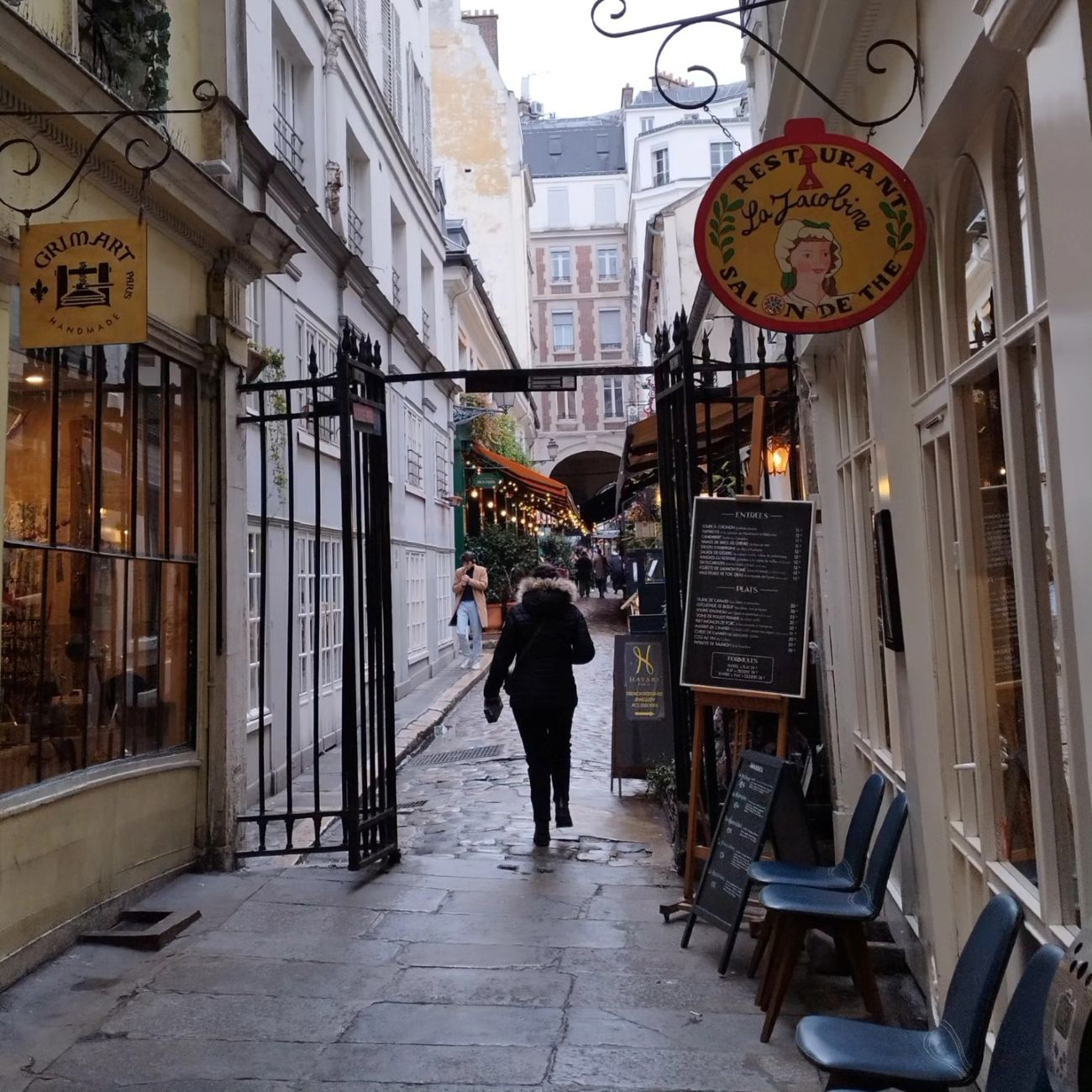
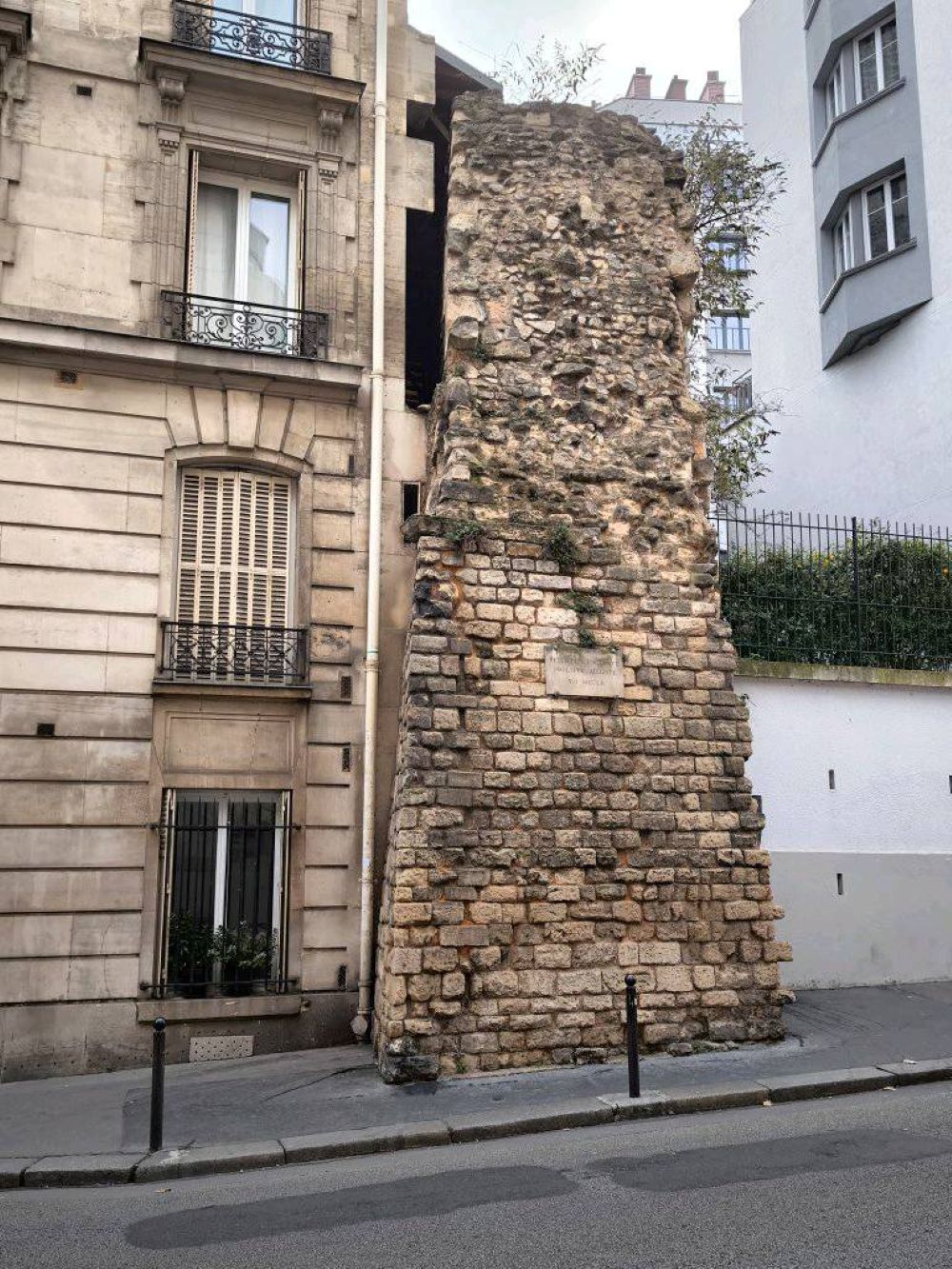
The rue Clovis in the 5éme arrondissement of Paris, in the Latin Quarter, The rue Clovis and rue Clotilde are now flanked by the Lycée Henri-IV, and rue Clotaire is adjacent to their son, King Clotaire I. The abbey protects the border door of the enclosure of Philippe Auguste wall at 50 rue Descartes. Part of the wall is visible on the path leading from the school to 5-7 rue Clovis,and at end of 48-50, impasse Jacques-Henri-Lartigue. The square of the neighboring Place de la Contrescarpe takes its name from this military function. Pieces of Philippe Auguste’s enclosure wall can be seen on rue Clovis (going down the metro Cardinal-Lemoine) (see post) ) and rue Jacques-Henri Lartigue (from the Bibliothèque des littératures policières or Library of Police Literatures). The name of the Place de la Contrescarpe, meeting place at noon of high school students, shows the ditches of the wall. The warheads of the first and second floor date from the 14C. The coronation of the Flamboyant Gothic tower, rebuilt after 1483.
The Paris tourist office on the Latin Quarters : https://en.parisinfo.com/transport/73228/Quartier-Latin
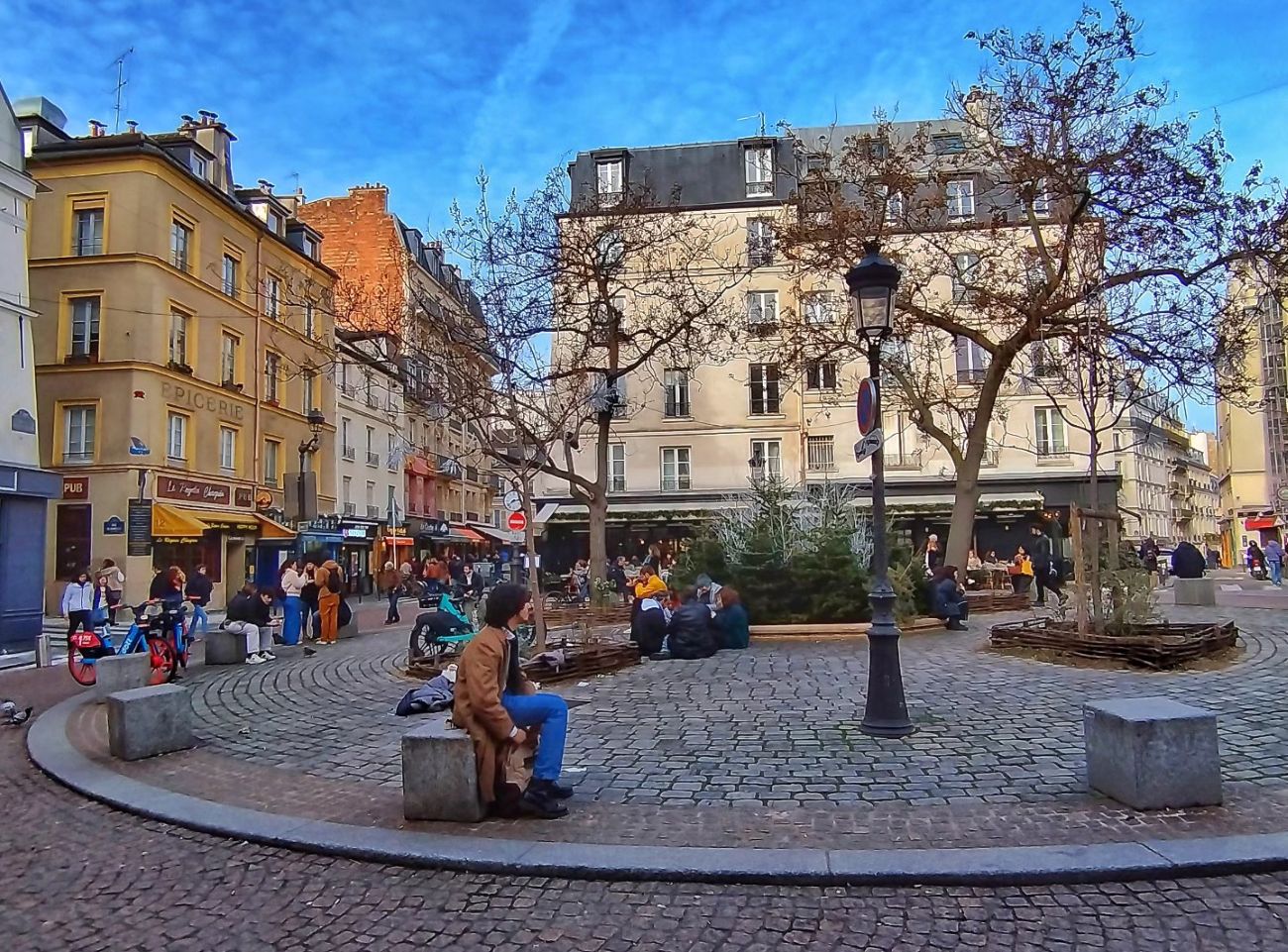
The place de la Contrescarpe is a square located in the 5éme arrondissement (see above) It is located by rue Mouffetard, at the outlet of the rue Lacépède and rue du Cardinal-Lemoine, It constitutes a central point of the 5éme arrondissement, since it is at the center of the four administrative neighborhoods that are Saint-Victor, Jardin-des-Plantes, Val-de-Grâce and Sorbonne. It owes its name to the vicinity of the old rue de la Contrescarpe-Saint-Marcel, currently shared between rue Blainville and rue du Cardinal Lemoine, and refers to the counterscarp, the external embankment of the well in front of Philippe Auguste enclosure. Remarkable buildings at No 12 former “Au Negre Joyeux” cafes store whose brand, deposited in spring 2018, has not been replaced because the city/town hall of Paris, which has owned it from it since 1988, judged its title and its racist and colonialist iconography. Today she is exhibited at the Musée Carnavalet museum.
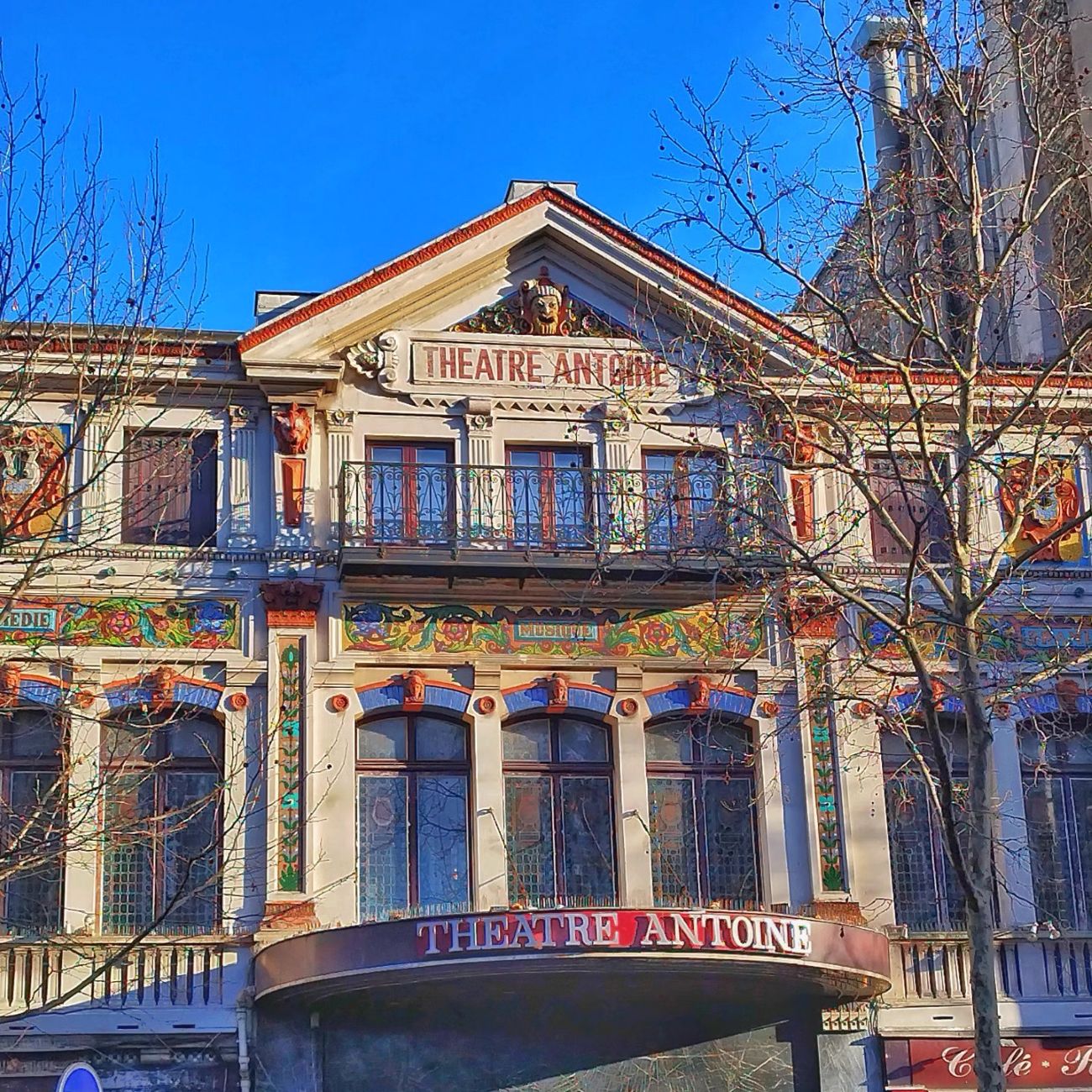
The Théâtre Antoine is located at 14 Boulevard de Strasbourg , It has a legacy of prestige where the most influential people in the world of the arts met, having contributed, through their works, to the influence of the theater Antoine on the Parisian scene.The latter remain illustrious authors such as Albert Camus or Jean-Paul Sartre, renowned directors like Peter Brook or Louis Jouvet as well as prodigious actors like Pierre Brassor and Jacqueline Maillan. The most memorable character remains, however, the one who gave his name to the theater, namely André Antoine, who provoked in this room a real artistic insurrection: free theater. The vocation of this movement close to naturalism is freedom; The theater is designed as a fantastic laboratory where neglected authors now find their place. You reach it on metro Strasbourg – Saint -Denis lines 4, 8, and 9 or metro Château d’Eau on line 4.
The Paris tourist office on the Théâtre Antoine: https://parisjetaime.com/eng/culture/theatre-antoine-p1203
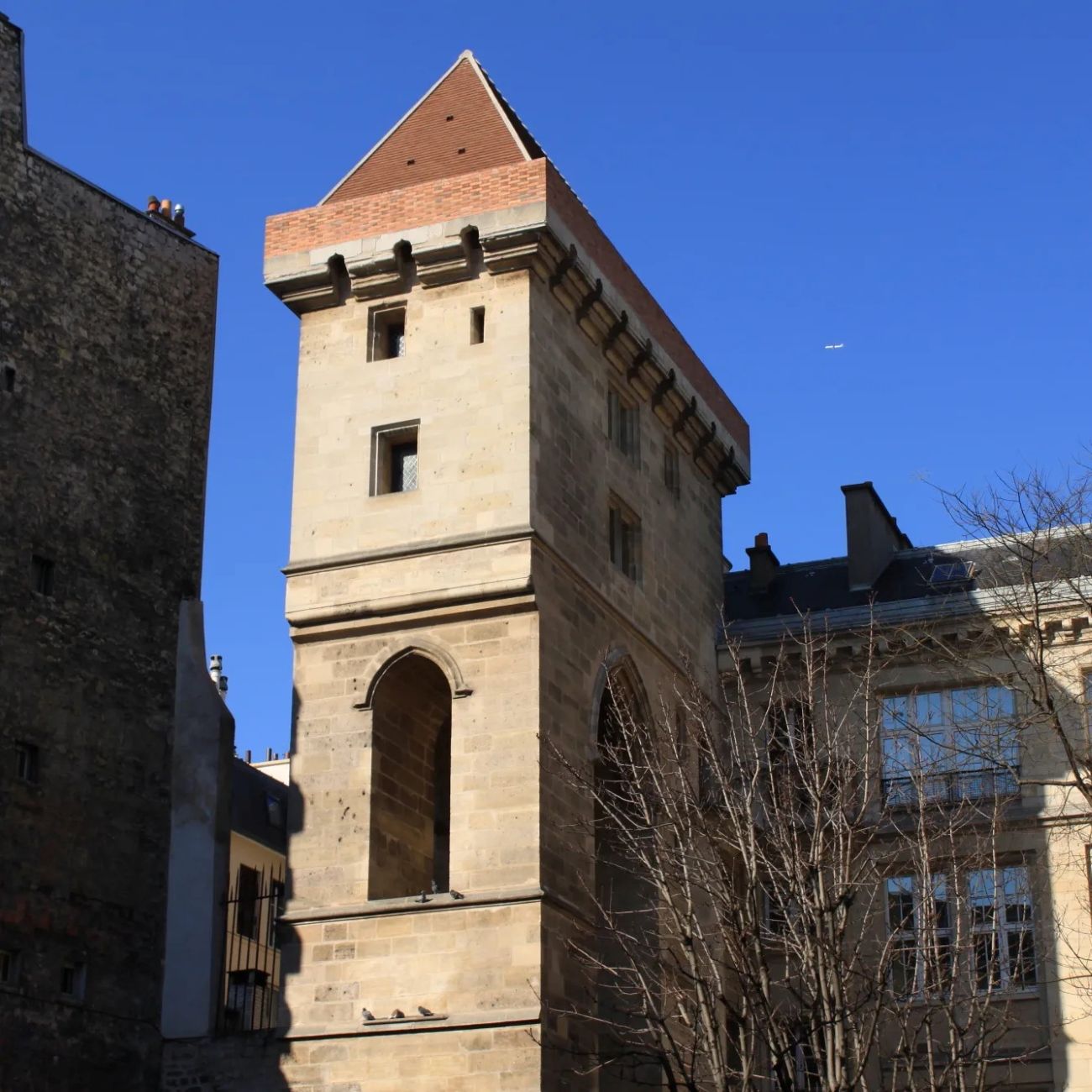
The tour Jean-sans-Peur is a fortification tower built in the 15C by Duke Jean I of Burgundy, known as “John without Fear tower”. It is located at 20, rue Étienne-Marcel, in the 2éme arrondissement. It is the last vestige of the Hôtel des Dukes de Burgundy. The hotel, backed by Philippe Auguste, had been built by Robert II d’Artois at the end of the 13C. It became the property of the Dukes of Burgundy by inheritance until the death in 1477 of Charles the Bold. King François Ier offered it to Diegue de Mandosse with the eastern part of the estate including the tour Jean-Sans-Peur tower. It is for this reason that the tower was sometimes called “Hôtel de Mandosse”. It was in 1866–1868, during the drilling of rue Étienne-Marcel, that the tower was rediscovered. In its upper part, the dungeon was endowed with slots and jaws which protected access to two “safety rooms” superimposed very well lit by windows, each heated by a fireplace and equipped with a reduced for conveniences. In the lower part of the dungeon, the staircase served the three floors of the west wing of the Hôtel de Bourgogne above the entrance, it ensured communication with: on the one hand the east wing of the Hôtel de Bourgogne (now also disappeared), and on the other hand, the courtyard of the enclosure wall of Philippe Auguste, at the time already abandoned due to the construction of the rampart of Charles V: the Duke of Burgundy thus spared a second discreet communication path with the outside. The throne and the meeting room of Jean Sans Peur alone are just worth the visit.
The Paris tourist office on the Tour Jean sans Peur: https://parisjetaime.com/eng/culture/tour-jean-sans-peur-p1068
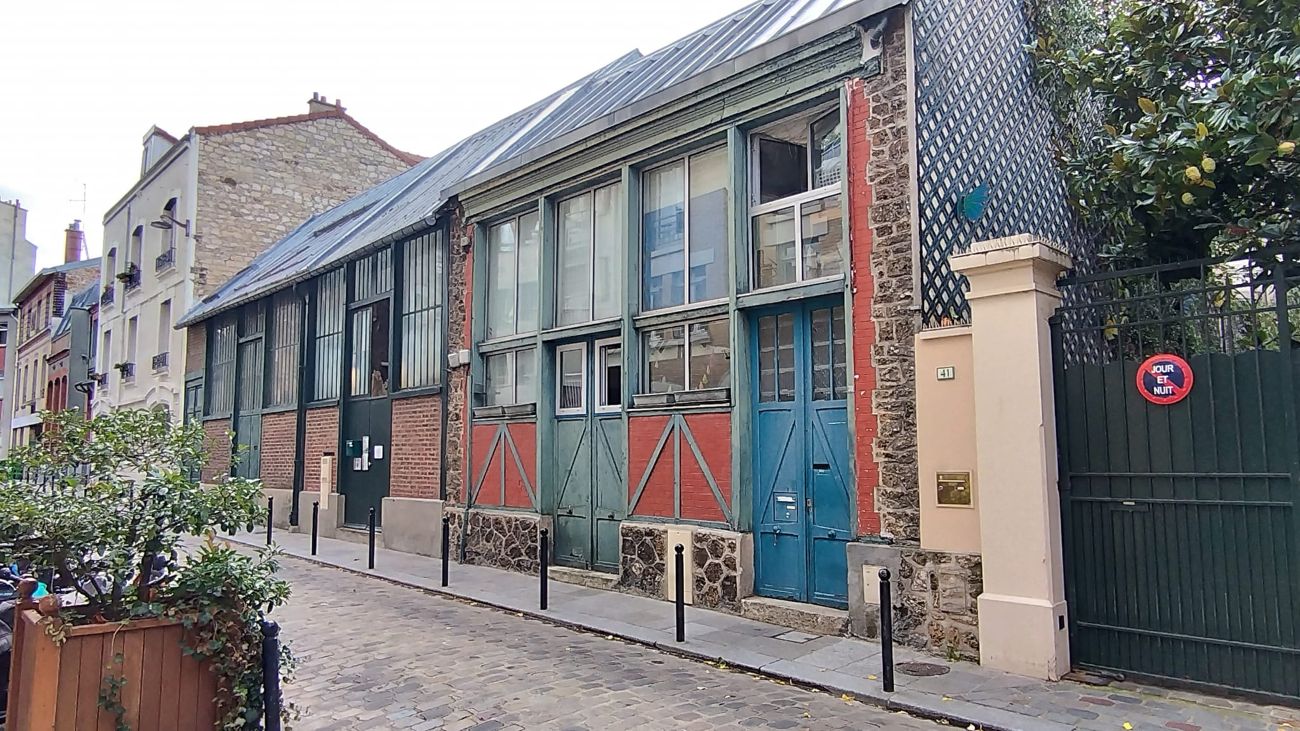
The villa d’Alésia is a path of the 14éme arrondissement of Paris; it begins at 111 ter, rue d’Alésia and ends at 39, rue des Plantes. It presents the particularity of having the shape of a “Y”, the two upper branches of the “Y” leading to the rue des Plantes and rue d’Alésia respectively and the lower branch ending in dead end. This path bears the name of the Gallic city of Alésia famous by the siége which it supported against Julius César , This path was opened around 1897 under the name of Villa Parquet, named of the then owner. It took her current name in 1965, Remarkable buildings here are at No 2 bis: Atelier du animal sculpteur Edouard-Marcel Sandoz, No 10: Domicile and workshop of Jacques Gruber, Master glass and cabinetmaker. His son Francis Gruber, painter, one of the few representatives of the expressionist movement in France, also lived there. At No 11 home and workshop of the painter Auguste Leroux, No 14: Atelier of painter Suzanne Rey de Jaegher, replaced by a residential building in the 1950s, On No 37 bis: workshop, in the 1930s, of the American artist Mary Callery that she provisionally gave in to Henri Matisse, in summer 1939. The painter posed at work for a series of photographs taken by Brassaï.
The Paris tourist office on the Villa d’Alésia: https://parisjetaime.com/eng/transport/villa-d-alesia-p2025
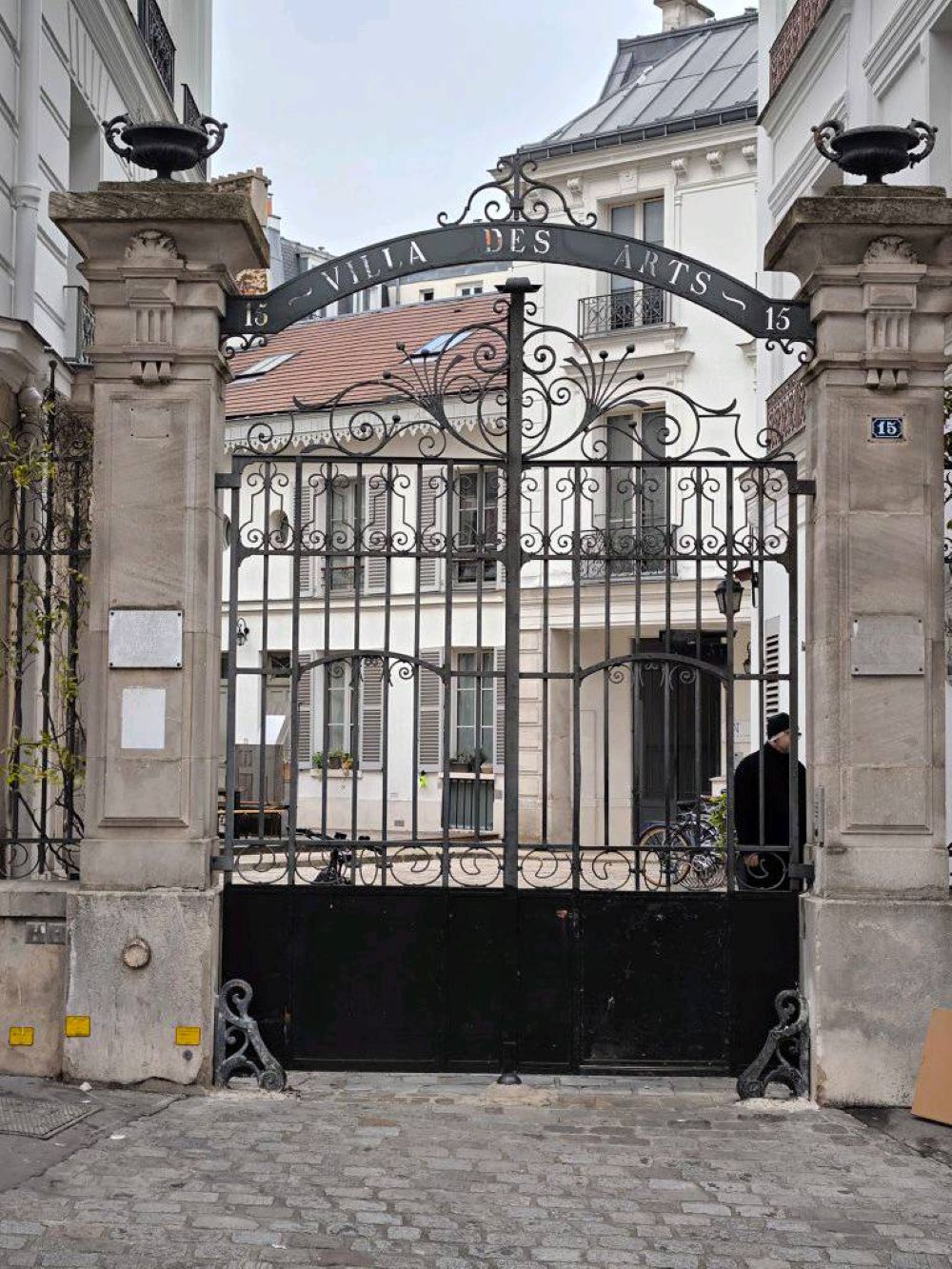
The villa des Arts is a private path located in the 18éme arrondissement of Paris, It begins at 15, rue Hégésippe-Moreau and ends in dead end. A facade gives to rue Ganneron, on the Montmartre cemetery. It bears this name because many artist workshops are located in this villa. The villa is a set of around fifty artists’ workshops, the most important of the 19C in Paris, built on land detached from the Montmartre cemetery and given to artists under Louis XV. The main staircase and many construction elements come from the recovery of pavilions from the 1900 universal exhibition. The artists Eugène Carrière, Paul Cézanne, Paul Signac, Raoul Dufy, Louis Marcoussis, Henri Rousseau, Francis Picabia, Georg Csato , Lucien Mathelin, Francis Harburger and Marcel Jean worked there, more recently, the Villa des Arts sheltered the workshop of Nicolas Schöffer, father of cybernetic art, It is today the property of the city of Paris.
The official Villa des Arts : https://www.villadesarts.paris/
The Paris tourist office on the Villa des Arts: Cité d’Artistes: https://parisjetaime.com/culture/villa-des-arts-cite-d-artistes-p1792
There you go folks, a dandy city to explore and enjoy with the family, Memorable moments in my eternal Paris, driving and walking all over in my road warrior trails brings out sublime awesome spots with nice memorable family visits of yesteryear always remember and always looking forward to be back, eventually. Again hope you enjoy the post on curiosities of Paris, part XVII !!! as I.
And remember, happy travels, good health, and many cheers to all !!!

 Paris1972-Versailles2003
vraiment charmant! My French isn’t great, but I have always wanted to visit Paris and Belle France, 🇫🇷 and imagine walking through places like this.
LikeLiked by 1 person
Not bad .. yes Paris is eternal a must, hope you can make it. Thanks for stopping by Cheers
LikeLiked by 1 person
i very much enjoyed this tour – thank you! Mike
LikeLiked by 1 person
Glad you enjoyed it. Thanks for stopping by Cheers
LikeLiked by 1 person