
In my dear gorgeous Versailles ; there are many places other than the castle. The city needs to be seen more, my kind of town, actually did lived there for 9+ glorious years! Very nice family memories. I found me older paper pictures that again should be in my blog, Therefore, here is my take again on the gardens of the Château de Versailles, part IV !!! Hope you enjoy the post as I
One of the wonders of this magnificent palace/museum done from 1837 to all the glories of France by king of the French Louis-Philippe are the gardens. I know the rush to see the wonderful inside, but the gardens are all on its own. The great gardener of France , André Le Nôtreorganized the gardens of Versailles around two axes, north-south and east-west. The first part of the bassin de Neptune, goes up by the allée de l’eau and continues until the Orangerie and the piéce d’eau des Suisses. The second, called Grande Perspective, crosses the gardens like an axis of symmetry, beyond the Bassin de Latone, it follows the allée royale to the Grand Canal.
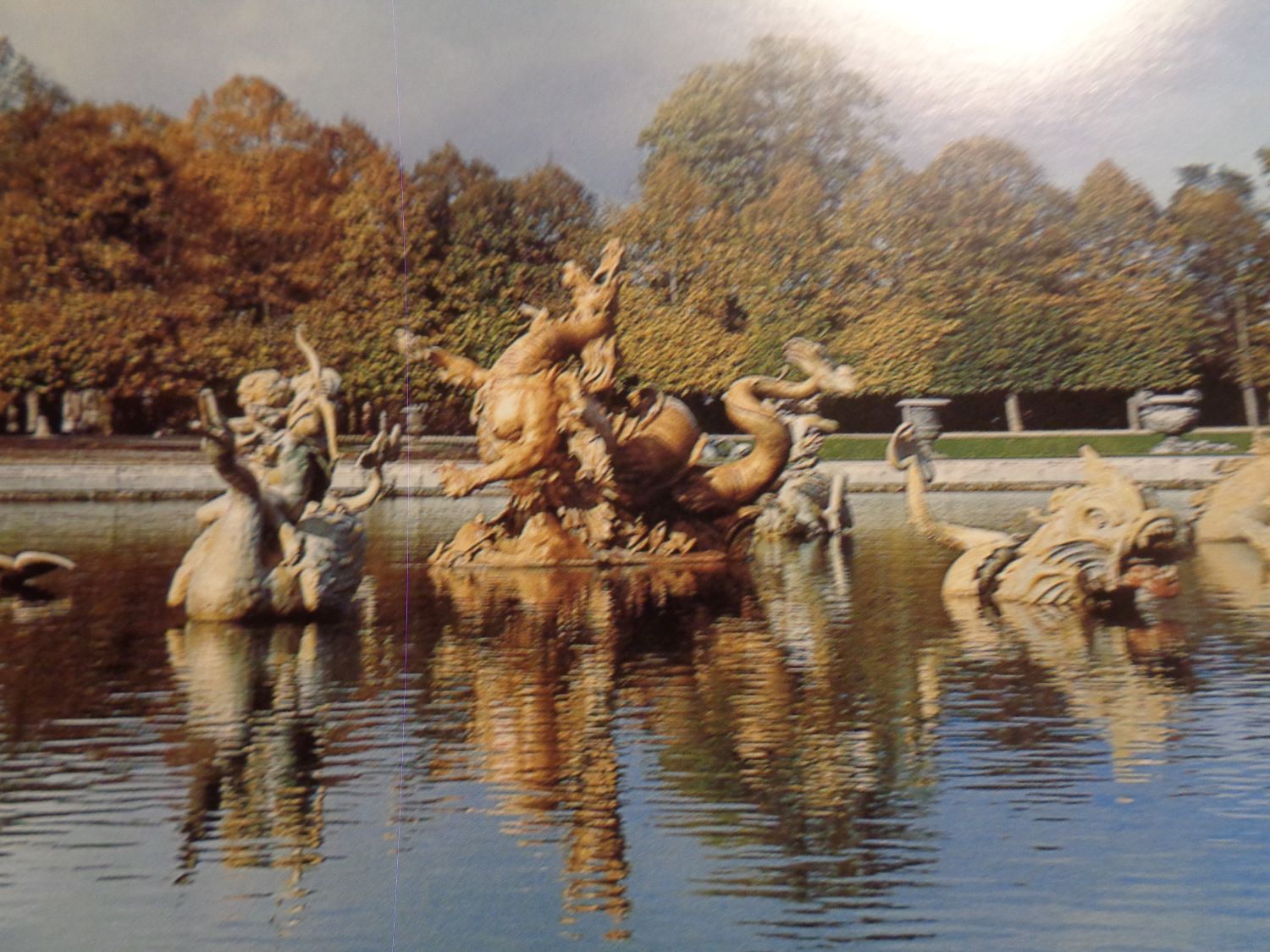
You come to admire the Bassin du Dragon, sculptured in 1667, with serpents being attacked by archers, throw its blood but better water by its mouth. They were put here in 1668 welcoming the triumphant Louis XIV from the war and the signing of the Treaty of Aix-la-Chapelle. The bassin du Dragon is at the intersection between the avenue de Trianon and the allée d’Eau, and in the alignment of the Neptune basin which it precedes. At the start of the Apollinian course, this basin stages the dragon Python, launched by Juno in pursuit of Latone, pregnant of Apollo and Artemis, Here, the Marsy brothers chose to represent the dying dragon, pierced with arrows of Apollo, and spitting his blood represented by the huge jet of water emerging from his mouth. It has a horse mane, pointed wings and a fish tail. Around it are four children armed with arcs and arrows, who symbolize Apollo, mounted on swans and escorted by four dolphins. The gaze is led to the castle by the allée d’Eau to the pyramid basin, symbol of knowledge, which represents the oracle of Delphi.
The Bosquet De L’Encelade carried out in lead by Gaspard Marsy, between 1675 and 1677, and was inspired by the history of the fall of the giants, taken from Greco-Roman mythology. Punished for trying to climb Mount Olympe and dethroned the gods, they end up buried under the rocks, like Encelade whose suffering results in the powerful jet which escapes from his mouth, like a cry. Full of rocks imitating the lava of a volcano. Also from Greek mytholody. The bosquet was used as a political tool in the war of Holland during the great European alliance of 1673.

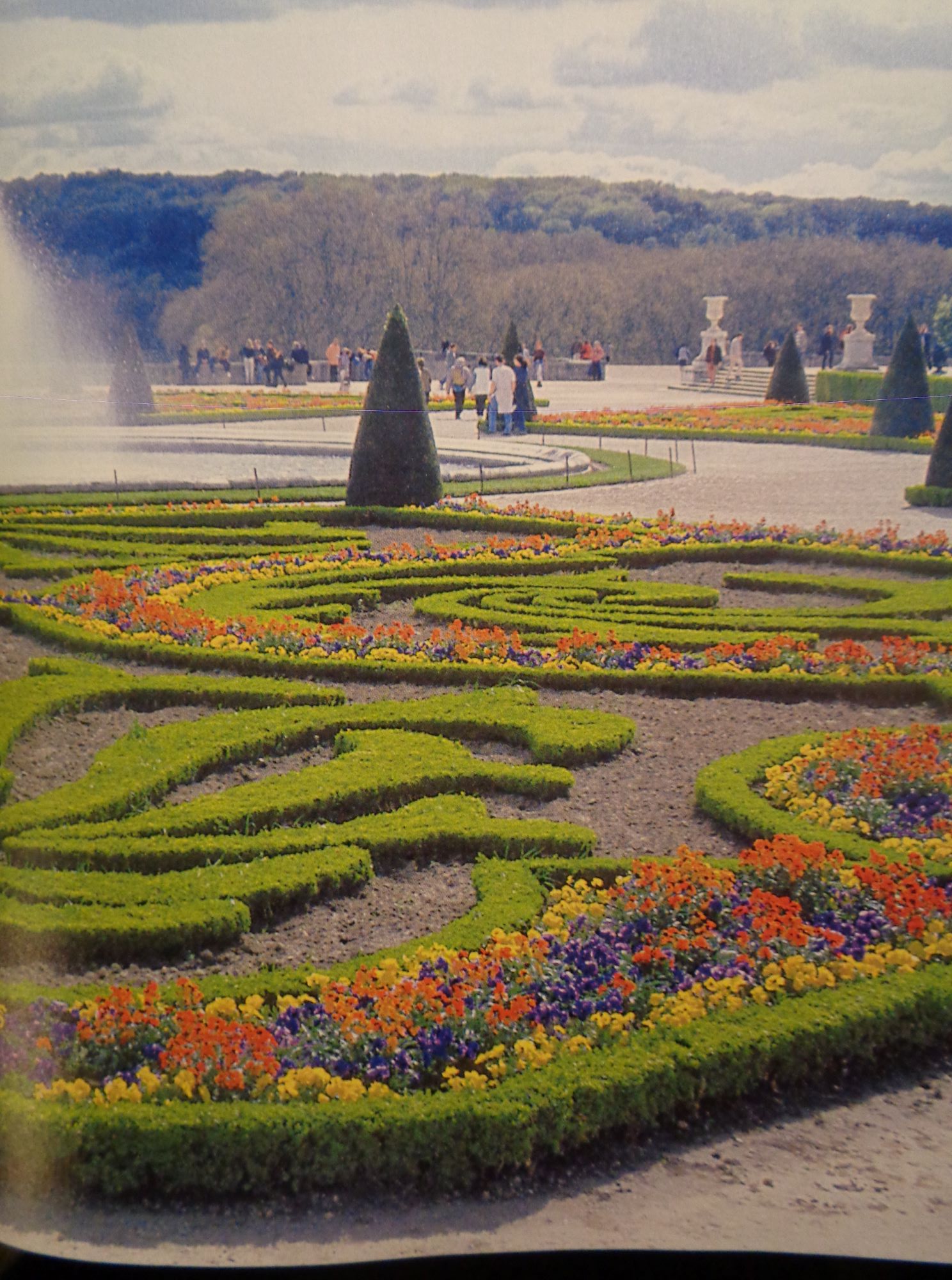
The parterre du Midi is a floral flowerbed comprising two circular basins central access to the flowerbed, to which we descend by a few steps, is framed by two statues of sphinxes rides by bronze loves ,The Parterre du Midi formerly named Parterre des Fleurs was put here in 1685, It is located above the Orangerie. During the reign of Louis XIV, flowers of bright colors were planted and constantly renewed: clogged, hyacinths, jasmins, tulips.
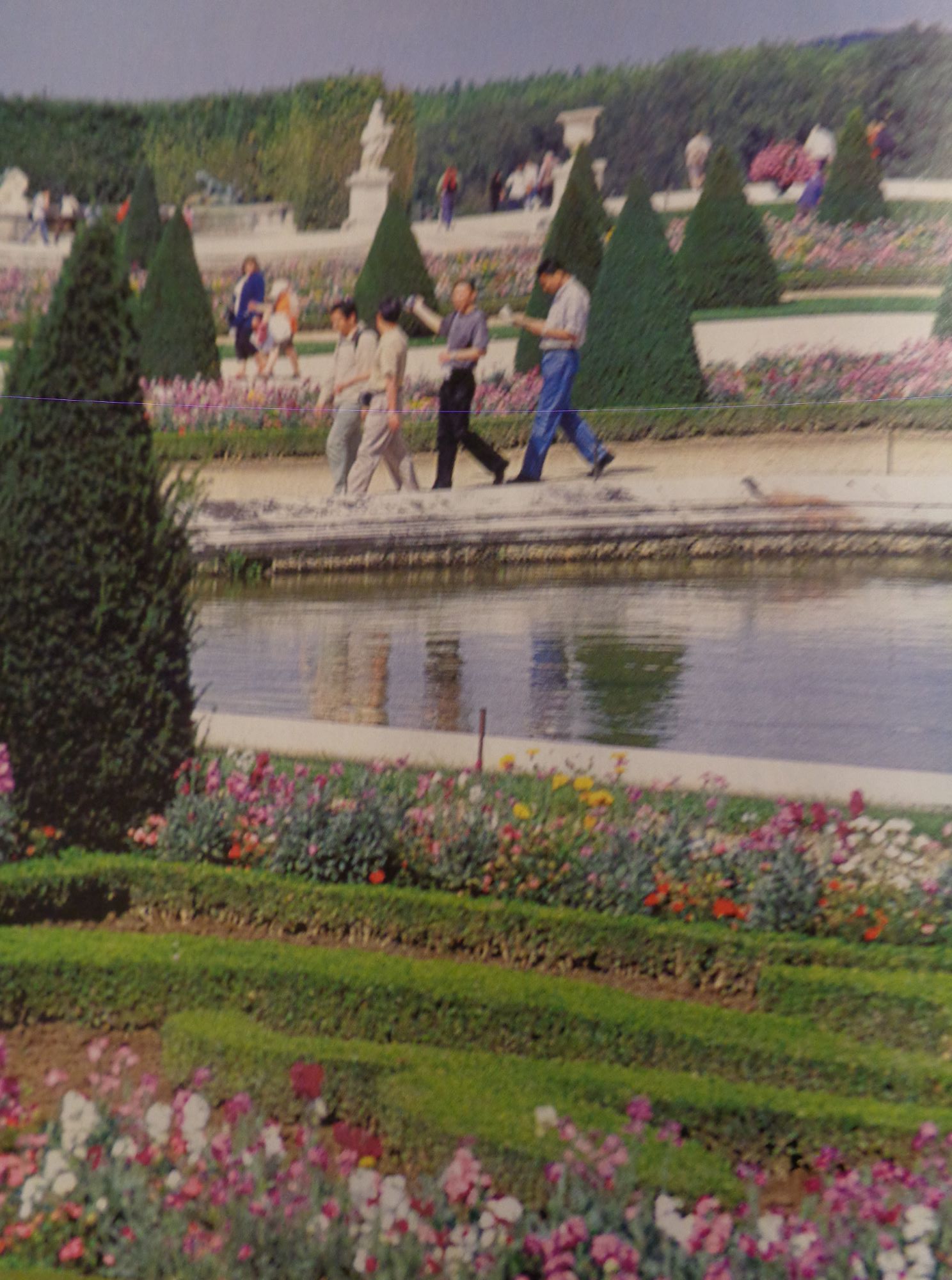
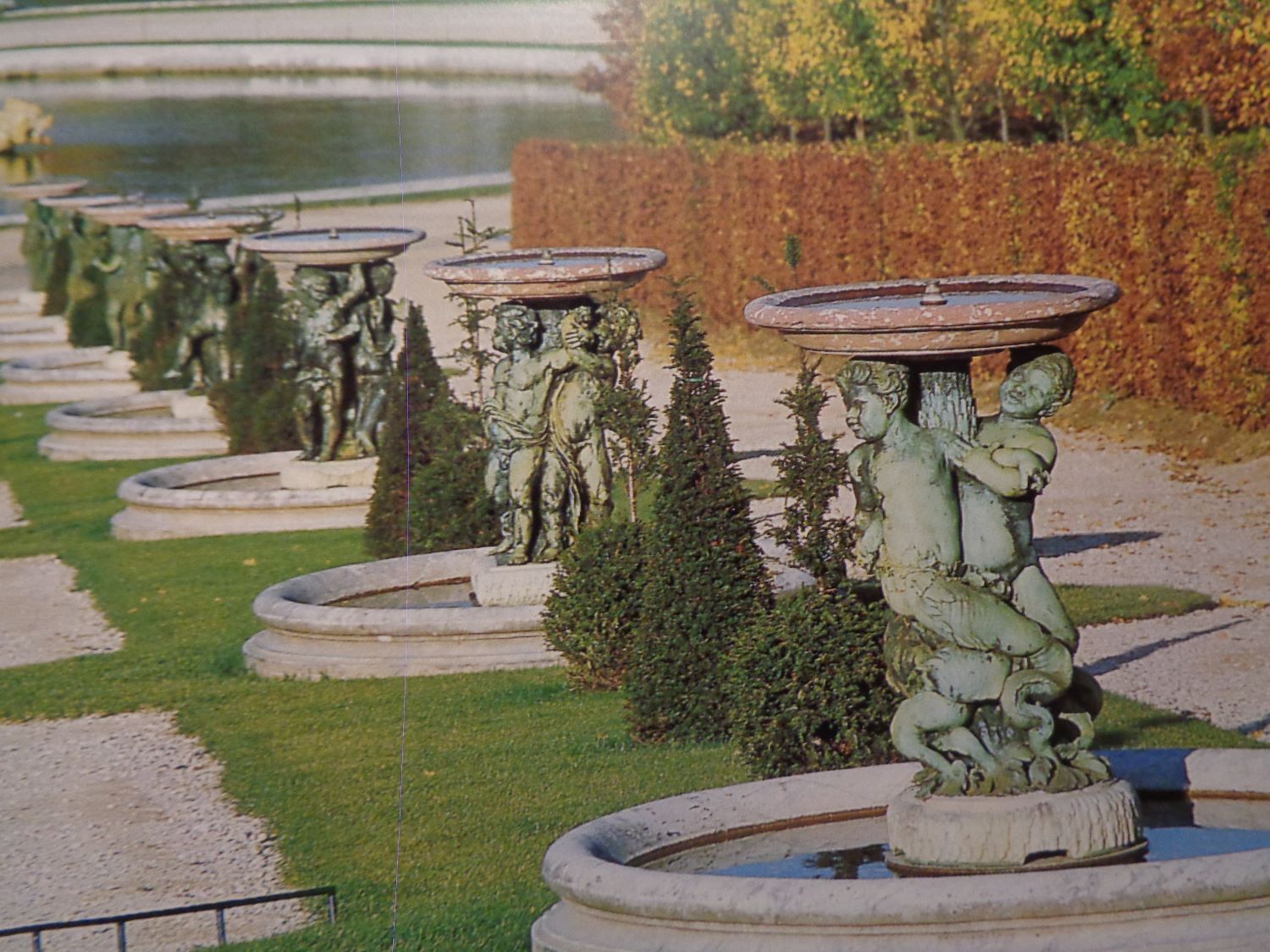
The Allée d’Eau, or Allée des Marmousets, make the junction between the bassin du Dragon and the Bain des Nymphes. The decor of this alley is due to Charles Le Brun whose workshop provides the drawing of seven groups of children in lead who respond to seven other identical placed symmetrically. They are also called marmousets, which explains the second name of the alley. All these groups joyfully celebrate the triumph of Apollo on Python and lead to the Bassin de la Pyramide, which symbolizes the temple of Delphi.
The Bassin de Flore is located at the crossroads of several groves, including that of the Queen, The basin is a Roman goddess of flowers, gardens and spring, symbolizes the first season of the year. Sculpted by Jean-Baptiste Tuby, she is represented with a crown of flowers, in the center of the basin. The basin is located west of the Bassin de Céres and east of the Allée d Saint-Antoine, more precisely at the crossroads of the Allée du Printemps and the Allée de Cérès-et-de-Flore. It is surrounded by three cherubs and is lying on a carpet of flowers. The statue of the goddess was made of golden lead by Jean-Baptiste Tuby between 1672 and 1679, it was represented with a crown of flowers, in the center of the basin

The official Château de Versailles on the Gardens : https://en.chateauversailles.fr/discover/estate/gardens
The Versailles tourist office on the palace gardens: https://www.versailles-tourisme.com/jardins-du-chateau-de-versailles.html
One of the must to see in Versailles and worth it. Another masterpiece of my belle France, and hope you have the time to see it while at this huge property that is the Domaine de Versailles. Again, hope you enjoy this post on the gardens of the Château de Versailles, part IV !!! as I.
And remember, happy travels, good health, and many cheers to all !!!

 Paris1972-Versailles2003
They look magnificent.
LikeLiked by 2 people
Yes indeed! Thanks for stopping by Cheers
LikeLiked by 1 person