
Well going back again looking at my earlier work in my blog realise there are many monuments sites missing in my blog or just barely small print. I have use this period of relatively calm to look at these..Briefly, Rennes is in dept 35 Ille et Vilaine of my lovely Bretagne, and in my belle France. Let me tell you now about the Musée des Beaux-Arts de Rennes, part I !! or Fine Arts Museum of Rennes. Hope you enjoy the post as I.
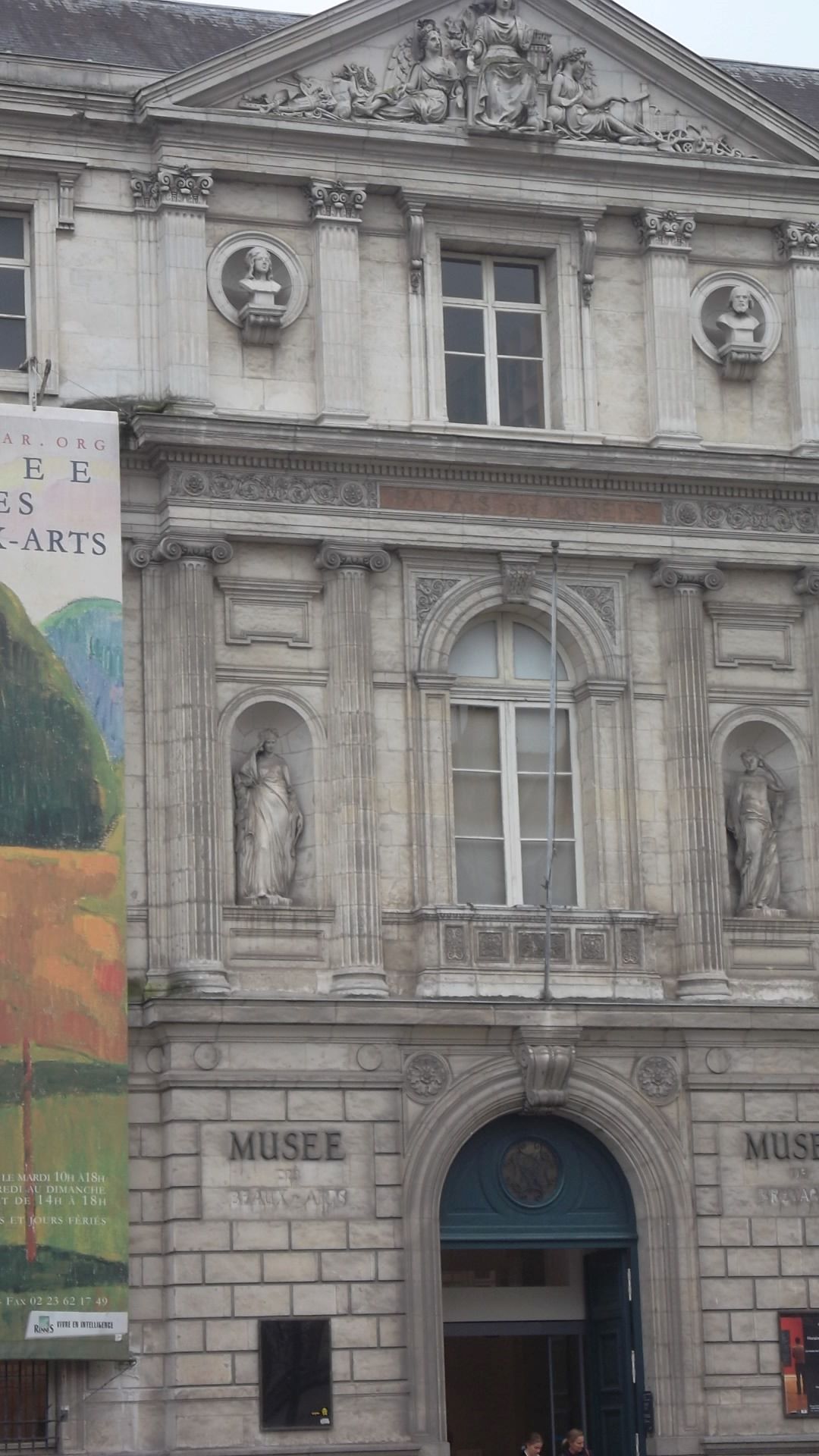
The Musée des beaux-arts de Rennes is located at 20 quai Emile Zola. You can reach it in town with metro line A stop République. Or by Bus stop Musée beaux arts on lines C4, C6, 40ex, 50, 64, 67, and N and bus stop Lycée Zola on line 12. Parking is available at parking C-Park Kléber at rue Kléber, Do check bus lines for the latest as always came here by car.
If its solemn architecture impresses the visitor, it is because the musée des Beaux-Arts was originally designed to house a university palace. Today, the museum of fine arts tries to make forget this very official atmosphere by a presentation of its more intimate collections, where the bright colors of the walls warm the space. At the same time, large rooms with very high ceilings allow the exhibition of large format works. The visitor is led from Egyptian Antiquity to contemporary art by a succession of rooms where masterpieces succeed other more discreet works which nevertheless know how to say their beauty to the attentive amateur.
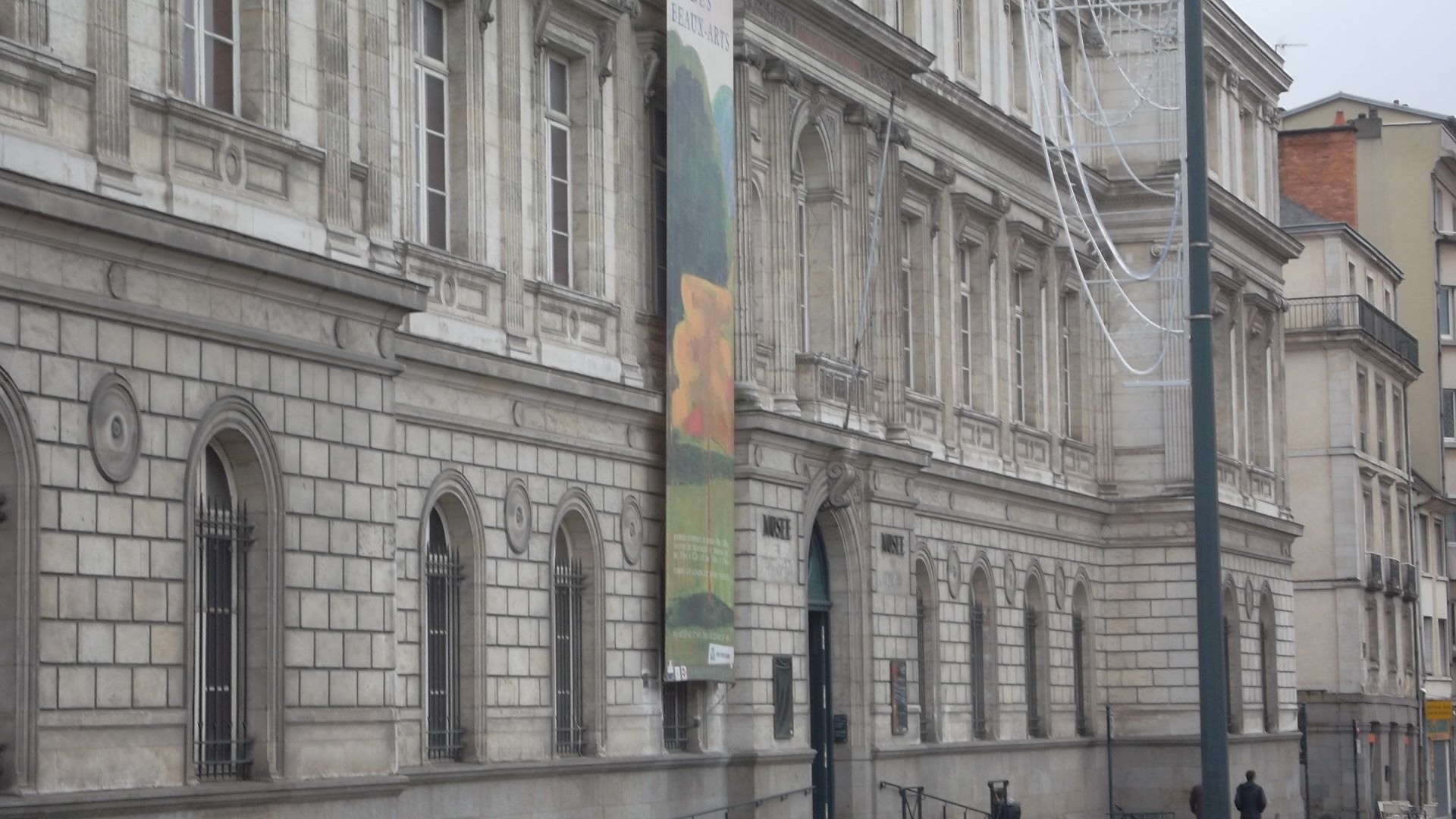
The musée des Beaux-Arts or Museum of Fine Arts of Rennes is, like most museums in France, a revolutionary creation. Constituted in 1794 from works seized from religious and civil buildings in the city, like most museums in France. However, the museum of fine arts derives most of its wealth from the fabulous cabinet of curiosities of Christophe-Paul de Robien, President of the Parliament of Brittany. This encyclopedic collection was one of the richest in Europe: paintings, sculptures, Egyptian, Greek and above all Celtic antiques, works of art from all continents, as well as an exceptional set of drawings where Leonardo da Vinci rubs shoulders, with Botticelli, Dürer and Rembrandt. Between 1801 and 1811, deliveries from the State supplement the initial fund and bring works of primary importance, stemming from Parisian revolutionary confiscations and the conquests of the French armies that the Muséum Central du Louvre (current Louvre) could no longer contain. Thus, great masterpieces illustrating the different European painting schools enter the collection: Véronèse, Persée delivering Andromède, Rubens, La Chasse au tigre or Le Brun with the gigantic Descent from the Cross in the chapel of Versailles. The installation in 1855 of the museum in a new building also housing the University raises significant donations and legacies. Damaged by WWII, the Museum of Fine Arts of Rennes was the subject of a renovation in 1957, accompanied by an active policy of acquisitions which brought the collection into modernity: the Impressionists with Gustave Caillebotte, Les Périssoires and the Pont-Aven School, Emile Bernard, L’Arbre jaune, Paul Sérusier, Solitude and the Blue Navy by Georges Lacombe. For twenty years, the museum has built up a group representative of the various artistic trends of the 20C, for which there are some masterpieces: Frantisek Kupka, Bleus Movants, Pablo Picasso, Baigneuse à Dinard, Louis Marcoussis, La Gare de Kérity and Le Port de Kérity, Yves Tanguy, L’Inspiration, etc.
More on the interior description of the Musée des Beaux-Arts de Rennes ,tell us that the museum has an encyclopedic vocation, since its collections cover both European paintings and sculptures from the 14C to the 20C, works of art from Europe, but also from Africa and America, than regional, Roman, Etruscan, Greek and Egyptian antiquities. More than all the other sectors of the collection, the cabinet of drawings owes a lot to the president Robien. There is also, stamps andn works of arts; this fund, very diverse, includes pieces coming from French-speaking Africa, white and black since the 18C, from Asia Minor or Far East, but also America from the Arctic Circle to the South Tropic as well as Oceania The 15C is notably represented by a painting by Mariotto di Nardo and especially by two panels of the primitive Italian Lippo di Benivieni from the same polyptych. The 16C has some major works. The Venetian school is the best represented. The 17C sculpture is mainly represented by the large bas-reliefs by Antoine Coysevox which once adorned the pedestal of the Monument to Louis XIV erected on the Place du Palais in Rennes by the Estates General of Brittany and melted during the French revolution. The golden age of Spain was absent from the Rennes collections until the purchase in January 2014 of an important youth work by José de Ribera, Saint Jude Thaddée (circa 1609-1610), acquisition completed in 2015 by the gift of another painting from the first period of the Spanish master, a Saint Matthew from the same series as the first. The museum exhibits paintings dating from the 18C to the first half of the 19C, works by Camille Corot, Eugène Boudin, Gustave Caillebotte ,Paul Sérusier ,and Maurice Denis amongst others.
The Official Fine Arts Museum of Rennes on the layout: https://mba.rennes.fr/fr/le-musee/plan-du-musee/
The Rennes tourist office on the museums, including the Fine Arts : https://www.tourisme-rennes.com/decouvrir-rennes/culture/musees-rennes/
There you go another beautiful historical monument of our times in Rennes. Worth the detour while in town. Again, hope you enjoy this post on the Musée des Beaux-Arts de Rennes, part I as I.
And remember, happy travels, good health, and many cheers to all !!!

 Paris1972-Versailles2003