
I tell you right off the bat had another post more on the history of it but needed to update this one with new text and links for you and me, Can’t be too far away from Paris and I need to bring up again this wonderful monument that must be visited, Paris is a huge mouvable feast indeed. Therefore, let me tell you again by the Conciergerie of Paris !!! Hope you enjoy the post as I.
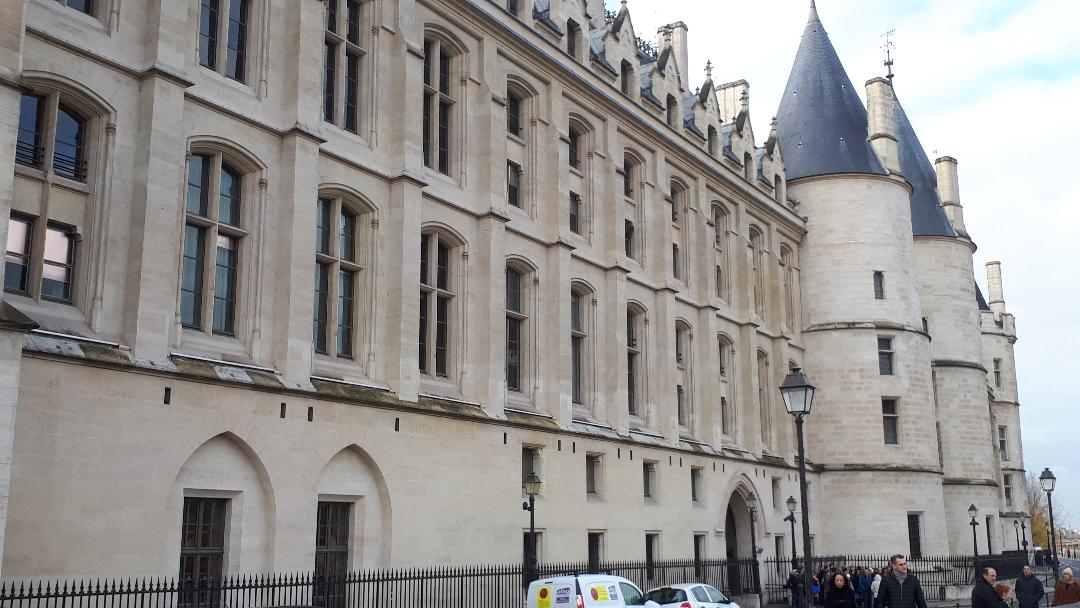
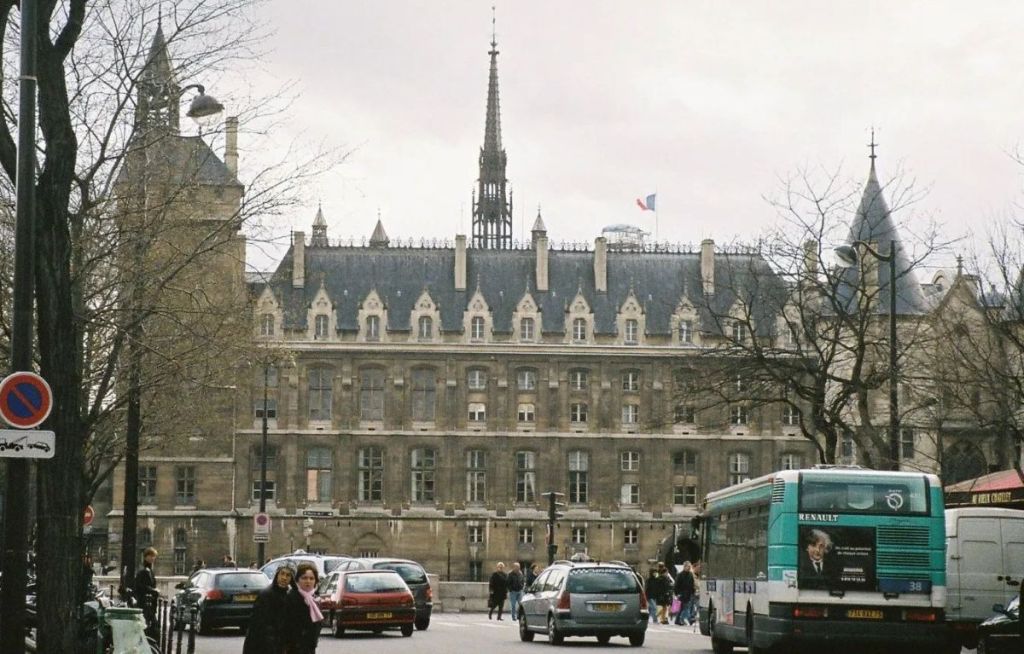
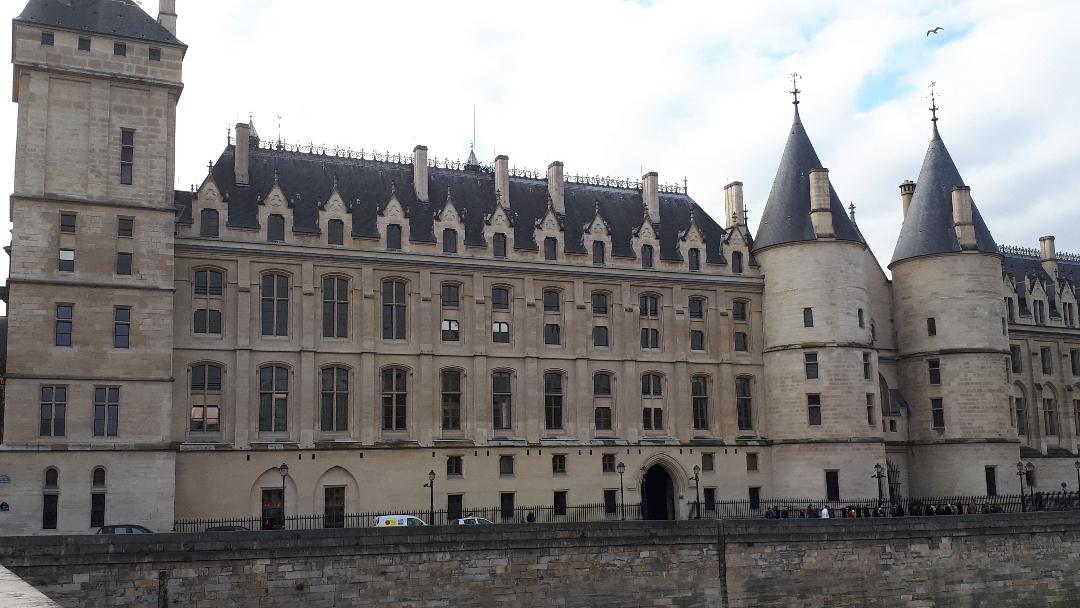
The building is imposing indeed and even on rainy days in Paris and lines to get in ! This is Power Paris !!! The wonderful golden clock is fantastic to look at and many were doing just that as I got muscled in to take my picture lol! I am a tourist !!! love it !!! The Palais de la Cité (City palace) was the residence and seat of the power of the kings of France from the 10C to the 14C. It extended on the western part of the island of La Cité in the 1éme arrondissement of Paris. Today, a large part of the site is occupied by the courthouse of Paris and most of the remains of this palace are constituted by the former prison of the Conciérgerie which runs along the quai de l’Horloge. As you know the Conciergerie is found on the Île de la Cité;. it is the oldest prison in France, very sinister memory moreover! A stroll on the side of this venerable place filled with a thousand memories dating from the Middle Ages is needed, especially when there is more than enough to tell and see.I have taken one of my earliest pictures of Paris showing it from other post and included here for the memories of always.
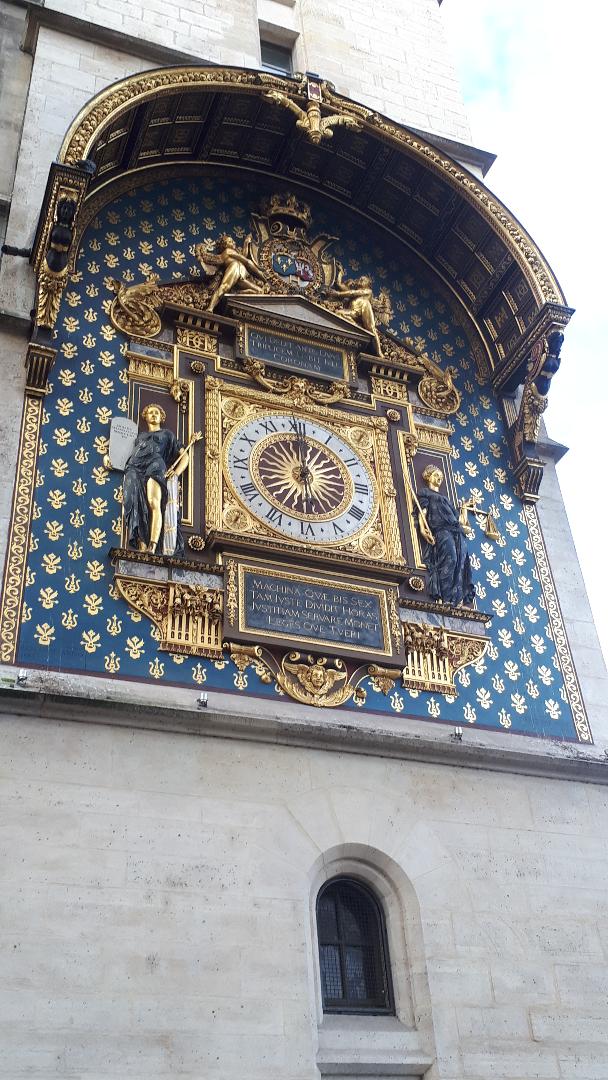
The interesting points about this clock are: Henri II appears through his monogram, composed of the H of Henri with the C of
Catherine de Medici, his wife. The small subtlety of this monogram is that each bar of H joins perfectly to the C, so as to form a D… The D of Diane de Poitiers, the favourite of King Henry II! So we can guess the divine right that gave him the crowns of Poland and France, and the third Crown refers here to the motto of the King, These two reliefs are allegories of law and justice. The law stands to the left of the dial, and carries a sceptre and a well-visible tablet, having this inscription in Latin: Something like meaning, the allegory of Righteousness stands on the right side of the dial, with the balance in her left hand and the sword in her right hand, the two classic attributes of justice. These two women have the golden body to gold, and their held is in a royal blue. Finally, Henri IV appears by his monogram, the H of Henri interspersed at the M of Marguerite de Valois, not only on the periphery of the cartridge containing the emblems of the Kingdom of France and the Kingdom of Poland, but also in much larger on the boxes located under the small roof of the clock, thus accompanying the monogram of King Henry II, and this alternately, a box on two. There is a third one, in a rectangular cartridge placed under the clock, bearing this text: meaning somehow, this machine that makes twelve hours so fair teaches to protect justice and to defend the laws. Lovely my
France!!!
When you arrive on the banks of the Seine,you are always amazed to see this majestic building, a mix of architectural styles, to be there. The Conciergerie seems relatively quiet, a beauty for the eyes. The Conciergerie is actually the old Palais de la Cité, which was nothing less than the Palace of the ancient kings of France, the Capetian. The Conciérgerie, also encompassing the modern Palace of Justice.
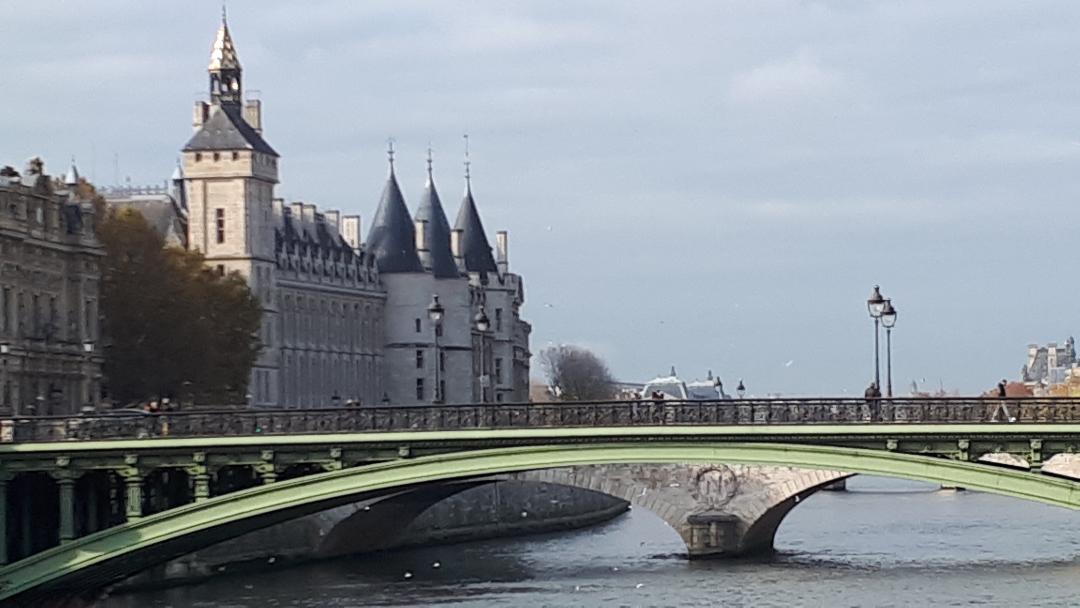
There are two towers, the tour d’Argent or silver tower (where the royal treasury was kept) and the tour de Caesar tower (in memory of the Roman foundations on which the tower was built) were built by king Philip IV the Fair and completed in 1313, and they have reached us , intact. Today, you can appreciate the reflections of the illumination of the Conciergerie at night in the Seine river, it is a must to see.
You go around to see the Salle des Gens d’Ames built in 1302 under Philippe le Bel, with its magnificent vanted naves, is a vast refectory, while its kitchen presents furniture of yesteryear, its guard room where the king held the “beds of justice », Parliament meetings to imposed laws. The floor where the revolutionary rooms are visited, made up of 3 reconstituted cells, the registrar’s counter, responsible for recording the prisoners, the concierge office, the toilet room, and the expiatory chapel of Marie-Antoinette, Made in 1815 in place and place of its cell.
The Salle des Gens d’Armes (Hall of the Guards), formerly refectory of the palace. The Rue de Paris takes its name from Monsieur de Paris, nickname given to the executioner of the Revolutionary Court, who came to visit the prisoners through this corridor. The great courtyard; It was the old King’s Garden, which had been replaced by a large rectangular courtyard. The Central corridor: dark and narrow, distributed on his route many rooms: The window room, the office of the conciergerie, the registry, the back-graft, the parlour, a rest room for the tellers, the infirmary, the chapel, some cells For women… The Court of women, an old garden bordering the King’s residence, this courtyard was the place for women to walk. The clerk’s office: It was reconstituted in the Conciergérie museum. This room has become the bar of the courthouse. The toilet room: In this place, the condemned to death were stripped of their personal objects for the benefit of the State or the hangman, low paid and for whom, therefore, there were no small gains: jewellery, snuff, spectacles, watches.To the Cour du Mai, where the carts were waiting for them to lead them to their place of execution. The small royal chapel ,called Chapelle des Girondins, it occupies the location of the medieval oratory of the king. Marie-Antoinette’s first cell: Marie-Antoinette of Austria was installed in the former meeting room of the tellers overlooking the women’s court by a narrow window. Marie-Antoinette’s second cell: it is located next to the small royal chapel. For more privacy, the cell was cut in half by a partition of planks with a screen separating it from the two constables, which ensured its constant supervision. See the towers such as tour Bonbec, closest to the Seine river, and Tour d’Argent,
Tour de César , and Tour de l’Horloge , the most famous located at the angle of the Quai de l’Horloge and Boulevard du Palais.
With a tablet, the histopad, the dungeons reveal the traces of the 4,000 revolutionary prisoners awaiting their trial, the confessional still seems to whisper the revealed secrets and the expiatory chapel of Marie-Antoinette reveals the conditions of her detention. In total, eight rooms, eight stories are told to us in the monument: the kitchens offer the spectacle of a royal banquet which really took place in 1378, the guards room returned to the form of a dungeon space of the period 1780 , La Grand’Chambre finds the splendor of the headquarters of the Parliament of Paris and one could almost follow the path of Marie-Antoinette towards her execution on October 16, 1793, from its cell in place of the Revolution, in great historical rigor, the Tables in augmented reality having been validated by historians thanks to iconographic sources.
There are no less than 2700 sentenced to death in just two years who will go through the Conciérgerie! Marie-Antoinette and Robespierre stayed here, before going to the scaffold, you can also visit the cell of the former Queen of France. The cell was put back in the original state, with wax figures for the guards, dressed in period, objects, sinister … It was nice to see a seat in Marie-Antoinette’s cell that was actually used to do her intimate needs !! In the 19C, the future Napoleon III was also locked up, as well as the anarchists Orsini and Ravachol or Marshal Ney. The prison function will continue until 1914, when it becomes a national monument, and open to the public. A wonder to be seen again and again while in Paris.
The Paris tourist office on the Conciergerie: https://parisjetaime.com/eng/culture/conciergerie-p3496
The official National Center of Monuments of France on the Conciergerie : https://www.paris-conciergerie.fr/
There you go folks, another beautiful historical architecturally stunning monument in my eternal Paris, Again, this is a must to see here !! Again, hope you enjoy this post on the Conciergerie of Paris !!! as I
And remember, happy travels, good health, and many cheers to all !!!


