
I am back into my best mode, road warrior! I am looking to find new areas not visited or hardly passing by for a more in depth look, and I am thrill to share it with the world! I came to Gaël on my way back home. This was not a plan visit but in my travels past by many nice towns like to have them in my blog, The town is located in my beautiful department 56 Morbihan in my lovely Bretagne region, I walked around town just to see and learn in my road warrior mode ! Therefore, let me tell you about the Church Saint-Pierre of Gaël !! Hope you enjoy the post as I.
The town of Gaël is on the edge of Morbihan (56), and Côtes-d’Armor (22). It is 52 km from Rennes and 74 km from Saint-Brieuc by N12 road, and 74 km from Saint-Malo by D766 road,It is km from my house.
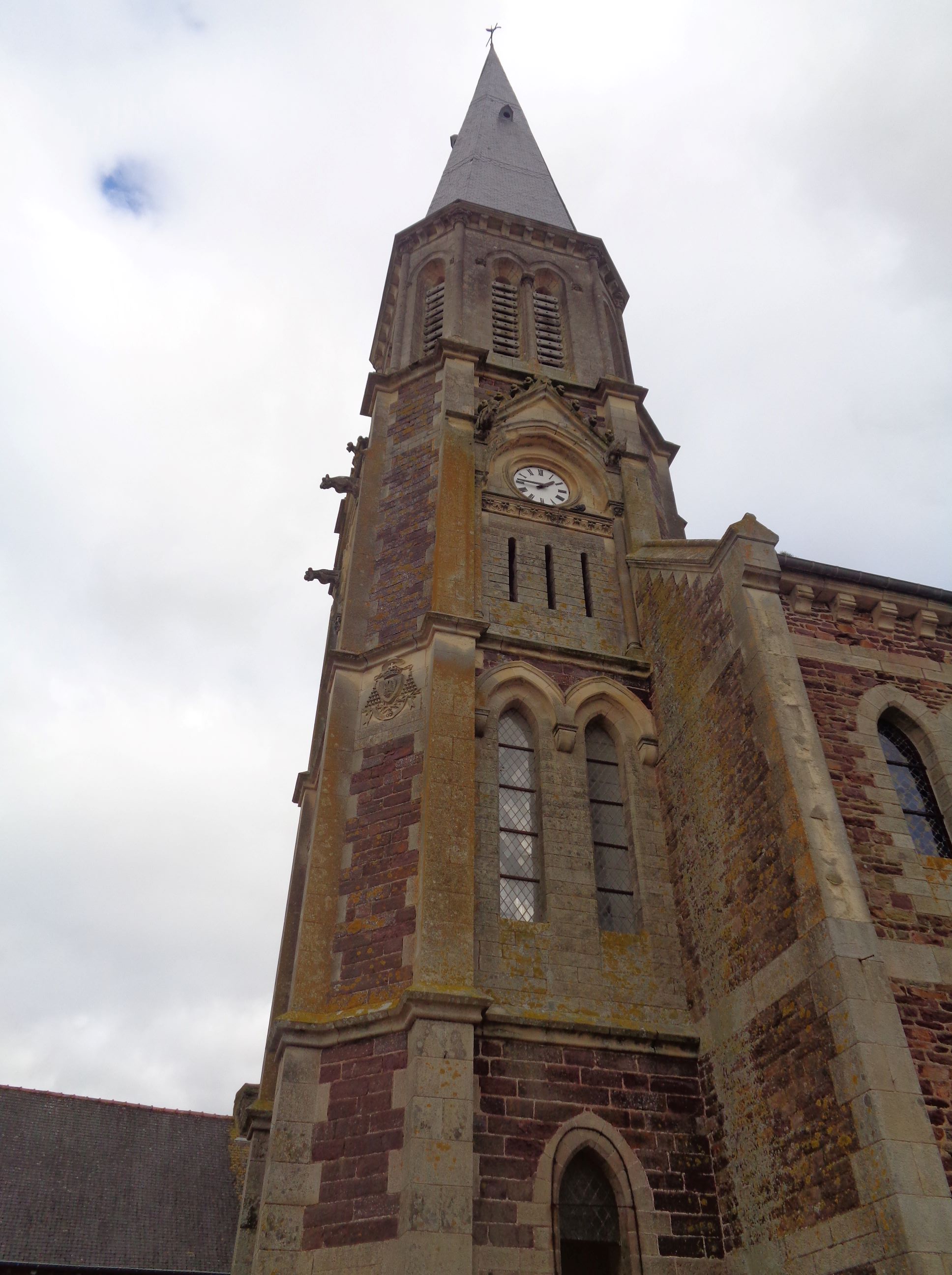
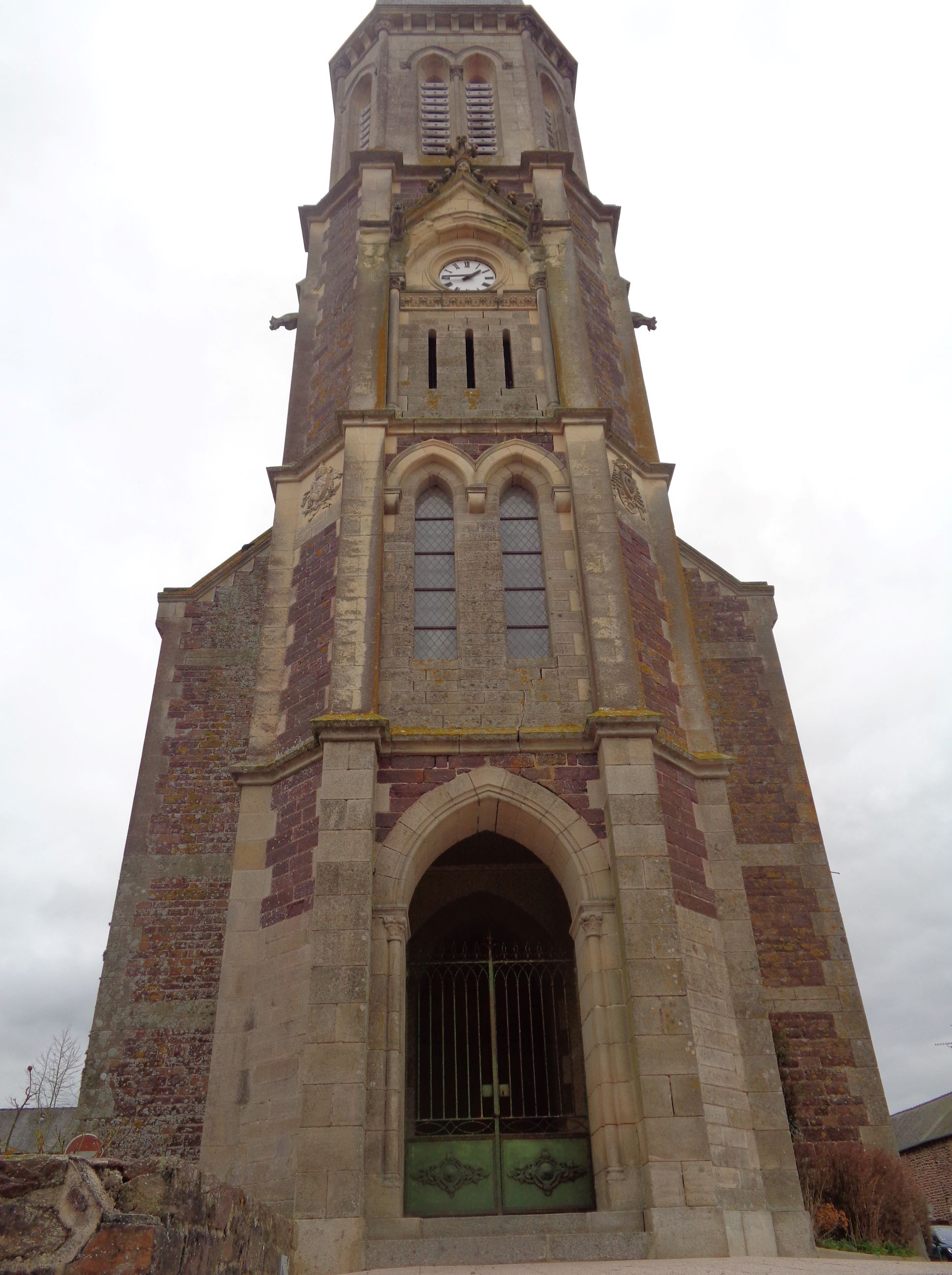
The Church Saint-Pierre done from the 11C to the 19C was where a former Benedictine priory dependent on the abbey of Saint-Méen, the church presents a Latin cross plan. It is covered with paneling. The nave and the choir date from the 11C. The single nave, supported by buttresses, is lit by narrow windows. The right bedside has three flat buttresses on the west gable and two walled windows. The southern chapel was resumed in the 15C, the north chapel in the 17C. The sacristy was built at the same time. The west facade with its tower-porch was built between 1865 and 1870.
From the primitive church, there remains only the Romanesque nave of the 11C and the sacristy it originally included a simple Romanesque nave, and it seems a choir with a right bedside, had two windows today blocked. The bell tower dated from 1645, and the arrow of 1773. This facade was redone between 1865 and 1870, hence the more modern aspect of this part of the church. Inside the choir contains beautiful 18C woodwork. Backed at the bedside, stands a stone and marble altarpiece dated 1651 it includes two reliquaries, one of which contains bones from Saint Judicael. The is remarkable southern transept turnse. It is surmounted by a double dome with a key of the sculpted vault of a character who holds a quartered badge. The dome is based on protruding sand pits and finely decorated with characters, fabulous animals and renaissance -style arabesques. The angles are decorated by six large angels bearing the various attributes of the passion of Christ. In the nave they present events in the life of Saint-Judicael on the north facade, and Saint-Pierre on the south facade. The sacristy as well as the choir have very beautiful woodwork which are undoubtedly contemporary. It is also decorated with a painting representing Saint Peter inclining. Its date is unknown as well as its author.
The Church Saint-Pierre as said was restored in the 19C.This church is interesting because of its Romanesque architecture recalling the 11C. It was first of all a simple nave, still existing with its long loopholes and its flat buttresses in the north, ended by a triumphant arc opening on the choir; Then were added two chapels, one in the south, recalling the 15C, and the other in the north, which only seems to be the 17C. This southern chapel was prohibitive, it is said, to be the Lord of Chesnaye; It still shows, sculpted on its wall, the coat of arms of the Laval Sires, which long owned the land of Gaël. Finally, the first stone of the high altar was blessed on November 20, 1650. We see in the nave an ancient statue of Saint Luke. The high altar is modern. Wall painting, illustrating the life of Saint Judicaël, dates from 1949. A statue of Saint Marguerite dates from the 16C. There is the arms of the Montmorency-Laval family, lords of Gaël in the 15-16C. The church once had several enfus those of the lords of Gaël and the lords of Faux or Fau. The southern chapel seems to have been prohibitive to the lords of La Chesnais.
A bit of history I like tells us that according to the Breton hagiography, Saint Méen founded in the 7C the monastery of Saint-Jean-de-Gaël at the edge of a large forest, on the banks of the Meu river, where a local lord offered him a land. It was there that he welcomed Judicaël, king of Domnonée in particular. The Gaël monastery was destroyed in 811 by the Frankish troops of Charlemagne, then in 919 by the Vikings. It was rebuilt a little further north, in a place that has become from Saint-Méen-le-Grand (see post), In the 6-7C, Gaël would have been the capital of the Domnona or at least one of the most important cities in the kingdom of Domnona and was originally called Wadel (Le Gué). The legends placed there from the 6C the King Hoël whom they called the King of the Woods, “Rex Arboretanus” . Alain Bouchart makes Gaël the capital of Domnonée. The town is located in the midst of the vast forests of the Poutécouët, was in the 7C a royal residence that Juthaël, father of Saint Judicaël, Judicaël himself, and later Erispoë. The location of their castle still appears on the edge of the river’s edge and very close to the town. At the restoration of Brittany in the 11C, this castle saw the birth of the family of the Sires de Montfort, of which the most illustrious, Raoul, contributed powerfully to the conquest of England. It was taken and dismantled by Du Guesclin in 1372.
Other monuments to see with more time is the Church Saint-Nicodemus (18C), located in the village of Bran. And the Chapelle de Louya (1556-1926) dedicated to Saint Jacques and Saint Christophe. The former Louyat monastery was founded in the 7C. The chapel, in the shape of a cross, became a branch of Gaël in the 12C, Also, the Château de la Ville-Roux (17-18C). It is at the origin of the old manor Ville-Raoul or Ville-Roux that Raoul de Gaël would have built. He has a chapel, private and dedicated to the Sainte-Famille, which dates from 1700.
The town of Gaël on the church : https://www.mairie-gael.bzh/du-cote-de-la-culture/patrimoine/eglise-saint-pierre
There you go folks, another nice monument for all to see, and enjoy, The ride was wonderful in country roads the real life of France ! I bring you the Church Saint-Pierre of Gaël !! Again, hope you enjoy the post as I
And remember, happy travels, good health, and many cheers to all !!!

 Paris1972-Versailles2003