
A work of love which I am enjoying very much and thank you for coming along with me. This again is older pictures not in my blog yet that should be. Having criss-cross this vast region of Bretagne ,I have encountered many works of arts of great beauty , history and architecture values in many places. Indeed France is a mouvable feast! Having visited Vitré, I have done posts on the sights, and I am coming back to tell you more of the Church Notre Dame of Vitré ,part II !! which really can be said to be more like a Cathedral for its wealth of beauty, that needed this extra post, Hope you enjoy the post as I
Notre-Dame of Vitré was the parish of the rich overseas merchants, the flamboyant Gothic building was erected mainly in the 15-16C. Opening to the west on Place Notre-Dame square, along the rue Notre Dame to the south, it occupies the highest point of the old town, prudent against the northern front of the medieval enclosure overlooking the Vilaine river. The most picturesque of the facades is that of the south, built from east to west from 1480 to 1540. The close succession of gables gives this style the name “sawtooth”. A series of shallow buttresses separates the windows. The strongly serrated pinnacles which surmount them give the facade its Breton character. We are here in the flamboyant Gothic style, dear to Upper Brittany from the 15C to the 17C.

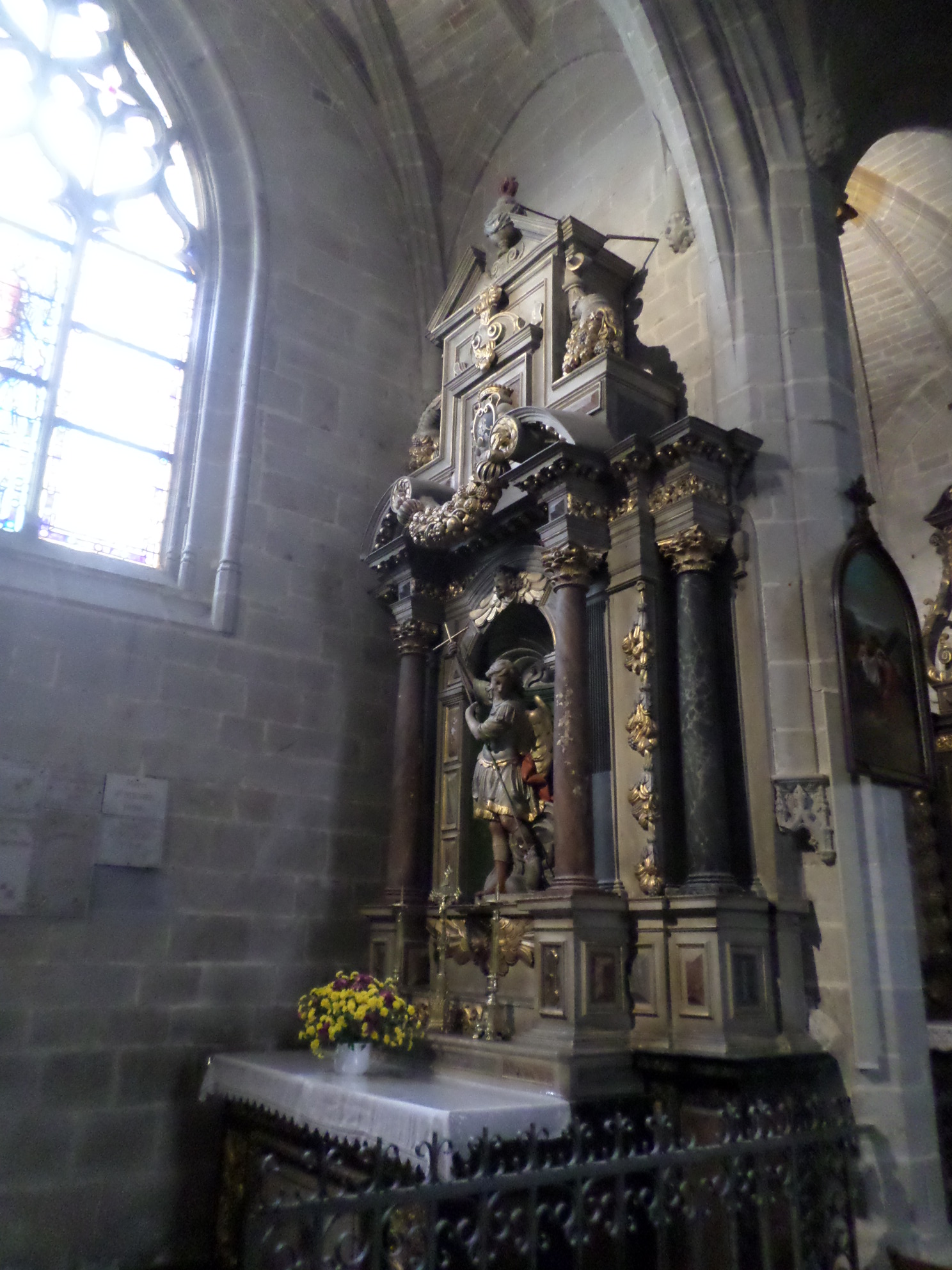
The style of the altarpieces is often excessive, typical of the Spanish spirit. The classic style such as the St. Francis altarpiece, resists despite an offensive in the Baroque style, supported by the all-Spanish taste for fully decorated surfaces. Let us cite, in the Baroque style, the altarpieces of Saint-Michel, Saint-Melaine and Saint-Sébastien. Let us not forget that excess carries with it triumphalism and majestic beauty. The brotherhoods who placed orders could be proud. The Council of Trent (1545-1563) had also affirmed its artistic credo: beautiful and large works of art are ideal for impressing the faithful. Let us add that the Notre-Dame Church had, not long ago, a very beautiful painted enamel altarpiece dating from the 16C. This altarpiece is now on display at the Château de Vitré museum.(see post)
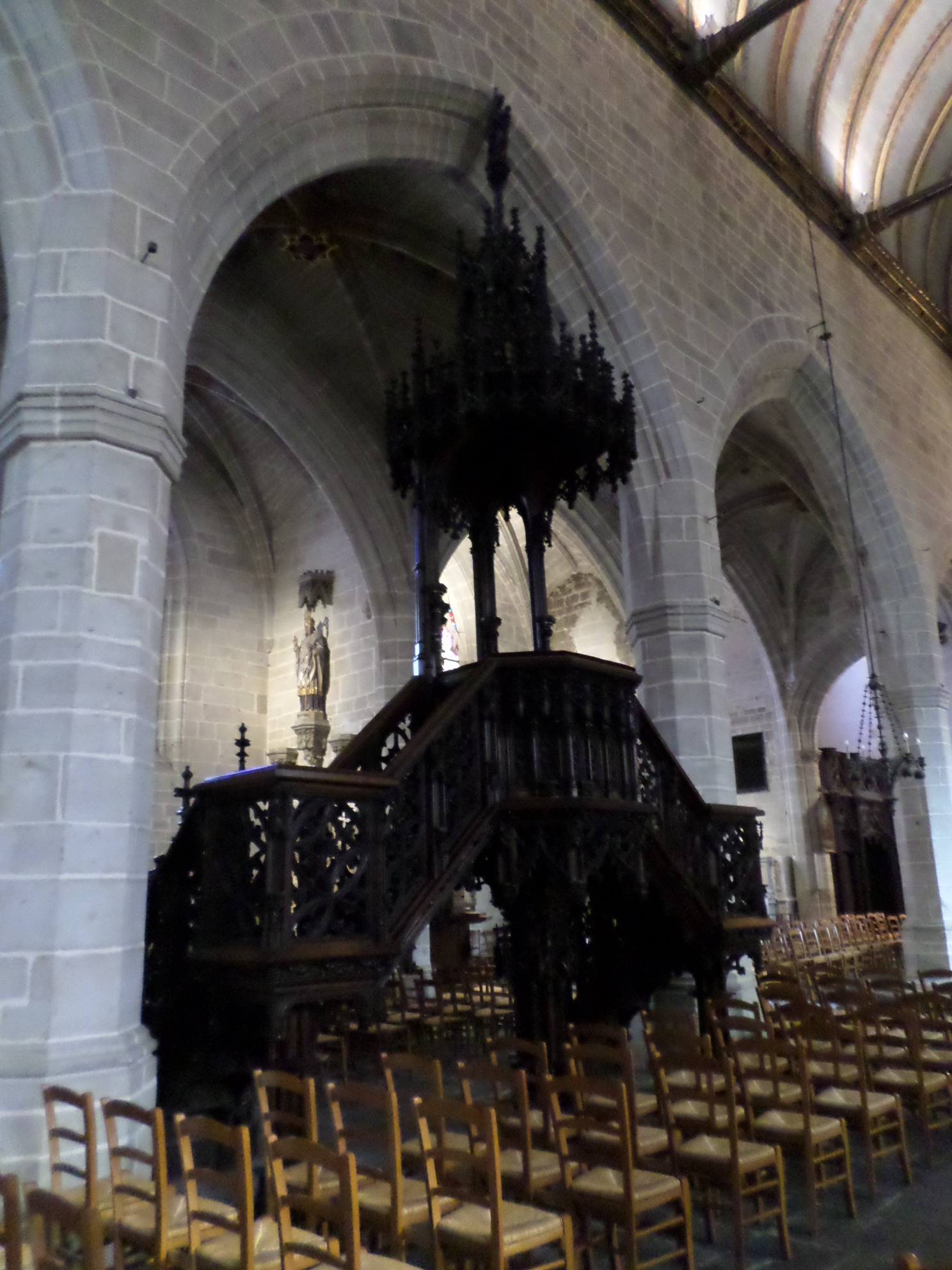
The preaching pulpit is dated 1855. The pulpit basin is inspired by the stone preaching pulpit of Strasbourg Cathedral (pulpit which dates from 1486).
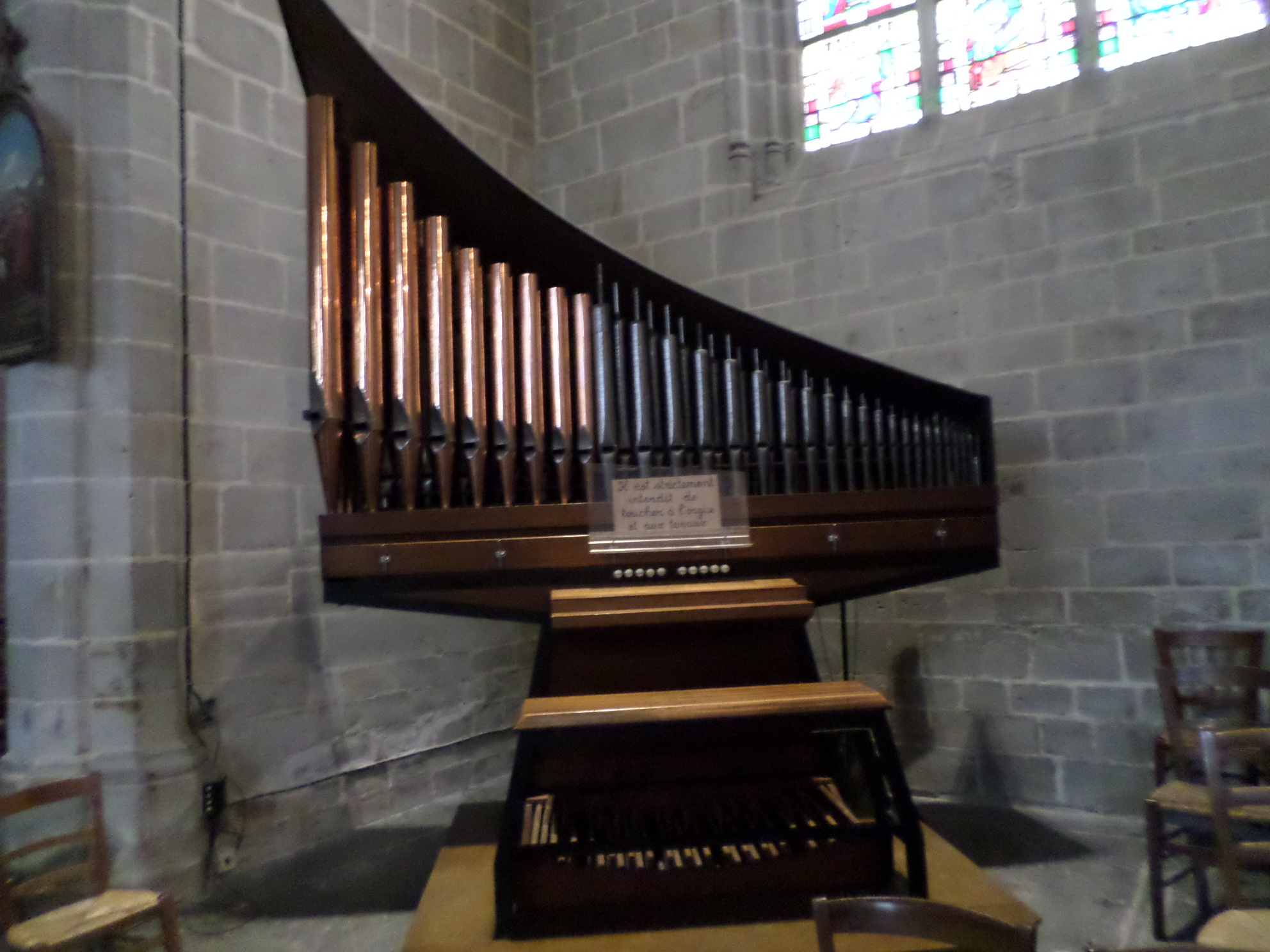
The Choir organ of Notre-Dame is located in the fifth chapel overlooking the northern collateral of the church. This was delivered in 1971.
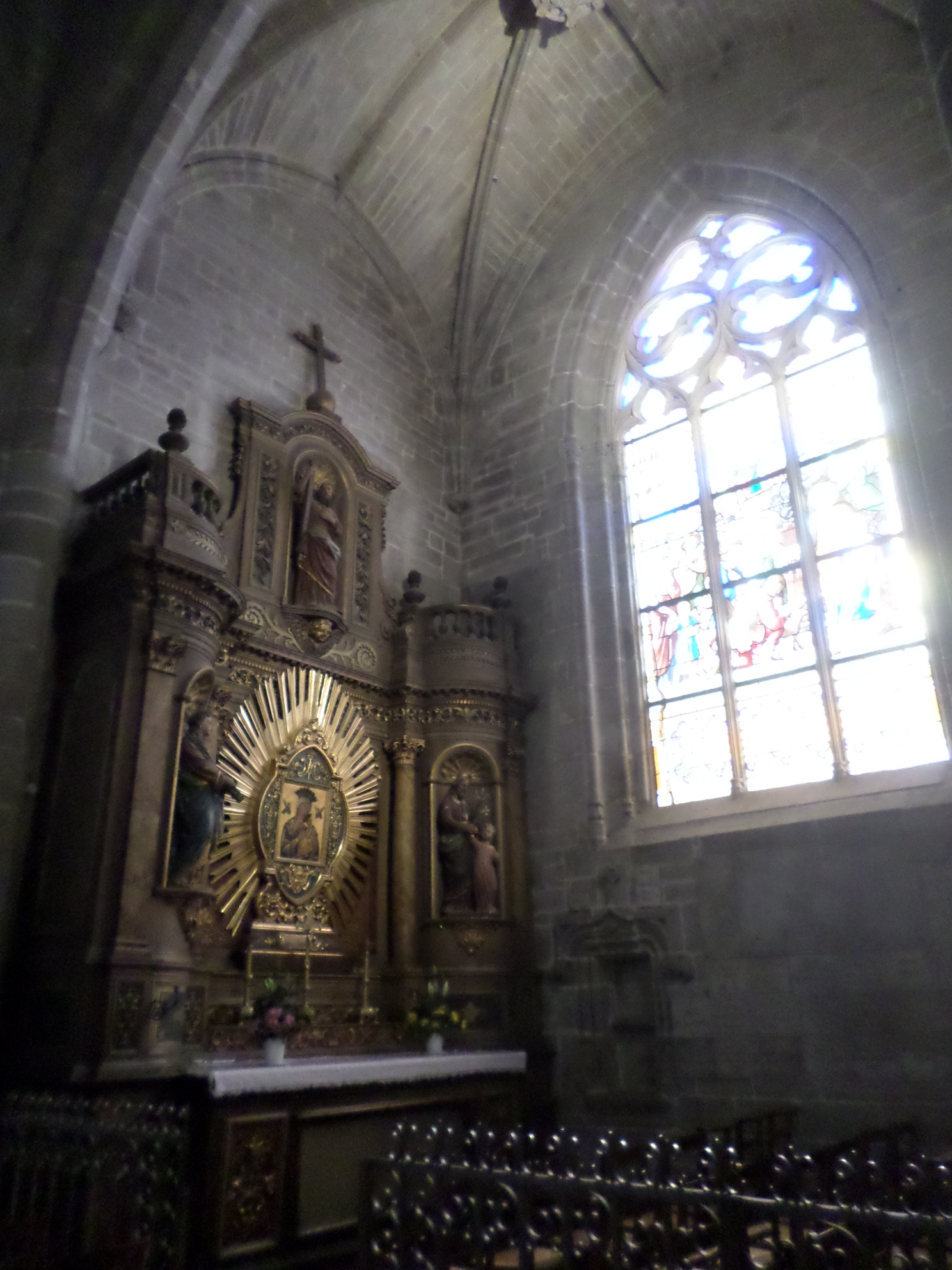
The main stained glass of the Notre-Dame Church dates back to the 19C. If the original glazing almost disappeared, the building retains an exceptional room ,the entrance of Christ in Jerusalem dating from the 16C, and two earlier fragments of the end of the previous century. Three windows of the Notre Dame Church retain stained glass from the late Middle Ages and the Renaissance. The stained-glass window of the seigneurial chapel. The last chapel on the south aisle, located on the floor of the old sacristy, houses a fragment of an annunciation dating from the late 15C. The Archangel Gabriel is placed in a flamboyant kiosk on the paved ground, in front of a richly adorned Damascus background.
Between 1480 and 1550 the Notre Dame Church was almost completely rebuilt. The new glass building enjoys a remarkable architectural asset: it is a link between flamboyant Gothic and the Renaissance style. Little present inside, this transition from one style to another is very visible on the south facade. The current monk choir was not affected by the reconstruction; the transept, very little. The interior designs were, without a doubt, facilitated by the wealth of the city due to the canvas trade. Among its riches, Notre-Dame offers a very beautiful Renaissance stained glass window illustrating the Entry of Christ into Jerusalem, dated 1537. The other stained glass windows are from the 19C. The Notre-Dame Church houses four large altarpieces from the 17C in its side chapels. Such as the Saint Michel altarpiece ,and a 19C altarpiece in a south side chapel.
You can see here a painting of Saint Barbara protecting the Notre-Dame Church from lightning. This painting from 1769 has the enormous advantage of revealing two things that have disappeared: the pinnacle which topped the bell tower since the 15C and the plasterwork of the church. The current spire, made of Crazannes stone, was built in 1858. It gives the monument a height of about 63 meters. The plasterwork is the enclosed space that once surrounded a church. That of Notre-Dame, raised above the street, was demolished in the 19C, Noted Saint Barbara or Santa Barbara is the patron saint of my native town !!
The City of Vitré on the Church: https://www.mairie-vitre.com/Eglise-Notre-Dame.html
The Ille et Vilaine dept 35 tourist office on the Church: https://www.bretagne35.com/offres/eglise-notre-dame-vitre-fr-2723886/
There you go folks, another beauty detail a bit more for you, Again, hope you enjoy this post on the Church Notre Dame of Vitré, part II as I.
And remember, happy travels, good health, and many cheers to all !!!

 Paris1972-Versailles2003