
I went back up to the north of me at the Côtes d’Armor dept 22, We follow the road D786 to Paimpol ! Always by the coast and again a new town visited, amazing of the many wonderful spots that we still need to visit, easy does it, I will be telling you about this pretty town, we like, in my road warrior mode ! My intention was to see the abbey and a nice spot it is ; we like for the old and upgrade the locals have done, Therefore, let me tell you about the Abbaye de Beauport of Paimpol !!! Hope you enjoy the post as I.
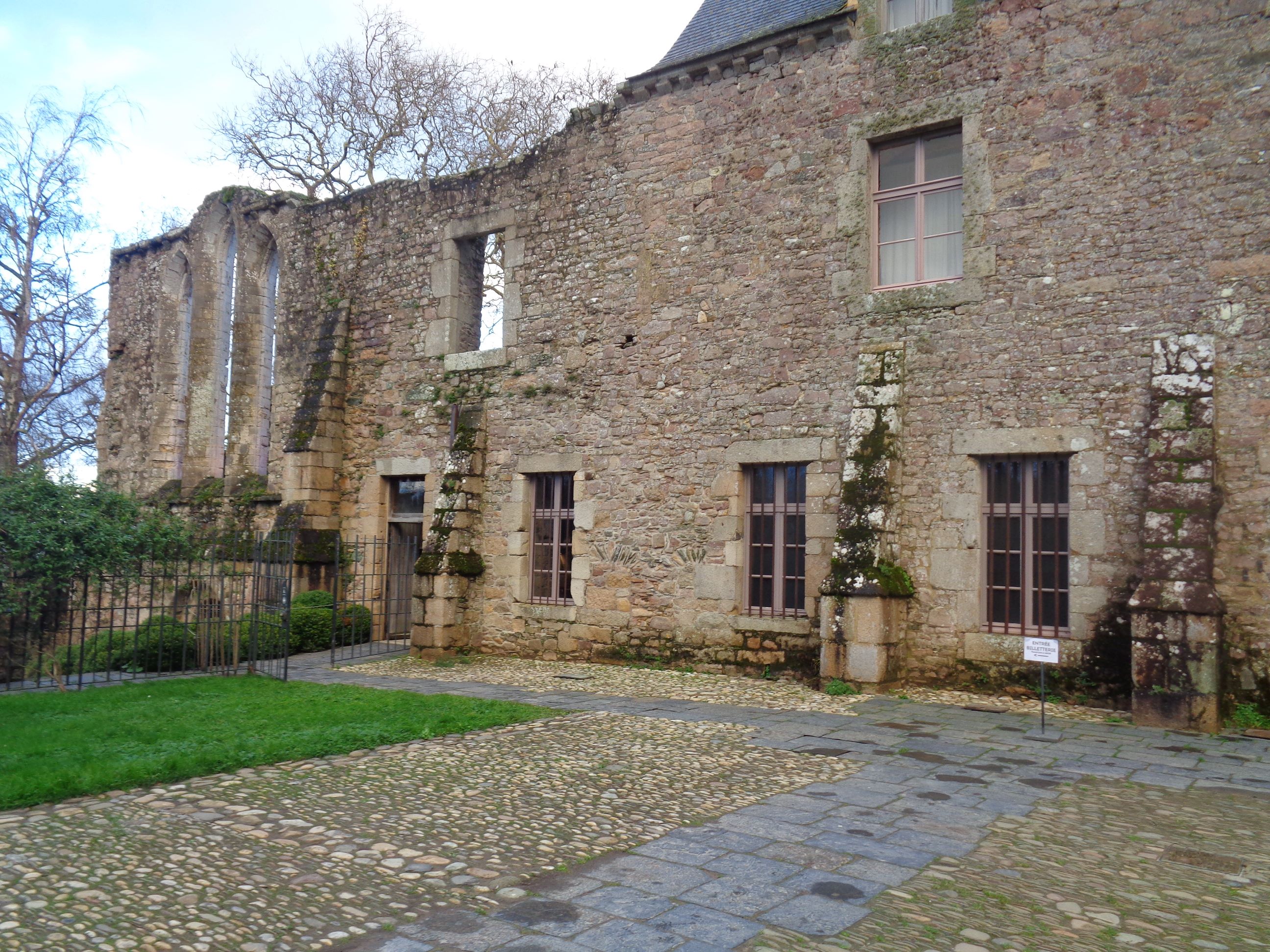
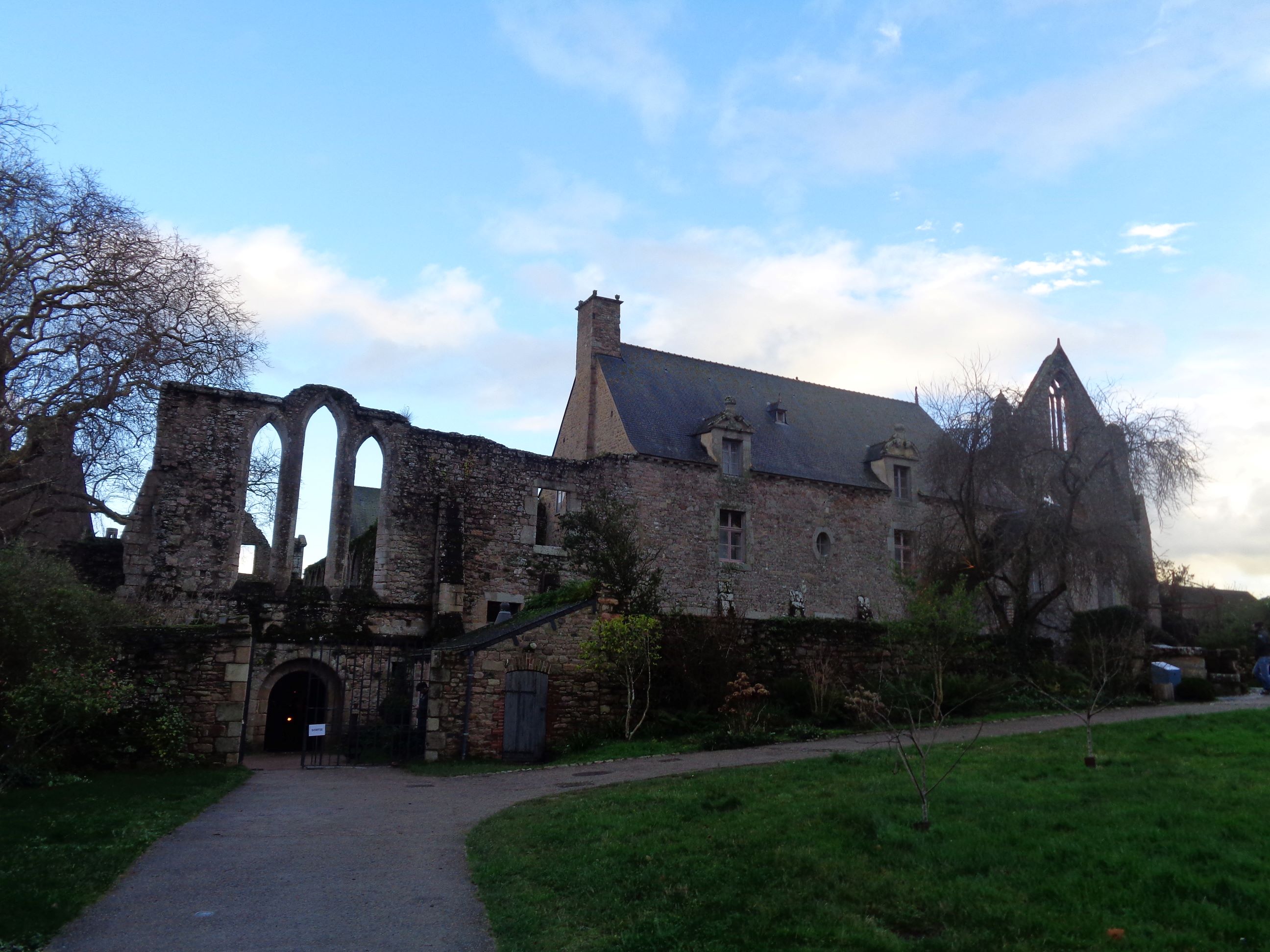
The 50 × 20 meters church has a flat apse with a rib-vaulted nave, groin-vaulted aisles and transepts. Its length is greater than other abbey churches built in Brittany by austere orders such as the Cistercians close to the Premonstratensians. The shapes are all borrowed from the Norman Gothic style which developed at the same time, the end of the 12C and the beginning of the 13C. A spire in frame 17 meters high is located at the crossing of the transepts . The one to the south is called Chapelle des Viscounts. The bay above the portal has a radiating style network which, for some, dates this facade to the end of the 13C. In 1790, when the monks left, the church dedicated to the Virgin Mary was intact. Visitors enter the sanctuary by passing under the organ case. The canons’ choir is raised by two steps and furnished with high and low stalls where paintings of Saint John, Moses, the Virgin, Saint Augustine and Saint Norbert are hung. founder of the order of the Premonstratensians. The high altar table is supported by marble columns with an altarpiece decorated with six columns and a painting. Four secondary altars in chapels are reserved among others for Saint Riom and Saint Maudez whose relics were transferred to the abbey in 1202. For worship, the monks have five chalices including one in silver-gilt, a lamp, a large and a small cross, two censers, a sun, a ciborium, cruets, all in silver completed by an ornament of complete cloth of gold and another with fringes of gold thread. If only the tombs of the lord of Kergosou, his wife and the tombstone of a knight represented by a large sword remain in the church, the founder of the abbey, Count Alain and his wife rested in the choir under a tomb with the arms of Avaujour and in the chapel of the viscount, Prigent de Coëtmen and Alain de Laval.
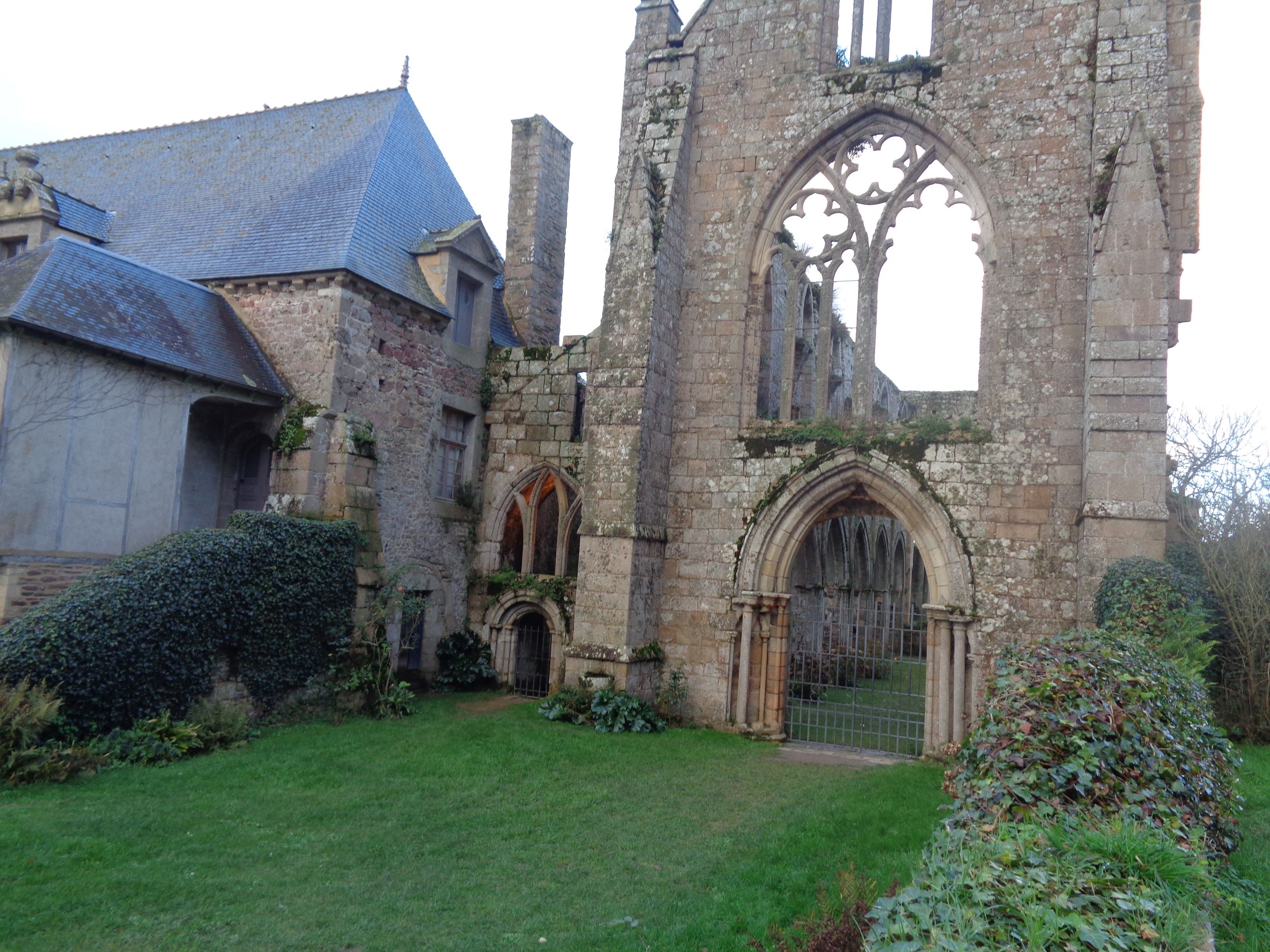
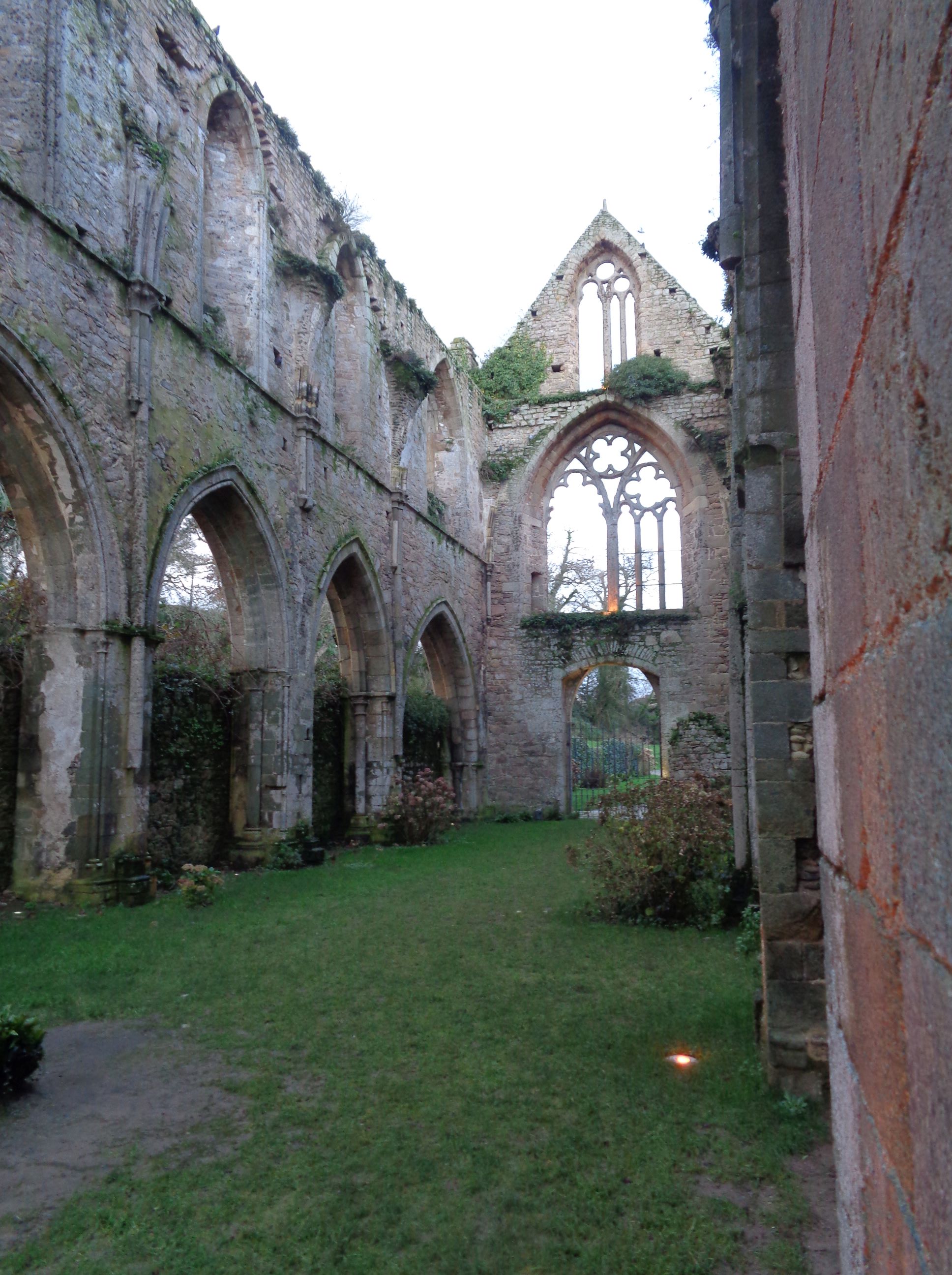
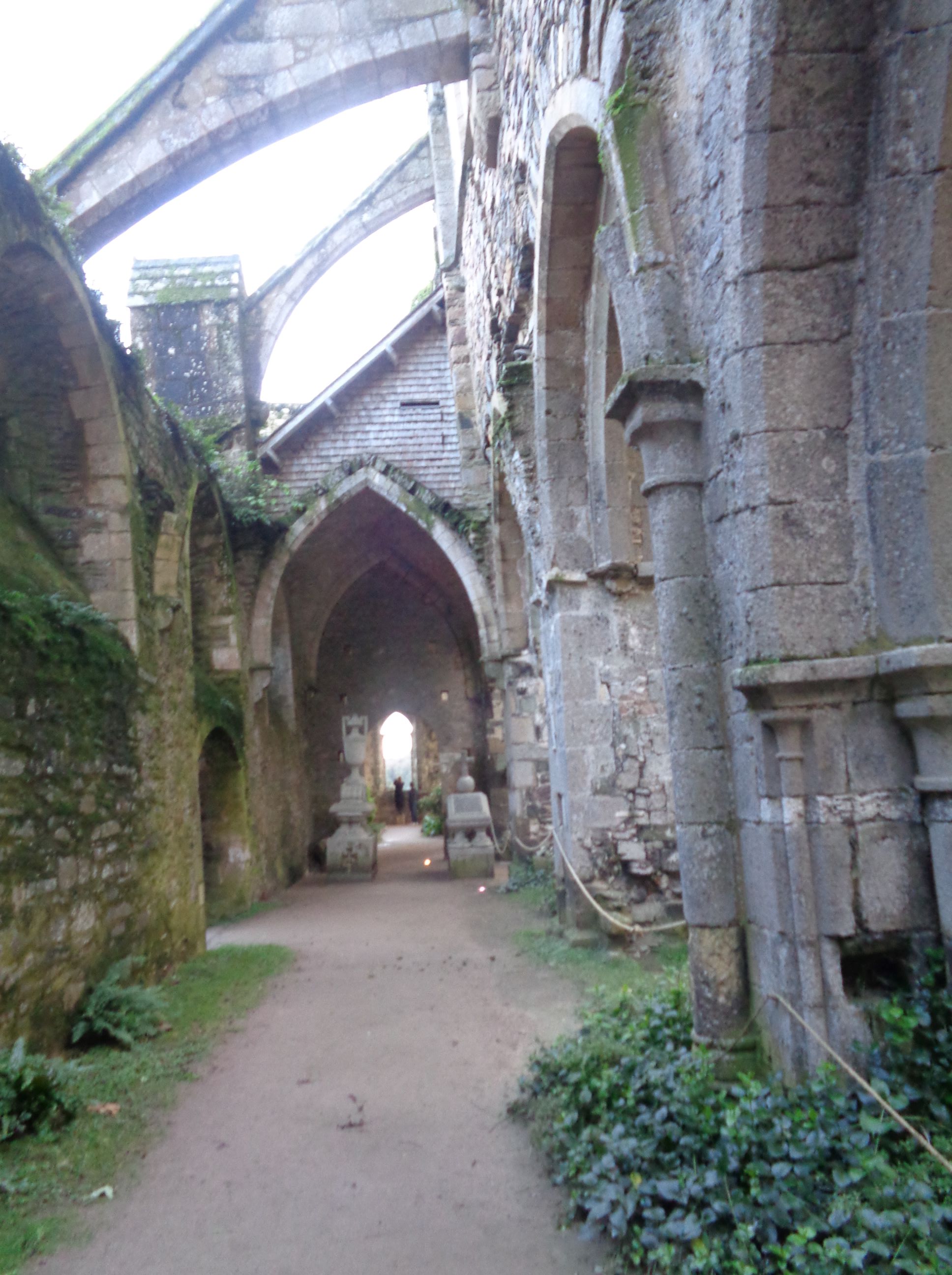
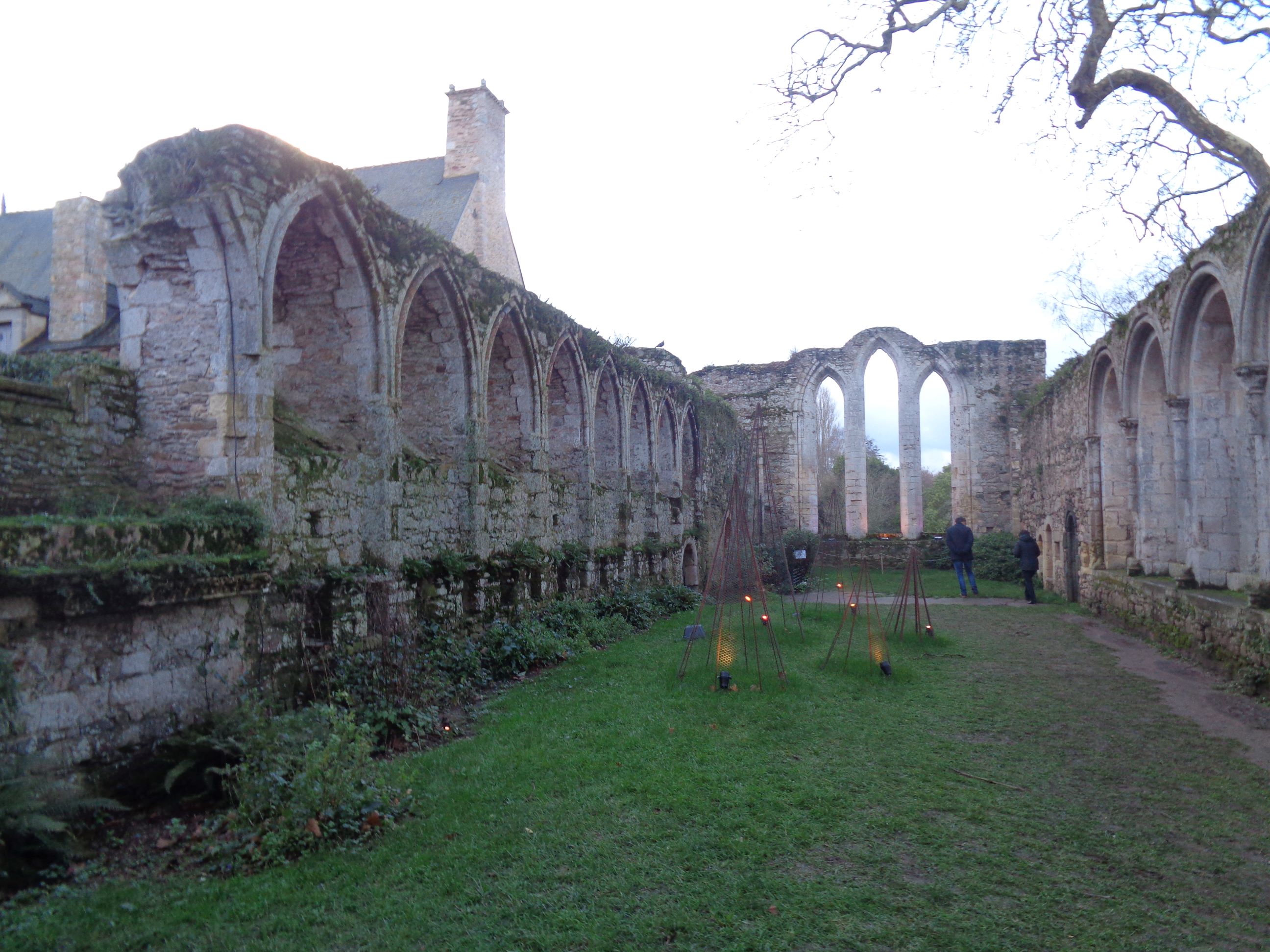
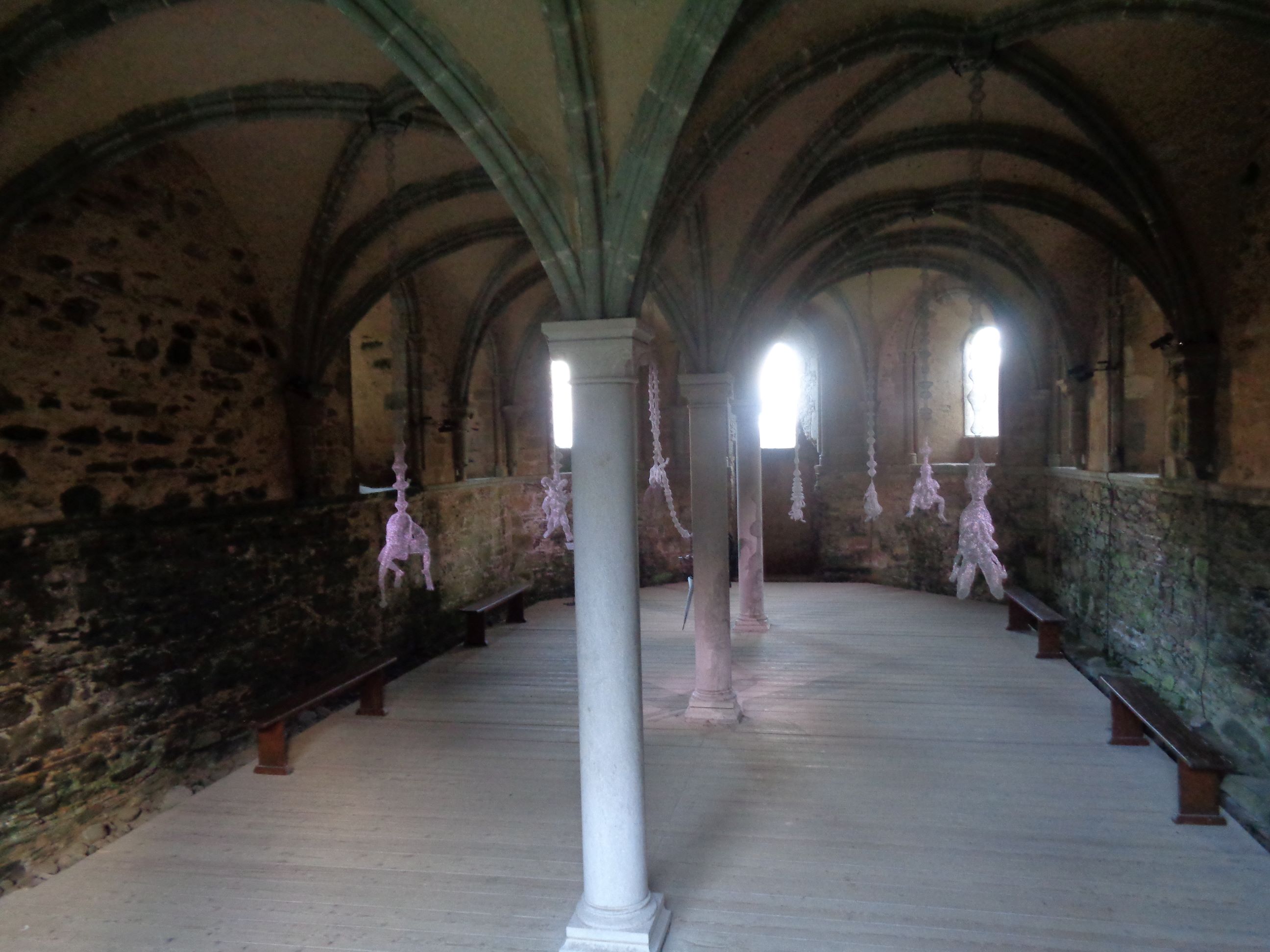
The sacristy is an approximately square room with a surface area of 58 m2 located at the end of the north cross of the transept of the church. The chapter room, place of meeting and decision-making for the community of canons, is a beautiful rectangular room ending on the east with a sort of three-sided apse, built with more care than the rest of the ground floor. The cloister has disappeared and we can see the stone corbels on the walls of its periphery but there remain details of the late 15C in the northwest corner. Leaning against the western wall of the cloister, near the refectory, the canons’ sink has three arches. The tympanum of each of them is decorated with a band supported by three series of arcatures and a geometric design. The refectory is a beautiful room measuring 34.50 meters in Caen stone, in length and 7.50 meters in width, where one enjoys a magnificent view with, on the north facade, eight semi-circular arcades 2 meters wide at the embrasure overlooking the garden and in the distance, offering an example of landscape staging, Of the 13C construction built by Abbot Hervé in 1249, the south windows remain and in the 16C the large bays of the refectory were opened. To the north of the refectory and above the small storeroom, the partially preserved walls of the monastery kitchen forms a room 10 meters long and 7.80 meters wide. Below the refectory, the large cellar, 34.20 meters long and 7.20 meters wide, is divided to the east by a rubble wall to form a shed. The Salle-au-Duc, or duke’s room to the north of the refectory, is distinguished by their magnificence, a vast room whose pointed vault rests its double arches on consoles placed along the walls with two large fireplaces. With the refectory and the chapter house, it is the most important building in Beauport. A craft and then residential building is atrapezoidal room 26 meters long and 8 meters wide internally, divided into six bays, is posterior to the north wing of the monastery and attributed to the end of the 13C. It is lit to the south by twin lancet bays and to the north by tall and narrow semi-circular bays. A canal is integrated into the building and runs along the north facade. To the west a ruined gallery can be dated to the 15C. The discovery of four bronze furnaces and a forge indicate artisanal use until the 15C. A small vaulted room 2.48 m long and 1.35 m wide is located 1.55 m below the floor level of the room In the north-east corner of the room, over 20 m2 and in front of the fireplace, negative prints of tiles suggest that the room was tiled in the 15C.

A bit of history I like, tell us that the Abbaye de Beauport Abbey, was carved out in the 13C, canons from Prémontré settled there at the request of Count Alain de Goëlo. The monastery was built on a site of 70 hectares descending towards the sea with a pier forming a harbor and a double belt of walls. Its pastoral, justice and economic functions extend from Île-de-Bréhat to Saint-Brieuc and to around twenty parishes, including nine in England. It is also a maritime lordship with rights over the sea from Saint-Riom Island to the tip of Guilben. For 500 years, they will shape this place and their environment according to their monastic rule and the needs of their community life. During the war of succession of Brittany which opposed the Montfort-L’Amaury and the Blois-Penthièvre whose heiress, Jeanne de Penthièvre wife of Charles de Blois is a descendant of Alain de Goëlo, founder of the abbey, the Premonstratensians de Beauport are rebels against the takeover of John IV of the Montfort line. Charles de Blois made them a large donation a few weeks before his death.
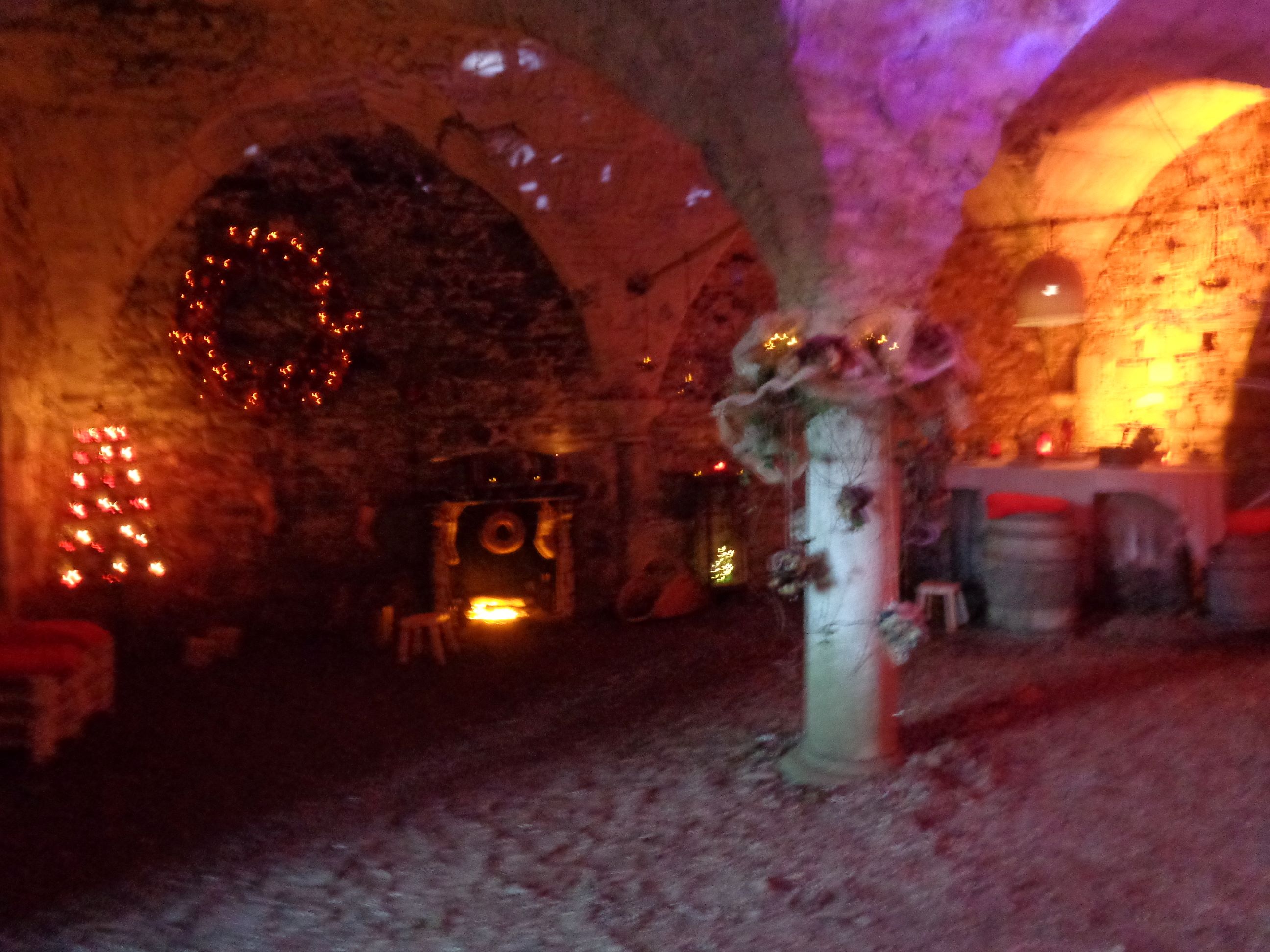


Closed during the French revolution, then sold as national property, the abbey buildings were in turn transformed into a stable, town hall, bourgeois apartments, school and cider house. In 1790, the abbey was sold and remained in private hands by Count Poninski (Polish outlaw from the Great Emigration and refugee in Paimpol) and his wife Mélanie Morand who moved to Beauport. Little by little, the couple bought the various buildings and devoted their assets to the safeguarding and reconquest of the Beauport estate, managing to preserve the abbey in the romantic spirit of the 19C restoration. In 1891, the heirs of the Poninski family own the entire abbey , The descendants of the Poninski couple sold the site in 1992 to the Conservatoire du littoral.which implemented protection measures. In 1995, the Conservatory opted for the project of crystallization of the ruin which favors consolidation work freezing the building in its current state, over restoration work. Tourist promotion and cultural mediation systems are implemented.
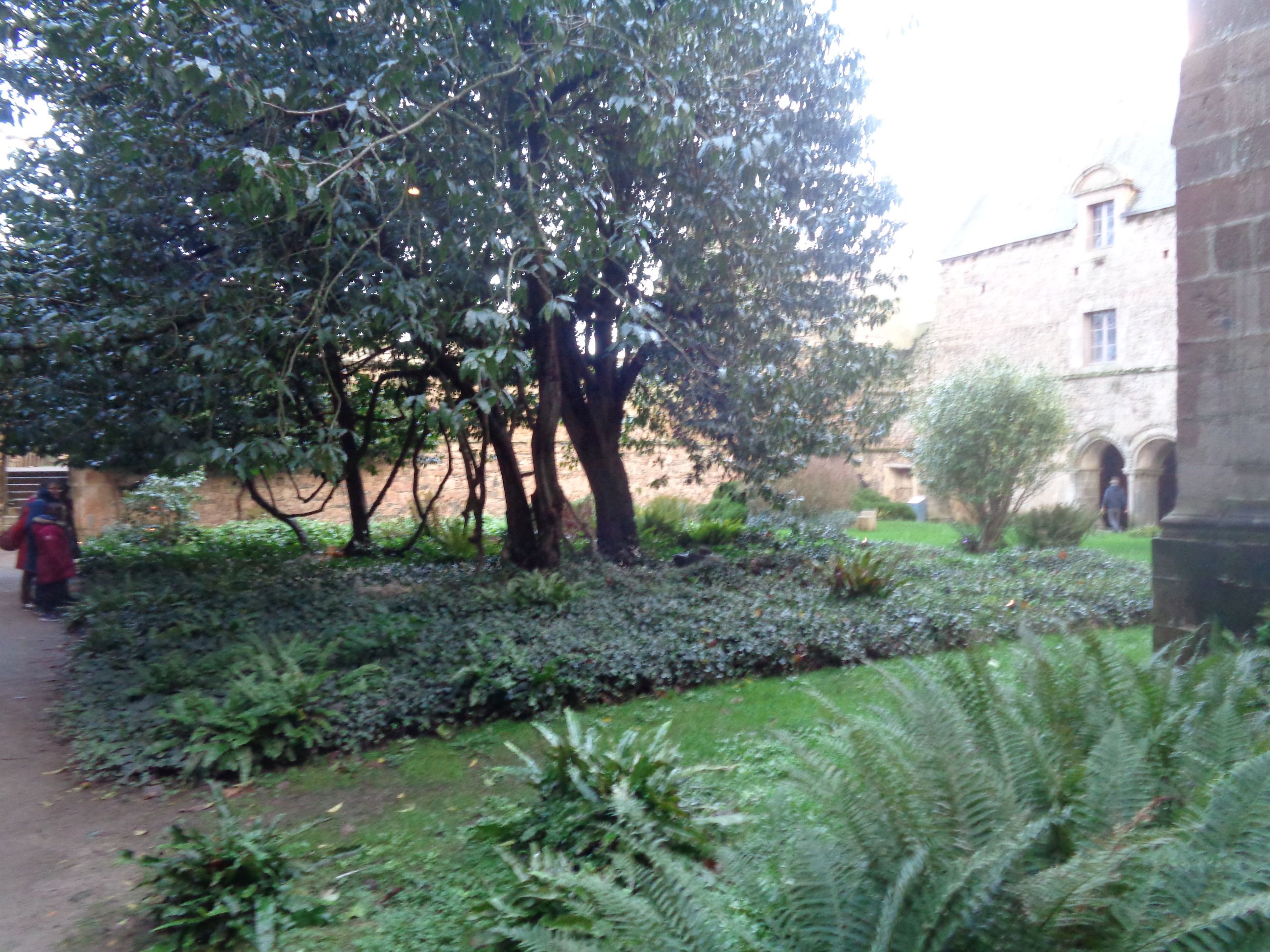
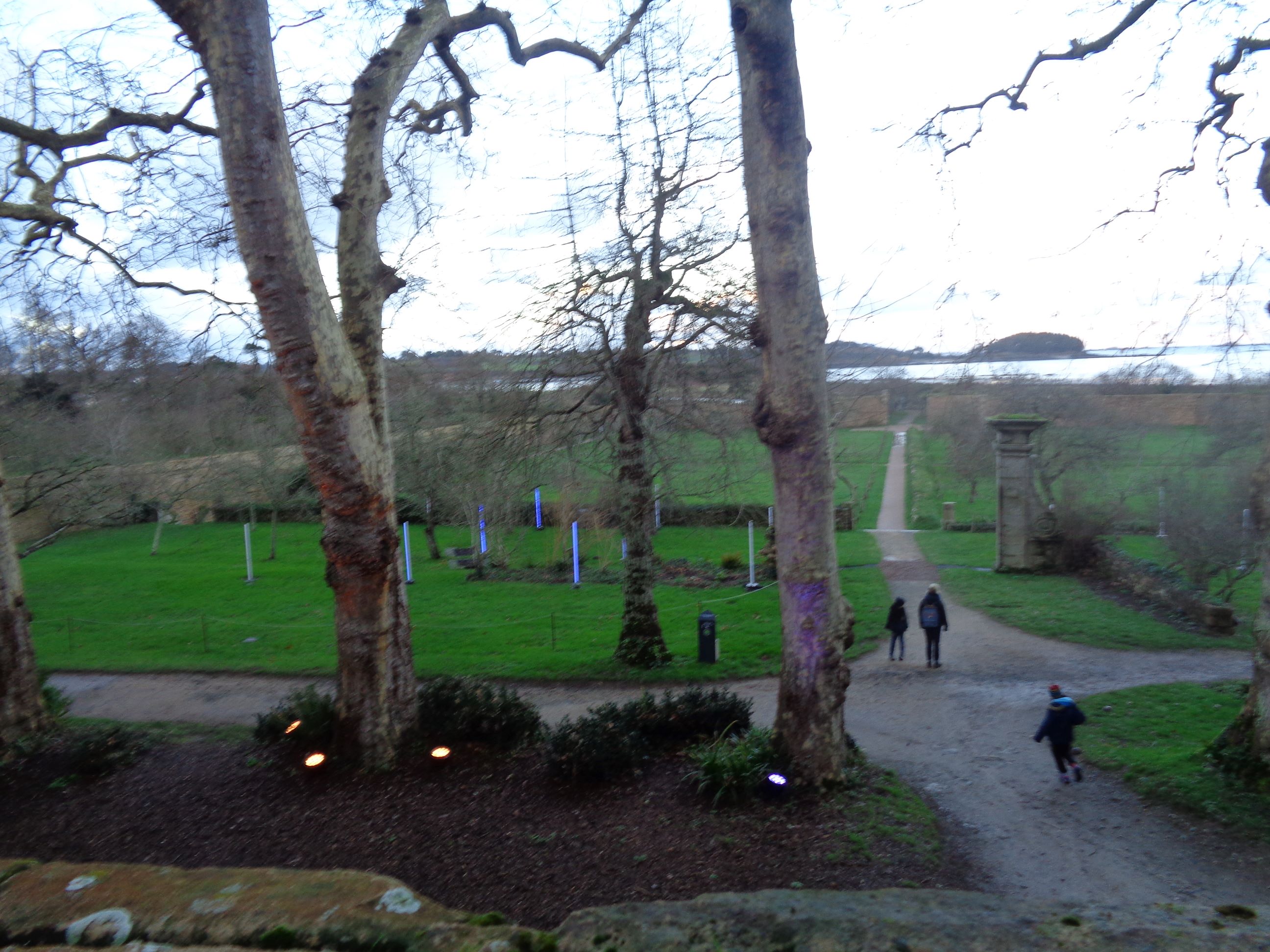
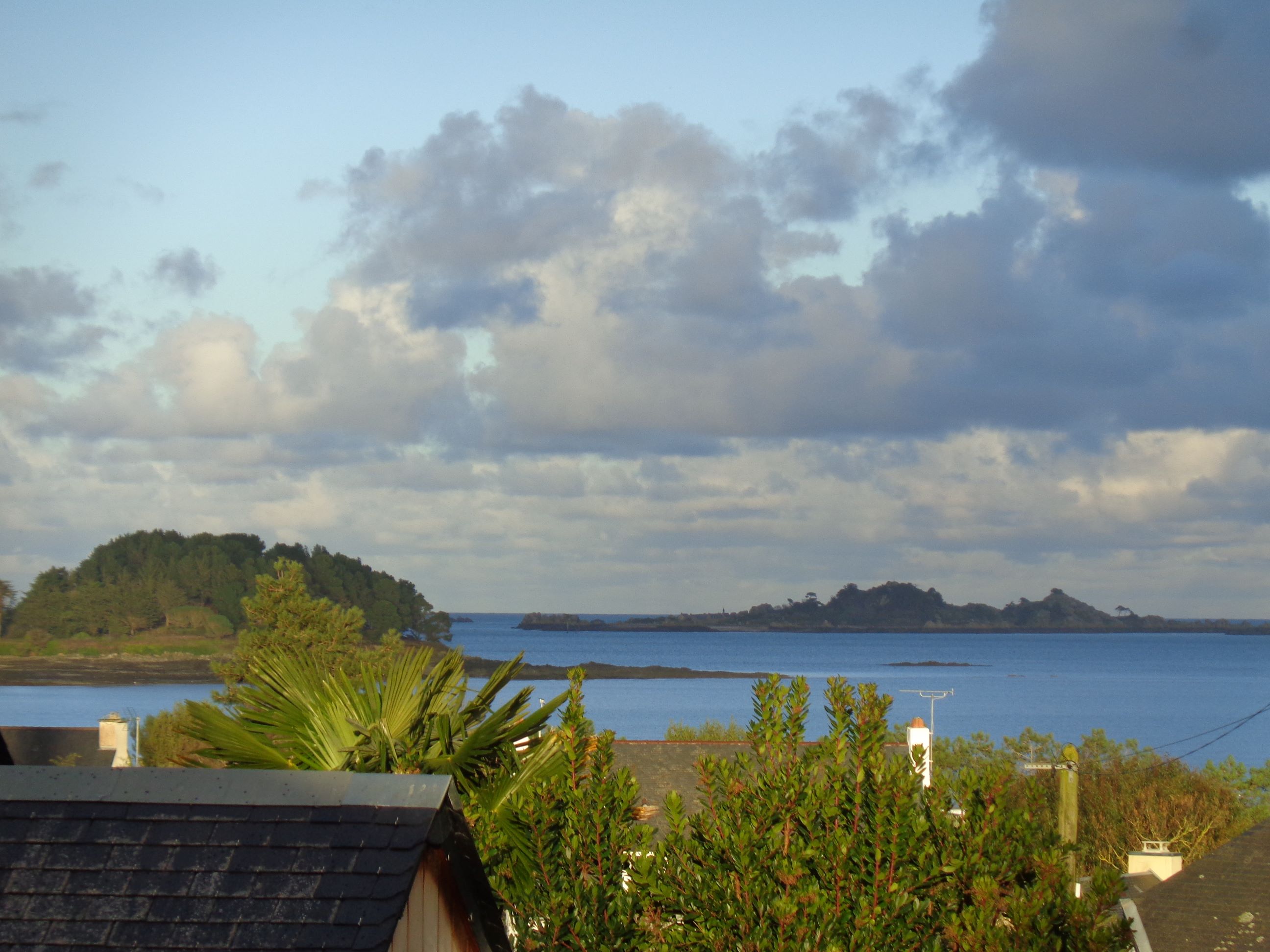
Beauport Abbey and the entire site receive individual, group or school visitors. Activities, workshops and thematic, educational and evening visits are organized around the history of the abbey and the nature that surrounds it.
The official Abbey of Beaufort : https://abbayebeauport.com/en/index.html
The town of Paimpol on the Beauport Abbey : https://www.ville-paimpol.fr/abbaye-de-beauport/
There you go folks, again another lovely town and beautiful monuments of Paimpol. This was worth the trip and nice, another spot in my world map, Again, hope you enjoy this post on the Abbaye de Beauport of Paimpol as I.
And remember, happy travels, good health, and many cheers to all !!!

 Paris1972-Versailles2003