
I am back again, where else, my eternal Paris ! Again, found me older pictures new to the blog that should be in it, After all, this is the famous beautiful Place de la Concorde ! A must to walk it and see its wonders of architecture and history all around it. It seems the world convenes here after a long walk along the Ave de Champs Elysées or the Rue de Rivoli! I was lucky enough to even worked just around the corner from it and walk to work passing close and seeing it every day . Of course, I have told you about it before in my blog, but this is new text , and pictures, Therefore, here is my new post on the Place de la Concorde of Paris, part II !!! Hope you enjoy it as I.
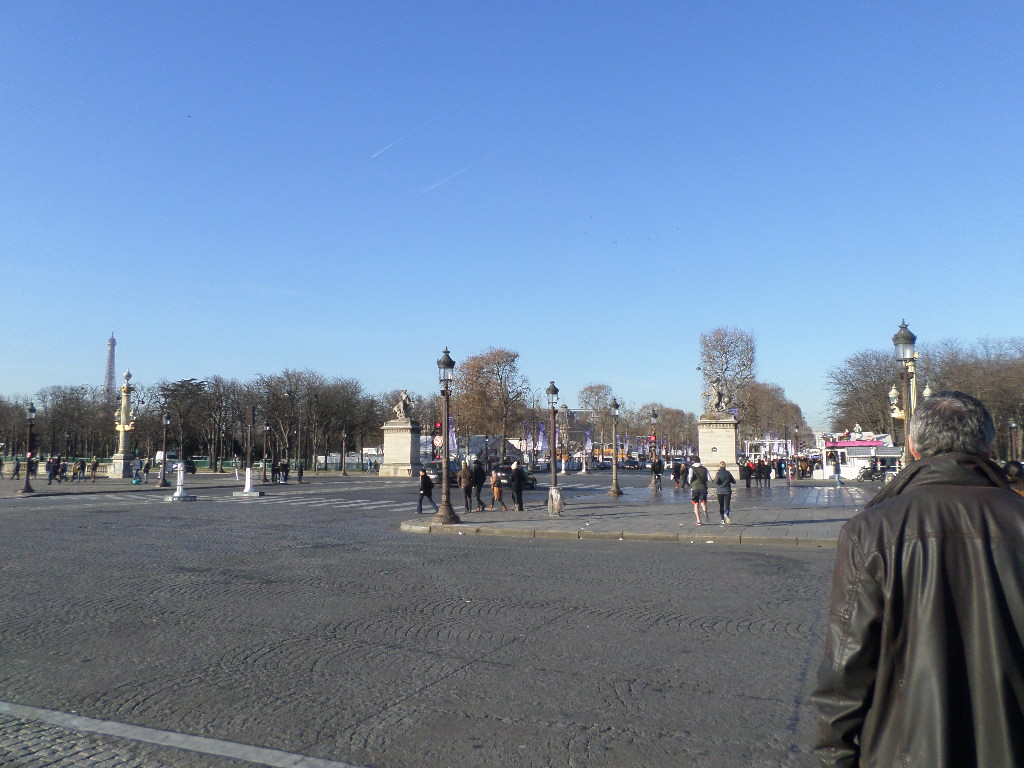
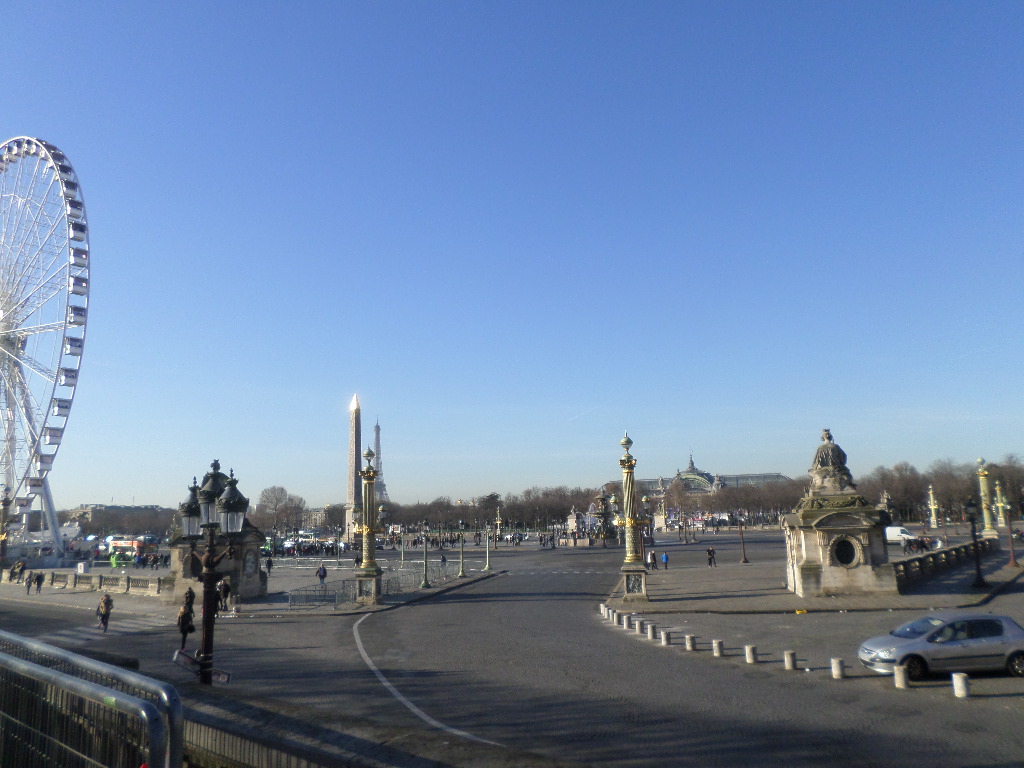
,You have here beautiful architecture in the form of fountains such as the Fontaine des Mers or Fountain of the Seas and the Fontaine des Fleuves or Fountain of the Rivers.The square was surrounded by candelabra and rostral columns.
All roads lead you here, I used to work for many years not far close, and use the metro Concorde on bad weather when not walking by it to work. Sublime! Public transport passing by here or close are bus lines 17, 18, 20, 21, 22, 24, 26, 27, and 28.
Metro stations Concorde- Line 1 | station Balard -Line 8 | station Porte de la Chapelle / Mairie d’Issy – Line 12. The Concord square or plaza de la Concordia or place de la Concorde is sublime , beautiful ,romantic ,what Paris is all about!!!
The Hôtel de Crillon is located at No. 10 Place de la Concorde, in the 8éme arrondissement of Paris. Built in 1775, behind a facade in 1758, first residence of the Duke of Aumont, it is from 1788 the property of the counts then the dukes of Crillon. It was confiscated as national property during the French revolution, then returned to the family who reinstated it until 1906. It was transformed into a hotel from 1909 to become “L’Hôtel des voyageurs”. Since 2010, the hotel has been the property of Prince Moutaïb ben Abdallah ben Abdelaziz Al Saud, a member of the Saudi royal family In 2013 , it formalizes its integration into the Rosewood Hotels & Resorts group. On September 19, 2018, it received the “palace” distinction and thus became the 25th palace in France. The former Hôtel Pastoret was purchased in 1898 by the Automobile Club de France , a private club adjacent. The Hôtel de Coislin is an 18C mansion on the corner of Rue Royale and Place de la Concorde. The hotel was built in 1770 on an order from Marie-Anne de Mailly-Rubempré, Marquise de Coislin, then Duchess of Mailly ,Royal Mistress , On February 6, 1778, this private mansion was the place where the first treaties of friendship, trade and alliance between France, represented by Conrad Alexandre Gérard, and the United States, represented by Benjamin Franklin, Silas Deane and Arthur Lee. By these treaties, France recognized the independence of the United States and concluded military support and an eternal peace between the two states , Also, Chateaubriand lived there as a tenant from 1805 to 1807, Le Cercle de la rue Royale, male circle reserved for the Parisian upper middle class, settled in 1866 within the walls of the Hôtel de Coislin. In 1868, 12 of its members posed on the hotel balcony for the artist James Tissot. The circle of the rue Royale, group portrait was acquired by the Musée d’Orsay in 2011, The Hôtel de Coislin was transformed into offices in 1920 by the Société Maritime des Pétroles and remained intended for this type of activity due to its ranking. It will then become the offices of the Morgan Guaranty Trusts, followed by various corporate headquarters. In 2002, it was acquired by the Qatar Investment Authority fund, then by the Dutch foundation Mayapan for three years each leasing. The Hôtel de la Marine (originally Hôtel du Garde-Meuble de la Couronne) is located at 2 place de la Concorde.The Garde-Meuble de la Couronne (Administration in charge of the King’s furniture). Supposed to occupy only part of the building, the Garde-Meuble invested all the walls in 1767. The hotel also houses several apartments, including the accommodation of the intendant of the Garde-Meuble. There is also the so-called chapel of Cardinal Richelieu, a laundry room, a library, workshops and stables. The treasure, amassed since the 16C by the kings of France, then composed of more than 10,000 stones, including unique pieces such as the “Grand Sapphire” of Louis XIV, the diamond “Sancy”, the “Regent” , pearls, rubies, emeralds, topazes and other sapphires. The Crown Jewels, including among other precious stones, the Blue Diamond of the Crown (the adornment of the Order of the King’s Golden Fleece and its large blue diamond) were notably stolen between September 11 and 16, 1792 at the the occasion of the burglary of the hotel. Most of the jewels were found two years later and joined the collections of the Natural History Museum from 1795. On deposit at the Louvre, they can now be admired in the Apollo gallery. The “Bleu de France” reappeared in England in 1812, but completely recut, which caused it to lose its original luster forever. It is now known as “Diamant Hope” and exhibited at the Smithsonian Institution in Washington, D.C. The Mobilier national is still responsible for the furniture of the various National Palaces such as the Élysée (see post). It moved to Quai d’Orsay then rue Berbier-du-Mets , 13éme arrondissement of Paris) and never returned to his original walls
A bit on the history I like and brief description tell us that the Place de la Concorde is the most famous square in Paris, me and many others think. However, do you know it started out named “Place Louis XV” in 1763. Later named “Place de la Révolution” during the period of terror in the French revolution, and finally took the name of the “Place de la Concorde” in 1795, to mark the reconciliation of a Nation. Again, it was re-named “Place Louis XV” in 1814, and further “Place Louis XVI” in 1826. It was not until the reign of king of the French Louis-Philippe in 1830, that it takes the current name for good of the “Place de la Concorde”. As Concord or harmony of a nation. King Louis XVI was guillotined on January 21, 1793 as well as Queen Marie-Antoinette, the Girondins, Danton, Mme Roland, Robespierre and many others. During the reign of Terror, 1119 people died there. It was created between 1755 and 1775, on the initiative of King Louis XV!. King of the French Louis Philippe, under the July Monarchy, asked in 1839 to rearrange it. The two fountains in the Place de la Concorde, inspired by those of Saint-Pierre in Rome, were installed between 1835 and 1840 at the request of King Louis Philippe. The maritime fountain on the side of the Seine and the Fluvial fountain on the rue Royale side. The Tuileries Garden extends from the Louvre Palace (east) to the Place de la Concorde (west), it is bordered to the north by the rue de Rivoli, the Place des Pyramides and to the south by the Seine river. The Arc du Carrousel, built in 1806 in the Carrousel garden, marks the entrance to the Tuileries garden. The Tuileries Palace which closed the Louvre on its west side was burnt down during the Commune(communists later use this word) of Paris in 1871 and its ruins were razed in 1881 by the city of Paris under the Third Republic. The rue Royale begins at Place de la Concorde and ends in front of the Madeleine Church. This road was originally called rue Royale des Tuileries. The current layout of the avenue des Champs Elysées was completed in 1724, and extended the perspective of the Tuileries garden. its name comes from the place of the underworld where virtuous souls stayed in Greek mythology. The Hôtel de Crillon – Hôtel Pastoret – Hôtel de Coislin and Hôtel de la Marine. The Luxor Obelisk was erected in 1836 at the initiative of the King of the French Louis-Philippe in the center of the square. It is a pink granite obelisk, dating from the 12C BC, offered to King Charles X by Mehemet Ali, Viceroy and Pasha of Egypt. The monument, weighing 230 tons and measuring 23 meters in height , was originally located in the Temple of Thebes (Luxor). another obelisk which was the pendant of the entrance to the Tuileries Palace is still there, it is covered with hieroglyphics. The Pont de Concorde bridge, 153 meters long and 35 meters wide, was built between 1787 and 1791.
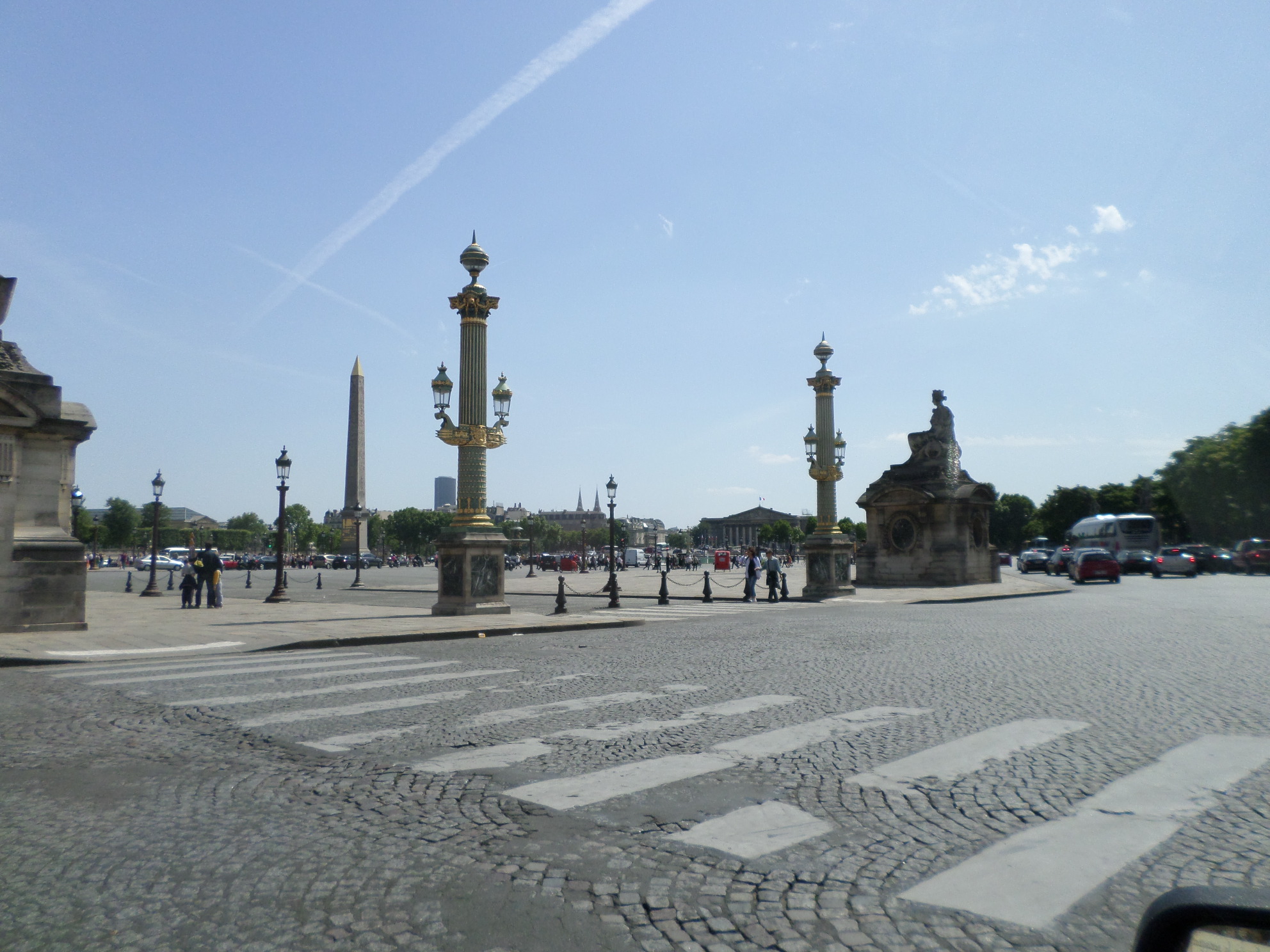
The ditches were filled in, two fountains were installed, statues representing towns in France, rostral columns and above all the Luxor obelisk which had been offered to King Charles X. It is the largest square in Paris, and one of the most famous sites in Paris with its emblematic obelisk. Eight statues are placed on the corner sentry boxes representing eight French towns. Lyon, Marseille, Lille, Strasbourg, Lyon, Marseille, Bordeaux and Nantes, In 1795, a famous sculpted group, the horses of Marly was placed at the entrance to the Champs-Elysées. On either side of the obelisk, are place two large cast iron fountains, called the Fountain of the Seas and the Fountain of the Rivers. The square was surrounded by candelabra and rostral columns. Eight statues are placed on the corner sentry boxes: They represent eight French towns. Lyon and Marseille by Jean-Pierre Cortot, Lille and Strasbourg by James Pradier, Lyon and Marseille by Pierre Petitot and Bordeaux and Nantes by Louis-Denis Caillouette. The seated figures represent: the Rhine, the Rhône rivers and the Harvests of Grapes and Wheat, as well as the Mediterranean, the Ocean and Fishing. Following the French revolution of 1789, it became the epicenter of the turmoil. The statue of Louis XV was brought down in 1792, and replaced by Liberty, a goddess draped in Roman style, wearing a Phrygian cap, who firmly holds her sceptre. King Louis XVI was guillotined on January 21, 1793 as were Queen Marie-Antoinette, the Girondins, Danton, Mme Roland, Robespierre and many others. During the reign of Terror, 1119 people died there. Under the Directory, Lucien Bonaparte removes the remains of the guillotine and the Statue of Liberty. Under the Restoration king Charles X plans to place a statue of his brother Louis XVI in its center but did not succeeded, the square was briefly named. A curious plaque remains visible at the corner of Place de la Concorde and rue Boissy d´Anglas. Protected by a piece of plexiglas, it mentions a curious name to say the least. It is in fact the Place Louis XVI. It recalls the name that the square bore between 1826 and 1828 and the beheading of the king on this same square on January 21, 1793. Difficult to read and difficult to admit that this mark has survived when we know what happened on this so-called Royal square at the time.
The Paris tourist office on the Place de la Concorde : https://parisjetaime.com/eng/transport/place-de-la-concorde-p1981
The City of Paris on the Place de la Concorde : https://www.paris.fr/pages/la-concorde-une-place-aux-multiples-facettes-22106
The Île de France region tourist office on the place de la Concorde: https://www.visitparisregion.com/en/inspiration/itineraries/things-to-do-in-concorde-district
There you go folks, feel better now to be able to add this wonderful square again in my blog ,This is my eternal Paris. Again, hope you have enjoy the post on the Place de la Concorde of Paris, part II !!! as I
And remember, happy travels, good health,and many cheers to all !!!

 Paris1972-Versailles2003
💙
LikeLiked by 1 person
👍👍👍
LikeLike
Heading there on Thursday
LikeLiked by 2 people
Good for you enjoy it!
LikeLiked by 1 person
Thanks
LikeLiked by 1 person