
Again, took me in my road warrior mode to past by this pretty town of Josselin in my beautiful Morbihan and lovely Bretagne, This is a great visit really and only 45 mins from my house, Of course, a must to see here is the beautiful basilica. Therefore, with new pictures taken this week, here is my new take on the Basilica Notre Dame du Roncier, part III !!! Hope you enjoy the post as I.

Difficult not to repeat some of the text but will try give you new insights on the beautiful Basilica Notre Dame du Roncier of Josselin ! Many miracles are attributed to this basilica, including the healing of the blind and the paralytic. The healing of “barkers” during forgiveness is also attributed to Notre-Dame du Roncier. The first half of the 15C, in the time of Duke Jean V, is regarded as Brittany’s golden age. From the 16C, the church and the city benefited from the constant development of the pilgrimage to Mary. The church even became a basilica in 1891.
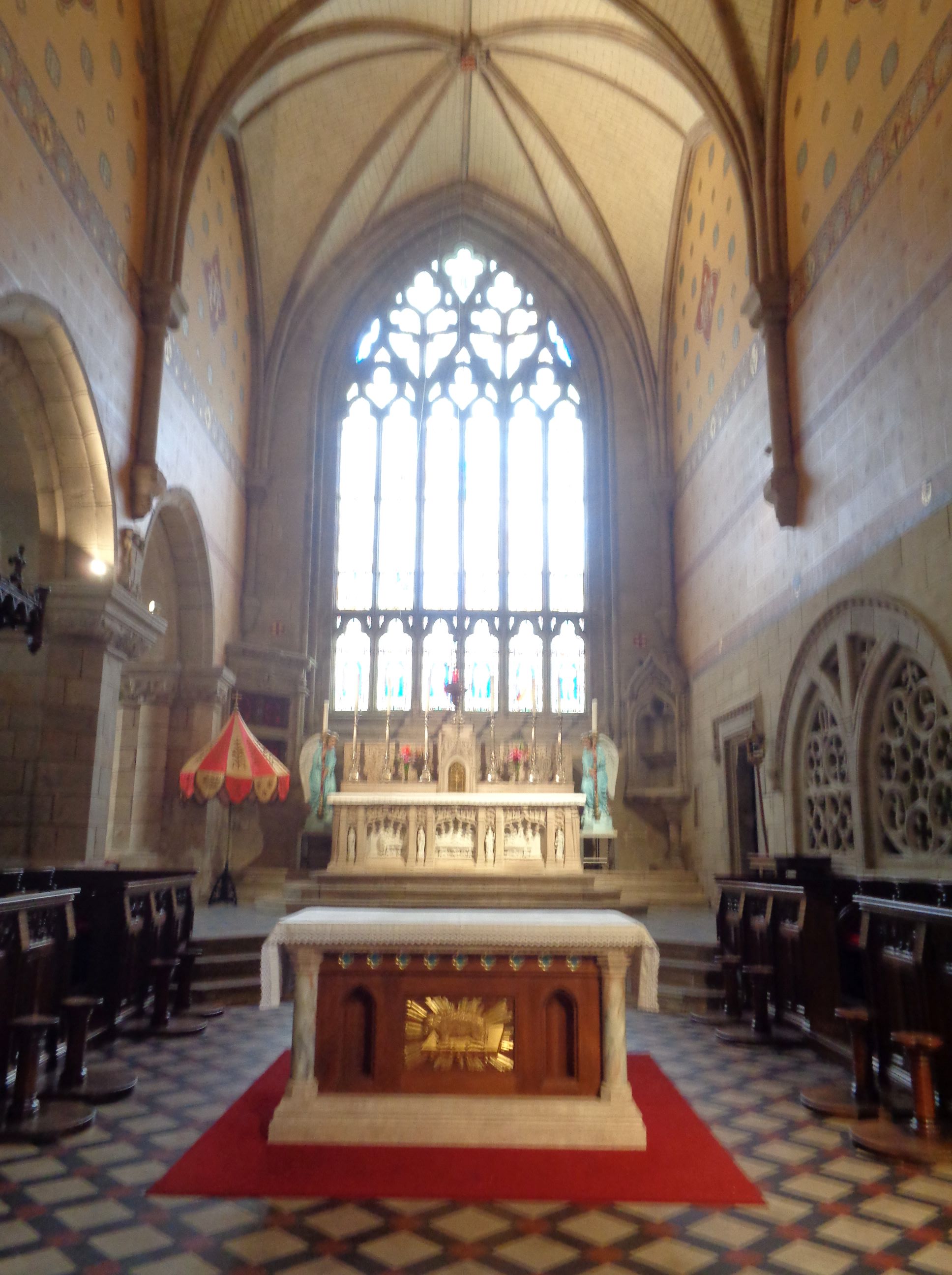
The Basilica of Notre-Dame-du-Roncier, also a parish Church, built at the end of the 12C and several times enlarged and modified. There is a pilgrimage here and one of the most important of the Morbihan, after that of Sainte Anne d’Auray (for Sainte Anne, see post). It is the site of the pardon or forgiveness celebration of the virgen for 1200+ years! every september 8th. You can climb the tower 138 steps at a height of 61 meters. Inside its richly decorated.
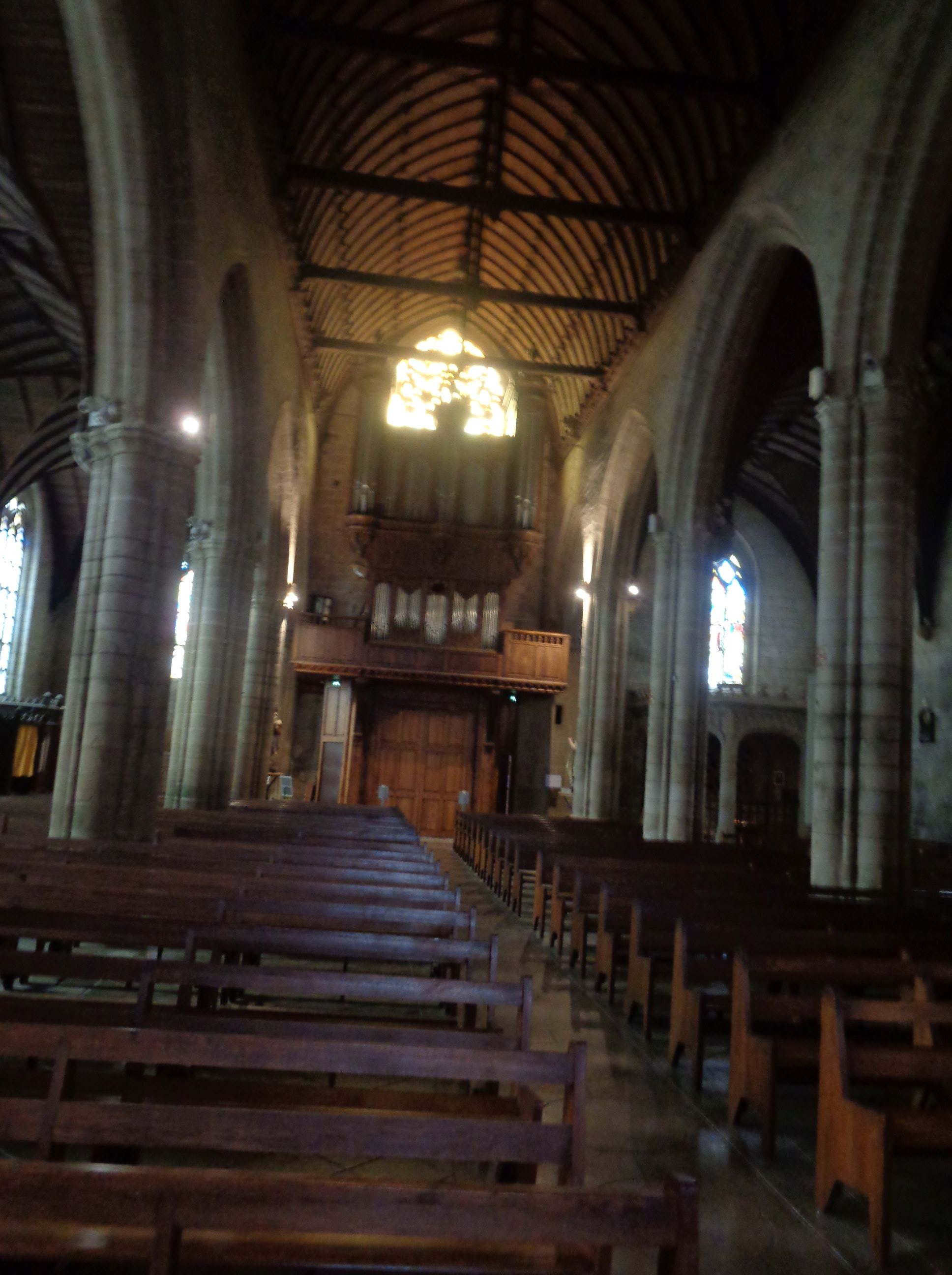
The choir of the Basilica Notre Dame du Roncier is dominated by the large Rohan stained glass window done in 1893. The high altar is made of Lannion granite and Carrara marble. It was created in Lannion in 1885. But the remarkable point of the choir is relative to the architecture. The destruction of a first building by Henri II Plantagenêt in 1158 left few old elements in the new construction of the end of the 12C, The Basilica of Notre-Dame du Roncier belongs to the so-called “mixed” style: paneled nave and stone vaulted choir. Here, the Romanesque anteriority of the choir explains this choice: the pillars support a stone vault; the fine arcades of the nave require a framework. In this way, without seeing the influence of financial difficulties, the hierarchy between the choir and the nave is respected.
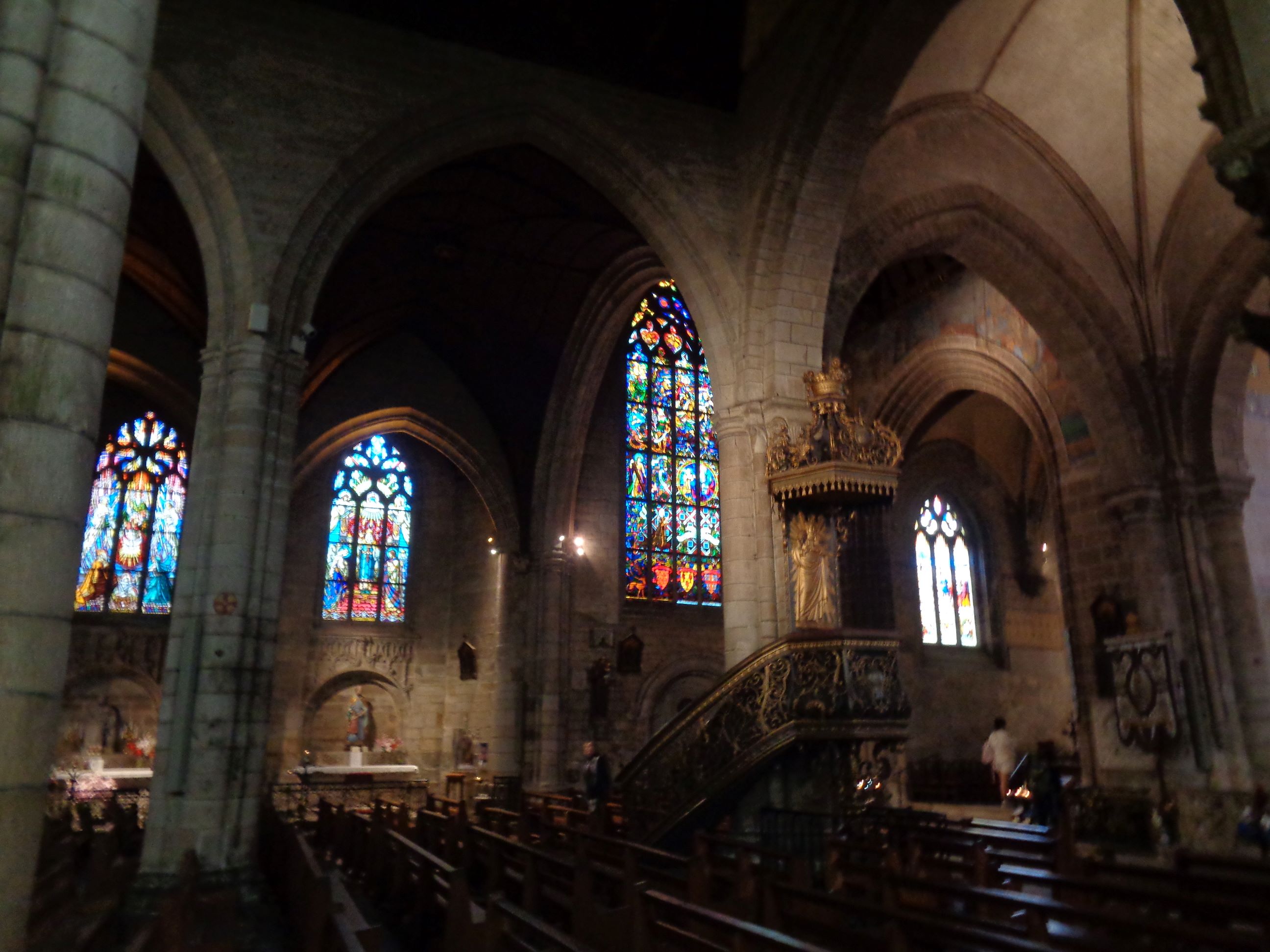
The further history tells us that in 1491 the construction of the chapel north of the choir which is the current Notre-Dame du Roncier Chapel was undertaken. In the first half of the 16C, two chapels were erected in the lower north side , The current church was remodeled in the 19C, and it is rich in stained glass windows from the 15C and 19C. The importance of glazing at the end of the 19C, also gives a very diversified overview of the artistic creation of the workshops of glass painters at that time. Among the 19C stained glass windows, the one dedicated to Saint Anne d’Auray and her pilgrimage should be noted. More interesting still is the stained glass window of the bay of axis commissioned by the Rohan family in 1893. A very Proustian way with which this stained glass evokes the high society of the time. The six figures of the Rohan family, lined up in the base, are given in full below. As for the lancets, they illustrate the mysteries of the Rosary. Also worth seeing is a beautifully crafted stained glass window: the one illustrating the famous theme of the “barkers”, women affected by hysteria or epilepsy, presented here the miraculous recovery, in 1728, of three children from Camors suffering from this mysterious illness.
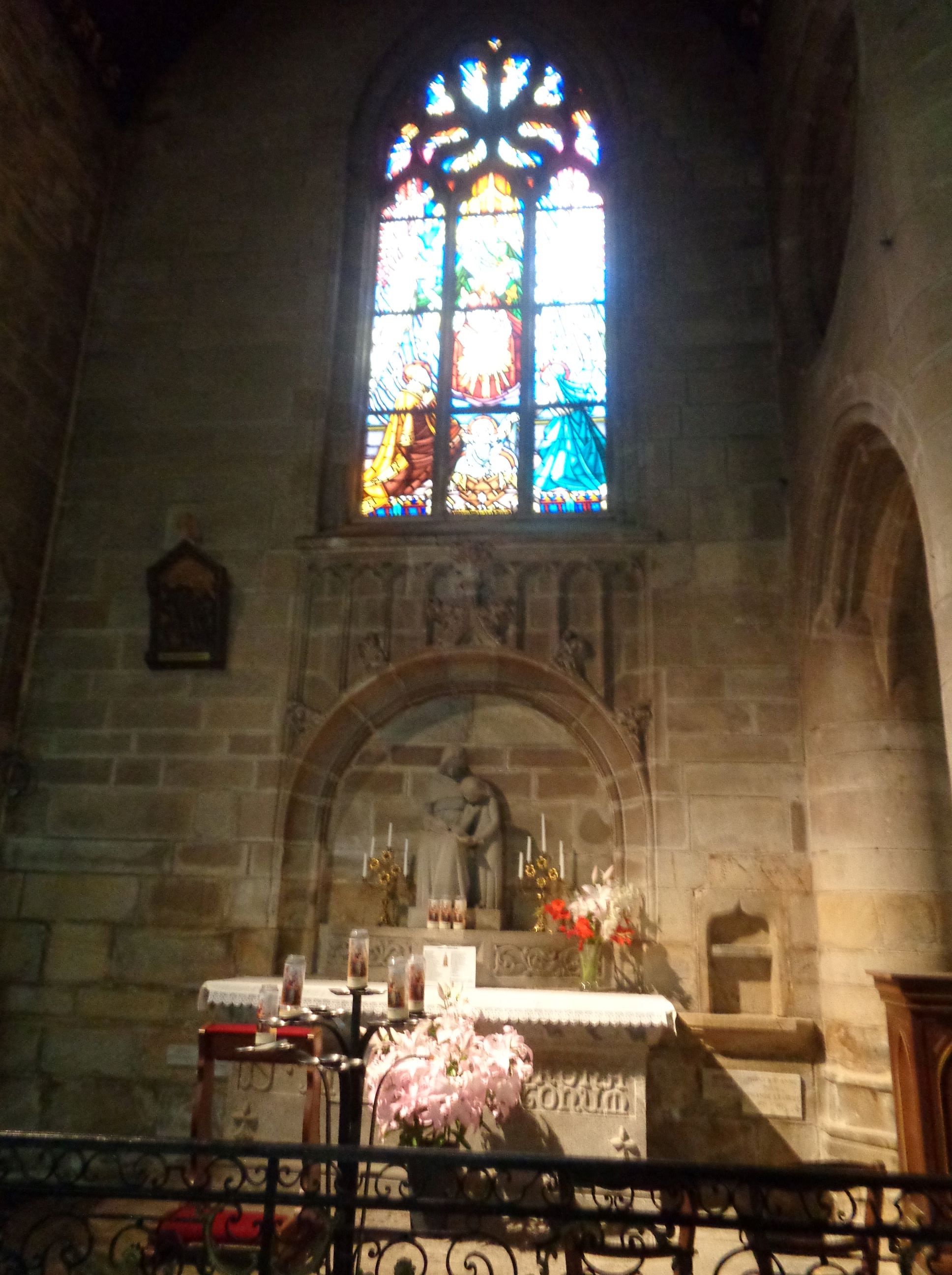

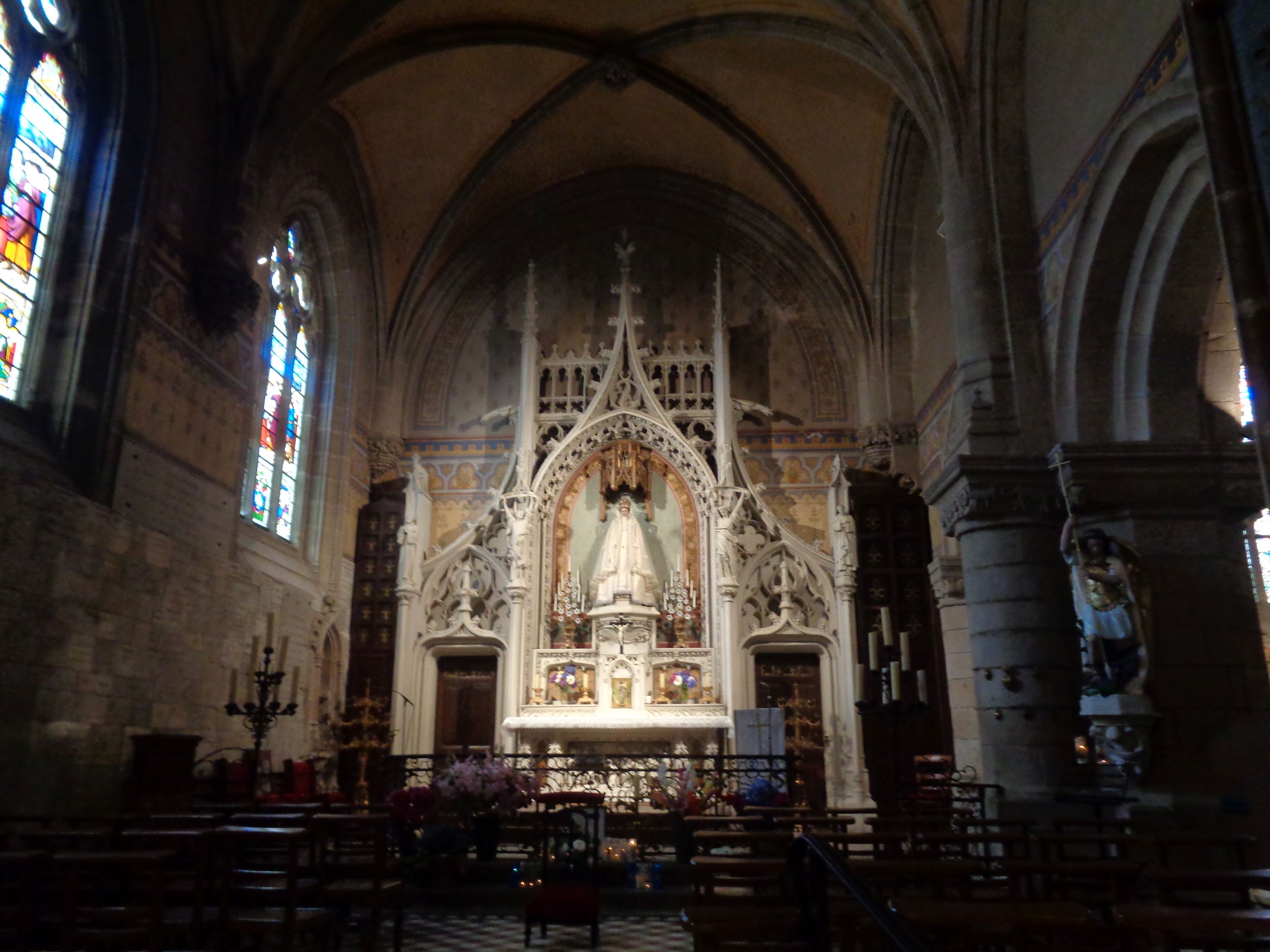
The Notre-Dame du Roncier Chapel shines with a magnificent 19C altar, itself surrounded by two angels with very ethereal dynamism. Under the neo-Gothic arch stands the statue of Notre Dame du Roncier, which is from the 19C (the original statue was burned during the French revolution). It is this statue that is carried in procession during the Great Pardon on September 8. To the right and left, on the buttress replicas, stand Saint Francis and Saint Dominic.
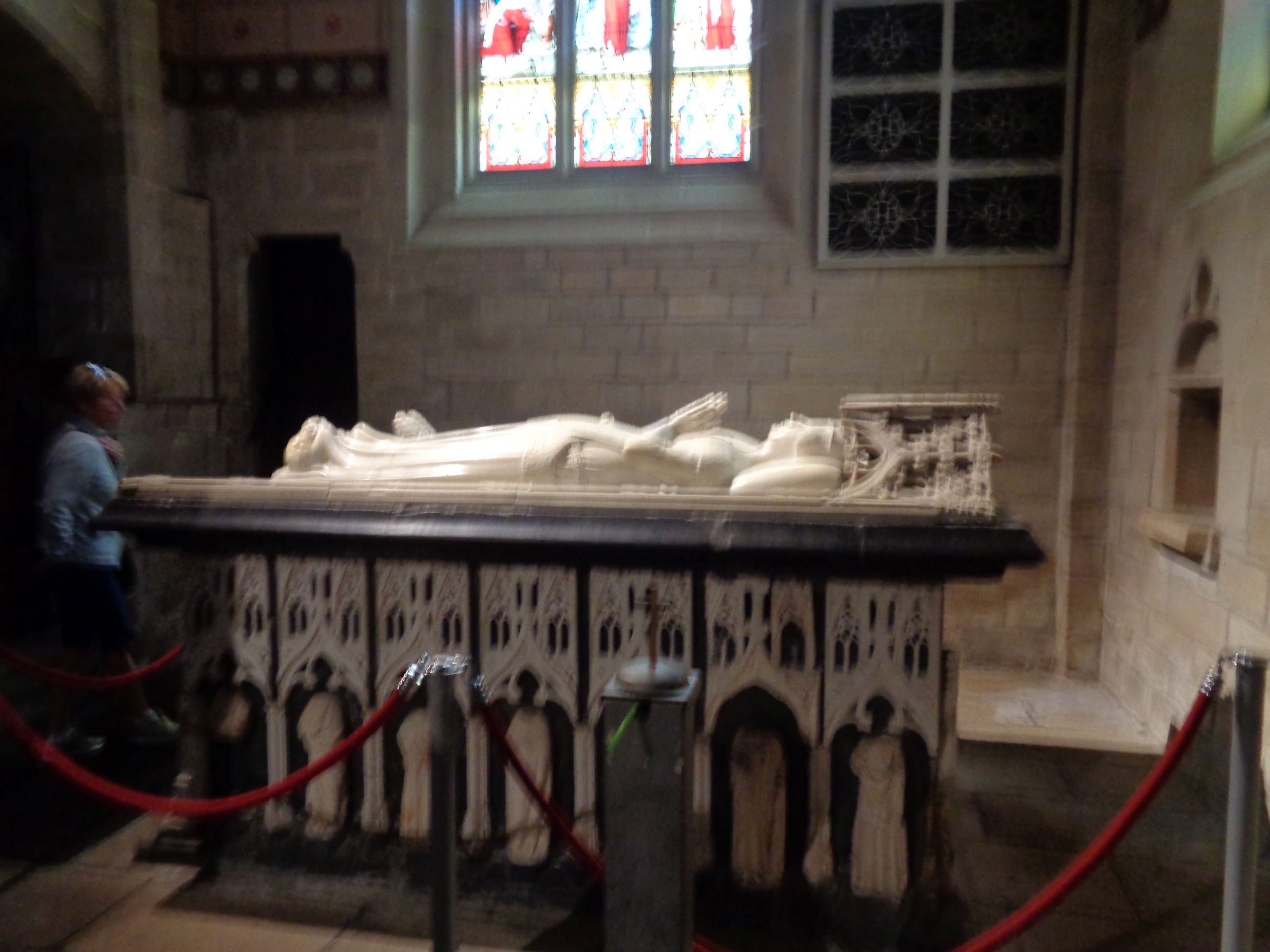
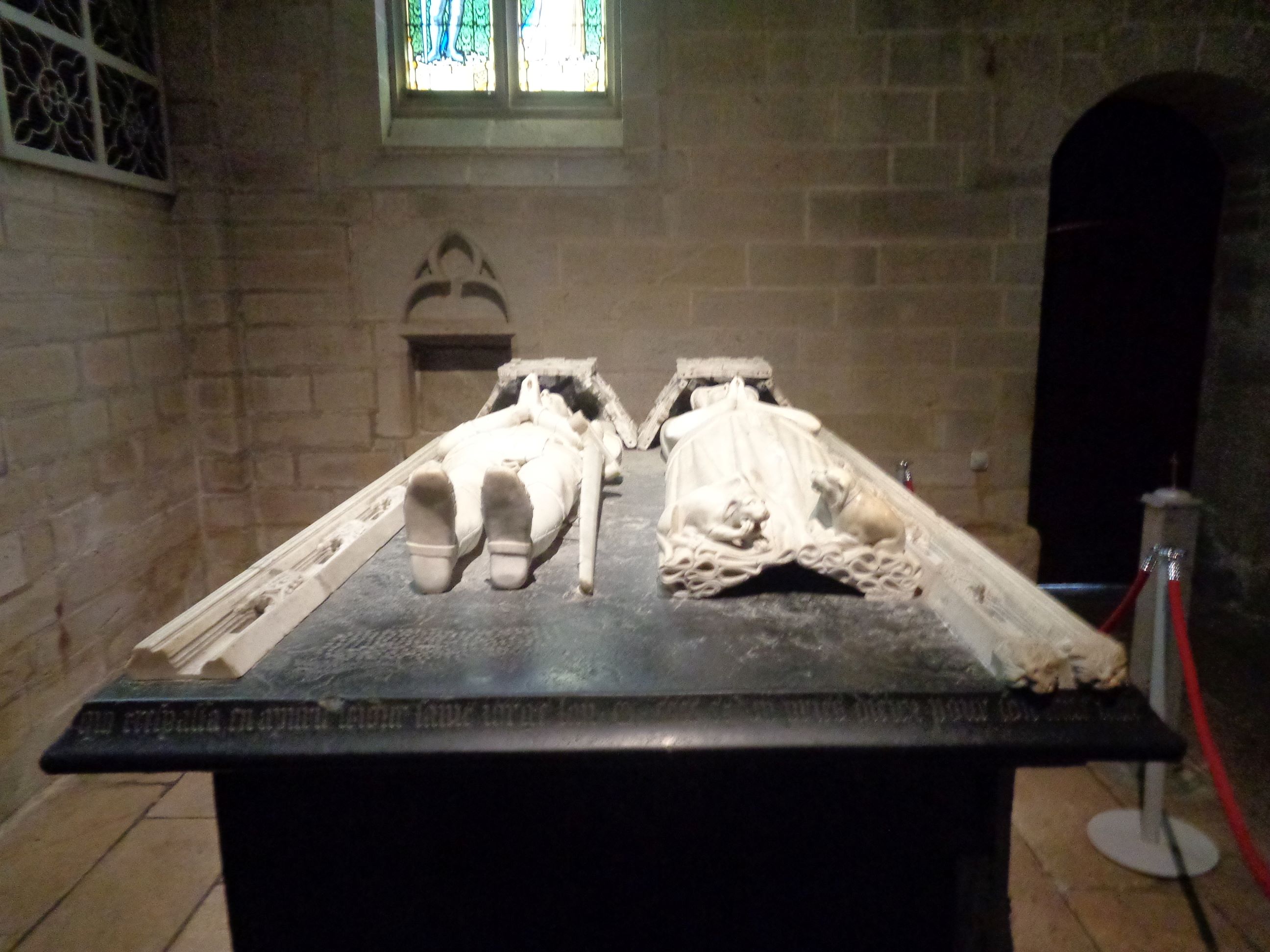
The Olivier de Clisson’s cenotaph is a monument is of great importance because it is one of the very rare works from the beginning of the 15C in Brittany. The constable of France, Olivier de Clisson (†1407) rests next to his second wife, Marguerite de Rohan (†1406). In 1792, the monument of Olivier de Clisson was torn to pieces and the bones were scattered, of course, again during the French revolution, From a mausoleum, the monument became a cenotaph. The cenotaph has two amazing features. First of all, it bears no coat of arms. And, on an old engraving from before the revolution, it doesn’t wear one either. Even more bizarrely, the inscription read on the cenotaph does not contain any woman’s name. However, no one has ever doubted that the recumbent represented Marguerite de Rohan, second wife of the constable. Because everyone trusts the – irrefutable will of Olivier de Clisson, The cause seemed heard. However, in 1888, the very learned Marquis de Granges de Surgères published a Breton Iconography containing an engraving of the cenotaph. It indicates that it represents the constable and his wife, Béatrix de Laval. Historians are therefore in possession of two contradictory official acts: the will of Olivier de Clisson, from the 15C, and the declaration to the king, from the 17C. This anomaly is accentuated by the total absence of coats of arms on the dress of the countess and on the tomb. No coat of arms either on the engraving of the tomb carried out by the historiographers of the house of Rohan, who nevertheless had documents in their possession. We will therefore remember that the official historiography associates the recumbent figure with Marguerite de Rohan, but that, in fact, we could just as well associate her with Béatrix de Laval. The Constable Olivier de Clisson and his second wife Marguerite de Rohan had the southern apsidiole transformed into an oratory and private chapel at the end of the 14C. In 1370, this powerful lord, who was constable of the royal armies, had a private chapel built to the right of the choir ; the Sainte-Marguerite Chapel, a place intended to shelter his/her remains.
The official sanctuary of the basilica: https://sanctuaire-josselin.fr/
The City of Josselin on its heritage : https://www.josselin.com/decouvrir/histoire-et-patrimoine/
The Regional Broceliande tourist board on the basilica: https://www.broceliande-vacances.com/offres/basilique-notre-dame-du-roncier-josselin-fr-2279515/
There you go folks, another wonder in my beautiful Morbihan, This is pretty Josselin and a must to visit the gorgeous Basilica Church Notre Dame du Roncier , Again, hope you enjoy the post on the Basilica Church Notre Dame du Roncier , part III as I
And remember, happy travels, good health, and many cheers to all !!!

 Paris1972-Versailles2003