
I ,again, need to expand on a previous post relating to the école military of Paris It gave the opportunity to tell you a bit more on this grand institution with the history of France. In my walks of Paris I come to see many nice buildings, This one has always caught my eyes, as was near my old HQ office so even visiting now takes extra time around there. You can always look up my other post with more pictures and description of it, Therefore, let me tell you again on the école Militaire of Paris !!! Hope you enjoy the postas I.
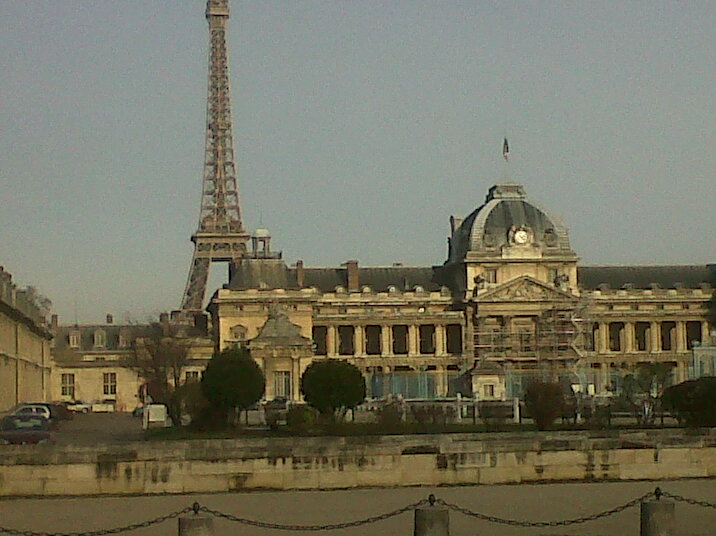
The École militaire is a huge assamblage of buildings housing several learning and training military tactics also in the 7éme arrondissement closing the perspective of the Champ-de-Mars. The realization of the Ecole Militaire is due to the architect Ange Jacques Gabriel built between 1751 and 1768 in the plain of Grenelle during the reign of Louis XV. The main entrance is on avenue de la Motte piquet, facing the Champ de Mars with the Eiffel Tower at the other end. In 1751, King Louis XIV asked Ange-Jacques Gabriel to draw the plans for a larger and more grandiose building than the Hôtel des Invalides, (see post) already built by Louis XIV. The marshal received the support of the king mistress Madame de Pompadour as well as financial guru Joseph Pâris Duverney (brother of Jean Pâris, marquis de Brunoy and godfather of the madame), that was enough to convince the king to start with the introduction of 500 young noble soldiers born without wealth; for the king it was an opportunity to leave a grand work of his reign.
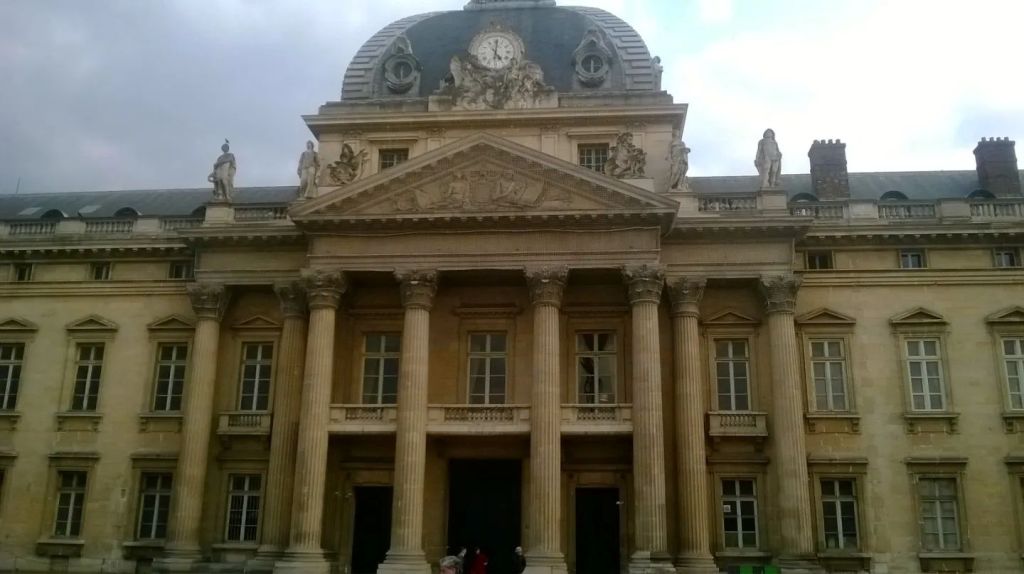
However, the Royal Military college wanted by king Louis XV did not survided the death of the king and seven years later the college is closed and plans to transfered it to the Hôtel-Dieu (see post) hospital near Notre Dame. Finally, the move did not took place but the buildings were left in abandon and later looted during the French revolution. The building goes thru a bad period where it served as a deposit, then soldiers hq especially for the Imperial Guardr the name of the caserne de École militaire, caserne Impériale, and caserne des Grenadiers. After this , it cames back slowly and later enlarged to the building we know today. By 1878 it opened the superior war school or École supérieure de guerre. Later in 1911 it brings here the center for upper military studies or the centre des hautes études militaires. It has never stop doing this ever since to today. It housed the defense college unter NATO or Nato college from 1951 to 1966 (when De Gaulle had France leave NATO) and the college was transfered to Rome.
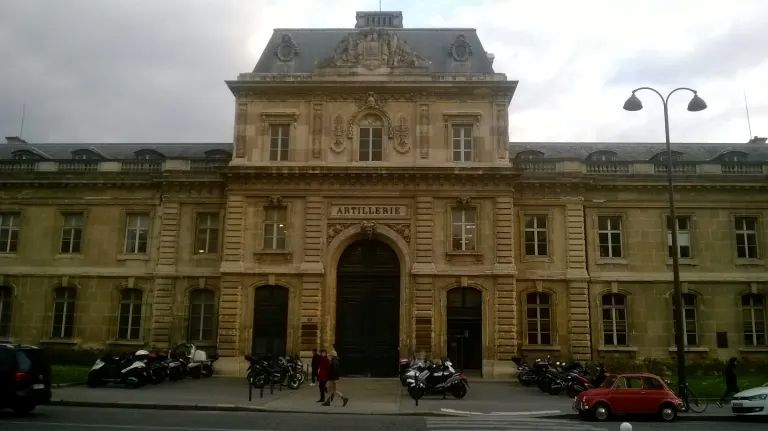
The War of the Austrian Succession finally ended and France, although victorious, counted and mourned its dead. The Marshal of Saxe, on the strength of his experience in combat, encouraged King Louis XV to create a veritable royal military school intended to to train 500 young boys, poor and wealthy alike, in an imposing and richly decorated military school in which the best officers in the country will be trained… In short, a tremendous testimony to the superiority of the reign of Louis XV. Work began on September 13, 1751 with the digging of the great well. The numerous wars waged by Louis XV completely emptied the banks and the architect struggled to raise the necessary funds to continue the work. In order not to have to give up on the opening of the school, it was chosen to welcome only a limited number of students and to accommodate them in the service buildings temporarily converted into dormitories and classrooms. In 1756, the institution finally opened its doors to 200 young men. The project got bogged down and finally, in 1760, the king gave up on building the institution as he had dreamed of with Gabriel. It was then decided that it would be divided between the école militaire and the Royal College of La Flèche. On July 5, 1768, the king himself laid the first stone of the chapel in the shape of a cross and twelve years later, the work was finally completed. Throughout the duration of the project, the school has already welcomed hundreds of cadets to train them in military professions. The most famous of them answered to the famous name of Napoléon Bonaparte.
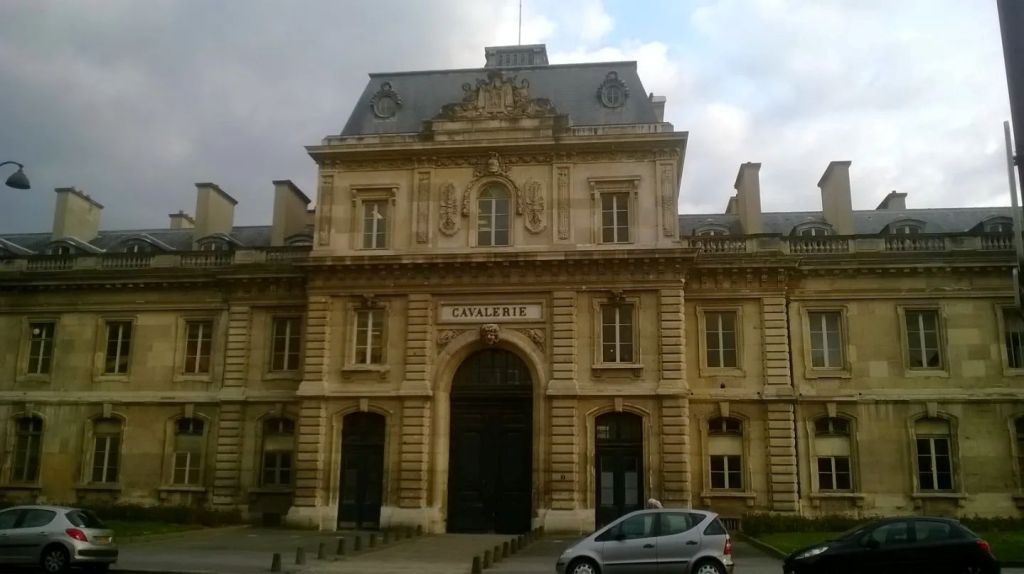
Seven years after the end of the works, the école militaire closed its doors. Abandoned, the buildings were completely looted during the French revolution of 1789. For many years, the old institution served in turn as a depot, then as a barracks and was enlarged to finally take on the appearance that we knows it today. It will be necessary to wait until the end of the 19C for the building to finally regain its primary vocation which had been torn from it: military training. Since then, the institution has continued to train officers. The hallways are a lineup of rooms that were the previous reception rooms and you can see in the lecture hall ,the wooden work sculpture on the ceilings and portraits, marbre chimney Louis XVI style, where one represent two cadets around the arms of the military Royal school. You can see on one of the glass two impacts from bullets from the assault on Paris in August 25 1944.
The Chapel of the École militaire was done inside the castle from designs of architect Jacques-Ange Gabriel in honor of Saint Louis, Patron Saint of the Arms forces. It was probably looted during the French revolution and for a long time without use but serving as ammunition stock and clothing depot as well as the ballroom dance for the second anniversary of the coronation of emperor Napoléon Ier. Finally, the Chapel was given back to the religious activities in 1952. The rotonde Gabriel was the initial
Chapel of the École militaire, thought to be the Chapel of the students,houses today one of the two cafeterias in the
École militaire. There is a beautiful library located in the Chateau part and also work of architect Jacques Ange Gabriel.
The École militaire is located in one of the better perspectives views of the city of Paris on the axis Trocadéro- Breteuil, that starts from the Palais de Chaillot, crossing the pont d’Iéna and the Champ-de-Mars to finish at the place de Breteuil. All square on the Tour Eiffel , and the seat of UNESCO. The École militaire, master work of the Classical architecture from the 18C is at the heart of the city and its history like a symbol of the Nation in arms. The metro station here is the École Militaire (line 8). The
bus 82 stops (see post) here and took to my office passing by here every month for several years. Howver, with the family came by car and there are two nice parking Indigo above ground paying just across dandy! This is the parking Joffre: https://www.parking.ai/en/paris/detail-car-park-joffre-ecole-militaire-indigo-m-c7049-ppd/
The École de guerre or War School prepares the best senior officers of the French armies, friends and allies to become the military leaders of tomorrow, Webpage :https://ecoledeguerre.paris/presentation/
Access to the Strategic Research Institute of the Military School (IRSEM) located within the grounds of the école militaire, a large complex of buildings in the perspective of the Champ de Mars and the Eiffel Tower. Various ministerial and interministerial organizations are located there. Visitors are welcomed at n°1, place Joffre 7éme. The presentation of a valid identity document is mandatory. Webpage: https://www.irsem.fr/en/index.html
The official Association école militaire place of memory :https://ecole-militaire-lieu-de-memoire.fr/
The Paris tourist office on the école militaire:https://parisjetaime.com/eng/culture/ecole-militaire-p1034
There you go folks, another dandy in my eternal Paris, This is a must on heritage day or the visit to the IRSEM indeed worth it, The école Militaire is a monument to French history right in the heart of Paris, and glad to be by there on visits and business around the corner, Again, hope you enjoy the post on the école Militaire of Paris !!! as I.
And remember, happy travels, good health, and many cheers to all !!!


