
Here I am again to tell you about more streets of my eternal Paris. I have many many posts on Paris and several on the streets of the most beautiful city in the world. I have come up with some pictures believe not in my blog and will tell you about the streets they represent. Hope you enjoy the post as always thank you. Therefore, here is my take on the streets of Paris, part V !!! Hope you enjoy it as I
The rue Catinat, is in the 1éme arrondissement of Paris. It bears the name of Marshal of France Nicolas de Catinat. Originally, the Place des Victoires had no exit from the side of the Hôtel de La Vrillière. In the past, you could have seen a building built in the rue de La Vrillière on the part of the land occupied by the rue des Fossés-Montmartre, when it extended to this square. Louis Ier Phélypeaux de La Vrillière obtained permission to demolish this building, and by this release provided a more pleasant view of his hotel. This new exit was first named “rue Percée”, then “petite rue La Vrillière”; in 1838 it received the name “rue de la Banque”, because it is located opposite this establishment, then, on June 11, 1847, it took the name of rue Catinat. Below rue Catinat towards rue La Vrillière and banque de France branch.
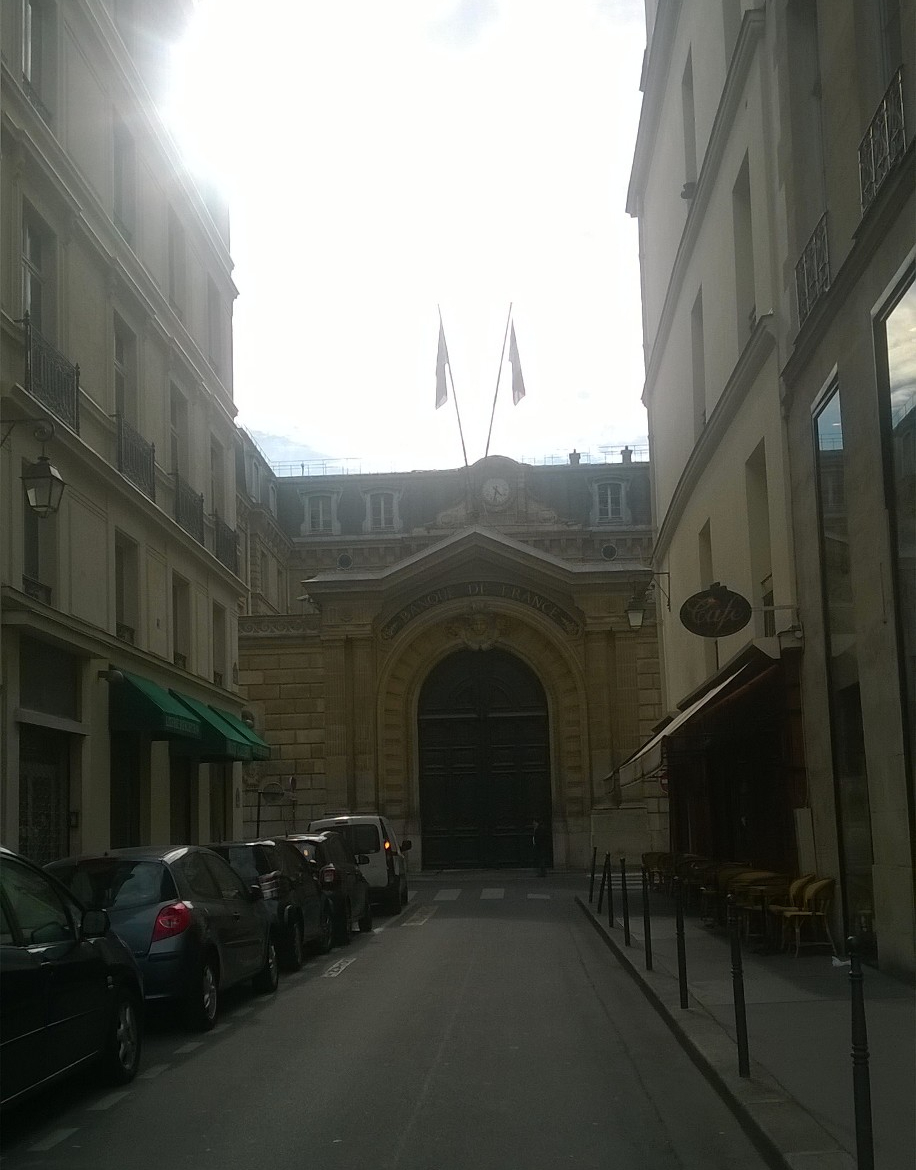
Some of the anecdotes here I like tell us the rue de la Sorbonne received the name of rue Catinat from 1792 to 1802. It is also the old name of the street Đồng Khởi in Ho Chi Minh City in Vietnam. I past by it, so a bit more. Its name was given to it by the Admiral-Gouverneur de la Grandièrele on February 1, 1865 in honor of the corvette Catinat (Nicolas de Catinat Marshal of France) who had participated in the interventions of 1856 in Tourane (Da Nang ) and from 1859 in Saigon. In the 1920s, rue Catinat, where the Continental Hotel was located, became the Canebière of Saigon. The famous writer André Malraux and his wife Clara stayed there from 1924 to 1925.
The quai Branly is located along the rive gauche of the Seine river in the 7éme arrondissement of Paris. It begins in the extension of the Quai d’Orsay, near the Pont de l’Alma and the Place de la Resistance and ends at the quai Jacques-Chirac, near the Esplanade David Ben-Gurion and the Passerelle Debilly. On the Seine side, it serves the port of La Bourdonnais.
The quai Branly bears the name of Édouard Branly, a French physicist born in Amiens, one of the forerunners of the TSF. wireless transmission, He discovered the principle of radioconduction and that of telemechanics. He is one of the forerunners of radio. Thanks to Branly’s discovery of the radioconductor , and his work on the principle of radioconduction. Guglielmo Marconi in 1899 made the radiotelegraph connections which marked the birth of wireless telegraphy. The quai Branly received its name by decree of January 30, 1941, the authorities serving the Vichy regime having insisted on honoring this French scholar who died in Paris on March 24, 1940. This choice was not questioned at the Liberation. On April 14, 2021, the Paris Council voted to rename most of the quai Branly from the portion located in front of the Quai Branly museum to the place des Martyrs-Juifs-du-Vélodrome-d’Hiver, in the 7éme arrondissement and 15éme arrondissements “quai Jacques-Chirac”, in tribute to the former President of the French Republic. The same principle that the museum is now quai Branly – Jacques Chirac.
Some of the things to see here me think are :
Near the Pont Bir-Hakeim bridge was erected the monument in memory of the 1st Free French Division, with a bronze bust of General Diego Brosset in 1953. The site of the former headquarters of Météo-France, at No 1, at the corner of avenue Rapp and opposite the Pont de l’Alma . The buildings of this headquarters, now destroyed, were bought, in February 2010, by the Russian State, to build on their land a cathedral, the new seat of the Russian Orthodox Bishopric of Chersonesus and a cultural center of the Russian Orthodox Church. Construction began in 2013 on an area of 4,200 m2 and was completed in 2016. (see post)
Alma Palace, at No. 11, residence of the French Republic and former seat of the Superior Council of the Judiciary (CSM).
Musée du Quai Branly – Jacques-Chirac, (see post) no 37, museum of arts and civilizations of Africa, Asia, Oceania and the Americas with its green wall overlooking the quay. It takes the place of the former Ministry of Foreign Trade.
The Tour Eiffel tower, on the Champ-de-Mars near the Pont d’Iéna (see posts).
Maison de la culture du Japon in Paris, at 101 bis. and National Memorial to the Algerian War and the fighting in Morocco and Tunisia.
The Place de la Bourse is located in the 2éme arrondissement of Paris. You get there by Metro line 3 Bourse, It owes its name to the Palais de la Bourse,(Brongniart) built on its site between 1807 to 1825, It opened at the same time as the Palais de la Bourse, absorbing part of the rue des Filles-Saint- Thomas. During the Three Glorious Days revolution, the square was the scene of confrontation between the insurgents and the troops. It officially took its current name on June 21, 1844. Below pic pl de la bourse to rue 4 septembre and Opéra Garnier.
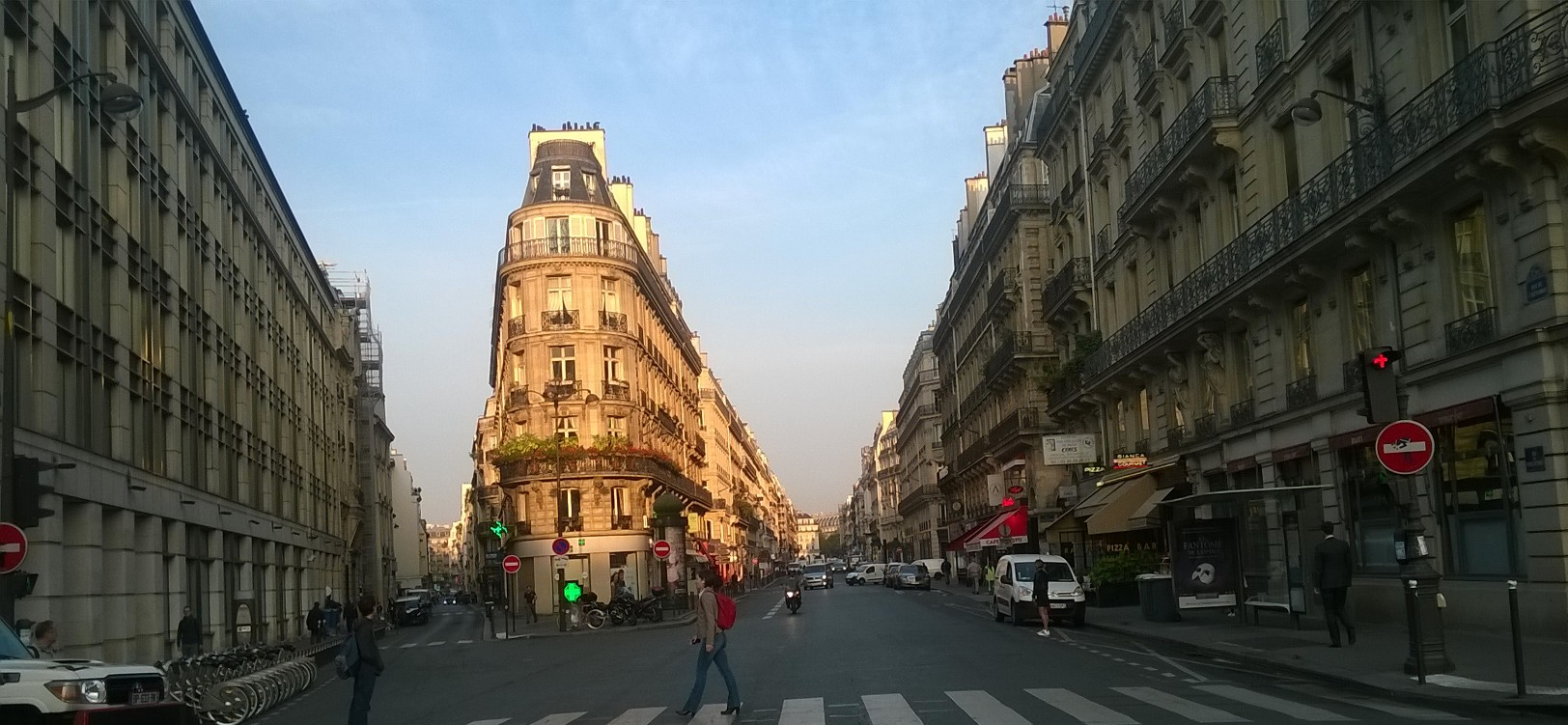
There is a market on the Place de la Bourse, Tuesdays and Fridays from 10h to 20h is one of the only Parisian markets to be open in the afternoon. You have here the main attraction me think even if not open to the general public the Palais Brongniart: inaugurated in 1825.(see post).
Other sights worth seeing me think are at no. 2: chamber of commerce and industry of the Paris – Île-de-France region; No. 4: trade union chamber of stockbrokers; no 5: one of the first press agencies, the Office-Correspondance, in 1830, nos 6-8: post office; no 9: Fournier press agency; nos 10-12: daily L’Information, in the future Nouvel Observateur building; no 13: Havas and Restaurant Champeaux information agency; today AFP Agence France Presse (see post) ,no 40, rue Notre-Dame-des-Victoires .No 29 rue Vivienne by the passage of same name,
Anecdotes tell us that the first Théâtre des Nouvelles was built in 1827 at 27 bis rue Vivienne opposite the Stock Exchange (former Bourse), The Opéra Comique settled there from 1832 to 1840, then the Théâtre de Vaudeville from 1840 to 1868.The theater was demolished in 1869 to allow the extension of rue Réaumur (now rue du Quatre Septembre). A new Vaudeville theater was built on Boulevard des Capucines , then it became a cinema Gaumont Opéra.
L’Argent, (the money) a novel by Émile Zola published in 1891, describes in detail the intense activity of the Place de la Bourse shortly before its peak: arriving from all four corners, while the rue du 4-Septembre and the rue Réaumur do not have not yet been pierced, a ballet of cabs and omnibuses crisscrosses a large square covered with chestnut trees and benches, riddled with rumors and negotiations, in shops (stationery, pastry chef), banks, media, cafes and restaurants arranged all around, Indeed a wonderful novel by Mr Zola!
There you go folks, another dandy beautiful set of glorious streets of my eternal Paris. I have criss cross them many and have many in my blog already, Again, hope you enjoy this post on the streets of Paris, part V !!! as I.
And remember happy travels, good health, and many cheers to all !!!

 Paris1972-Versailles2003
Rue du Temple is one of my favourite streets in Paris
LikeLiked by 1 person
Yes I stayed by there. Thanks for stopping by cheers
LikeLiked by 1 person
I always stop by
LikeLiked by 1 person
Yes indeed cheers
LikeLiked by 1 person