
This is one of the nice off the beaten path towns of the old Béarn area of south France. We love it in the area and would like to show you the town to you updating an older post with text and links. Therefore, let me tell you about curiosities of Lescar !!! Hope you enjoy the post as I
A lovely region that we had enjoyed tremendously over the years, and always looking forward to return. Let me tell you a bit more on a very nice quant town. The City of Lescar sits on the east-west axis by the A64 highway ( aka La Pyrénéenne). A highway exchanger to reach the new highway A65 ; (aka Autoroute de Gascogne), crossing the A64 on the territory of the town and allowing to reach Langon in the north. The town is also served by the old national Roads RN117, Route de Bayonne, and RN417 (forming part of the Beltway of Pau) which are grouped under the RD817 (super road connecting to many areas of Pau and out to other towns, great). We love our freedom on the roads here ! Lescar is located at 6.5 km west of Pau; it is also 52 km north of Urdos, which allows the passage to Spain (via the Col du Somport), heck yeah for many years our route even before the tunnel was built !!!
At Lescar you come into the Cathedral of the Kings of Navarre, and its wonderful. The Cathedral Notre-Dame-de-l’Assomption. The Cathedral of Our Lady (Notre Dame) of the Assumption ; the Kings and Queens of Navarre choose to be buried from 1483 to 1555. It is considered the most imposing Romanesque building in Béarn old region. A masterpiece of Romanesque art in Béarn, the cathedral was built between the end of the 11C and the first half of the 12C. Consecrated in 1145, the cathedral has typical Romanesque architectural layouts. These are illustrated by harmonious proportions, a wide nave with semi-circular barrel vault, transverse barrel aisles, large cruciform pillars with engaged columns, a choir with a monumental apse and two apsidioles vaulted in culde-four, narrow windows now obstructed. The many sculpted capitals and modillions testify to the influence of Romanesque sculpture along the Ways of Saint-James of Compostella (Santiago) and particularly to the influence of Saint-Sernin de Toulouse. The windows with flamboyant Gothic tracery were installed in the 16C. A Bishopric and seat of a community of Augustinian canons, the cathedral received between the 15C and 16C, the burials of the last sovereigns of Navarre. From 1563, the cathedral was dedicated to Protestant worship, on the decision of Queen Jeanne d’Albret. It then suffered the vagaries of religious wars. In 1610, it was returned to Catholic worship. The creation of the stalls, the paintings of the choir and the gilded wooden altars are the symbols of this return to Catholicism. The organ was installed in the 18C, the instrumental part was redone in the 19C. During the French revolution, the bishopric was abolished and the cathedral became a parish church. Here by the Cathedral there is a small but interesting museum of antiquities from the findings in the area dating to Romanesques times, located at the old cellars of the episcopal palace.
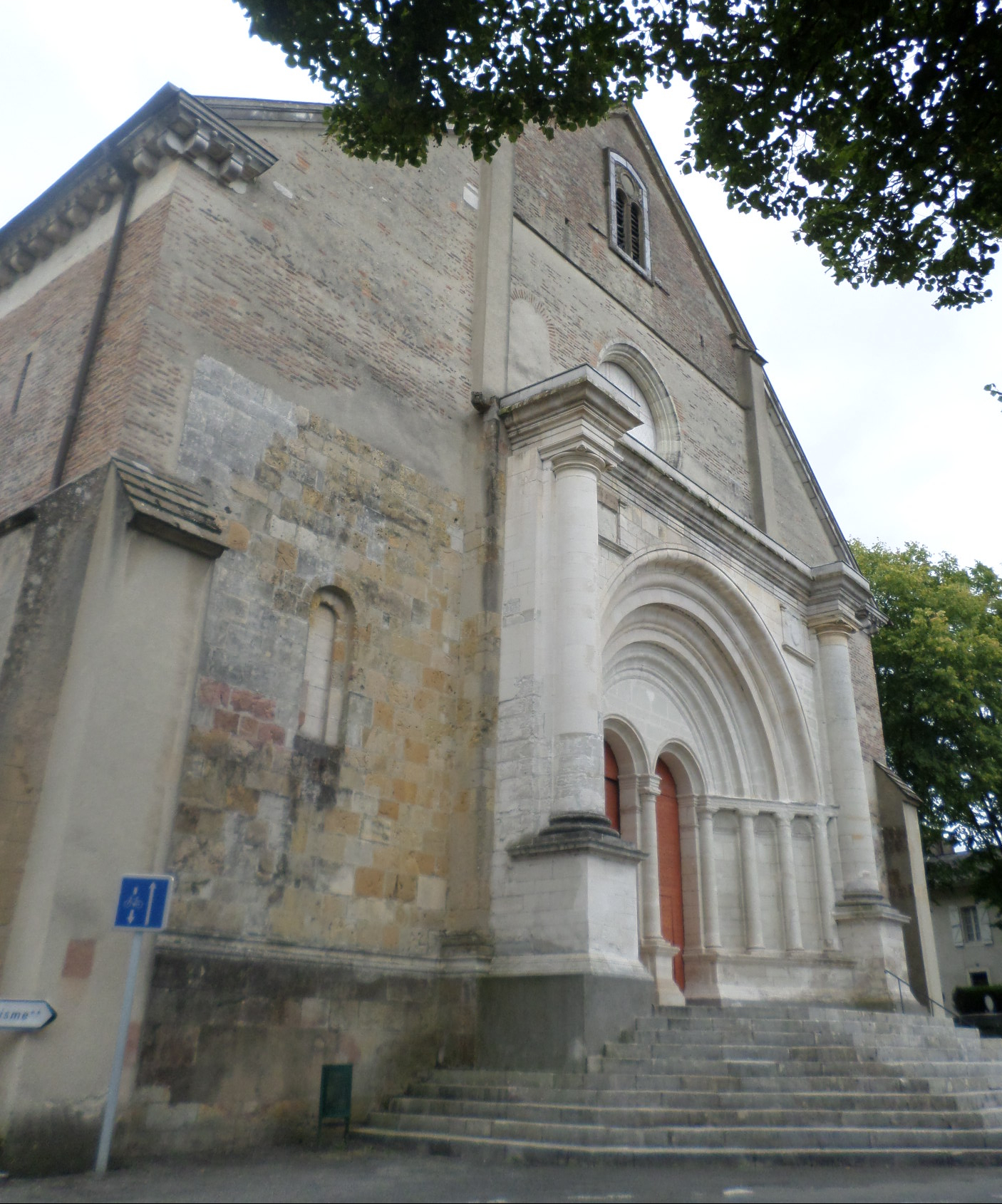
The medieval town develops on a rocky headland , overlooking the gave (river) to the south, and bounded by the brook of Lescourre to the north and then to the plain of the Pont-Long. Lescar is the heir of the Gallo-Roman city of Beneharnum. Having lost its role as capital Béarnaise, in favor of Morlaàs, the city rebuilt at the end of the 10C under the impulse of the Duke of Biscay Guillaume Sancho. He built a chapel in the upper town dedicated to Saint Mary, which is consecrated Cathedral in 1062. It became the seat of the bishops of Lescar, following the primitive Cathedral of Saint-Julien in Lower town. Taking part in the Reconquista in the 12C, Bishop Guy de Lons replaced the Chapel-Cathedral by constructing the present Our Lady of Assumption Cathedral in the Romanesque style in 1790 as part of a grouping with Bayonne and Oloron. From this period, Lescar retains several heritage elements including its ramparts (partly ancient), with the gates or Porte de l’Esquirette and certain towers constituting them. It remains one of the stages of the Via Tolosana, on the pilgrimage of Santiago de Compostela. Lescar became an educational center, first with the installation of the Protestant Academy of Béarn in 1562, then with the decision of king Henri IV to establish a college of Barnabites. This college built in the 18C is the ancestor of the current lycée Jacques-Monod.
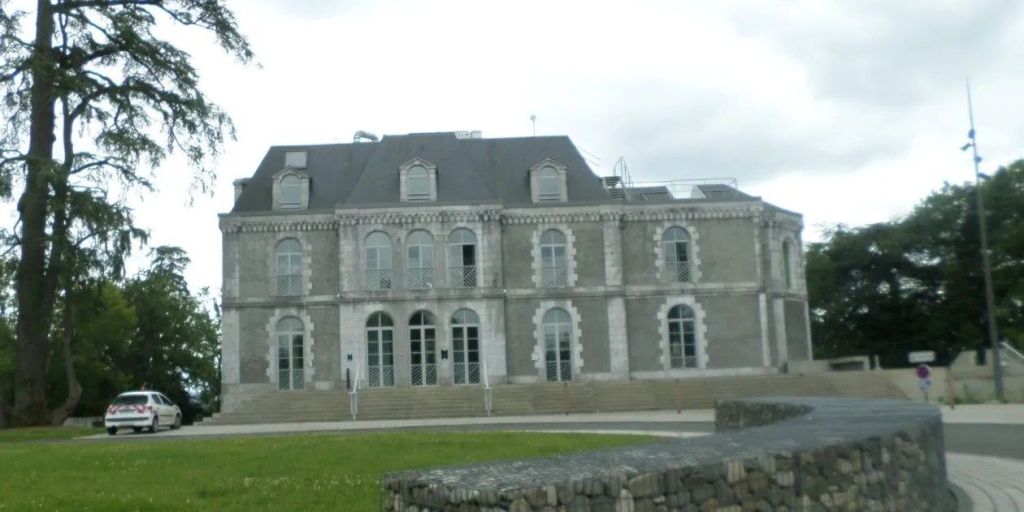
The Parc de Bilaà park is done in a fortified site, dating from the 2nd-1st century BC, was to serve as a refuge for the surrounding populations. Dominating the valley of the Gave, the oppidum extends over approximately 3 hectares with earth levees that can reach 6 to 7 meters in height. A very nice rustique natural setting, you can climb from the bottom parking lot thru the river and up the ruins into the high city and the Cathedral. Here was the old bishophery from the 6C and from the 10C a baptistry dedicated to Saint-John-the Baptist. Later a repenting soldier built a chapel , “Loup-Fort”,where it was dedicated to Saint Mary. The
castle was built in 1853, a neo-classical style residence, illustrating the fashion of the time. A chapel, inspired by the choir of the cathedral of Lescar, was added in 1861. The Ariste family had an English-style garden laid out around the castle made up of exotic species such as cedar, redwood, or American oak. After two fires in the 1970s, the castle fell into disrepair. Became property of the town of Lescar and restored between 2005 and 2011,The former castle now houses the City/Town Hall since February 14, 2011. You, also , have interesting ruins of a castle and citadel up at pont Saint Louis very nice rustique natural setting, you can climb from the bottom parking lot thru the river and up the ruins into the high city and the Cathedral. Here was the old bishophery from the 6C and from the 10C a baptistry dedicated to Saint-John-the Baptist. Later a repenting soldier built a chapel , “Loup-Fort”,where it was dedicated to Saint Mary.
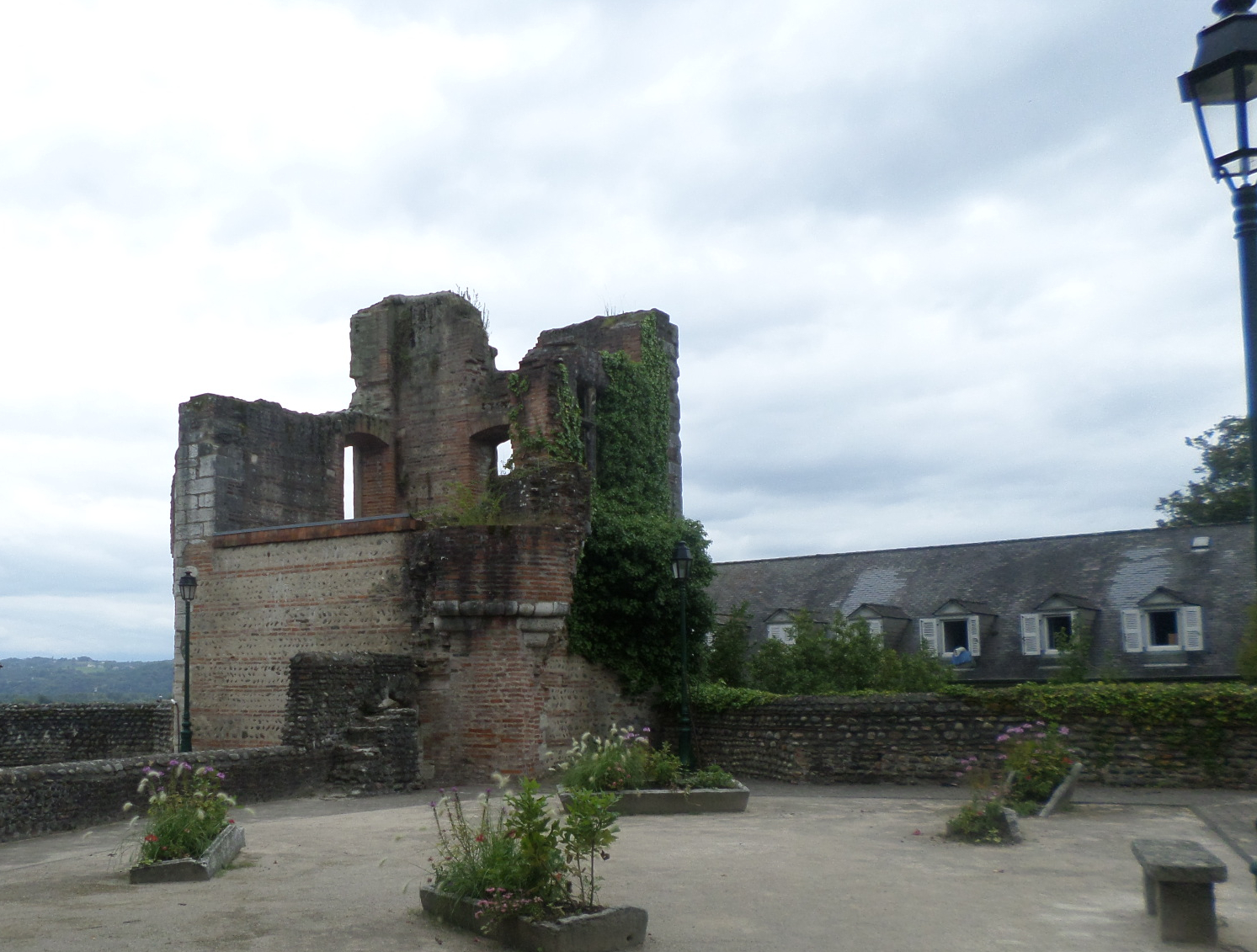
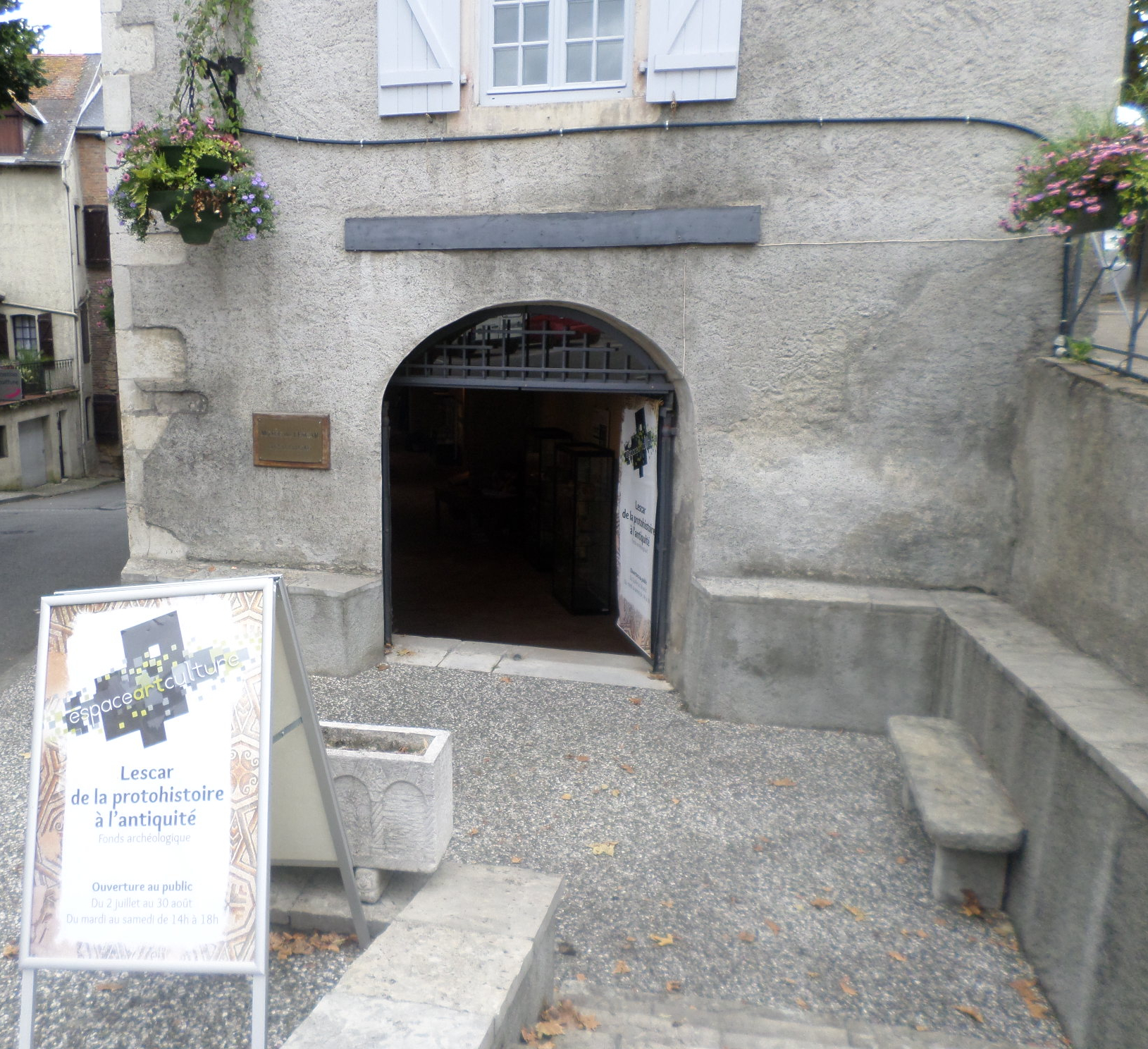
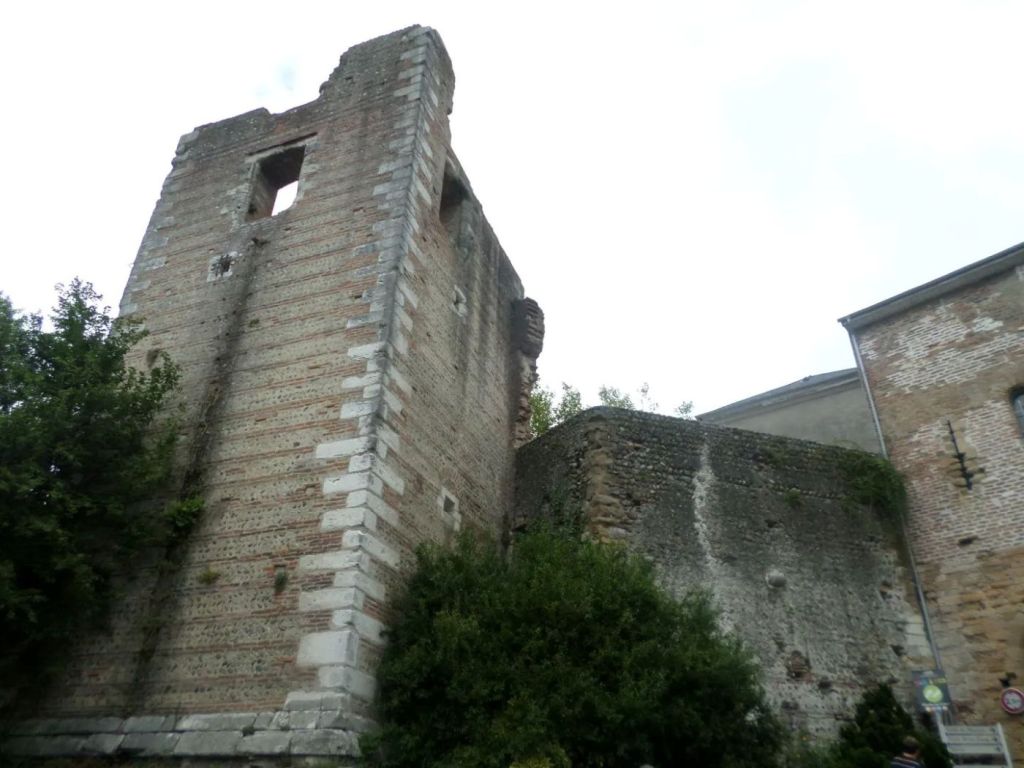
The former Episcopal Palace is a fortified building, now largely ruined, which served as the residence of the Bishops of Lescar from the 14C until its destruction during the French revolution. The site is today occupied by the Place de l’Évêché, and only two towers remain of the palace. On the west side, the Tour de l’Esquirette, which adjoins the gate of the same name, where a small door leading to a room is still visible, may have served as a prison. The Bishop’s Tower, which is on the other side of the square, was also part of the city’s fortifications. The cellars of the palace are also preserved and are now occupied by the Art and Culture Museum of Lescar, where you can see archaeological collection dating from the Neolithic period to Antiquity !
The lower town of Lescar represents the heart of the ancient Beneharnum. Archaeologists have exhumed in the district of Bialé 178 traffic lanes, sewers, foundations of houses, as well as ditches. Still on the Domaine Saint Michel, the remains of the funeral enclosure La Tourette are discovered dating from the lower empire period of Rome. Several elements discovered on the site are exposed to the museum of Lescar, including furniture and a mosaic of 6.5 meters long on 3.3 meters wide.
A bit more on the history I like tell us that this amazing small town of Lescar which we stopped by every year we passed by . The birth of Lescar as a city occurs in the 1C, from the time of the Roman occupation of Aquitaine. The city Beneharnum becomes the capital of the people of Venarni, sheltering in Lower town the bulk of the habitat and activities. The earliest Roman period occupation indices date back to around 15-10 B.C., but a true urban plot only appears from the second quarter of the 1C. It was at the end of the 10C that the city was reborn, under the impetus of the Dukes of Biscay and, in particular, Guillaume Sancho. Legend has it that a soldier, named Loup Fort or strong wolf, finds in the ancient city only a forest and a baptistery dedicated to Saint John Baptiste in the Upper town. Loup-Fort then built a Church under the Saint Mary name in this place, in repentance of past crimes. This Church became a Cathedral in 1058, before its official consecration in 1062. The name Beneharnum is abandoned for that of Lescar, the city rebuilt on the rocky spur in the 5C. The ramparts of the city are reinforced, while the Cathedral attributed to Loup-Fort is rebuilt in the 12C in the Romanesque style, mainly under the episcopate of Guy de Lons, it takes the name of Cathedral Notre-Dame-de-l’Assomption. Already highly independent since its formation around the 9C, Béarn won its independence in 1347 under Gaston Fébus, it is in the Cathedral of Lescar that the Kings and Queens of Navarre choose to be buried from 1483 to 1555.
After becoming king of France in 1589, Béarn Henri IV promulgated the Edict of Fontainebleau for the Catholics of Béarn in 1599. It is necessary to wait 1610 for the Cathedral of Lescar to be restored in its Catholic cult, but it is the military expedition of King Louis XIII in 1620 which allows to restore definitively the Catholic cult in the whole country of Béarn. The historical part of the town is composed of ancient houses dating for most of the 18C, sporting a classic Béarn style with roof steep covered with slates, stones of size at angles and openings, sponge cake between the roof and the wall, Pebbles of the gave river to make the walls. Older houses of the 16C and 17C are also present in the city, made especially for the canons of Notre-Dame-de-l’Assomption dating partially from the 12C and 13C. The Cathedral of Notre Dame de l’Assomption is considered the most imposing Romanesque building in Béarn.
The city of Lescar on its heritage: https://www.lescar.fr/attractive/ville-historique/patrimoine/patrimoine-architectural
The Pau Pyrénnées tourist office on the Lescar cathedral: https://www.pau-pyrenees.com/lescar/cathedrale-de-lescar/tabid/315/offreid/aa47f7dc-a773-4054-a084-48aad516f4c6
The local Pau Pyrénnées tourist office on Lescar’s heritage : https://en.tourismepau.com/discover/pau-much-more-than-you-expected/lescar-medieval-city/historique/patrimoine/patrimoine-architectural
There you go another splendid recommendation to come and enjoy the Nouvelle Aquitaine and the wonderful Pyrénées-Atlantiques dept 64 (old Béarn) as well as the lovely city of Lescar! Again, hope you enjoy the post on curiosities of Lescar !!! as I
And remember, happy travels, good health ,and many cheers to all !!!

 Paris1972-Versailles2003