
And here going back to one of my fav of Europe, the little country of Luxembourg and its most emblematic city of Schengen !!! I came here for the curiosity of the meaning of the town for travelers and European Union thoughts. I was delighted to have come. Hope you enjoy the post as I.
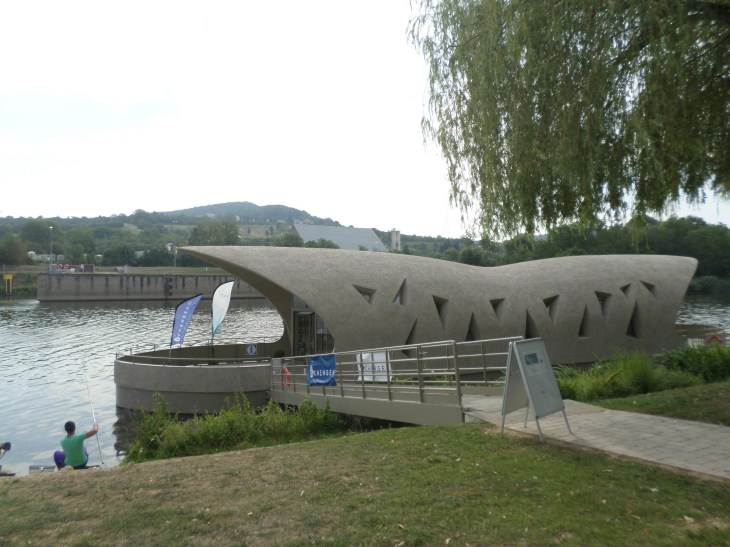
And I bring out east again to neighboring nice Luxembourg and one icon town that is a symbol of European unity, that desperate goals seek by over 400 million people trying to live in peace and prosperity. Not easy I know but we keep on trying… I like to show you a bit more on Schengen. The European Center, the famous old Castle and the Church of St Sauveur. Schengen is a town in the canton of Remich in Luxembourg. The town is located in the extreme southeast of Luxembourg, close to the tripoint Germany-France-Luxembourg. It is a wine town, part of the Moselle vineyard. We rode from Germany where we were staying on the B51 over the 419 and into Wellen crossing the Moselle into Grevenmacher and then down south on the 10 and 152 to Schengen. Easy beautiful rides along a wonderful river and very nice scenaries. Below the tourist office!
The visitor European Center houses the European Museum, a permanent exhibition about the European Union and the Schengen Agreement as well as a Europe information center with documentation about the activities of the European Union. The Euro Center was the treaty of free exchange of people in Europe something that is in vogue today in Europe and test this initiative done in 1990.
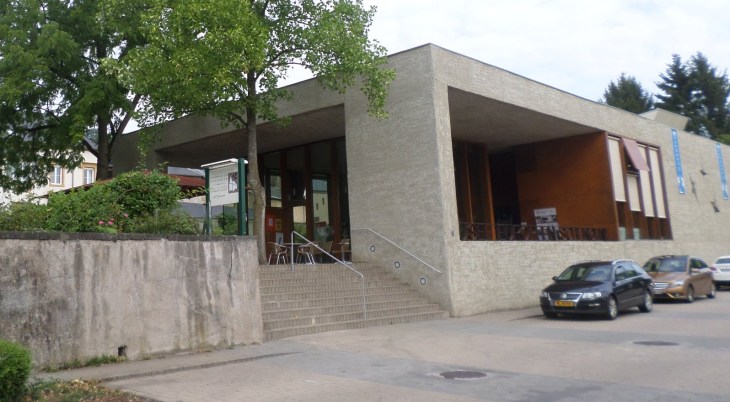
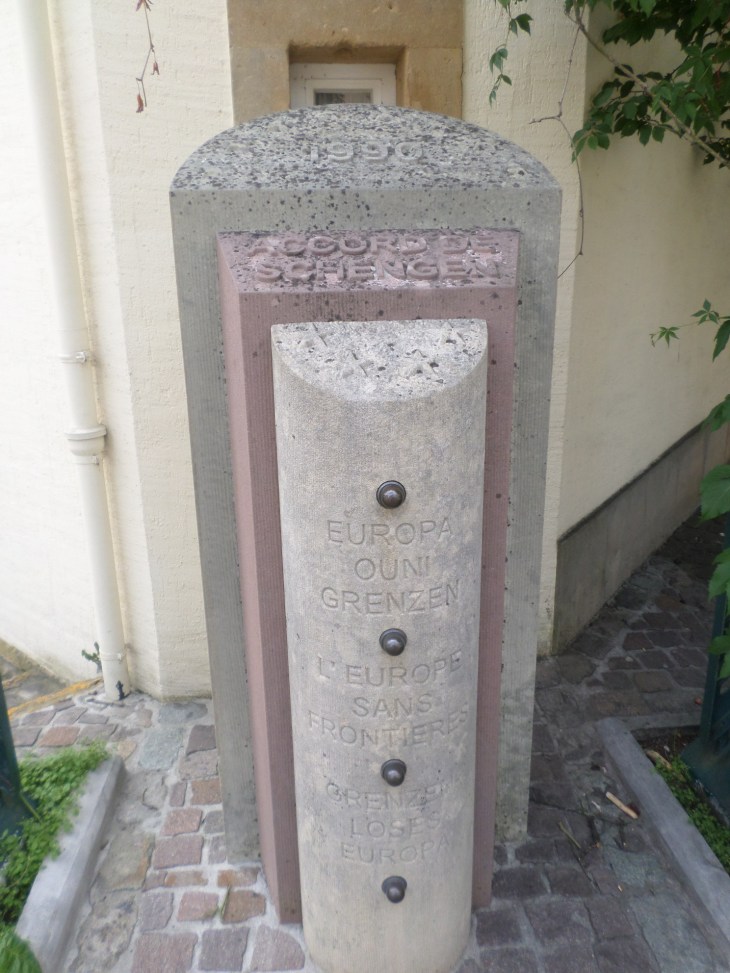
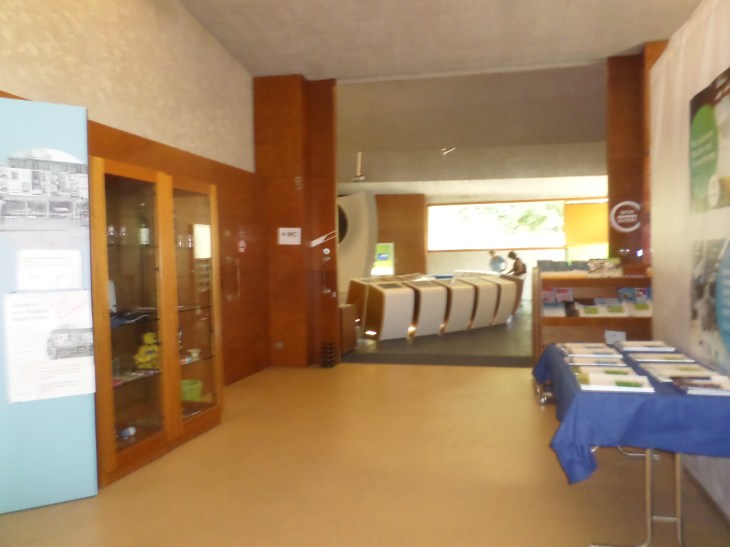
Even 30 years after the first treaty was signed, the term Schengen is still a symbol for the freedom of movement and the abolishment of borders in Europe. Inaugurated in 2010, the European Museum is dedicated to the history and significance of the Schengen agreement. The exhibition is spread over 200 m2, retraces the development from a Europe of borders towards a more unified Europe with a common citizenship in a clear and interactive manner. The abolishment of systematic border controls within the Schengen zone has been the first step in applying the four fundamental freedoms established with the Treaty of Rome in 1957.
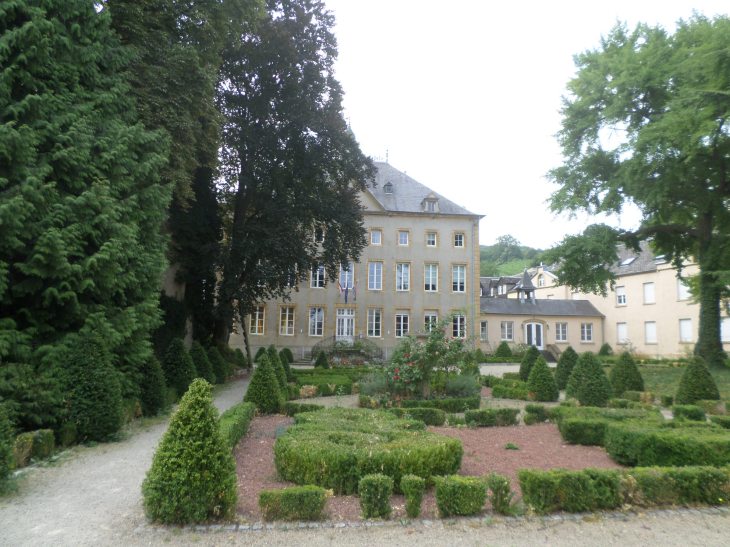
Schengen Castle in Schengen near the borders with France and Germany. Dating from 1390 but almost completely rebuilt in the 19C. The 14C fortified castle was torn down by the industrialist Jean-Nicolas Collart in 1812 who built a residential manor house in its place. All that remained of the medieval building was its round central tower. The castle’s most famous visitor was certainly Victor Hugo who visited the Castle in 1871 and made a sketch of the old tower.

From 1939, the Schengen castle was occupied by the congregation of Saint Elizabeth, but in April 2010, it opened as a hotel and conference center. Together with the surrounding buildings, it has meeting facilities for up to 100 participants. It is part of the gardens.
The city of Schengen on the Agreement of Schengen: https://www.schengen.lu/commune/accords-de-schengen/
The Schengen agreement visa info etc. : https://www.schengenvisainfo.com/
The Schengen tourist office: https://www.visitschengen.lu/en/
The Moselle region of Luxembourg tourist board on Schengen: https://www.visitmoselle.lu/en/where-to-go/schengen
The Luxembourg tourist board on Schengen: https://www.visitluxembourg.com/en/moselle/schengen
Hope you like it as we did lovely ride along the Moselle river by car glorious and then the town is very quant indeed historically famous. Schengen is Europe!
And remember, happy travels, good health, and many cheers to all !!!

 Paris1972-Versailles2003
If I remember correctly, there is also a small monument in reference to the Schengen agreement at the border with France.
LikeLiked by 1 person
You might be right but I have not gone to that one.
LikeLiked by 1 person