
Back to you in a winter in Toulouse, the pink city we love. Of course, plenty of posts on it in my blog and this one too. However, always a stop for us while visiting the city or area! And we keep coming back and always glorious cooking as the cassoulet! This is my take on the memorable restaurant Le Loubechem in Toulouse !!! Hope you enjoy the post as we!
In my continuing saga with the pink city of Toulouse I bring you to eating out. And you are in for a good one here in my belle France of course. The culinary experts here is the cassoulet dish and even if imitators and competitors this one remains the only one unique, me think. OF course, came here first with my dear late wife Martine as her father was from the area and the tradition continues even if missing a large part of our lives. The dish even has a page in the tourist office of Toulouse! We love it and I die for it; each time here must have one and where better than in our ritual place at Place Victor Hugo right above the market of same name, the restaurant Le Loubechem! A family tradition for years…
Of course, there are others, but this one is a family tradition of many years going back to the founders of the restaurant and my wife’s father’s family from the area. We have been coming to Le Louchebem since 1994 when it opened and keep coming back!! The word Louchebem is the result of the deformation by jargon of the word butcher attested for the first time in 1876 in the form luchebem, was then used to indicate the jargon of louchébems or the butchers’ talk, in other words the slang of butchers from second half of the 19C. Louchébem remains known and used today in this professional universe.
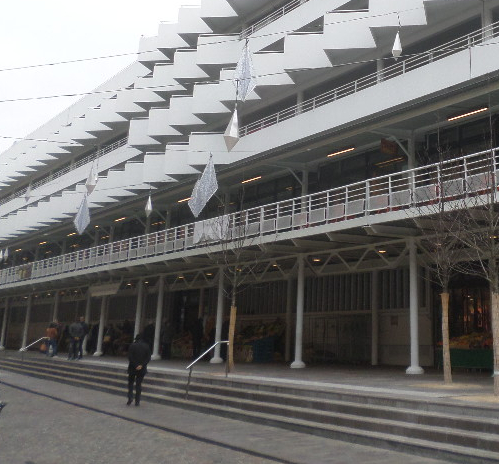
And where is it? One of the best spots in Toulouse; here is a brief history. It was not until 1827, after the demolition of the ramparts surrounding the heart of the city since the Middle Ages, that the square where the Victor Hugo market stands today will be built. It took place in 1827 under the name of Place du Marché-au-Bois and hosted from its inception a market with wood, fodder and then flea market. The Place du Marché-au-Bois was renamed the Place Victor Hugo in 1886 at the occasion of a coronation of the poet by the Floral Games. In 1892, the new Victor Hugo market was inaugurated. Under its metal halls there were 283 shops. Modern and functional, it is the largest covered market in Toulouse. It was in 1959 that the current market-parking was born. this new Victor Hugo market which will become the first paid car park in Toulouse, with 670 parking spaces and a market of 100 exhibitors. It went again renovations in 2016 and now it is sparkling wonderful even better place to be at in Toulouse.
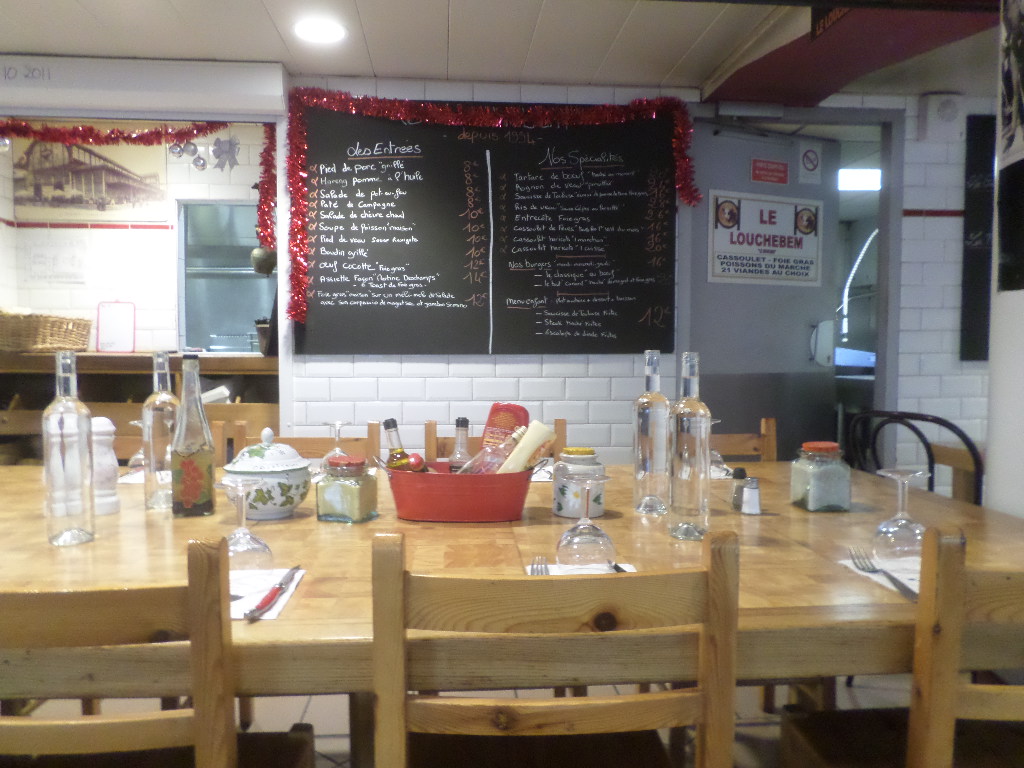
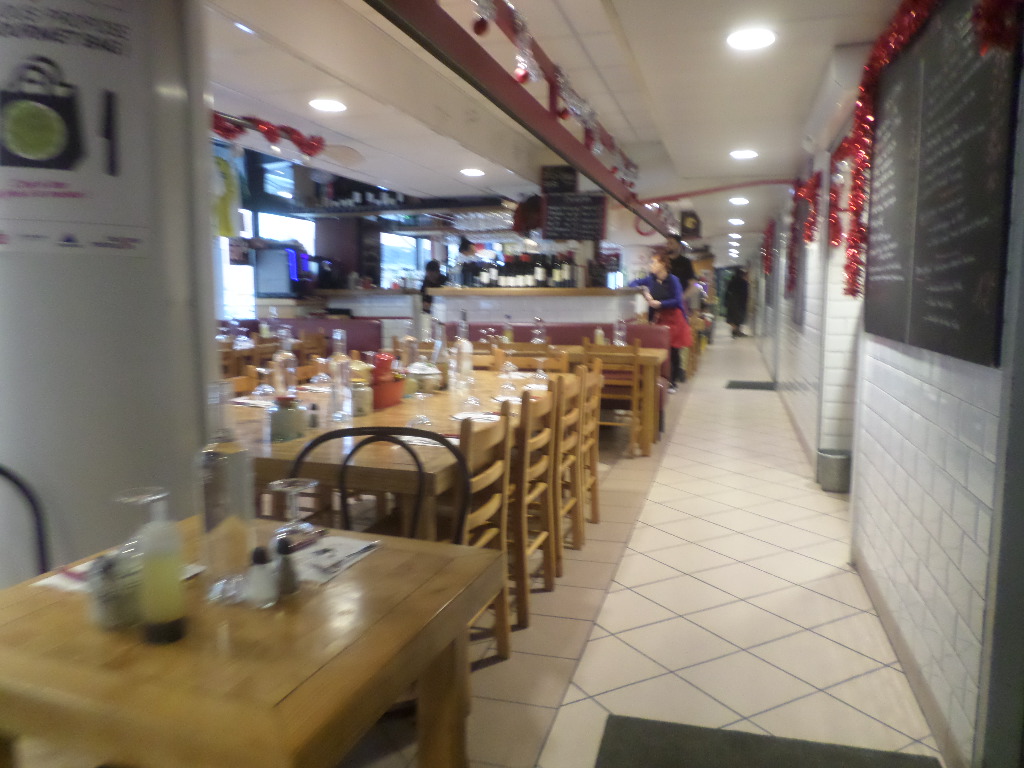
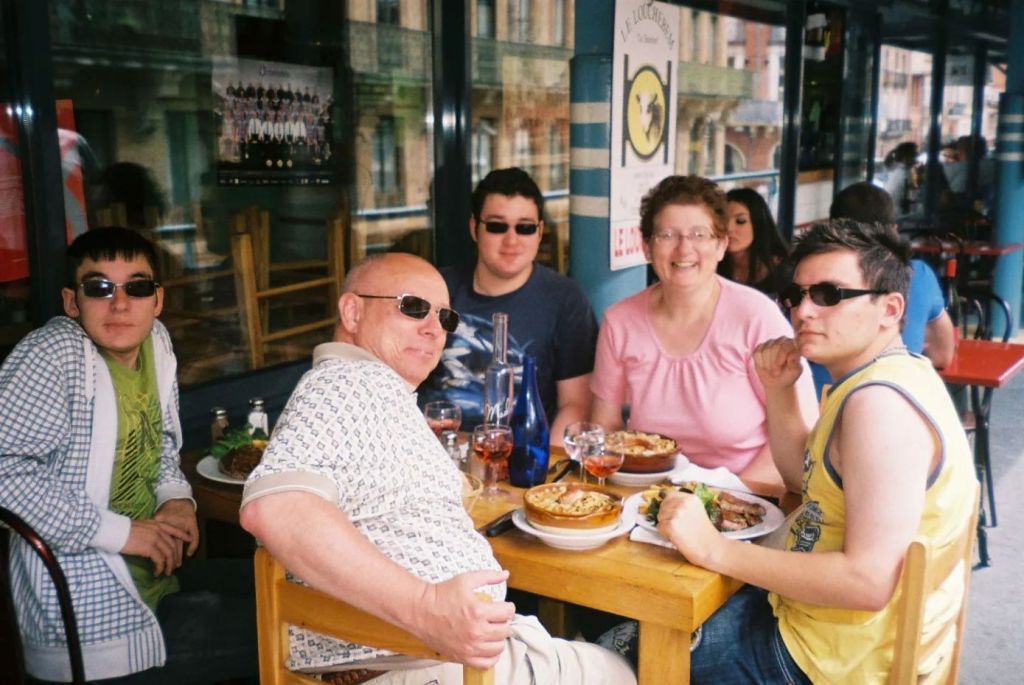
The Le Louchebem opened its doors in 1994, above the Victor Hugo market. And we were there on our visits in the late 1990’s even if the family picture is from 2010, This traditional establishment is a family home that makes both restaurant and butcher shop. It holds the title of Master Restaurateur. The cuisine prepared here is made from fresh and carefully chosen products. The setting is picturesque, the atmosphere friendly, the service as professional as smiling. That is to say if it is a good address for the local Toulousans as for visitors passing through. It is essential to taste the homemade specialties, as hearty as delicious as our favorite cassoulet. The Févoulet is the ancestor of cassoulet and is a very old Occitan recipe made with beans, duck confit, pork rinds and sausage, before the féves especial beans are replaced by the white beans brought back from Latin America in the 16C. For over 20 years, every first weekend of the month at the Victor-Hugo market, Le Louchebem has been honouring its sublime féves bean cassoulet to the delight of its loyal clientele. There are also the classic cuts of meats such as the faux filet steaks XL , XXL , and XXXL; the veal kidney, XXL beef fillet. And the plate of the 4 meats “La Gilbe” with walnut, bib, faux fillet, steak , the works, only meat eaters allowed lol ! A very busy place of 12h lunch. Every time I passed in Toulouse I find with great pleasure this place of sharing and for lovers of good meat and cassoulet . The pleasant terrace, the service always professional, smiling and caring waiters and waitresses. Don’t miss it while in
Toulouse.
The official Le Louchebem resto : https://www.maisonlouchebem.fr/
The RestaurantGuru reviews on Le Louchebem : https://restaurantguru.com/Le-Louchebem-Toulouse-2
And one picture for the memories forevern family time of better days, my dear late wife Martine love it, after all is the region of her father’s birth, and uncles, cousins.
The cassoulet is of occitan origins and is a specialty based on dry beans, generally white, and meat. Originally it was made from beans. The cassoulet takes its name from the enamelled terracotta casserole made in Issel. It is usually told that the place the origin is in the city of Castelnaudary, during the Hundred Years War (1337-1453). During the siege of Castelnaudary by the English, the hungry besieged would have gathered all the food available (beans and meat), to make a gigantic stew or estofat, to reinvigorate the combatants. These could then drive out the English and liberate the city. The question became nationalized around 1900 when the food critic Edmond Richardin launched a debate on this subject in the Parisian Gazette. Everyone then took sides for a region such as Castelnaudary, Carcassonne, and Toulouse, while by passing the existence of local versions like Villefranche-de-Lauragais, Narbonne, Montauban, Pau or Pamiers. To mediate this rivalry, Prosper Montagné ; a Languedocien gourmet who became a cook in Toulouse, uses a metaphor : “Cassoulet is the God of Occitan cuisine. A God in three people: God the Father who is the cassoulet of Castelnaudary, God the Son who is that of Carcassonne and the Holy Spirit, that of Toulouse. ” We of course, side with the version of Toulouse!!
The Toulouse cassoulet contains duck confit and a Toulouse sausage, carrot and an onion spiked with cloves. It is sometimes covered with breadcrumbs, before going to the oven. The number of times it is necessary, during baking, to break the crust that forms on the surface of the dish, is the subject of great quarrels of experts told between six and eight times depending on the versions and the chef. The tourist office of Toulouse on the cassoulet in English : https://www.toulouse-visit.com/cassoulet
Hope you can visit Toulouse and enjoy this institution by a wonderful picturesque quant neighborhood of Victor Hugo! at the Place Victor Hugo inside the marché or market of Victor Hugo! (see post) Again, hope you enjoy this post on the memorable restaurant Le Loubechem in Toulouse !!! as I
And remember, happy travels, good health, and many cheers to all !!!


