
And so here I am in my merry go round updating my old posts and saw this one very badly done me think. Therefore, I am splitting the towns and do one post for each with new text. Hope you enjoy Paimpoint in the forest of Brocéliande of fame Merlin you know!
And while in Bretagne who needs more lol! Truly enjoying the region and one of the places we finally went as a family and after seeing reading hearing the stories of king Arthur and Merlin was here in the forest of Brocéliande. The major town for it is Paimpont . I like to tell you a bit more on this is Paimpont !!! Hope you enjoy the post as I
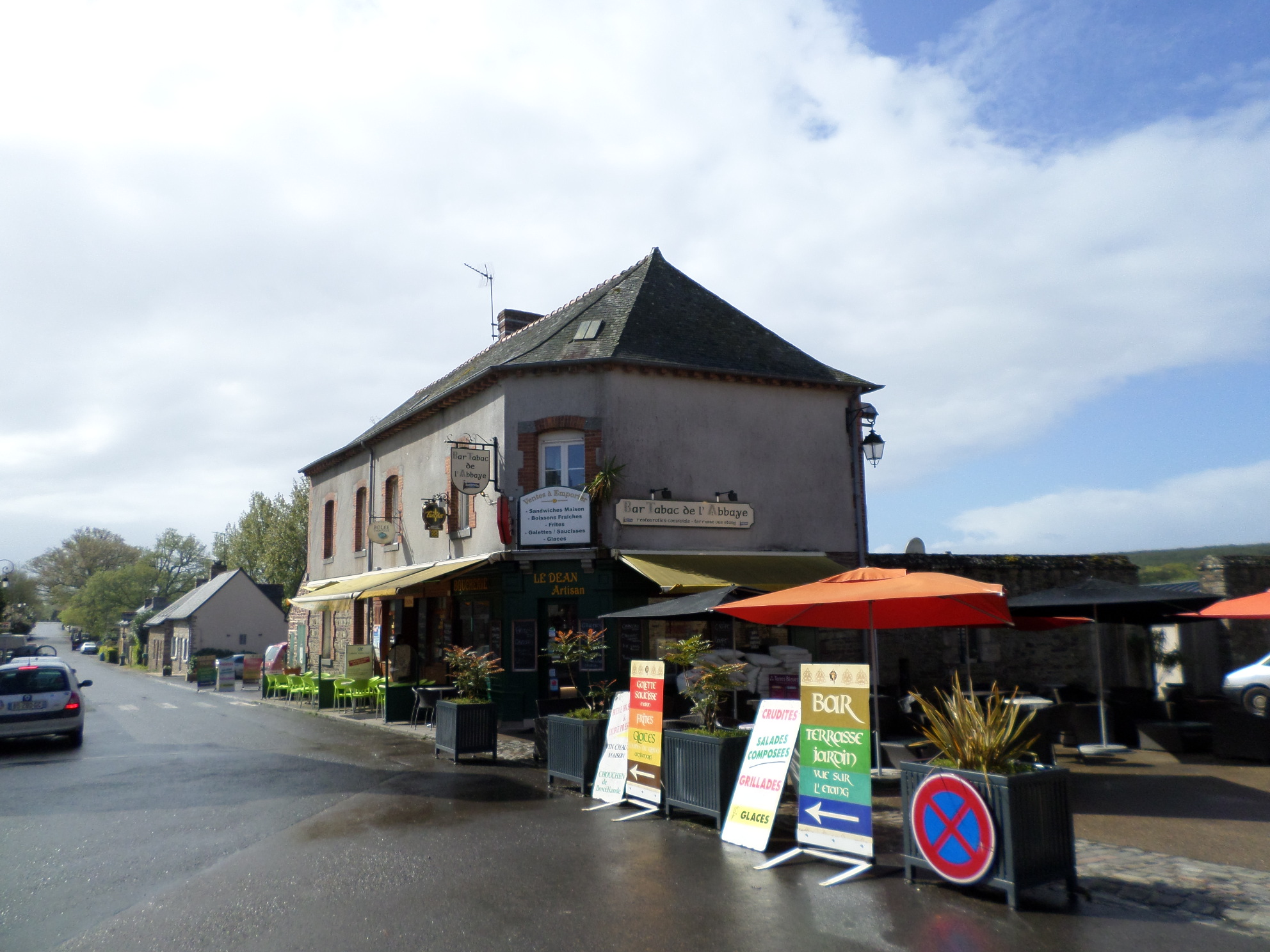
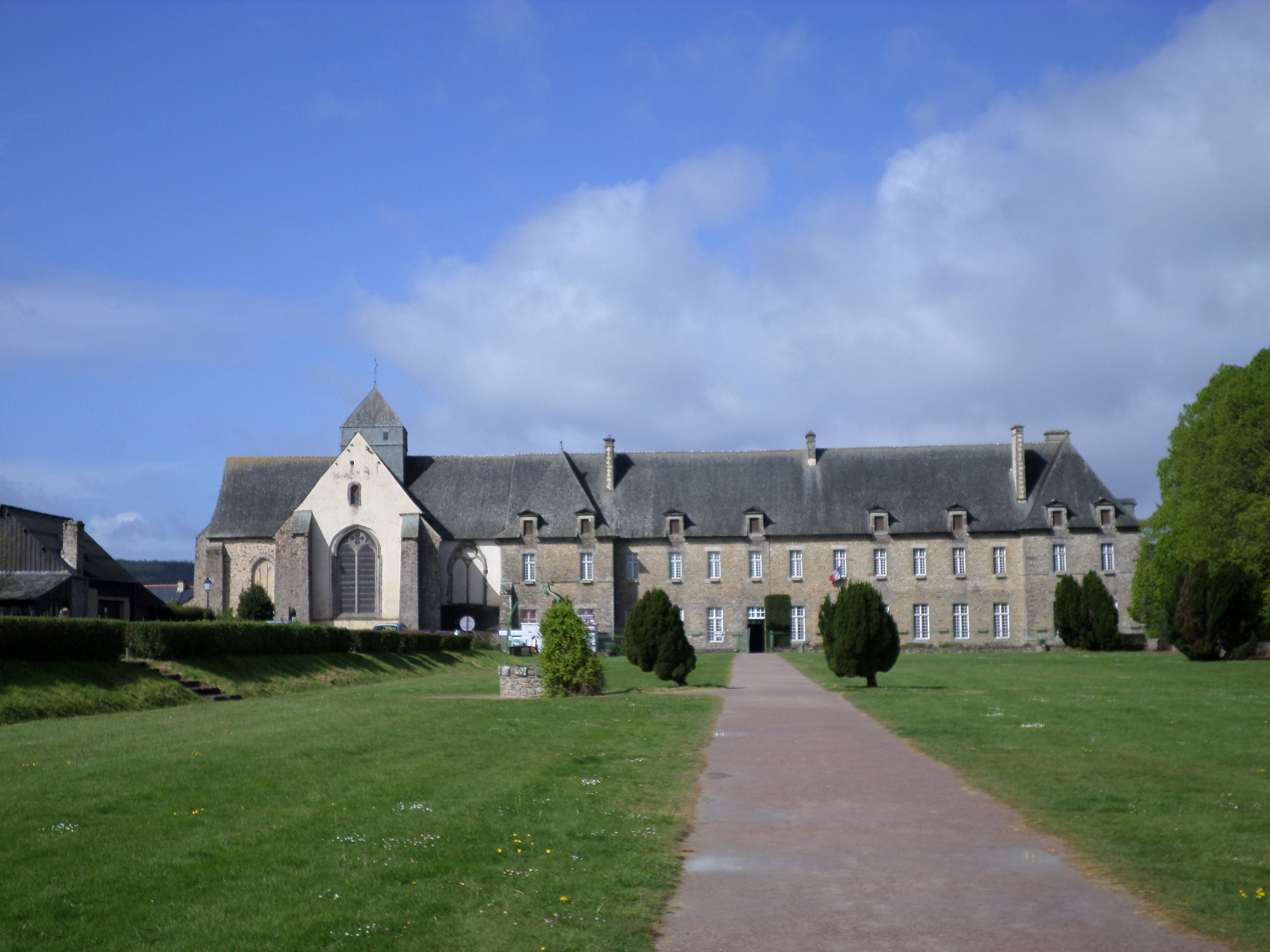
Paimpont is a town in the department 35 of Ille et Vilaine in the region of Bretagne. The town is mainly in the forest of Paimpont that in turn is in the forest of Brocéliande. The nearest town is Guer in the Morbihan dept 56. The Aff river is the limit with the camp Coëtquidan, training field for the military and 3 military schools there at Guer since the end of WWII. The town of Paimpont encircles the eastern contour of a pond of 50 ha called the pond of the abbey. It is on its shore that the abbey of the monastery of Paimpont has settled and developed. The name of the town is from the Breton Pen-(head, end, tip) and Pont, Breton word borrowed from the Latin Pontus. As Bridgehead or the end of the bridge. The monastery founded in the 7C by Judicaël became the Abbey of Notre-Dame de Paimpont in the 13C. For a long time the village was only made up of the abbey with its associated buildings such as the hotel for the reception of pilgrims, the cemetery and some houses.
It was not until the 19C, well after the sale of the abbey as a nationalized property in 1790 during the French revolution, that the village began to take the look as we know today. During WWI at least 157 locals lost their life according to the list carved on the obelisk of the Monument to the Fallen inaugurated in 1923 and erected near the Abbey Place du Roi-Saint-Judicaël. Following the nazi invasion of 1940, the mother of General de Gaulle, Jeanne Maillot took refuge here. Leading a necessarily discreet existence, she heard on the radio that her son had been convicted by the Vichy collaborating regime. At her death, a few weeks later, on July 16, 1940, a large crowd attended her funeral although the death-certificate was censored by the authorities and she was buried in the village cemetery. On 21 August 1944, General De Gaulle, after his visit to Rennes, fifteen days after the liberation of the city, came to bow to her grave.
Things to see: All related to the Arthurian legend of King Arthur and the round table. We have
The Abbey of Notre Dame is an abbey and former monastery on the gothic and baroque styles built in the 13C on the site of a Priory founded in 645 by Lacy, king of Dumnonia. Benedictine monastery originally, it was the 13C inhabited by canons until the French revolution. The edifice at the beginnig was a benedictine monastery from the 12C of which there is nothing left today. The Abbey of Notre-Dame holds this peculiarity to house both the religious center of the parish and the center of the communal power, since the City/Town hall is located in the Grand Logis, like the presbytery. The abbey is the central building of the Abbaye, which is linked to other buildings such as the the Chapel of the Blessed Sacrament, a place of prayer and meditation; the Baptistery chapel, dedicated to baptism; the sacristy where the precious patrimony of the abbey is preserved; and the Écrouettes room. The Grand Logis and Manoir Abbatial are located around the abbey. The parish Garden is a park of trees and a place of prayer depending on the abbey. It is located not far from the pond, on the banks opposite the abbey, in the direction of the north. It consists of an altar for the major events of the parish, a cave dedicated to the cult of Notre-Dame de Paimpont, and a source of drinking water adjoining a sculptural representation of the King builder Saint Judicaël. The Abbey houses religious silverwares and ancient books spanning a large period, from the 15C to the present day, which are exposed to the public view in glass enclosures. Medieval Gothic style wall, openings, the baptistery and the chapel of St-Sacrement, the vault), the abbey presents interior decoration (Chair, statue,altars, and altarpieces) characteristic of the baroque style of the 17C. The sacristy contains the Treasury of the Abbey church composed of a beautiful Christ in ivory (17C), a reliquary (15C) offered by the Duchess Margaret of Brittany, mother of Anne of Brittany, which would contain a radius of Saint Luke, a statue in polychrome wood (15C).
The Official Abbey of Notre Dame de Paimpont: http://www.abbayedepaimpont.org/visite/
The Barenton Fountain, lost in the wild-minded forest; This source is the place of many Celtic legends such as the encounter of Merlin and Viviane, the battle between Yvain and the Black Knight or the legend of Ponthus son of the king of Galicia. It is famous for its miraculous virtues which allow to trigger the rain. The Val sans Retour (valley without return) This valley aka as the perilous or even Valley of false lovers , is a legendary place of the Arthurian cycle in the forest of Brocéliande,. The legend attached to it, narrated in the Lancelot-Grail (early 13C), circulated orally before the end of the 12C. The Fairy Morgana saw a disappointment in love with the Chevalier Guyomard (or Guiomar, Guyamor), who pushed her away at the instigation of Queen Guinevere. She studied magic with Merlin and then, in retaliation, created the Val sans Retour in the forest of Brocéliande to enclose the false lovers;unfaithful knights in love. After seventeen years, Morgana was foiled by Lancelot du Lac, who remained faithful to Guinevere, who liberated 253 knights. This narrative is the most vivid action of Morgana against the Arthurian chivalry, and a reversal of male and female roles as they are conceived in medieval literature.
The Hotié of Viviane or tomb of the Druids or House of Viviane, large burial chest (Neolithic), in the Val sans Retour; The Hotié, Hostié or House of Viviane, also known as the Tomb of the Druids, was described quickly during the 19C and then forgotten, but the various fires of the Val sans Retour and the local actions allowed to find it and to carry out searches. The legend makes it the home of the fairy Viviane, where she would hold the enchanting Merlin in an air prison. Another legend equates it with the transformation of Merlin. When the location of the val sans retour is moved to the Val de Rauco in 1850, the megalithic site near the Gurvant Valley takes the name of Hotié de Viviane which is sometimes assimilated to the tomb of Viviane. Previously, this tomb was located near the tomb of Merlin and the first location of the Val sans Retour in the valley of the Marette.
The Tomb of the Giants, in the Val sans Retour; The Tomb of Merlin (Neolithic) and the Fountain of Youth. As for the tombeau des géants, they are the tomb, measuring nearly 4 meters long and 1 meter wide with 1 meter in height. This tomb was built from 3 menhirs that stood in this place by 2200 BC. Today are visible walls and 3 menhir lying at 8 meters, The tomb you see today dates from the Bronze age (about 1500 BC). Its name is probably due to its shape and its dimensions. There are marked by a panel just out of Campénéac from the road D312 to the D40.
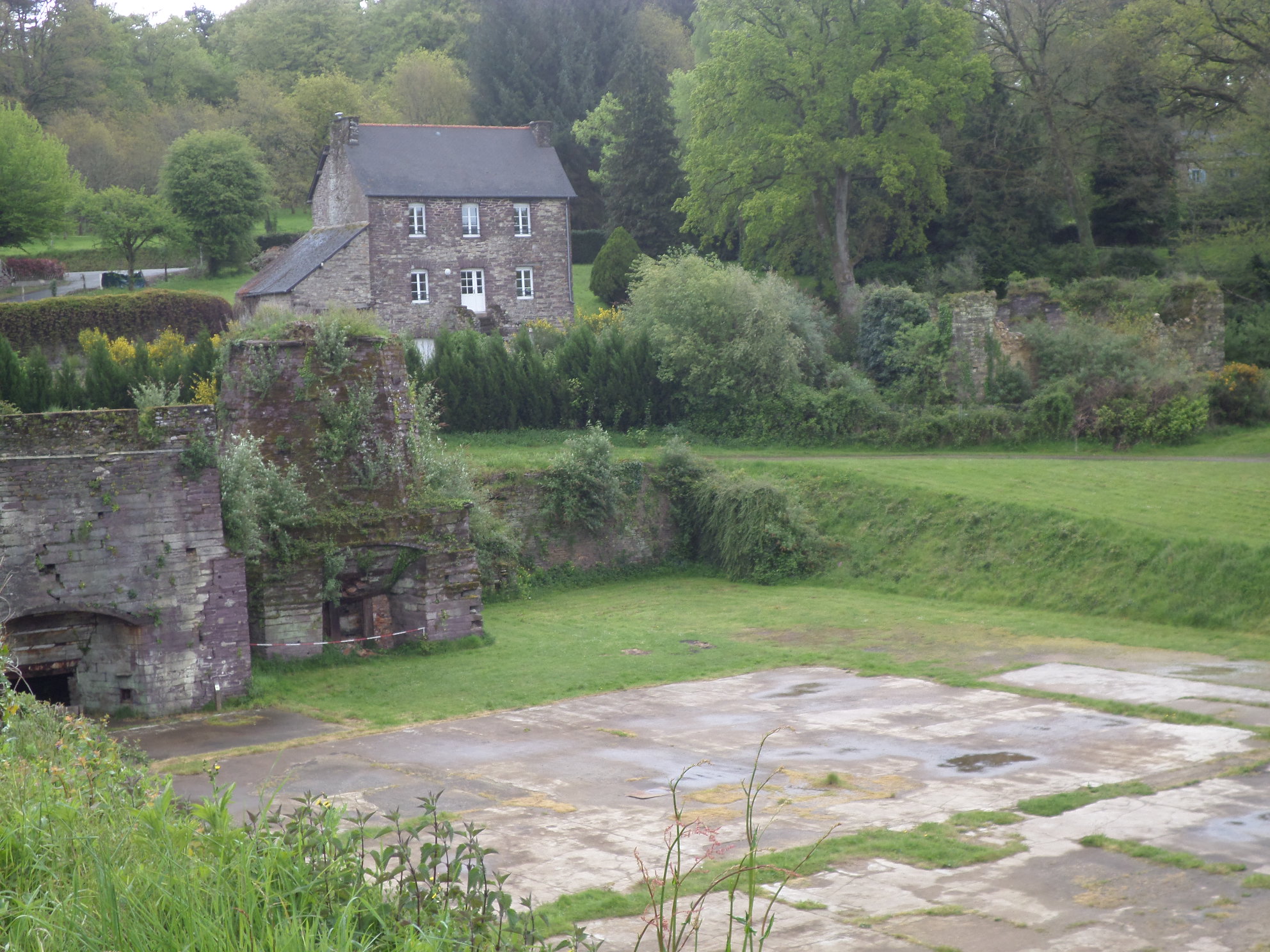
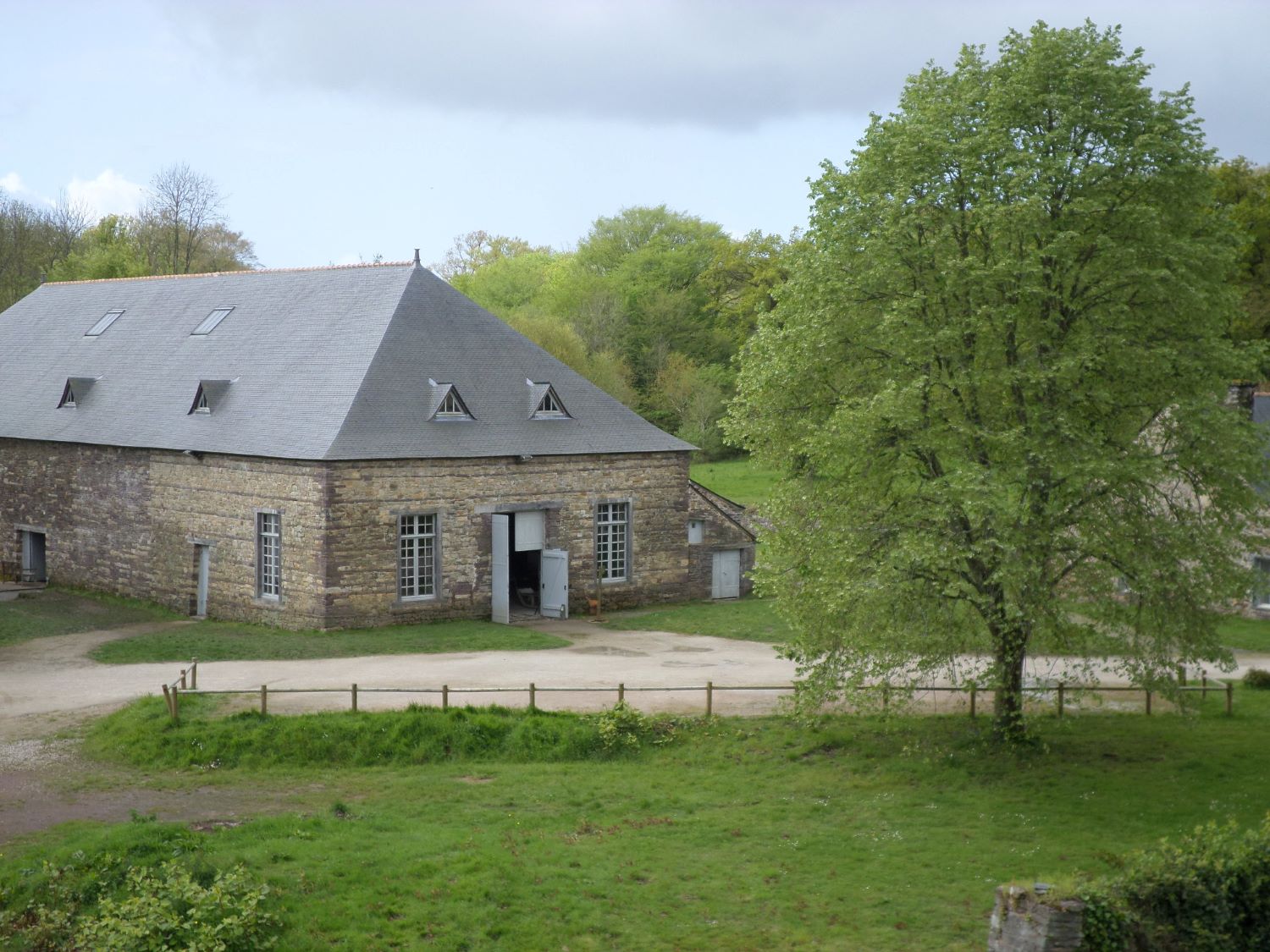
If you go further out of town, road D224 well marked, you arrive at an old foundaries place call
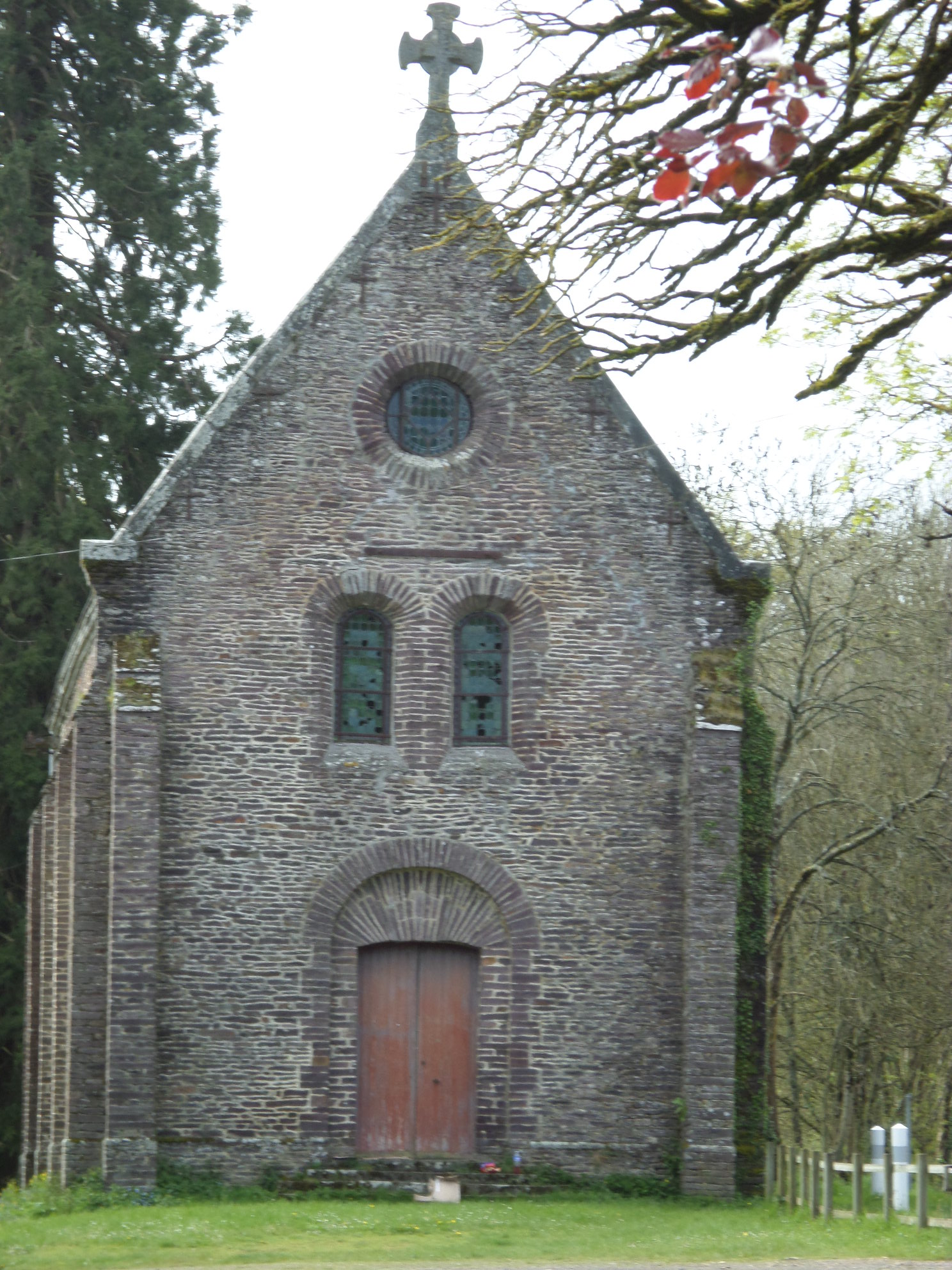
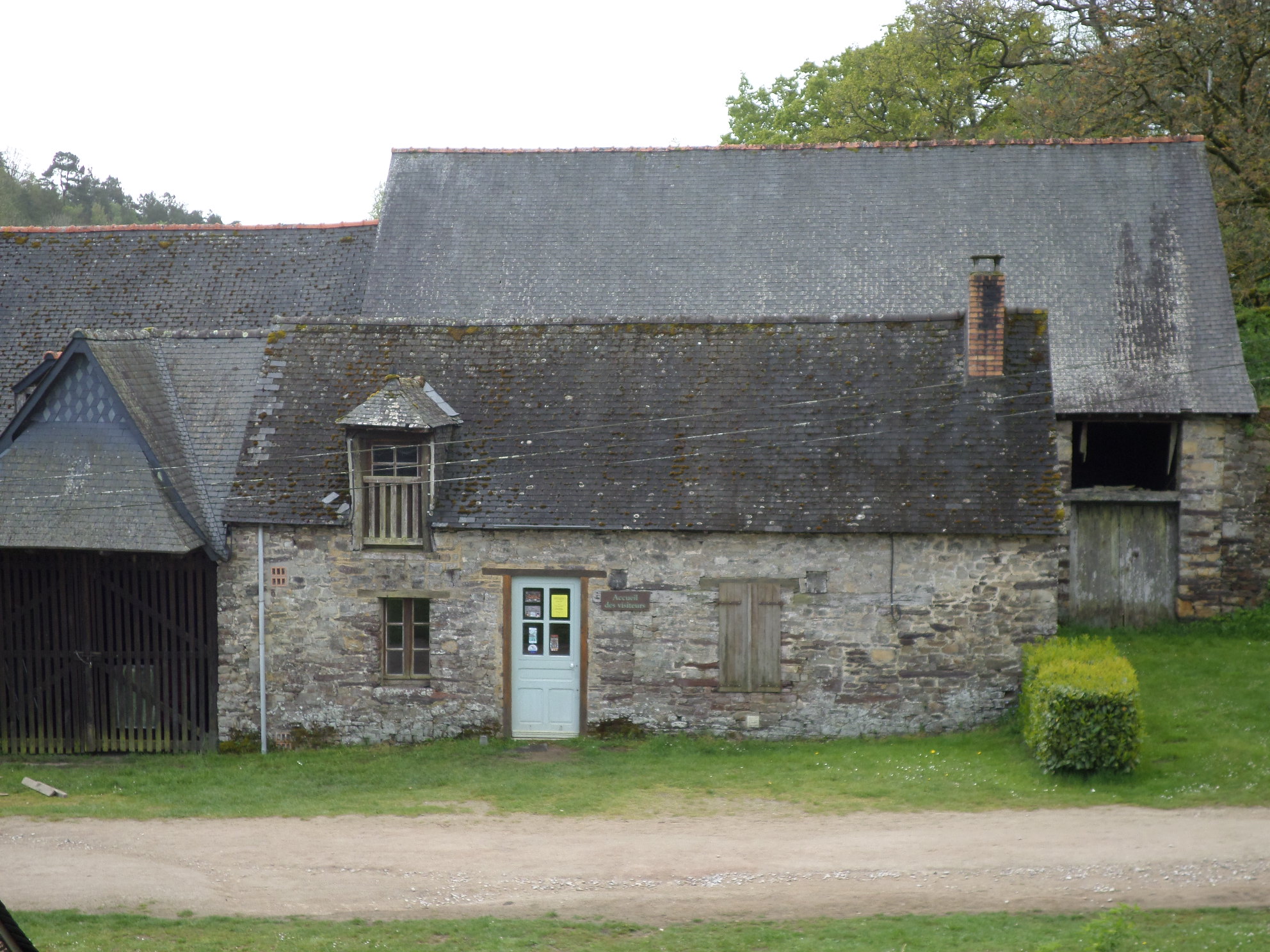
Les Forges de Paimpont. you see a foundary site as it was in the middle ages, with a chapel, and now ok to reserve for events and marriages etc. It is a private property today. This is worth stopping by indeed. As early as 1675, Des Forges settled in the heart of the forest of Paimpont / Brocéliande. Now, the 3 components of a forge are gathered here, the ore, wood and water. In the 18C, Diderot and d’Alembert retain the refinery to illustrate “the encyclopedia”. Des Forges ensure orders linked to the war of independence of the United States of America. The maison de Maître de Forges, as well as worker homes are built start 18C on a plan or map of the 17C. In the 19C, during the reign of king Louis XVIII, the Forges must modernise; a state of the art made (which gave us a beautiful series of detailed plans visible at the National Archives in Paris). Competitive prices from foreign firms , especially English, made the furnaces stop in 1866 and then resume activity for the war of 1870 to stop permanently in 1880. We can observe some products manufactured in these Forges (screw press, chimney plates, forged… nails) are visible in some masonry. This activity will stop in 1954. A restoration program is committed with the assistance of the State, the Council régional de Bretagne, Conseil Général D’ille et Vilaine and the owner. The iron forges are a former remarkable industrial site of the forest of Paimpont they were the most important wood forgings of Brittany from the 18C. They will work until the end of the 19C.
The town of Paimpont on its heritage: https://www.paimpont.bzh/transitions/sites-legendaires/
The Forest of Broceliande tourist board on the legendary sites as above: https://tourisme-broceliande.bzh/lieu_categorie/sites-legendaires/
The official Forges of Paimpont: https://forgesdepaimpont.fr/
The Broceliande tourist office on the iron forges: https://tourisme-broceliande.bzh/en/activite/forges-de-paimpont/
This is indeed a magical land of pure nature and story telling for old and young. I will be back, eventually. Again, hope you enjoy this post on this is Paimpont !!! as I.
And remember, happy travels, good health, and many cheers to all !!!

 Paris1972-Versailles2003