
I am again to tell you about more streets of my eternal Paris. I have many many posts on Paris and several on the streets of the most beautiful city in the world. I have come up with pictures from cd rom vault that should be here for you and me. As always thank you for following my blog some since Nov 26, 2010. Therefore, here is my take on the streets of Paris, part XXVII !!! Hope you enjoy it as I.
The Rue des Barres is located in the former 4éme arrondissement of Paris,it is now part of Paris Centre grouping districts 1-4, This street is 130 meters long and 10 meters wide, and located in the Saint-Gervais quartier or neighborhood, on the Saint-Gervais heap and begins at 62 Rue de l’Hôtel-de-Ville and ends at 14 Rue François-Miron. The Rue des Barres is joined by Rue Grenier-sur-l’Eau between nos 12 and 14. The lower section of the street is made up of stairs. It owes its name to the Hôtel des Barres which was built there around 1250, and to the place called “des Barres”, which was mentioned from 1152 and where mills were located on the Seine river. The neighborhood is served by metro line 7 at Pont Marie station, and by line 1 at Saint-Paul station. Notable buildings here with the anecdote first as at the outlet on the Seine river, site of the old Port au Vin and Port au Blé. Then at No. 2 and No. 62, Rue de l’Hôtel-de-Ville 19C building retaining the front of an old bakery; Nos. 2 to 10: site of the Hôtel des Barres built in 1250, which became the Hôtel de Charny in the 17C. The buildings on this site, set back from that of No. 12, were built around 1840 following the opening of the Rue du Pont-Louis-Philippe. Louis and Félix Lazare lived at this address until 1826; Louis is particularly known for his co-authorship with Felix Lazare of the Administrative and Historical Dictionary of the Streets of Paris and its Monuments, published in 1844 in order to provide a very precise overview of the Parisian urban fabric just before Haussmann’s work. No. 11: apse of the Church Saint-Gervais-Saint-Protais (see pic and post); No. 12: site of the town house of the nuns of the Maubuisson Abbey, rebuilt in 1540 in corbelled form and called the « couvent des Filles de la Croix » or convent of the Daughters of the Cross. Located at the corner of Rue du Grenier-sur-l’Eau, this half-timbered house now houses a youth hostel, Nos. 18 to 24: Square Couperin. The square was created on the site of old houses demolished during the renovation of the unsanitary block No. 16.
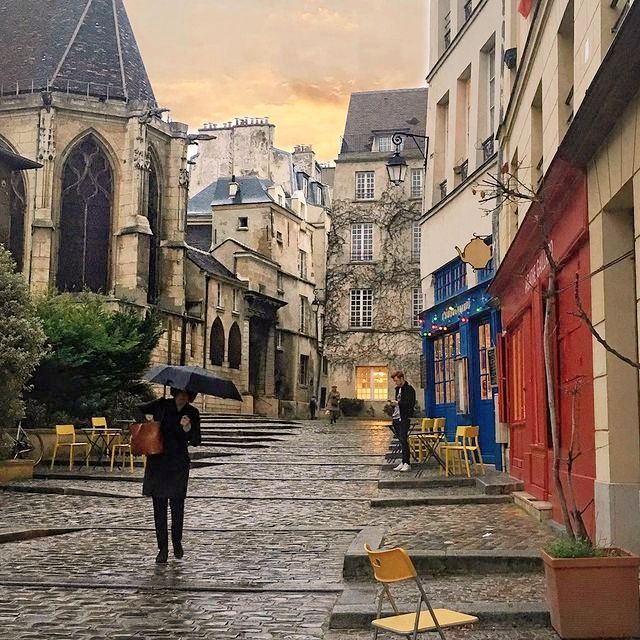
A bit of history tell us that in 1250, this road was called “ruelle aux Moulins-des-Barres”, because of the mills located on the Seine river at the place called “les Barres”. In this street was located the Hôtel des Barres, built in 1250, which was inhabited at the end of the 14C by Louis de Boisredon, lover in 1417 of Isabeau of Bavaria, Queen of France. Charles VI had him arrested and locked in a sack and then thrown into the Seine with this inscription on the sack: “Let the King’s justice pass.” In 1293, it was called “ruelle des Moulins-du-Temple” , because at that time these mills belonged to the Templars. In 1362, in a legal document passed during the reign of Charles V, it was given the name “rue qui-va-de-la-Seine-à-la-porte-Baudet”. In 1386, it was called “rue du Chevet-Saint-Gervais”, and sometimes “rue des Barres”. In the 16C, from the rue de la Mortellerie to the Seine it was called “rue Malivaux”. This name came from the Malivaux mills, located on the river, opposite this street. It is mentioned under the name rue des Barres in a manuscript from 1636, throughout its length. In the 19C, the 156-meter-long Rue des Barres, located in the former old 9éme arrondissement, Hôtel-de-Ville quartier or neighborhood, began at 22 Quai de la Grève and 1 Rue du Pont-Louis-Philippe and ended at 6 Place Baudoyer and 2 Rue Saint-Antoine. The street numbers were black, and the last odd number was 17 and the last even number was 36.
The Paris tourist office on Paris Centre (old arrond 1-4) : https://parisjetaime.com/eng/article/explore-the-centre-of-paris-a846
The rue du Faubourg-Saint-Denis is located in the 10éme arrondissement or district of Paris in the extension of Rue Saint-Denis. It crosses the quartiers or neighborhoods of Porte-Saint-Denis and Saint-Vincent-de-Paul, connecting Porte Saint-Denis to the La Chapelle metro station, passing through the Gare de l’Est and Gare du Nord stations. The Rue du Faubourg-Saint-Denis owes its name to the fact that it crossed the hamlet outside the city wall, symbolized today by the Porte Saint-Denis, located on the old road to Saint-Denis, called “Faubourg Saint-Denis,” and which served the Abbey of Saint-Denis.(Seine Saint Denis dept 93), This site is served by the metro stations Gare du Nord lines 4 and 5, La Chapelle on lines 2,4,and 5, and Gare de l’Est lines 4,5,and 7. The street is part of the ancient Roman road from Lutetia to Caesaromagus (Beauvais), probably following the route of a Gallic road prior to the Roman conquest. In the 12C, following the establishment of the Saint-Lazare fair by Louis VI the Fat, the road was called “Saint-Lazare road”. It is mentioned under the name of “Grand rue du faulxbourg Saint Denis” and “rue du faulxbourg Saint Lazare” in a manuscript from 1636. This road remained, until the opening of the boulevards of Strasbourg and Sébastopol in the middle of the 19C, an element of this major communication axis from Paris to the north of France. Until the First Empire, (Napoléon I) ,the section between rue Saint-Laurent and place de la Chapelle was called “rue du Faubourg-Saint-Lazare”, because it ran alongside the house of Saint-Lazare. It was also called “rue du Faubourg-de-Gloire” because of the proximity of a plot of land that bore this name. During the French revolution, the street was briefly called “rue du Faubourg-Franciade” in 1793, the town of Saint-Denis having been renamed “Franciade”.
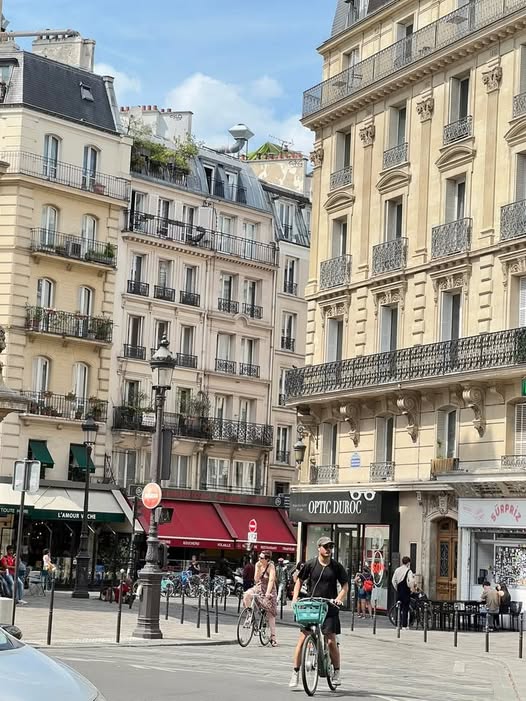
Notable buildings here me think are at No. 12, the Passage du Prado forms the L-shaped junction between the street and Boulevard Saint-Denis. Opened in 1785 as the “Passage du Bois de Boulogne,” it was covered in 1925 and is renowned for its Art Deco decoration. At No. 16 is the Julien restaurant, a former broth that has become a chic brasserie. Chez Julien, whose profiteroles are renowned throughout Paris. The Art Nouveau decor includes painted glass panels by Louis Trézel. An inn called the Cheval Blanc was founded on this site in 1787, which later became one of the first café-concerts. At No 21 is the Café Saint Denis, a traditional bistro imbued with the popular spirit and warmth of the local inhabitants. At No. 42: the Passage de l’Industrie, specializing in wholesalers for Hairdressers, At No. 45: the oldest pharmacy in Paris, the Pharmacie Vée, was founded here in 1783, at the corner of Rue du Faubourg-Saint-Denis and Rue d’Enghien. No. 46: the Passage Brady, inaugurated in 1828, originally housed clothing stores; today, it is renowned for its Pakistani restaurants, becoming the Pakistani quarter of Paris, sometimes nicknamed Little Islamabad. At No 50 PNY Faubourg St Denis, delicious burgers! At No 57 was the Central Sporting Club, a boxing hall in the Christmann gymnasium. A scene from the film L’Air de Paris (1954), starring Jean Gabin, was filmed at the Central; the hall closed in 1968, since occupied by the Jacques-Lecoq theater school. At No 60 was the Manufacture de porcelaine du faubourg Saint-Denis, founded by Pierre Antoine Hannong in 1771 or 1772, which was under the protection of the second brother of King Louis XVI, Charles-Philippe, Count of Artois (later king Charles X). This factory was taken over in 1798 by Marc Schœlcher, closed and finally sold in 1834. It was in this place that his son, Victor Schœlcher, was born on July 22, 1804. At No 61bis is the entrance to the courtyard of the Petites-Écuries, located on the site occupied by the small royal stables at the end of the 18C. At the current No 65, President Félix Faure was born; on his birth certificate, in 1841, it is noted “residing at rue du Faubourg-Saint Denis, 71” At Nos. 94 to 114: Site of the former convent of the Daughters of Charity of Saint Vincent de Paul, which was converted into a barracks, the Saint-Lazare barracks. Nos. 99, 101, 103, and 105: Several early 18C buildings, built by the fathers of the Mission of the House of Saint Lazare, to rent them to seculars; these buildings are still visible. More on the street tell us that on the last section of Rue du Faubourg-Saint-Denis is nicknamed Little Jaffna, and it is here that Tamils from the Paris region who fled Sri Lanka during the civil war in the 1980s gather. Ganesh Chaturthi is celebrated there, and many Indian and Sri Lankan businesses have set up shop there. Mistinguett, although born in Enghien-les-Bains, popularized the suburb by singing « I was born in the Faubourg Saint-Denis ». The four-season market women were typical of the Faubourg Saint-Denis. They can be seen in the film A Woman is a Woman (1961), by Jean-Luc Godard. They disappeared because they obstructed traffic.
The Paris tourist office on the 10éme arrondissement de Paris : https://parisjetaime.com/eng/article/explore-paris-s-10th-arrondissement-a843
The Cité Véron is located in the Grandes-Carrières quartier or neighborhood of the 18éme arrondissement or district of Paris. The entrance is on a small, narrow cul-de-sac, accessible only on foot,located at 94 Boulevard de Clichy., This boulevard borders the entrance to the Cité Véron, and Place Blanche, and is served by the metro Blanche line 2. It is named after Jean-Louis Véron, who was deputy mayor from 1809 to 1830, then mayor of Montmartre from 1830 to 1841, due to its proximity to the eponymous street. It was classified as a Parisian street by a prefectural decree of April 9, 1984 under the name “cité Véron”, it was then named “rue Pierre-Dac” by a municipal decree of January 14, 1994 before another municipal decree of September 20, 1994 reinstated the name cité Véron.
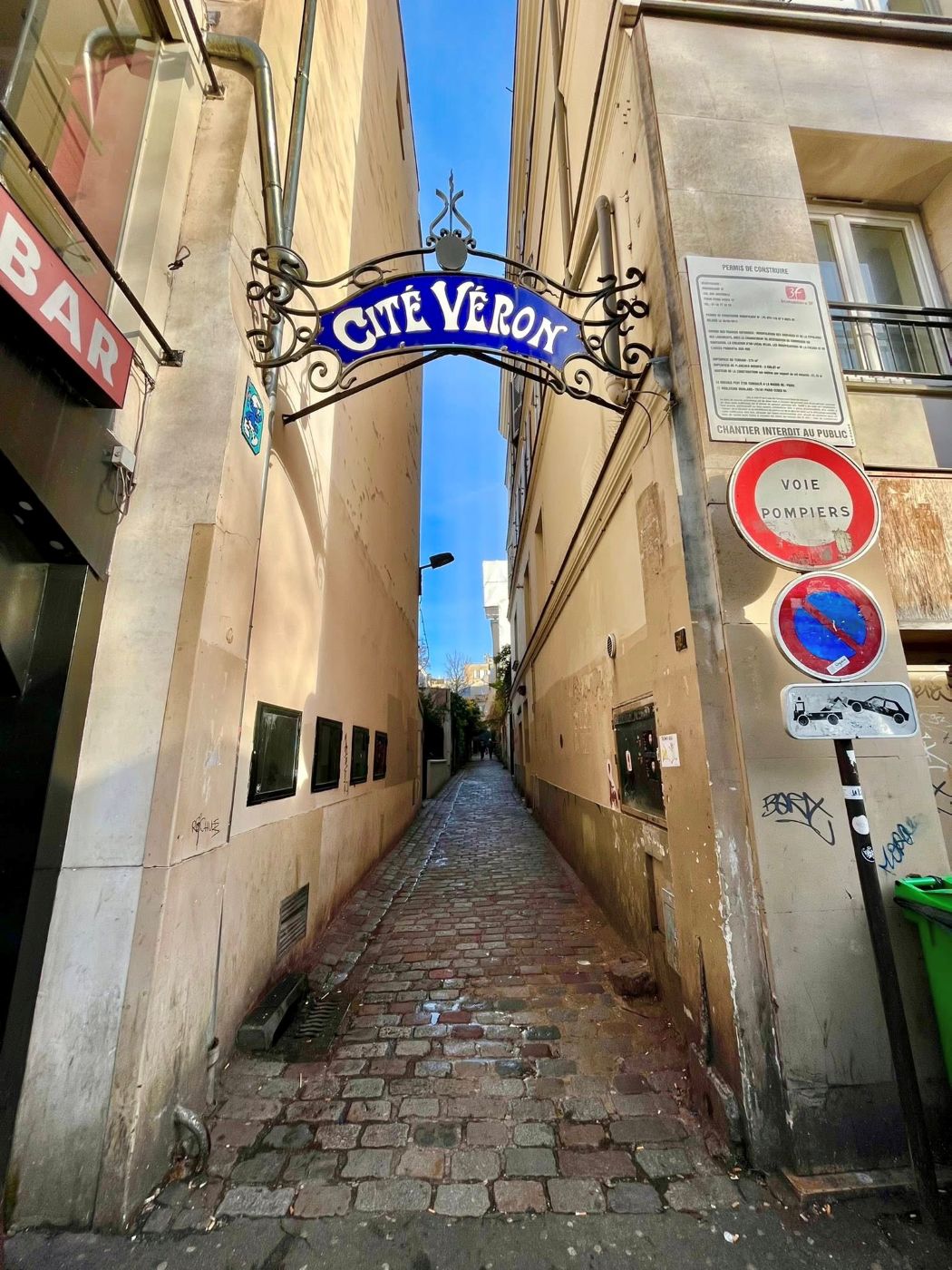
Notable buildings here ,me think are at No. 4bis:Théâtre Ouvert or Open Theater in the winter garden of the cité, closed in 2020. No. 6 bis:on the 3rd floor workshop, belonging to the Moulin Rouge, was taken over in 1953 and converted into an apartment by Boris Vian and his second wife, Ursula Vian-Kübler; he lived there until his death on June 23, 1959. Shortly after, Jacques Prévert became their next-door neighbor in 1954 and they shared the use of a common terrace ,the so-called trois Satrapes or three Satraps, overlooking the roofs of the Moulin Rouge, on which parties of the Collège de ‘Pataphysique were organized. A terrace which they did not fail to share with other great names of artistic and cultural Paris of the time such as Eugène Ionesco, Raymond Queneau, Max Ernst, Joan Miro and André Gide, gathered as part of the meetings of the Collège de Pataphysique, a “society of learned and useless research” founded in 1948. Pataphysics is defined as the “science of imaginary solutions”. Ursula Vian-Kübler will keep the workshop intact, which becomes a place in memory of her husband’s work. The apartment has become the headquarters of the Fond’action Boris-Vian association which, together with the Cohérie Boris Vian, has been responsible for promoting the work of Boris Vian since 1992 following the Boris-Vian Foundation created in 1981. It is a private property which, due to its small size, cannot be visited but which can occasionally be the subject of a guided discovery after receiving the agreement of the owners of the place. It is also where the dance studio of the Raymon Franchetti Academy is located, one of the greatest masters of classical dance who was Director of Dance at the Paris Opera.
The Paris tourist office on the 18éme arrondissement de Paris : https://parisjetaime.com/eng/article/explore-paris-s-18th-arrondissement-a832
The Fondation Boris Vian : https://www.borisvian.org/coherie.html
The Academie des ArtsChorégraphiques Raymond Franchetti : https://aac.danse75.fr/
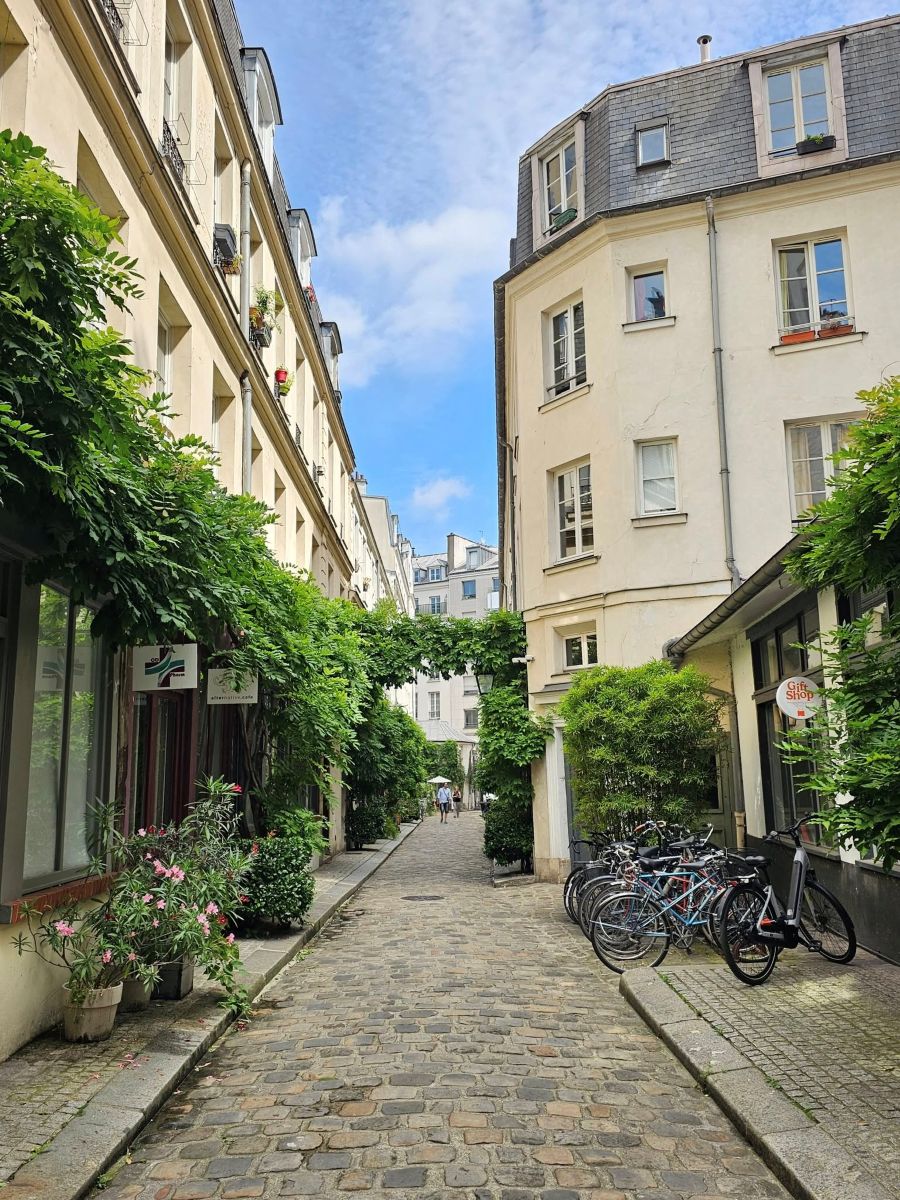
The Cour Damoye is a private street in the Roquette quartier or neighborhood of the 11éme arrondissement or district of Paris, It begins at 12 Place de la Bastille and ends at 12 Rue Daval. The Cour Damoye is access via 12 Place de la Bastille. This small alleyway connecting Place de la Bastille to Rue Daval is accessed through a simple door wedged between two unremarkable cafés. Get here on metro Bastille lines 1, 5, and 8, The Cour Damoye courtyard, was reopened to the public in June 1999. Open daily from 9h to 19h, two wrought iron gates prevent access in the evening. Workshops, offices, shops, and art galleries have replaced the old signs, and only a renovated freight elevator still lends an industrial feel to the place. In a corner, on the Place de la Bastille side, stands a wall fountain topped by a niche containing a statue of the Virgin. Director Bertrand Tavernier shot La Fille de d’Artagnan or D’Artagnan’s Daughter there, which was praised at the time for the quality of its sets. A French swashbuckler film released in 1994 starring Sophie Marceau, Philippe Noiret and Claude Rich. The screenplay is loosely based on the two novels The Three Musketeers and its sequel Twenty Years After by Alexandre Dumas. In 1778, Antoine Pierre Damoye, a wealthy Parisian merchant and hardware dealer, purchased a plot of land previously used for arquebusier training, which he used as a firing range. The courtyard was in the former Saint-Antoine ditch sewer and on the site of the glacis of the Saint-Antoine Gate bastion, which extended in front of the eponymous gate. Taking advantage of the opening of Rue Daval in 1780, as he was a capitalist ahead of his time, intended to subdivide the plot into small commercial buildings. A very profitable real estate operation, the construction of which, carried out in a continuous manner, explains the architectural homogeneity of the courtyard. The shops and workshops, topped with housing, are reminiscent of the Parisian covered passages of the 19C. The majority of the buildings date from this period, although most have been raised by one or two floors.
The Paris tourist office on the 11éme arrondissement de Paris : https://parisjetaime.com/eng/article/explore-paris-s-11th-arrondissement-a829
The Paris tourist office on walks from Bastille to père Lachaise : https://parisjetaime.com/eng/article/a-walk-from-bastille-to-pere-lachaise-a924
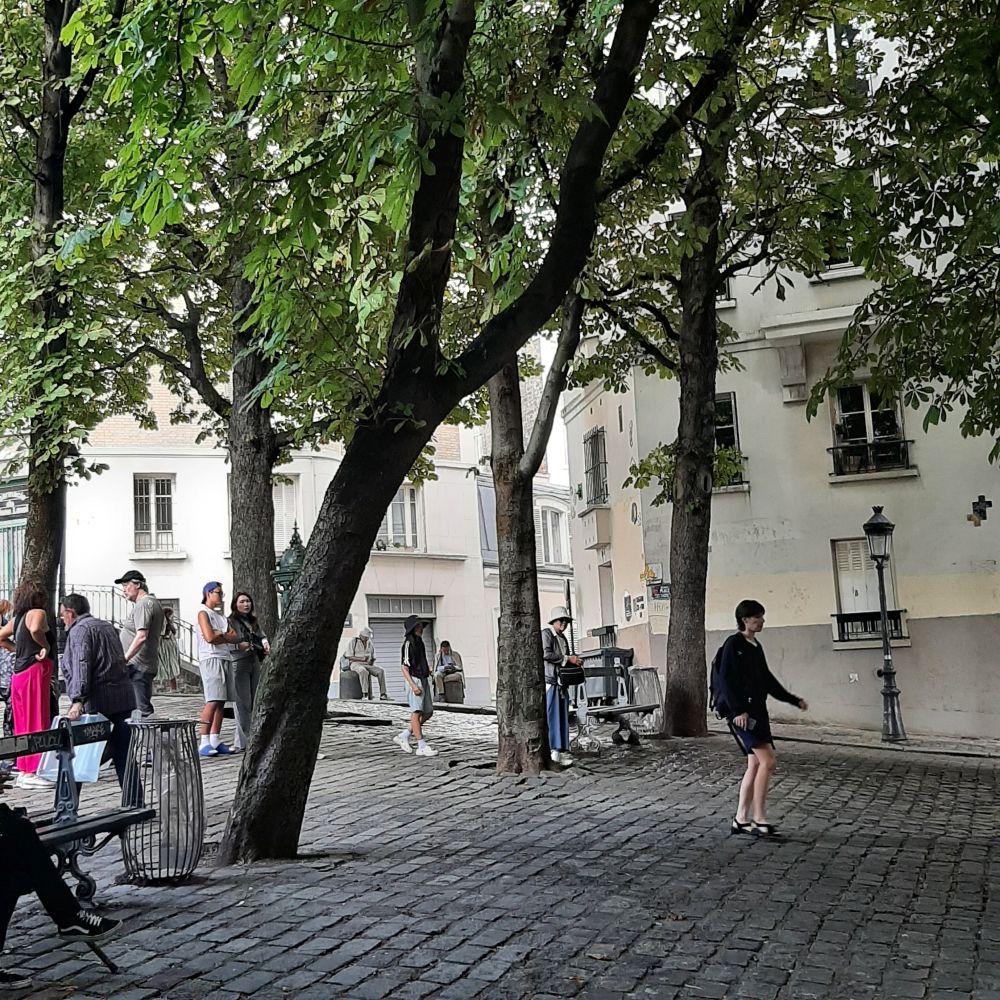
The Place Émile Goudeau, formerly “Place Ravignan”, is a square in the 18éme arrondissement of Paris in the Montmartre quartier or neighborhood. It is only 43 meters long and 7 meters wide, the square is accessible by metro Abbesses line 12 as well as by bus line 40, the only one to run on the Butte Montmartre, at the Durantin-Burq or Abbesses arrêt/stop. This square is named after the poet and singer Émile Goudeau, founder of the Hydropathes club, which included a band of merry pranksters including Alphonse Allais, Jules Laforgue, Charles Cros and Jules Jouy. The trace of the Chemin Sacalie, its ancestor, can be found from the 14C. Used by winegrowers and plasterers, it was then called Vieux Chemin and then Rue du Vieux Chemin de Paris. Paved in 1646,to cope with its success and its countless inconveniences, including traffic jams, the street was widened and repaved in 1675. Widening the current Rue Ravignan, it is said that it was here that Napoleon, in 1809, tied his horse to a tree to complete his ascent to the top of the hill on foot to admire the Chappe telegraph installed on the Saint-Pierre de Montmartre Church (see post). In 1860, Montmartre joined the list of villages annexed by the city of Paris. The street network was redesigned and in 1867 the Vieux Chemin was named after Xavier de Ravignan, a Jesuit and former preacher at Notre-Dame, who died in 1858. In 1911, the square was separated from Rue Ravignan to bear its current name of Place Émile Goudeau. Notable buildings here include at No. 11 where Django Reinhardt lived here; the Tim Hotel, which replaced the Grand Hôtel Goudeau, was Roger Vailland’s base when he joined the Resistance during WWII; At No. 13: the Bateau-Lavoir, this unusual building, accessible on the ground floor from Place Emile Goudeau, opens three floors below onto the building at 4 Rue Garreau. A famous city of artists that hosted Renoir, Picasso, Modigliani, Reverdy, Derain, Braque, Max Ernst, and the Dadas… Painters, sculptors, writers, poets, and theater people all made Montmartre’s artistic star shine here.
In 1892, La Maison du Trappeur, as the place was then called, welcomed its first artist, Maxime Maufra, and the place quickly became a center for diverse and varied artistic gatherings. Gauguin often visited as a friend. On Saturdays, anarchists, politicians, notably Aristide Briand, and young Symbolist poets such as Paul Fort gathered in Maufra’s studio. In April 1904, Pablo Picasso, returning from Barcelona, took over the studio of his friend Paco Durrio, a sculptor and ceramist. He stayed there until 1910 and painted Les Demoiselles d’Avignon in 1907, establishing the legend. Kees Van Dongen from 1905 to 1907, André Derain in 1907, Modigliani in 1908, Juan Gris in 1908, Max Jacob in 1911, Pierre Reverdy in 1912, they all lived in the studios of the Bateau-Lavoir. We met Jules Pascin, the Douanier Rousseau, Georges Braque, Henri Matisse, Guillaume Apollinaire, Jean Cocteau who came as friends. Purchased in 1969 by the City of Paris, a fire ravaged the buildings in 1970. The facade survived as well as the annex whose entrance is located at 1 rue d’Orchampt. Under their vast glass roofs, these artists’ studios give, today, a good idea of the original appearance of the Bateau-Lavoir. In 1978, twenty-five new concrete studios rebuilt, which are now occupied by young artists who work there without living there. During the First Empire (Napoléon Ier) , the Tivoli Montmartre guinguette, known as the Grand Poirier or the Poirier. In 1828, the writer Alphonse Karr found the old disused guinguette for rent for a modest sum, where nature had taken over, to the great astonishment of Alexandre Dumas, his friend, who visited him. A hotel replaced the guinguette in a less rustic style. The Hôtel du Poirier was a place where the writer Pierre Mac Orlan stayed when he had money from 1899 to 1912, the home of Amadeo Modigliani just opposite the Bateau Lavoir around 1906, and that of Max Jacob as well. Returning from Algeria in March 1940, Albert Camus lived here. Paved and decorated with trees, the square hosts a Wallace fountain.
The official museum of Montmartre on the Bateau-Lavoir : https://museedemontmartre.fr/le-bateau-lavoir/
The Paris tourist office on the 18éme arrondissement de Paris : https://parisjetaime.com/eng/article/explore-paris-s-18th-arrondissement-a832
There you go folks, another dandy beautiful set of glorious streets of my eternal Paris. I have criss cross them many and have many in my blog already, Again, hope you enjoy this post on the streets of Paris, part XXVII !!! as I.
And remember happy travels, good health, and many cheers to all !!!


