
We have driven and walked in my eternal Paris, and would like to have an imprint in my blog on the wonderful family times we had there, There is so much to see , doing my best, and glad found me this picture in my cd rom vault ,which now transposing in my blog for you and me, This was my former worked city, so glad to post more memorable spots on it, I thank you for your readership over the years and to bear with my rants! After Paris is to rant, shout and yelled about, me think. Therefore, here is my take on curiosities of Paris, part XLIII !!! Hope you enjoy the post as I.
The Quai de Conti is a quay located along the Seine, in the 6th arrondissement of Paris. It is 307 meters long, starting at 2, rue Dauphine and ending at Place de l’Institut. It is one-way, running east-west. This road is so named because the Hôtel de Conti had its main entrance there. It is cited under the name of rue du quay, going from the end of the Pont Neuf to the Porte de Nesle in a manuscript of 1636. In 1655, the project of building a quay was born. In 1662, the main work of the construction of the quay had already begun, and the project was finalized. This quay, first named “quai de Nesle”, because of the Nesle tower which occupied its entire width, then took the name of “quai Guénégaud” because of the Hôtel de Guénégaud which was next to it, before taking the name of quai Conti. A prefectural decree of April 27, 1814 gave it back the name of quai de Conti. Notable buildings here are : At No. 1: three buildings constructed in 1932, reminiscent of the early 17C brick and stone architecture of Place Dauphine, No. 3: location of the curiosity and jewelry shop at Petit Dunkerque, created around 1760 by Granchez, a native of Dunkirk and jeweler to Queen Marie-Antoinette. No. 11: the Hôtel des Monnaies, which since 1771 houses the Paris Mint, a public institution responsible, among other things, for the management of the Paris Mint Museum, in the former Hôtel de Conti. At this level, between the quay and the downstream point of the Square du Vert-Galant, the Monnaie dam-lock was established on the Seine. Commissioned in 1853, it operated until the flood of 1910 and was destroyed in 1923. No. 13: Hôtel de Sillery-Genlis; Bonaparte resided there. No. 23: The former Collège des Quatre-Nations, which housed the Institut de France (see post). On its site stood the Tour de Nesle, part of the Philippe-Auguste enclosure. Statue of Condorcet is a French scientist, mathematician, philosopher, politician and publisher. He is one of the great intellectual figures of the Enlightenment movement. inaugurated for the centenary of his death, on July 14, 1894. The politician is linked to the history of the district: in fact, he was general inspector of the Mint and perpetual secretary of the Academy of Sciences, at the Institute. At No. 31 la Boîte welcomes as many young artists as big names in contemporary art (See pic), In the novel À la recherche du temps perdu or in search of lost time by Marcel Proust, the Verdurin salon is located on quai de Conti.
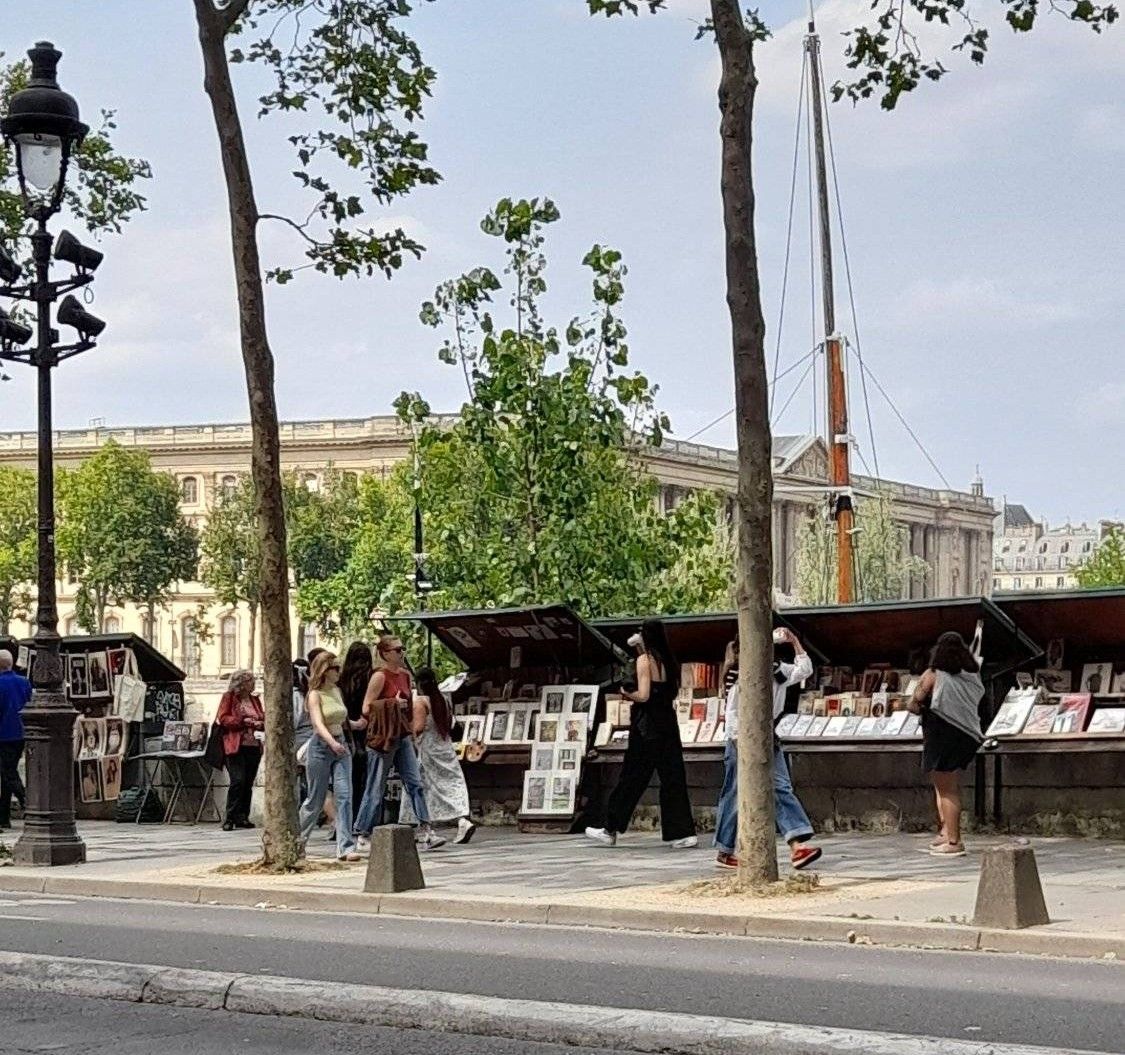
The Paris tourist office on the 6éme arrondissement de Paris : https://parisjetaime.com/eng/article/explore-paris-s-6th-arrondissement-a823
In the heart of Paris, just steps from the Opéra Garnier,(see post), the Pathé Palace is a unique venue, distinguished by its Renzo Piano-designed architecture, the quality of its amenities, and the exclusive services offered. It features a high-end cinema with 7 high end screens and 854 seats,. The first, the largest, offers 4K laser projection in Dolby Vision, as well as a 35 and 70 mm film projection system. and a bar accessible with or without a ticket, offering a stunning view of the Boulevard des Capucines. The Pathé Palace, 2 boulevard des Capucines at the corner of boulevard des Capucines and rue de la Chaussée-d’Antin, continuing to rue Meyerbeer. It is served by the metro Opéra on lines 3, 7 and 8 ; and by the Chaussée d’Antin – La Fayette on lines 7 and 9. It is also accessible by bus lines 20, 21, 22, 52, 53, 66 and 95.
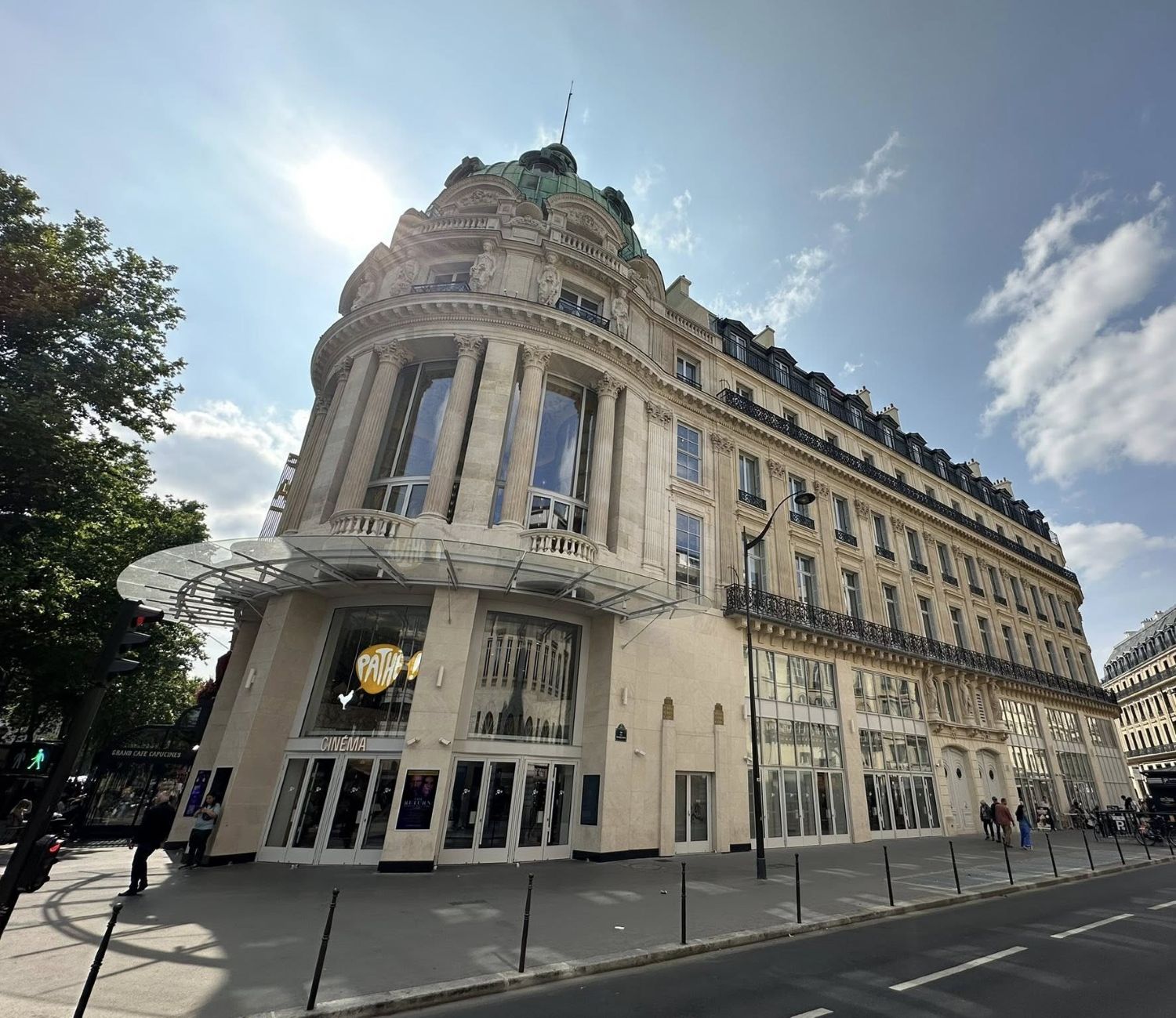
In March 1925, the Famous Players-Lasky Corporation, owner of Paramount Pictures, bought the Vaudeville Theatre in Paris. Construction of the “Paramount” began in October 1926. Initially planned in an Art Deco style, the facade took on the style of the old Vaudeville to fit in with the layout of the Opera district defined under Napoleon III. The Paramount cinema was inaugurated on November 24, 1927. The French subsidiary of Paramount Pictures moved into the top floors of the building in 1929. It will remain there until 2013. It will be renamed Gaumont in 2008 and will become, in 2024, the head office and reference cinema of the Pathé group. The Gaumont Opéra Capucines remained under the Gaumont brand until 2019. This was one did visit as was nearby my former job, The cinema will reopen its doors on July 10, 2024 under the new name, During WWII, a Resistance cell was founded in 1941 around André Ullmann, director of Paramount cinemas in France. In Paris, the Paramount staff mobilized fully. Allied airmen were hidden and slept in the cinema, which became a storage site for weapons and explosives for the Resistance. Resistance mail passed through the cinema and information was reported and typed by a clandestine agent who worked as an usher. Other employees hid members of the Allied troops in their homes. After the Liberation of Paris, Paramount Pictures regained control of the cinema and their French subsidiary reopened in September 1944.
The official Pathé on the Pathé Palace : https://www.pathe.fr/en/cinemas/cinema-pathe-palace
There you go folks, a dandy city to explore and enjoy with the family, Memorable moments in my eternal Paris, driving and walking all over in my road warrior trails brings out sublime awesome spots with nice memorable family visits of yesteryear always remember and always looking forward to be back, eventually. Again hope you enjoy the post on curiosities of Paris , part XLIII !!! as I.
And remember, happy travels, good health, and many cheers to all !!!

 Paris1972-Versailles2003