
We have driven and walked in my eternal Paris, and would like to have an imprint in my blog on the wonderful family times we had there, There is so much to see , doing my best, and glad found me these older pictures in my cd rom vault ,which now transposing in my blog for you and me, This was my former worked city, so glad to post more memorable spots on it, I thank you for your readership over the years and to bear with my rants! After Paris is to rant, shout and yelled about, me think. Therefore, here is my take on curiosities of Paris , part XXXVII !!! Hope you enjoy the post as I.
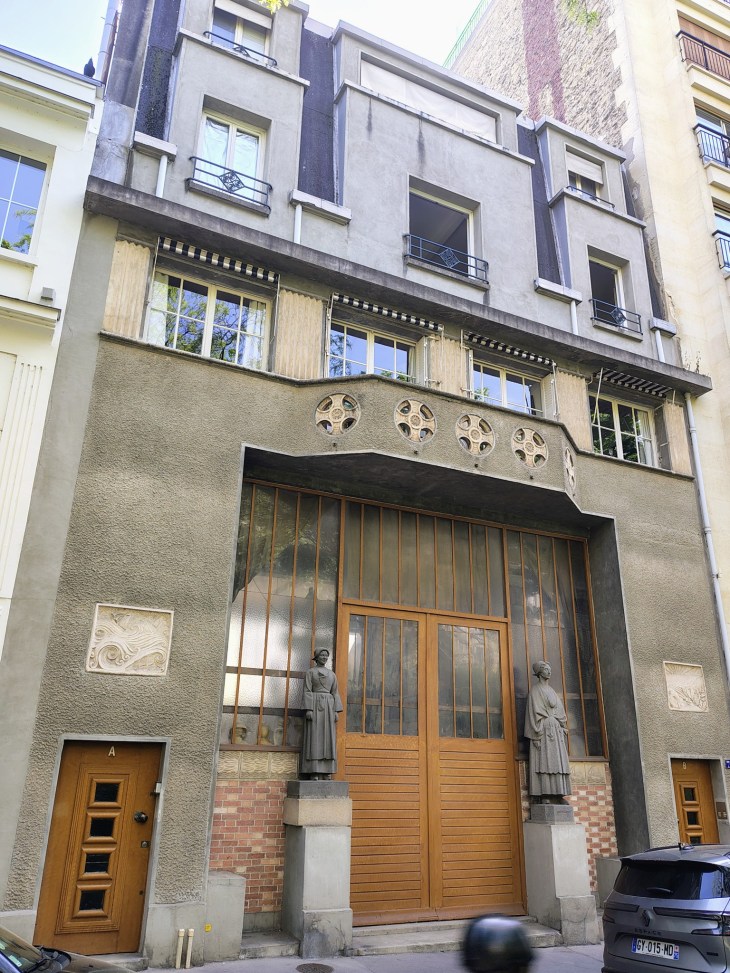
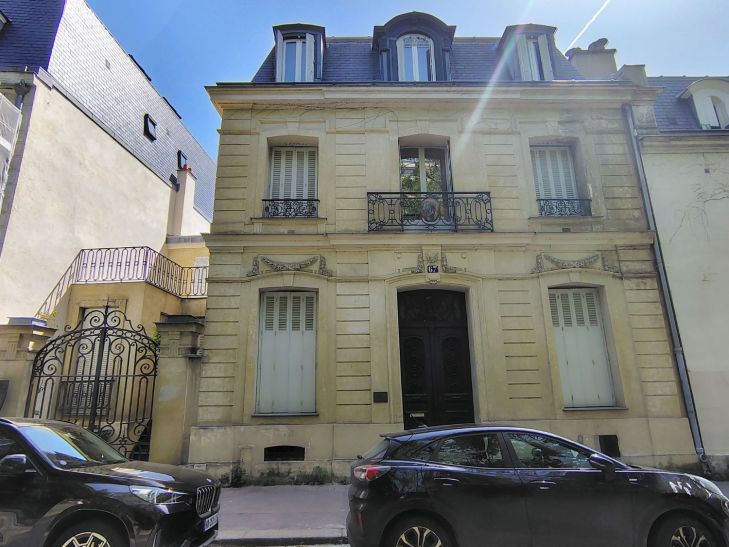
The Boulevard de Montmorency is a street in the 16éme arrondissement of Paris. Extending the Boulevard de Beauséjour, the Boulevard de Montmorency, 10.5 meters wide and 960 meters long, opens onto four other streets: the Rue de l’Assomption (at no, 93) at its beginning; the Rue Raffet; the Rue Poussin; and the Rue d’Auteuil (at no, 76) at its end. It is one-way from its beginning to its end. The street is mainly residential and has a few businesses towards the end, only on the odd-numbered side. It runs along the old tracks of the Auteuil train line, which has become, along this boulevard, a nature trail. Bd Montmorency takes its name from the House of Montmorency, an influential French noble family from the Middle Ages to the French revolution. You can access it mainly on metro line 10 at Porte d’Auteuil station. Originally, the Bois de Boulogne extended as far as the current boulevard. This street, from the former village of Auteuil, was created under its current name by a ministerial decree of March 18, 1853. It was classified as a Parisian street network by a decree of May 23, 1863. At the southern end of the current boulevard, which runs along the railway lines, stands the Auteuil-Boulogne train station. Decommissioned in 1985, they have been home to the Petite Ceinture du 16éme, a tree-lined promenade, since 2007. At the southern end, on the former site of the Auteuil train station, a pedestrian link was built in 2019 to Porte d’Auteuil, Boulevard Montmorency and Boulevard Suchet. 59 trees were planted: black locust, common pear, field maple, common hornbeam in particular, are represented there. Notable buildings here are at No. 37 HQ of EADS France SAS, a subsidiary of the European Aeronautic Defence and Space Company group , At No. 51: Hôtel de Noailles. It houses La Compagnie de l’Odet, a holding company of the Bolloré family that hails from Brittany, At No. 57: on this level was the Villa Molière, a clinic where the poet Guillaume Apollinaire was trepanned in 1916. He returned in 1918, due to pulmonary congestion, At No. 67: (see pic) it was here, at the former No. 53, that the attic of Edmond and Jules de Goncourt was installed on the second floor, which was frequented by a large number of writers and artists such as Émile Zola, Alphonse Daudet, Guy de Maupassant, Joris-Karl Huysmans, Jules Janin, Henry Murger, Roger de Beauvoir and Théophile Gautier. The brothers moved here in 1868, arriving from 43, rue Saint-Georges. Jules died there in 1870. In 1932, the city of Paris became the owner of the house and then in 1938 transferred it to the Goncourt Academy, At No. 73: (see pic) this house with its two beautiful statues at the entrance was built for René Quilivic (an engraver, medalist and sculptor) in 1925. It was then the studio of his son, the engraver René Quillivic, his son Armel Quillivic and his wife, the Japanese painter Kiyoko. The entrance is flanked by two statues: Woman from Ploaré and Woman from Audierne. The door handles are women’s heads, Opposite at No. 75 is the south entrance to the Petite Ceinture of the 16éme, which runs along the entire boulevard on the odd-numbered side. On its southern perimeter, the odd-numbered side of Boulevard de Montmorency marks the boundary of Villa Montmorency. There are two secondary entrances to this gated residence, at nos. 53 Avenue des Tilleuls, and 93 Avenue des Sycomores and Avenue des Peupliers.
The Paris tourist office on the 16éme arrondissement de Paris : https://parisjetaime.com/eng/article/a-la-decouverte-du-16e-arrondissement-de-paris-a830
The Paris tourist office on the Petite Ceinture : https://parisjetaime.com/eng/article/the-petite-ceinture-circular-railway-unusual-and-little-known-paris-a1779
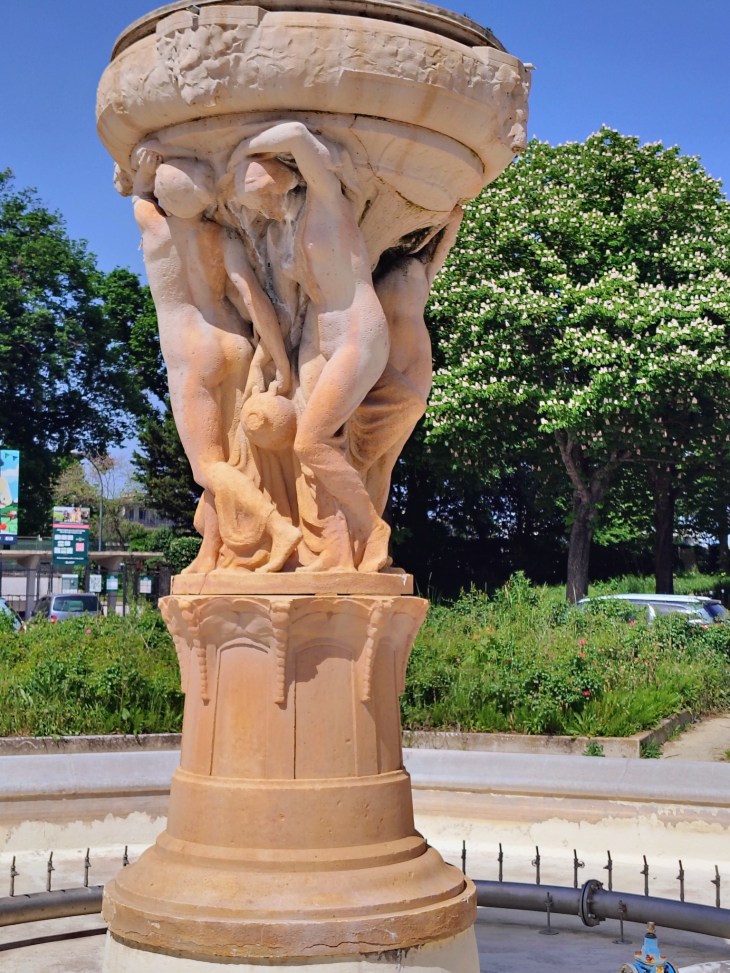
The fontaine de l’Amour aka fontaine de la porte d’Auteuil or L’éveil à la vie or the Fountain of Love, or the Fountain of the Porte d’Auteuil, or the Awakening to Life, is a fountain located on the Place de la Porte-d’Auteuil, at the Porte d’Auteuil, in the 16éme arrondissement of Paris. The fountain was built in 1926, with its central sculpture by Raoul Lamourdedieu. It is in the Art Deco style. The fountain consists of an octagonal basin, decorated in its center with a yellow stone statue representing four young girls supporting the basin from which the water issues. This site is served by the metro Porte d’Auteuil station of line 10. The Place de la Porte d’Auteuil was built in 1928 on the site of the Thiers wall on the edge of the Bois de Boulogne. The square is decorated with the Art Deco style Fountain of Love by Raoul Lamourdedieu, built in 1926.
The Paris tourist office on the village of Auteuil : https://parisjetaime.com/transport/village-d-auteuil-p2030
The Paris tourist office on the 16éme arrondissement de Paris : https://parisjetaime.com/eng/article/a-la-decouverte-du-16e-arrondissement-de-paris-a830
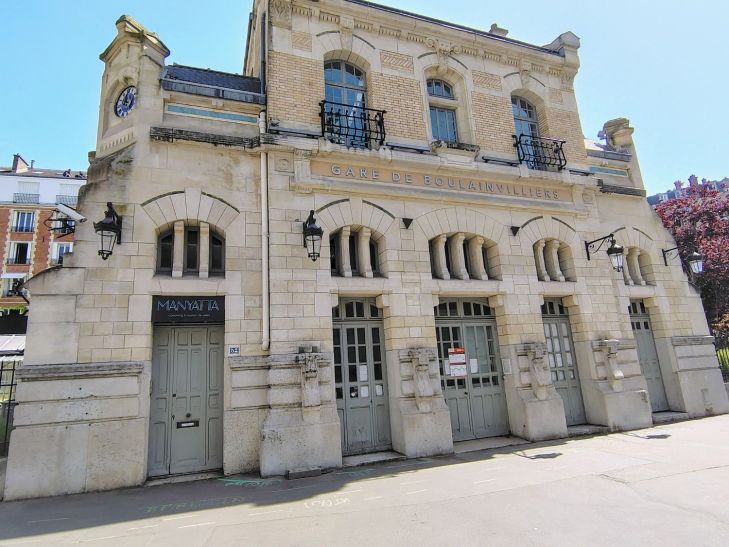
The gare de Boulainvilliers train station is a station on the Ermont-Eaubonne to Champ-de-Mars line, located in the 16éme arrondissement of Paris, on the eponymous street. The station is part of the “Boulainvilliers connection” commissioned in April 1900, before the start of the Universal Exhibition. It then allowed trains to run between Saint-Lazare and Champ de Mars stations via the Auteuil line to Trocadéro station, now Avenue Henri-Martin station. In the late 1970s, it was integrated into the Vallée de Montmorency – Invalides (VMI) branch of the RER C; the Boulainvilliers station, renovated from 1986 onwards, was covered by a slab. The new line was put into service in 1988. The station has a direct connection with the La Muette station on metro line 9, accessible via an underground passage. The station has two pedestrian entrances on rue de Boulainvilliers, on either side of the central building, as well as another villa des Guignières. On January 23, 2020, a statue of René Goscinny was inaugurated in the station garden, laid out on the slab. The comic book writer lived nearby, on rue de Boulainvilliers.
The official Transilien transports of Paris region on the Gare de Boulainvilliers : https://www.transilien.com/fr/gare/boulainvilliers-8754318
The Paris tourist office on the 16éme arrondissement de Paris : https://parisjetaime.com/eng/article/a-la-decouverte-du-16e-arrondissement-de-paris-a830
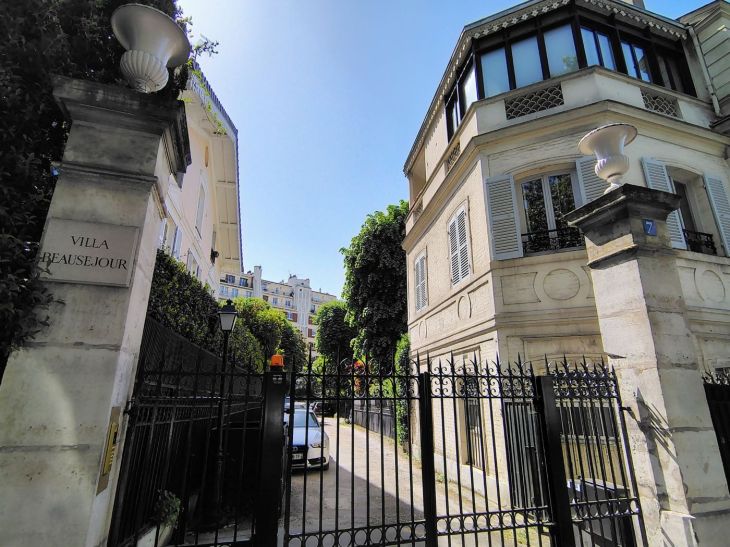
The Villa de Beauséjour is a street in the 16éme arrondissement of Paris. It is a private street. It begins at 7 Boulevard de Beauséjour and ends in a cul-de-sac. This street owes its name to its proximity to Boulevard de Beauséjour. The neighborhood is served by metro Line 9, at the La Muette station. The Boulainvilliers station on Line RER C is located nearby. The Villa de Beauséjour was created in 1856, shortly after the opening of the Auteuil Railway and Boulevard de Beauséjour on part of the former Parc de Beauséjour, by a company formed by the music publisher Heugel and two other owners. Notable Buildings and anecdotes are the novelist Paul Margueritte lived here. The publisher Jean-Quentin Gérard, who would go on to become a singer under the pseudonym Laroche Valmont, lived in the mansion at the entrance to the road, which was later taken over in 1977 by Julien Clerc and Miou-Miou. The singing couple Michel Berger and France Gall lived there. In 1976, he hosted Fabienne Thibeault, (a Canadian singer-songwriter from Quebec, naturalized French) who arrived in France after being hired for the Starmania project. (a Franco-Quebec rock opera composed by Michel Berger with a libretto by Luc Plamondon.) The title of Michel Berger’s 5th album, entitled Beauséjour, refers to the villa. Group of isbas from the 1867 Universal Exhibition, are in the heart of the Villa Beauséjour that we find curious houses that seem to come straight from Russia! Indeed, at the end of the 19C, Paris was fascinated by Russian culture, and we began to see small wooden pavilions typical of the country appear during the Universal Exhibition of 1867. These are called “isbas”.
The Paris tourist office on the 16éme arrondissement de Paris : https://parisjetaime.com/eng/article/a-la-decouverte-du-16e-arrondissement-de-paris-a830
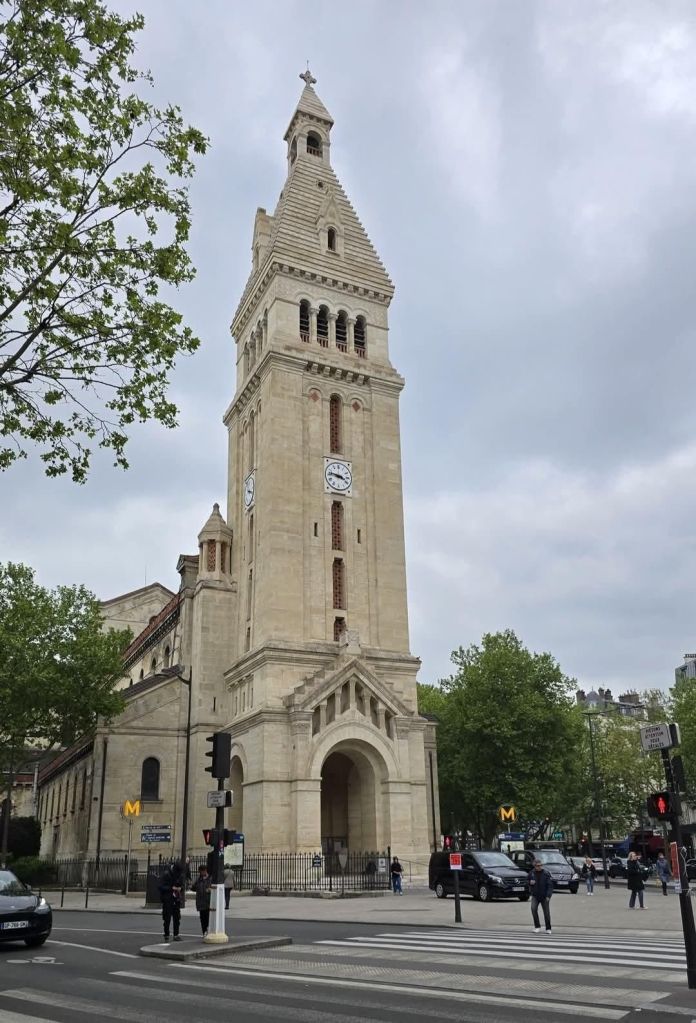
The Church Saint Pierre de Montrouge at 82, avenue du Général-Leclerc in the 14éme arrondissement or district of Paris , and quartier or neighborhood Petit-Montrouge. The church belongs to the neo-Romanesque style and was built as part of Haussmann’s works, from 1863, at the crossroads known as Quatre-Chemins, formed by the meeting of the avenues du Maine, de Châtillon, de Montrouge and the route d’Orléans. It now occupies a triangular plot of land framed by the avenue du Maine and the avenue du Général-Leclerc, and its bell tower overlooks the central crossroads of the neighborhood, the place Victor-et-Hélène-Basch. It is the noisiest church in Paris. This site is served by the metro line 4 Alésia station. Following a royal ordinance, the first Saint-Pierre-de-Montrouge Church was inaugurated in December 1847, at the corner of Rue d’Amboise (now Rue Thibaud) and Passage Rimbaud. The current Saint-Pierre-de-Montrouge Church, built between 1863 and 1869, was begun as part of Haussmann’s renovations and, more specifically, the development of the new Petit-Montrouge district, which had been created from a former outbuilding in the village of Montrouge, annexed to Paris in 1860. The entrance is flanked to the west by the baptismal font and to the east by the statue of Saint Peter with Jesus’ famous words: “Tu es Petrus et super hanc petram ædificabo ecclesiam meam” (“You are Peter and I am this rock ,I will build my church”). The domes depict Jesus Christ in the axial chapel, flanked by his father Saint Joseph in the east wing of the transept and his beloved disciple Saint John in the west wing. In the other four corners of the transept crossing are statues: on the east side, two saints from French history: Saint Louis and Saint Joan of Arc, on the west side, two saints from Parisian history: Saint Denis, the first bishop of Lutetia and martyr, and Saint Genevieve, who repeatedly galvanized Parisians during invasions, notably that of the Huns led by Attila.
The official parrish Church Saint Pierre de Montrouge : https://www.saintpierredemontrouge.fr/
The Paris tourist office on the 14éme arrondissement de Paris : https://parisjetaime.com/eng/article/explore-paris-s-14th-arrondissement-a836
There you go folks, a dandy city to explore and enjoy with the family, Memorable moments in my eternal Paris,driving and walking all over in my road warrior trails brings out sublime awesome spots with nice memorable family visits of yesteryear always remember and always looking forward to be back, eventually. Again hope you enjoy the post on curiosities of Paris, part XXXVII !!! as I.
And remember, happy travels, good health, and many cheers to all !!!

 Paris1972-Versailles2003