
I am again to tell you about more streets of my eternal Paris. I have many many posts on Paris and several on the streets of the most beautiful city in the world. I have come up with pictures from cd rom vault that should be here for you and me. As always thank you for following my blog some since 2010. Therefore, here is my take on the streets of Paris, part XVII !!! Hope you enjoy it as I.
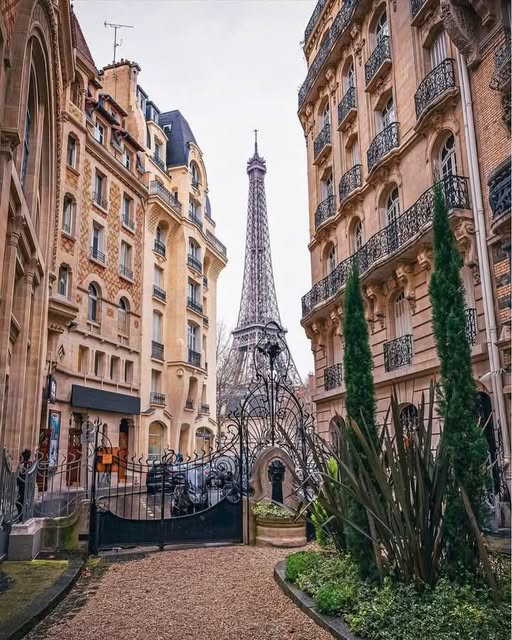
The square Rapp is in the Gros Caillou neighborhood or quartier of the 7 éme arrondissement or district of Paris. It begins between 33 and 35 Avenue Rapp and ends in a dead end about fifty meters further on. It forms a bend roughly in the middle. See the Tour Eiffel (see pic) Only four buildings overlook the road. The far end of the square, behind a gate that makes the road private, is formed by the blind facade of 10 Rue Sédillot. This square is named after the French general Jean Rapp, due to its proximity to the eponymous avenue. Previously known as the “Villa de Monttessuy,” the square took its current name and was then classified as a Paris street by a municipal decree of April 29, 1997. This site is mainly served by RER line C, at the Pont de l’Alma station. Notable Buildings are at No. 3: Art Nouveau building built by architect Jules Lavirotte in 1899, commissioned by the Countess of Monttessuy. She lived on the first floor, while the architect and his wife occupied the duplex on the top floor. No. 4: Theosophical Society building (see 2nd pic) a Masonic lodge that houses the offices of the Theosophical Society, a spiritualist association founded in the United States in 1875 and which experienced significant growth in Europe at the beginning of the 20C, as well as the Costa Rican Embassy in France on the 4th floor. Adyar Publishing, which publishes the monthly magazine Le Lotus Bleu (The Blue Lotus), also has its headquarters in the building. The amphitheater seats 450. Eclectic in style, the building borrows its ogee arches and turret from the Troubadour style, its floral motifs and bay windows from Art Nouveau, and its geometric forms from Art Deco. During the Nazi occupationin WWII, the building housed the SSAD (Security Service for Defense Administration). The archives of the Theosophical Society, kept there, were looted by the nazis; some were returned by Russia in the 2000s. Also, the Eiffel Tower Theatre dating from 1907, purchased in 2016 by comedian Christelle Chollet.

The Paris tourist office on the 7éme arrondissement : https://parisjetaime.com/eng/article/explore-paris-s-7th-arrondissement-a825
The Rue Madame-de-Sévigné is located in the 3éme and 4éme arrondissements of Paris Centre. The boundary between the two arrondissements is marked by Rue des Francs-Bourgeois. It is 386 meters long, and it begins at 2 Rue de Rivoli and 100 Rue Saint-Antoine and ends at 3 Rue du Parc-Royal. It is one-way, running south-north, starting from Rue de Rivoli. See at end the Parrish Church Saint-Paul Saint-Louis (see photo). Its name comes from Madame Marie de Rabutin-Chantal, Marquise de Sévigné, born in the Hôtel Coulanges, the home of her maternal grandparents, at No. 1 bis Place Royale (currently between 1 bis Place des Vosges and 11 bis Rue de Birague) who lived in the Hôtel Carnavalet from 1677 until her death in 1696 but buried at the Château de Grignan (Drôme 26) . The nearest metro stations are Saint-Paul on line 1, and Chemin Vert, served by line 8. The street is a grouping under a single name of two former streets: “Rue de la Culture Sainte-Catherine” or “Rue de la Couture Sainte-Catherine,” and “Rue du Val,” the supposed former name of the section between Rue des Francs-Bourgeois and Rue du Parc-Royal. The street was opened in 1545 as an extension of a cul-de-sac located on the rampart walk of Philippe Auguste’s wall, which served the Sainte-Catherine church. The nearby Place du Marché-Sainte-Catherine preserves the memory of the Sainte-Catherine-du-Val-des-Écoliers convent, demolished between 1773 and 1777. By resolution of the Paris Council of December 15, 2023, rue de Sévigné becomes rue Madame de Sévigné.
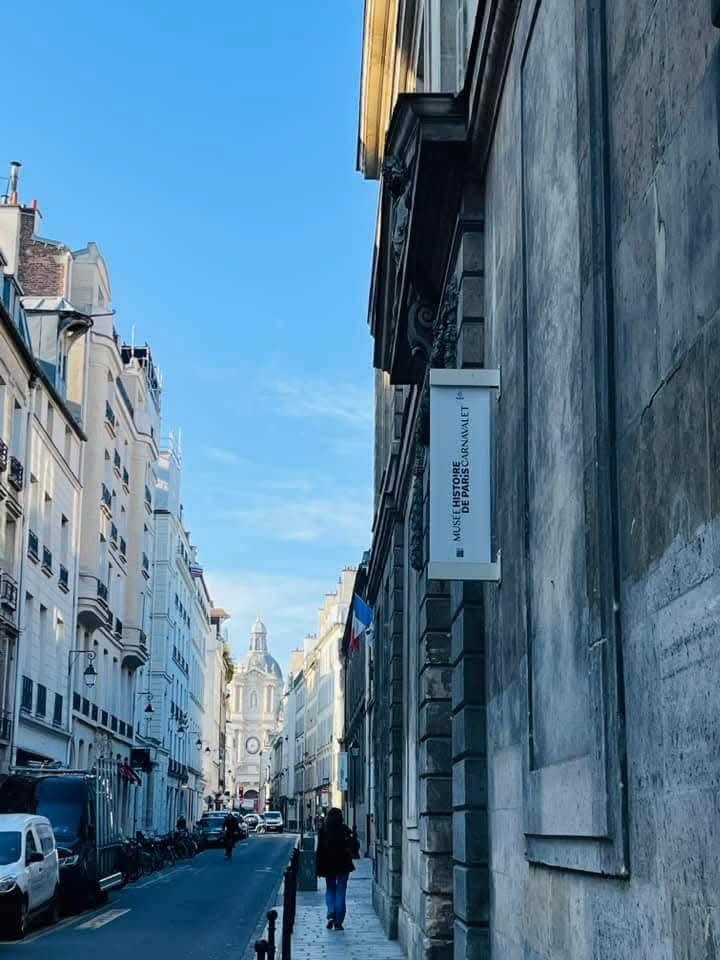
The notable buildings on the street are at Nos. 1 to 7: the Philippe Auguste enclosure wall follows the interior facade of the houses, No. 7: Hôtel de Chavigny, former Hôtel d’Évreux (which also occupied No. 9) then Hôtel Poulletier. In the cellars of No. 7, remains of a tower of the Philippe Auguste enclosure wall; today a fire station. No. 11: the Théâtre du Marais, in which Beaumarchais had his plays performed. It closed in 1807. The premises were used for funeral services until 1816. The buildings were partially razed and transformed into a bathhouse. Only the facade, still visible, is preserved , At No. 13: on the site of the barn of the Sainte-Catherine-du-Val-des-Écoliers convent was built the Poulletier hotel, acquired by Léon Bouthillier de Chavigny at the same time as his hotel at no. 7. To the right, in the courtyard, the old orangery of the Chavigny hotel remains , At No. 23 Musée Carnavalet museum on the history of Paris.(see photo and post) , At No. 26: the painter André Masson lived at this address from 1964 until his death in 1987. No. 27 Lycée Victor-Hugo high school, built in 1893. At no. 29 was the Jauffret institution. No. 30: old house. André Pieyre de Mandiargues lived at this address from 1967 until his death in 1991. No. 38: the poet André Chénier lived in this house from 1774 to 1787. He mentions his room in La République des Lettres. Nos. 46-48: former Hôtel de Neaulieu, fine arts workshop of the city of Paris, Sévigné annex, see its Charity fountain. No. 52: site of the Hôtel de Flesselles, where Jacques de Flesselles, the last of the provosts of the merchants of Paris, resided. The portal of the old hotel destroyed in 1908 was reconstructed at the entrance of the building constructed in 1968. Places of memory : On June 13, 1392, Constable Olivier de Clisson was attacked by Pierre de Craon at the entrance to Rue Culture-Sainte-Catherine. Seriously injured, he survived. At the corner of the street and that of Saint-Antoine there is a statue of Saint Catherine.
The Paris tourist office on the Paris Centre (arrond 1-4) : https://parisjetaime.com/eng/article/explore-the-centre-of-paris-a846
The official Musée Carnavalet : https://www.carnavalet.paris.fr/en
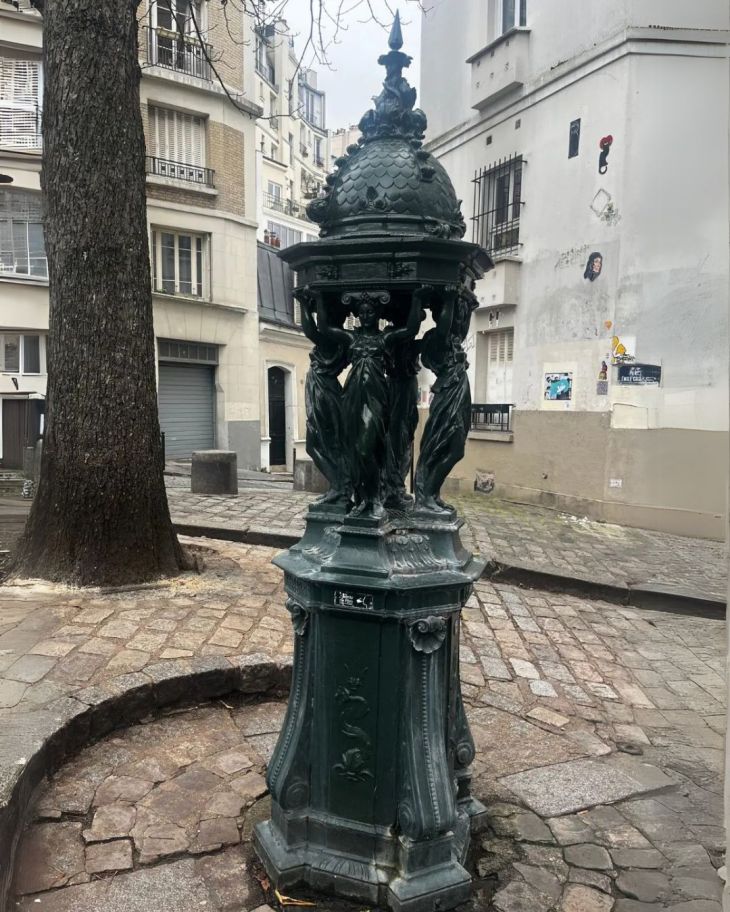
The rue Ravignan is located in the 18éme arrondissement of Paris, it is one of the oldest on the Butte Montmartre. It is named after the Jesuit Father Xavier de Ravignan, who gave the Lenten Lectures at Notre-Dame from 1837 to 1846. This site is served by the Abbesses metro station on line 12. The street originates from a 14C path, the “Sacalie Path,” named after a locality, which led from Paris to the village of Montmartre. Having become passable, it saw such heavy traffic that it had to be paved in 1646, then repaved again and widened in 1675. At the time of the French revolution, it was already called the “Vieux-Chemin”, then the “rue du Vieux-Chemin-de-Paris”. It received its current name around 1867. Napoleon I decided one day in 1809 to go to the top of the hill to see the Chappe telegraph which was installed on the apse of the Saint-Pierre de Montmartre Church. To do this, he took the “Vieux-Chemin”, now rue Ravignan. It was in very poor condition. The Emperor had to dismount at the height of the current Place Émile-Goudeau. After tying up his mount, he continued his ascent on foot. Received at the church by the priest, the latter did not fail to point out to him that it would be useful to double the “Old Road” by a good road passable in all weather and with a less steep slope. The Emperor promised to give him satisfaction. He would create the Rue Lepic which climbs the hill in switchbacks ,Here you see a wonderful Wallace fountain (see photo) ,the first one was installed in 1872 on Boulevard de la Villette. Designed as true works of art, the Wallace fountains are adorned with four caryatids, each of them representing an allegory: Simplicity, Goodness, Sobriety and Charity. Today, 107 can be admired in the streets of Paris. The fountains function as they did on the first day and provide drinking water to tourists and Parisians. The remarkable buildings The writer Max Jacob lived at no, 7 around 1906. It was there that he saw, on the afternoon of September 22, 1909, the image of Christ appear to him on a wall, which was the first step in his conversion to Catholicism. At no, 13, Edmond-Marie Poullain, painter and engraver, stayed above the Bateau-Lavoir. At no, 13 ter is built on the site of the former Tivoli where the writer and humanist Alphonse Karr lived until the coup d’état of Napoleon III in 1851. At no, 15, the actors Pierre Fresnay and Rachel Berendt resided from 1917, then from 1923 until 1938 the pianist Arthur Rubinstein,
The Paris tourist office on the 18éme arrondissement : https://parisjetaime.com/eng/article/explore-paris-s-18th-arrondissement-a832
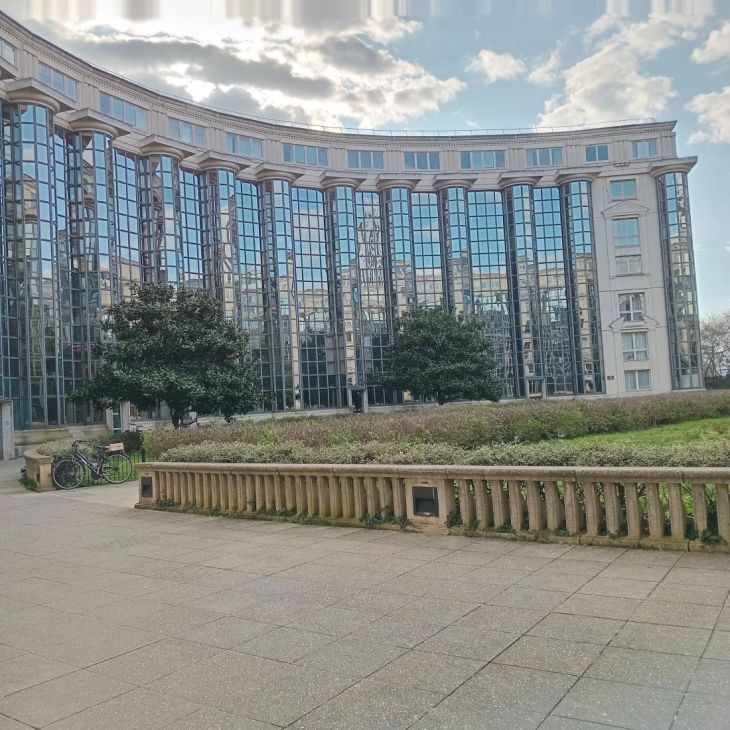
The jardin des Colonnes – Ricardo-Bofill is a green space in the 14éme arrondissement of Paris, in the Plaisance quartier or neighborhood. The garden is accessible from 5, place de l’Abbé-Jean-Lebeuf. It is served by line 13 at the Pernety metro station. The garden was created in 1986 under the name Jardin des Colonnes. On October 13, 2022, the name of the architect Ricardo Bofill was added to the name of the green space.
The Paris tourist office on the 14éme arrondissement : https://parisjetaime.com/eng/article/explore-paris-s-14th-arrondissement-a836
There you go folks, another dandy beautiful set of glorious streets of my eternal Paris. I have criss cross them many and have many in my blog already, Again, hope you enjoy this post on the streets of Paris, part XVII !!! as I.
And remember happy travels, good health, and many cheers to all !!!

 Paris1972-Versailles2003