
I told you how much I have walked all over Paris and that I worked in it for 9 + years while living just next door in Versailles! Well, I have, also told you that there is so many things to see here that you will need a lifetime. This is another wonderful monument on the off the beaten path and glad to have it in my blog for you and me ; after finding me some pictures in my cd rom vault, There is always time to indulge in Paris. Therefore, let me tell you a bit on the Church Saint Ambroise of Paris !!! Hope you enjoy the post as I.
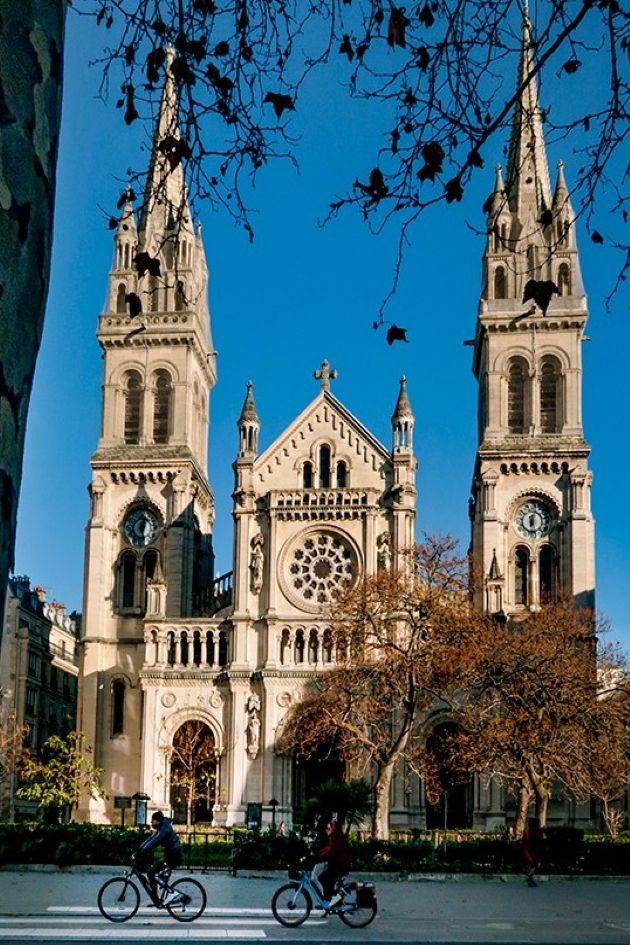
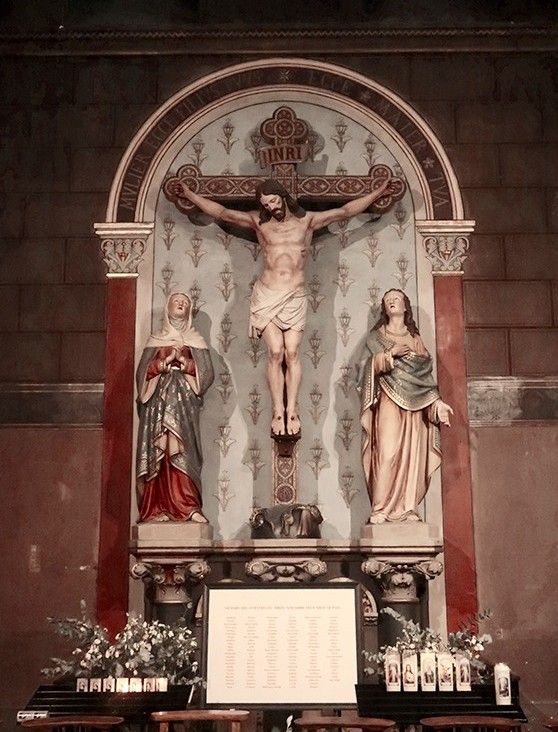
The Church Saint-Ambroise is located in the quartier Saint-Ambroise , the 42nd neighborhood in the 11éme arrondissement or district of Paris. It gave its name to the Saint-Ambroise neighborhood. The site is served by the Saint-Ambroise metro station of line 9, The Church Saint-Ambroise was built in a hybrid and eclectic style, sometimes called the “Second Empire style”, which combines neo-Romanesque with some elements of neo-Gothic. The church is 87 meters long and 37 meters wide at the transept, has two identical bell towers 68 meters high, ending in an iron cross surmounted by a weather vane in the shape of a rooster. The porch has three entrance doors each with a neo-Byzantine style enameled lava painting on its tympanum. Below the wonderful Chapelle du Souvenir or Chapelle du Calvaire (Chapel of Remembrance or Chapel of Calvary).
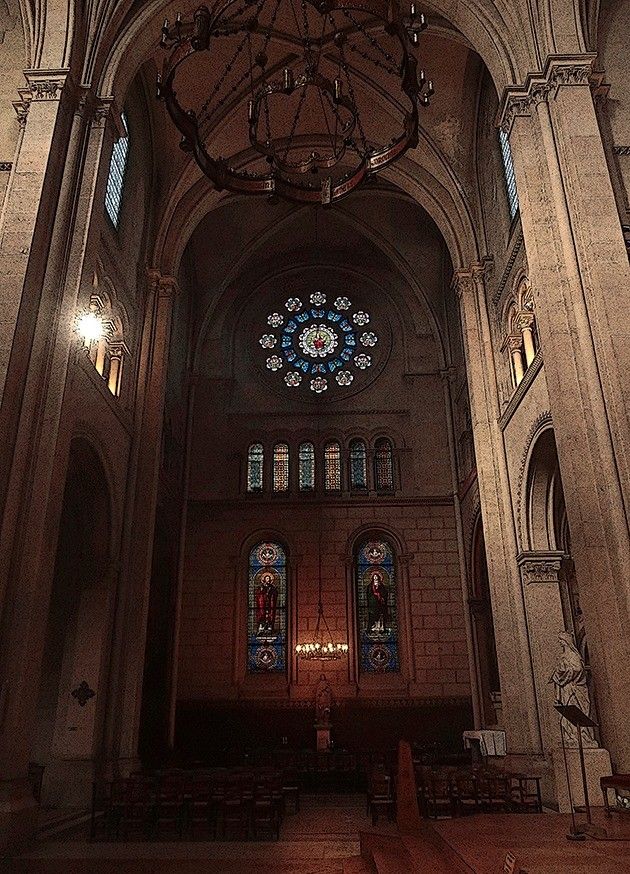
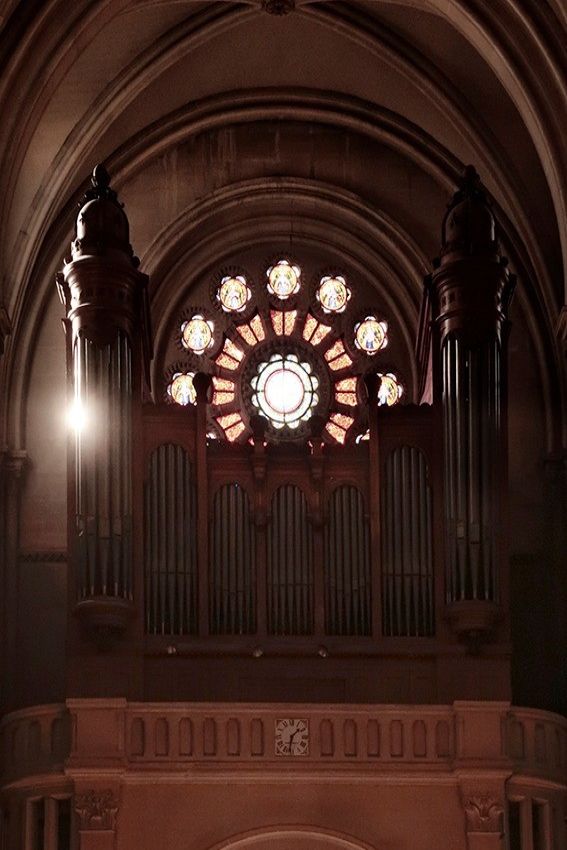
The 20 meters high nave includes a triforium opened by a series of triplets of bays with semi-circular arcades. The vaults are mounted on semi-circular ribbed vaults. These vaults are typical of Norman Romanesque art. The church’s furnishings and works of art includes the L’Espérance and La Foi, stone statues of 1829, works that have disappeared; L’Immaculée Conception presented at the Salon of 1824. The baptismal font is made of white marble. It is supported by eight red marble columns. The cover was surmounted by a cross with the Mystic Lamb, which has disappeared. In the left transept is the Chapel of Saint Augustine, with two wall paintings: on the altar side Saint Augustine reconciling the Catholics and the Donatists at the Council of Carthage, opposite Saint Augustine putting an end to the barbaric custom of fighting between relatives to practice war. In the right transept is the Chapel of Saint Ambrose, on the altar side Saint Ambrose forbidding the Emperor Theodosius from entering the church of Milan, opposite Saint Ambrose delivering the sacred vessels of his church to ransom prisoners. All painted by Jules Lenepveu The stained glass windows were made in 1868 , The great gallery organ was built in 1869. There is also a choir organ, located behind the altar, The three bells are located in the right tower, under a wooden frame ; baptized under the names of Saint Eugenie, Saint Mary and Saint Catherine. Below the Chapelle Saint-Ambroise.
A bit of history tell us that a first chapel was built in 1659 by the nuns of the Annonciades convent of Popincourt, who had been based on Rue Popincourt since 1636. The nuns left the convent in 1782 and two streets were laid out on the site of their convent in 1783 (Rue Saint-Ambroise and Rue de Beauharnais, which was closed in 1818). Having become a national asset during the French revolution, the chapel was sold on 21 May 1797. However, it became a branch of the Sainte-Marguerite parish in 1802. Purchased by the City of Paris on 31 August 1811, it was restored and enlarged. It was blessed on 15 November 1812. It was destroyed when Boulevard du Prince Eugène was built, renamed Boulevard Voltaire in 1870. The Place Saint-Ambroise square was built on its site.
The new Church Saint Ambroise located at 71, boulevard Voltaire,was built from 1863 to 1868, shortly after the opening of the “boulevard du Prince-Eugène” former name of the boulevard Voltaire. The first service took place on March 21, 1869. The blessing of the bells took place on April 29 in the presence of Empress Eugénie, who was the godmother of one of them. Its style is a mixture of neo-Gothic, neo-Romanesque and neo-Byzantine, very fashionable at that time, especially in Paris. Its two slender spires are reminiscent of those of certain cathedrals. During the Commune in 1871, without preventing worship, the church was the headquarters of the Ambroise Club, known as the Proletarians’ Club, which included feminist speakers. This club published the newspaper Le Prolétaire. From May 23, 1871, it became a powder factory (ammunition and gunpowder). The church was consecrated on December 7, 1910.
The Life of Saint Ambrose (339-397). Ambrose was a literature student in Rome, then became a lawyer. He showed such brilliance in the praetorium that the emperor Valentinian sent him to govern the provinces of Liguria and Emilia. He arrived in Milan, in the midst of a popular quarrel: Catholics and Arians were tearing each other apart to elect a new bishop. Ambrose intervened and restored calm, but the crowd then chose him for the episcopal seat. He then discovered Jesus Christ. He was still only a catechumen when, passing through the city, he was elected bishop by acclamation of the people. He was then immediately baptized, ordained a priest, and consecrated bishop in a short time. Known as Ambrose of Milan he died on the night of Good Friday with his arms crossed, expressing in this attitude his mystical participation in the death and resurrection of the Lord. This was his final catechesis. Without words and in the silence of gestures he continued to bear witness.
The official parish Saint Ambroise on the Church Saint Ambroise : https://saint-ambroise.com/saint-ambroise-et-son-histoire/
The City of Paris on the Church Saint Ambroise : https://www.paris.fr/lieux/eglise-saint-ambroise-19504
The Paris tourist office on the 11éme arrondissement walks and sights : https://parisjetaime.com/eng/article/an-unusual-walk-in-the-east-of-the-11th-a791
There you go folks, another nice find in my eternal Paris, often overlook and totally bypassed by visitors is always amazing to find these gems. Glad to have it in my blog for you and me, Again, hope you enjoy this post on the Church Saint Ambroise of Paris !!! as I.
And remember, happy travels, good health, and many cheers to all !!!

 Paris1972-Versailles2003