
Let me get back to this older post and give it a new update with new text and links for you and me, This was a special spot for me as worked for over 2 years just diagonally from it and the Jardin des Tuileries was leisure time and snacks place, Even if so close only been inside once on a lunch break, it goes on like this for this road warrior. I like to tell you more of this wonderful institution,that is the Musée de l’Orangerie of Paris !!! Hope you enjoy the post as I.
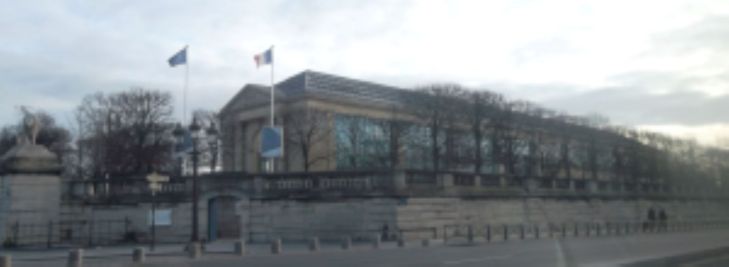
The Musée de l’Orangerie is a museum of impressionists and post-impressionists paintings located inside the jardin des Tuileries at the western end of the terrace bordering the Seine river to the Place de la Concorde. The museum is located in the old Orangerie of the Palais des Tuileries (gone see post). The museum is officially call the public establishment of the museum of Orsay and Orangerie Valéry Giscard d’Estaing since 2021, In addition to the famous cycle of Nymphéas, eight great paintings by Claude Monet that cover the walls of two large oval halls, the museum presents works by Pierre-Auguste Renoir, Alfred Sisley, Claude Monet, Paul Cézanne, Henri Matisse, Pablo Picasso, Amedeo Modigliani, Le Douanier Rousseau, André Derain, Chaïm Soutine, Marie Laurencin, Maurice Utrillo, Paul Gauguin and Kees van Dongen. Let you wandered through the museum for the exhibitions permanent and temporary.
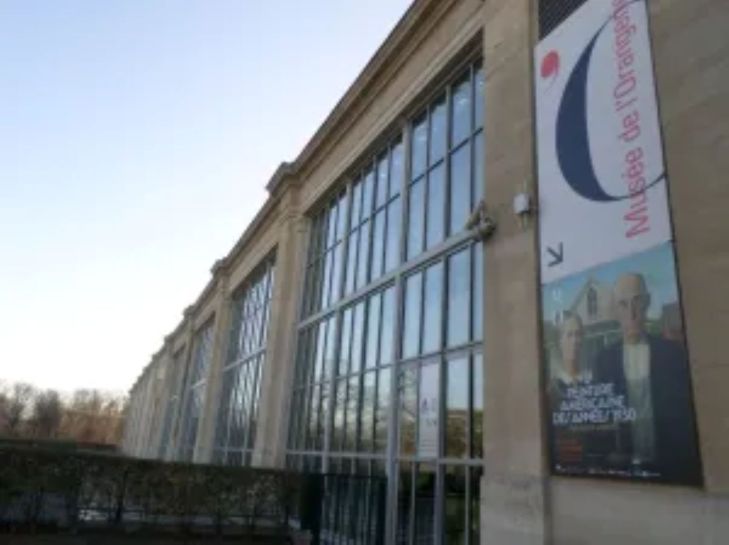
You entered thru a hallway and reach the petit rotonde or small circle ,you have temporary exhibitions and the Monet collection, Lower level you have a boutique and a caféteria, Lower level 2 you have the Paul Guillaume collection and other painter’s collection as well as more temporary exhibitions, More in details, you have on the ground floor: vestibule, and Monet 1 and 2 rooms: the Nymphéas, On the lower ground floor you have the vestibule de Derain, interiors’ room of the apartment of Paul Guillaume, room Paul Guillaume d’Art African and works sold by his widow, Renoir room and historical models of the Orangery, room of Cézanne, Soutine room (still lifes), Picasso and Matisse room, Modigliani room, Marie Laurencin and Derain, Douanier Rousseau room Utrillo room, Soutine room (landscapes and portraits), temporary exhibition halls, auditorium (projection room), educational workshops. There is ,also, a library, boutique, and snack cafe inside.
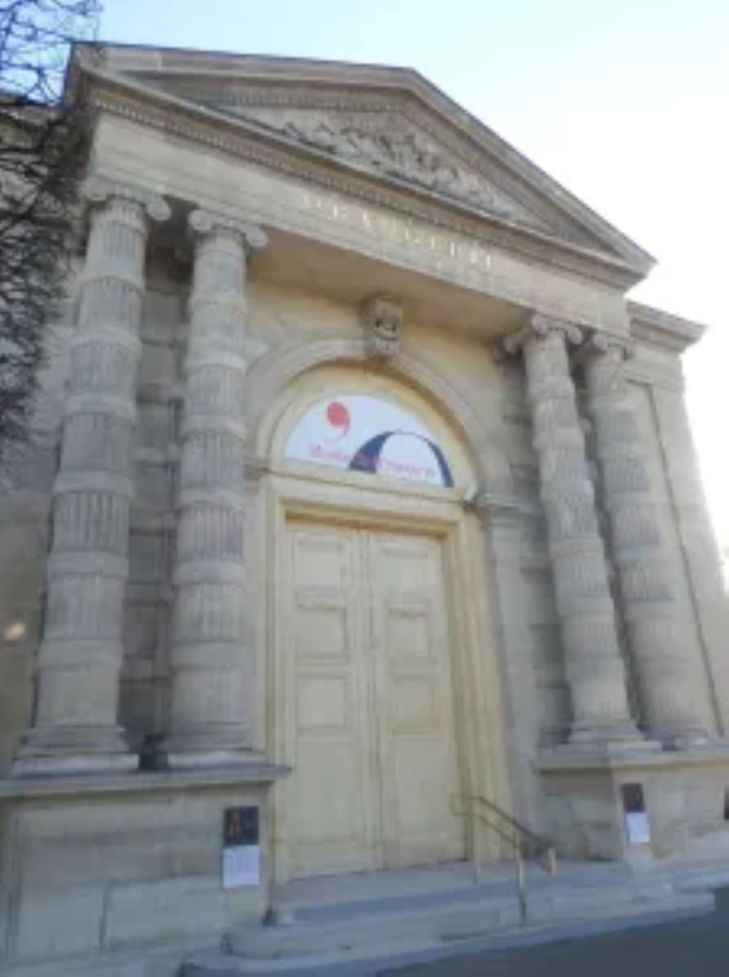
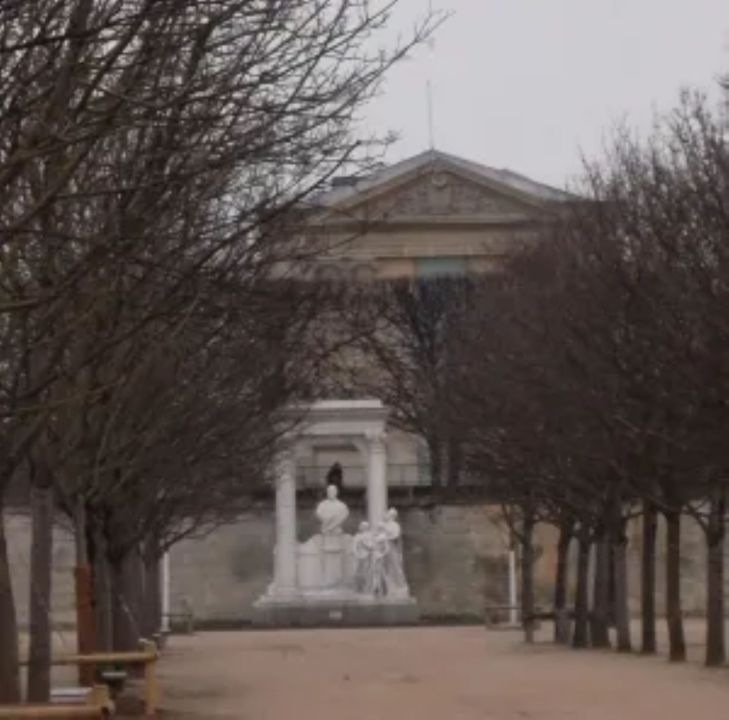
Around the building, several sculptures are exhibited. Along the north façade that runs along the Jardin desTuileries, it is the Great White Commander (1986) of the sculptor Alain Kirili as well as three bronze casts of Rodin: Eve (1881 and cast in 1889), Meditation with arms (1881 and cast towards 1905) and The Shadow (1881 and cast by 1904). A fourth work by Rodin, a cast of the Kisser, takes place in front of the museum’s entrance to the west. On the other side of the museum are Henry Moore’s Reclining Nude (1951) sculptures, located at the foot of the staircase, and a cast from the Lion to the Serpent by Antoine-Louis Barye; Located on the terrace on the banks of the Seine.
Of course, I came here walking and by car with fav parking place de la Concorde corner with avenue Gabriel, Also parking Pyramides at 15 rue des Pyramides or parking Carrousel du Louvre reach it by avenue du Général Lemonnier, Also, on Métro Concorde on lines, 1, 8, and 12 , Bus lines 42, 45, 52, 72, 73, 84, or 94, arrêt/stop Concorde, There, is also a Vélib bike station at Cambon-Rivoli no 1020, and a taxi stand on 252 rue de Rivoli.
A bit of history I like tell us that on the terrace of the Tuileries, at the location of the Orangerie, was in the 17C the restaurant Renard, named after a former valet of the House of Commander Jacques de Souvré who has set up a chalet where there are small discreet rooms adorned with tapestries and of paintings where the nobility of this time loves to meet. Built in 1852, to house the orange trees of the Tuileries garden during the winter. Conceived as a greenhouse, its southern façade, overlooking the river, was enclosed in glass in order to receive sunlight, while the north façade is covered, to protect the orange trees from the northern winds. It was in this orangery that, in 1865, the Imperial Prince for the sculptor Carpeux set up his workshop to carry out the portrait of the young son of Napoleon III, accompanied by his dog Nero.
In 1921, the Orangerie was assigned to the Under-Secretary of State for Fine Arts. It has the vocation to expose living artists. But the Orangerie is chosen by Claude Monet to host the cycle of Nymphéas that the painter has just given to the State. Until 1927, the date of its inauguration, which took place only six months after the death of Claude Monet, and in the presence of Georges Clemenceau. The orange trees were removed; a staircase and a floor are built to access the exhibition halls. Eight panels of two meters high and a total length of 91 meters are thus exposed in two oval rooms, forming the sign of Infinity, and oriented east-west, thus registering in the historical axis of Paris as well as in the direction of the stroke of the sun. The lighting of these rooms is made by canopies, according to the will of the painter who wanted to plunge the visitor into a state of grace. Until then attached to the Luxembourg Museum, (see post) the Orangerie museum was attached to that of the Louvre (see post) in 1930.
After the liberation, in 1945, the Orangerie as well as the Paume (see post) form a single entity that is attached to the department of paintings of the Louvre. In 1946, the masterpieces of the collections of French paintings seized or sold under duress to the Nazis and found in Germany by the Commission of Artistic Recovery with the help of the Monuments, Fine Arts, and American program Archives. Between 2000 and 2006, renovation work was done. They consisted in the removal of the floor which covered the Nymphéas since 1965 in order to give them their natural lighting moose wanted by Monet. To compensate for the loss of these exhibition spaces, are also created 1 000 m2 in the basement of the Tuileries terrace (for a usable total of 6 300 m2) in order to expose the Jean Walter et Paul Guillaume collection. There is also a temporary exhibition space, an auditorium as well as an educational room and a library. These works allow the discovery of the archaeological remains of the enclosure of the yellow ditches erected from 1566 to protect the palais des Tuileries and a part of the wall is visible inside the museum. It is attached in May 2010 to the Musée d’Orsay (see post) within the public institution of the Musée d’Orsay and the Musée de l’Orangerie.
The official musée de l’Orangerie : https://www.musee-orangerie.fr/en
The Paris tourist office on the museum : https://parisjetaime.com/eng/culture/musee-de-l-orangerie-p3513
The official boutique of museums on the Orangerie museum: https://www.boutiquesdemusees.fr/en/content/5087-musee-de-orangerie.html
There you go folks, an introduction to this wonderful museum, a lot more could be said, One of the must to see while in Paris me think, all around the wonderful Jardin des Tuileries , Again, hope you enjoy this post on the Musée de l’Orangerie de Paris as I.
And remember, happy travels, good health, and many cheers to all !!!


I believe there is currently some expansion work going on.
LikeLiked by 1 person
Yes
until october 2025. Thanks for stopping by. Cheers
LikeLiked by 1 person