
I like to tell you again about my road warrior in my dear Spain. Again, this was a passing thru town and do need to be back, eventually, This will be my introduction to Santander thanks to couple pictures found in my cd rom vault that should be in my blog for you and me, Do see my other post on the city with pictures, Therefore, here is my take on curiosities of Santander !!! Hope you enjoy the post as I.
The City of Santander is the capital of the single-province autonomous community of Cantabria in the kingdom of Spain. The City boasts excellent connections to the national highway network, providing easy access to other towns and cities in Cantabria and the rest of Spain. The A-8 or Autovia del Cantàbrico highway offers access to Santander via the exit or S-10, which connects to the A-8 near Solares; and via the exit or S-30, from San Salvador to El Alisal and La Albericia, passing through the exit or S-20. This highway connects the cities of Baamonde, Avilés, Gijón, Llanes, Torrelavega, Solares, Bilbao, San Sebastián, and Irún; and the N-623 Burgos-Santande local road. The City is 100 km from Bilbao, 162 km from Vitoria Gasteiz, 454 km from Madrid, and 197 km from San Sebastian from which we came on my road warrior trails of my Spain along the A8 autovia del Cantàbrico dir Bilbao ,continue dir Santander and get off at exit/salida S10 Solares/Santander going over the Viaducto Ria de Solia continue on the S10 to roundabout bear left then quick right onto dir Cuatro Caminos on Calle Jéronimo Sainz de la Masa passing Plaza de Toros (bullring) on your right continue to roundabout Plaza de Cuatro Caminos bear right onto Calle San Fernando continue under Tunel Burgos (underground tunnel) continue come out on Calle Jesus de Monasterio continue bearing slight left onto Calle Calvo Sotelo shortly on your right hand side there is Plaza Asuncion (pedestrian) and the Cathedral ,parking just ahead on parkia by Indigo Plaza Alfonso XIII, 5,
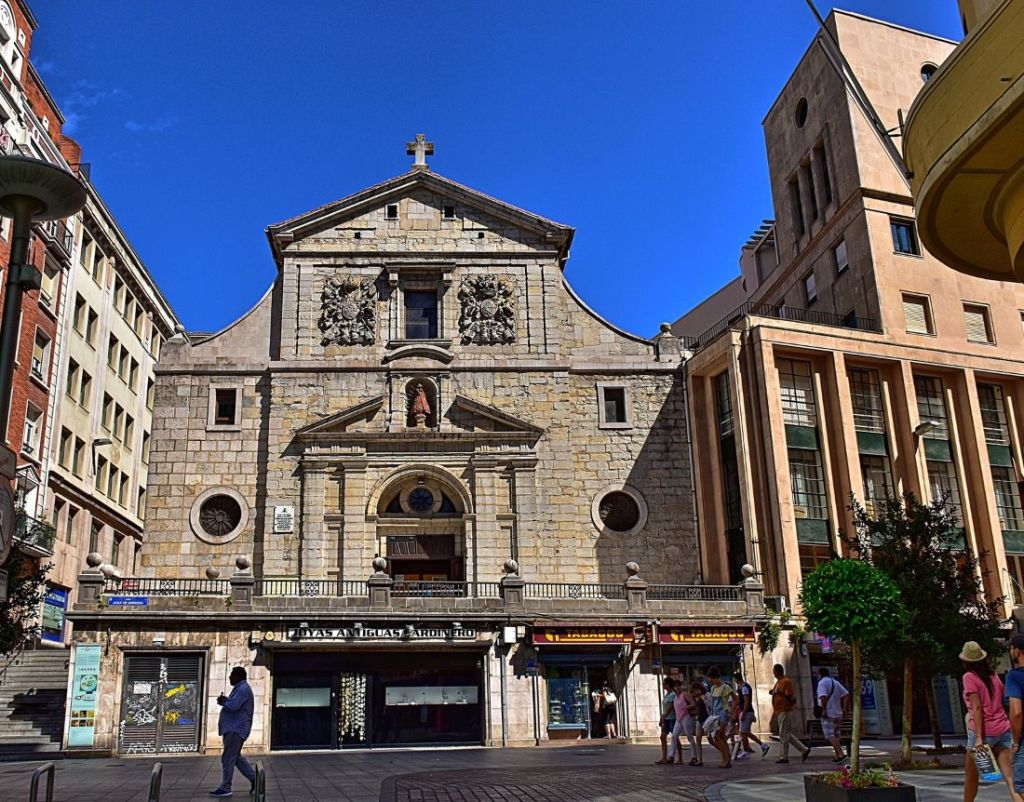
The Church of the Annunciation has a single nave and a rectangular apse with side chapels joined by semicircular arches, and a transept surmounted by a large dome. The façade features a taller central section to which narrower, lower side sections are attached, connected by a stone screen. In the center of the central section is the doorway, with a semicircular arch framed by double pilasters supporting an entablature, and a broken pediment to accommodate a niche containing an image of the Virgin. The second level of the central section is occupied by a large rectangular window with an architrave, flanked by two large 18C Baroque coats of arms bearing the arms of the first Marquis of Villapuente. The side sections have a simple oculus below and a rectangular window above, with the exterior corners crowned by a Herrerian-style sphere. The church was begun at the expense of Doña Magdalena de Ulloa, wife of Luis de Quijada, tutors to Don Juan of Austria.
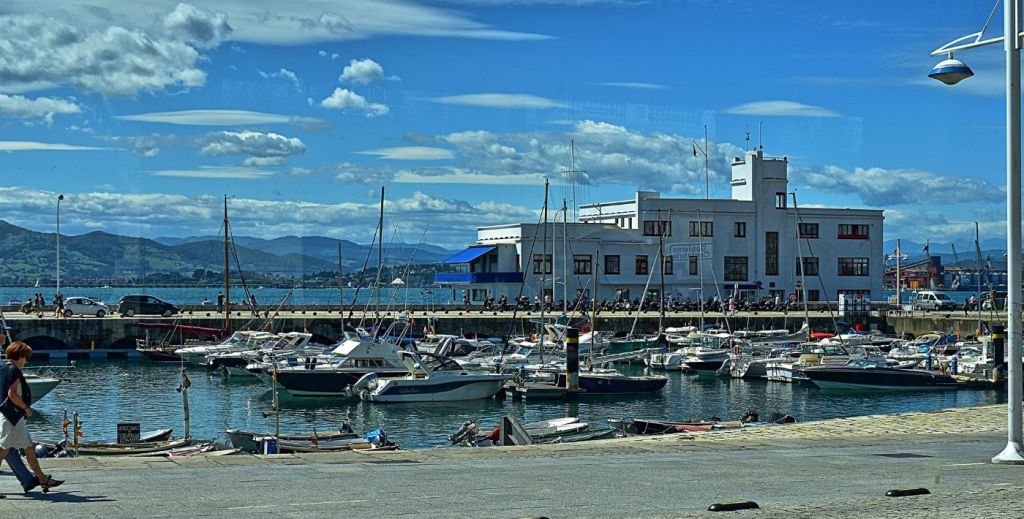
Puertochico is a neighborhood and a nice marina with lots of action. This central neighborhood comprises the group of streets surrounding the port of the same name. These streets were once inhabited by Santander’s fishermen before they were relocated to the Fishing Quarter. The ground floors of many of the houses on Peña Herbosa, Bonifaz, and Tetuán streets were used as cellars where fishing gear, tackle, and barrels of fish stock were stored. In the mid-19th century, new docks and the new town of Peña Herbosa were planned, and earthworks were carried out near Molnedo. Today, it is young people who have made this area popular as a meeting place in the numerous bars along these streets.The marina, located next to the Santander Maritime Club, has helped to continue the tradition of this area of the city, a key point on the way to El Sardinero beach.
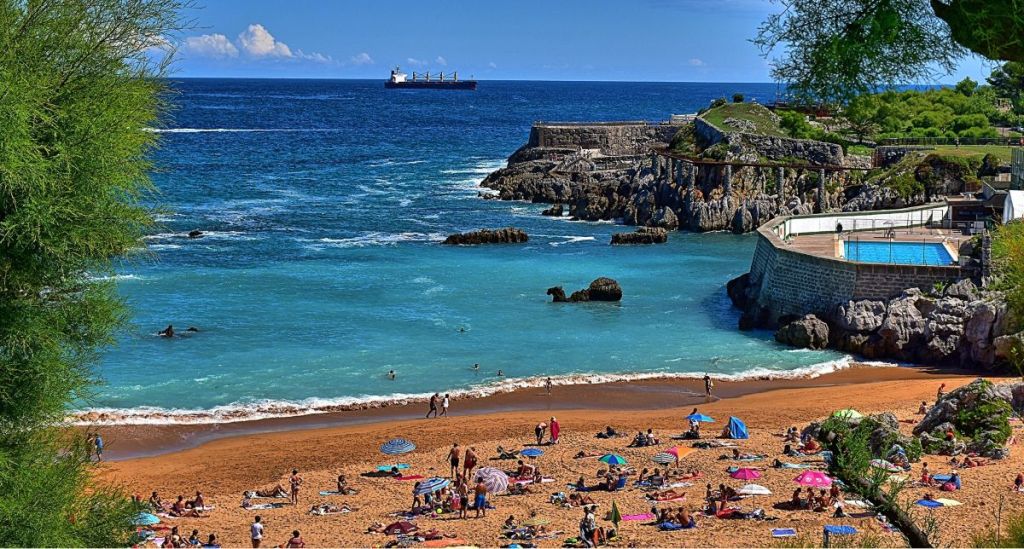
The playa El Sardinero beach is divided in two by the Piquio Gardens, stretching from the Magdalena Peninsula to Mataleñas; two other adjacent beaches are sometimes also included. Approximately 1300 meters long, the beach boasts fine, golden sand and moderate waves; it is bordered by a wide promenade running its entire length. Sardinero is lined with hotels, restaurants, and a casino and is considered one of the most elegant beaches in Spain. This is a must while in Santander!
Other things to see here (see post Cathedral) are the Museum of Prehistory and Archaeology of Cantabria, houses a specially protected artifact: the early medieval hoard of Ambojo, as well as a replica of the Otañes patera (a type of clay vessel). The Municipal Museum of Fine Arts, the tower, walls, and monumental complex of the Riva-Herrera noble house in Pronillo, the Magdalena Palace and its gardens, the Menéndez Pelayo Library and House-Museum, the Convent of the Poor Clares of Santa Cruz (Tabacalera), themercado del Este or East Market, the Church of Santa Lucía, and the Church of San Francisco are all worth visiting. The Paseo de Pereda is a long street in the city center, running parallel to the waterfront and extending to Puertochico. Along its length, one can admire the entire Bay of Santander. The Gran Casino Sardinero, completed in 1916, bears a resemblance to the Hotel Real and is one of the city’s landmarks. The Botín Centre, a museum and conference center inaugurated in 2017, is part of the Botín Foundation and houses art exhibitions. It is located in the Pereda Gardens, extending a few meters beyond the waterfront. The Cabo Mayor lighthouse overlooks the entrance to Santander Bay.
A bit of history I like tell us that although it is first mentioned in 1068 in a document commissioned by King Sancho II, in the 9C Alfonso II, the Chaste, founded the Abbey of the Holy Bodies in the pre-existing hermitage on the hill of Somorrostro, over the reliquary of the heads of Saint Emeterius and Saint Celedonius and the burials of other unknown martyrs, from whom it derived its name of Church of the Holy Bodies. On July 11, 1187, King Alfonso VIII of Castile appointed the Abbot of San Emeterio lord and master of the town and endowed the town with a charter. During the 12C and 13C, the population gradually defined its structure within the walled enclosure that every town had, with two distinct settlements. The older part of Puebla Vieja, or old town on the Somorrostro hill overlooking the city and facing the bay, included the castle, the Abbey of the Holy Bodies, the cloister, and the cemetery. The Puebla Nueva or new town contained the convents of Santa Clara and San Francisco, the latter located outside the gate, which gave its name to one of the main streets; other important streets were Rúa de la Sal, Rúa del Palacio, Ribera, Don Gutierre, Puerta de la Sierra, Cadalso, and Rúa del Arcillero. The two towns were joined by a bridge over the Becedo estuary, which divided them and extended to the shipyards, the shipyards ordered to be built by the king to utilize the timber from the Cantabrian forests in shipbuilding. in 1248, Santander, along with other towns on the Cantabrian coast, participated in the battle for the conquest of Seville, receiving as a reward a coat of arms featuring the Torre del Oro (Tower of Gold) and the Guadalquivir River. In 1372, following the victory of the Castilian fleet against the English at La Rochelle (France), the entourage of Henry II of Castile entered the port of Santander. This event was of great importance, as it established Santander as the naval base of the Atlantic and provided it with important Royal Shipyards, similar to those of Seville and Barcelona. In 1497, the Spanish Armada of Flanders stopped in the town to disembark Margaret of Austria, who was to marry Prince John, heir to the Catholic Monarchs, in Reinosa. In 1754, support came from the Catholic Church, which established it as the capital of a diocese and granted the abbot the title of bishop, thus elevating the Collegiate Church of the Holy Bodies to the status of cathedral. This also facilitated the town’s subsequent elevation to city status. In 1755, Ferdinand VI granted the town of Santander the title of city, and in 1783 the Consulate of Sea and Land of the very noble and very loyal city of Santander was created, an entity responsible for regulating maritime traffic with other cities.
During the second half of the 19C, taking advantage of the rise of seaside resorts among the European upper classes, who were introducing a new concept of leisure associated with health, a series of hotel initiatives promoted Santander at the Court for its beaches ideal for sea bathing (the first season was advertised in the press in 1847 in a Madrid newspaper) and spurred the creation of the seaside resort of El Sardinero, which became established as a summer destination for Spanish high society at the beginning of the 20C. During the reign of Alfonso XIII, Santander became the court’s favorite summer retreat. In 1908, the city built and gifted the Magdalena Palace to the king. It continues to be an important academic and tourist center in northern Spain. El Sardinero is Santander’s most popular tourist neighborhood and is home to an affluent population. It houses the stadium of Real Racing Club de Santander, as well as the beaches of El Sardinero, La Concha, Mataleñas, El Camello, and La Magdalena. The Royal Palace of La Magdalena is also located there, along with several Belle Époque houses. The city center of Santander is where the majority of the population lives, Its neighborhoods are: Cabildo de Arriba, Centro, Cuatro Caminos, and Puertochico.
The official parroquia de la Anunciacion : https://parroquiaanunciacion.com/
The Cantabria tourist office on the church de la Anunciacion : https://turismodecantabria.com/lugar-interes/iglesia-de-la-anunciacion-o-la-compania/
The Santander tourist office on Puertochico marina : https://turismo.santander.es/que-hacer/rutas-por-santander/entorno-puertochico
The Santander tourist office on playa El Sardinero : https://turismo.santander.es/en/what-to-do/travelling-around-the-city/el-sardinero
The local Cantabria tourism on Santander : https://turismodecantabria.com/descubrela/santander/
There you go folks, another wonderful spot in my road warrior trails of my dear Spain, This is architecture, history and a lot more ; one of the gems of Santander, worth the detour , me think, Again, hope you enjoy this unique post on curiosities of Santander !!! as I
And remember, happy travels , good health and many cheers to all !!!


Mi sento chiamata in causa 😂 non solo amo profondamente la Spagna ma ho recentemente letto un bellissimo romanzo storico ambientato proprio in Cantabria e.. mi sono così innamorata e immersa nella lettura che mi sembra di conoscere già quei luoghi che ora voglio visitare!!
Grazie del viaggio, buona serata!
LikeLiked by 1 person
Glad it brings you memories and hoping you can visit the beautiful country. Grazie Mille
LikeLiked by 1 person