
This is a very memorable City for us going way back many years, The City of Calatayud is in the province of Zaragoza in the autonomous community of Aragon , and in the kingdom of Spain, My dear Mom Gladys told me about it and we came eventually and have ever since with the family. I am glad found me more pictures in my cd rom vaults that should be in my blog, Therefore, here is my take on curiosities of Calatayud ,part II !!! Hope you enjoy the post as I.
The wonderful Calatayud sits on the banks of the Jalon river. You too will love it if visit the city, and we will be back, eventually, The City is 88 km from Zaragoza, and Molina de Aragon, 145 km from Teruel, 268 km from Cuenca, and 232 km from Madrid, We have come down from France or going back several times over the years.
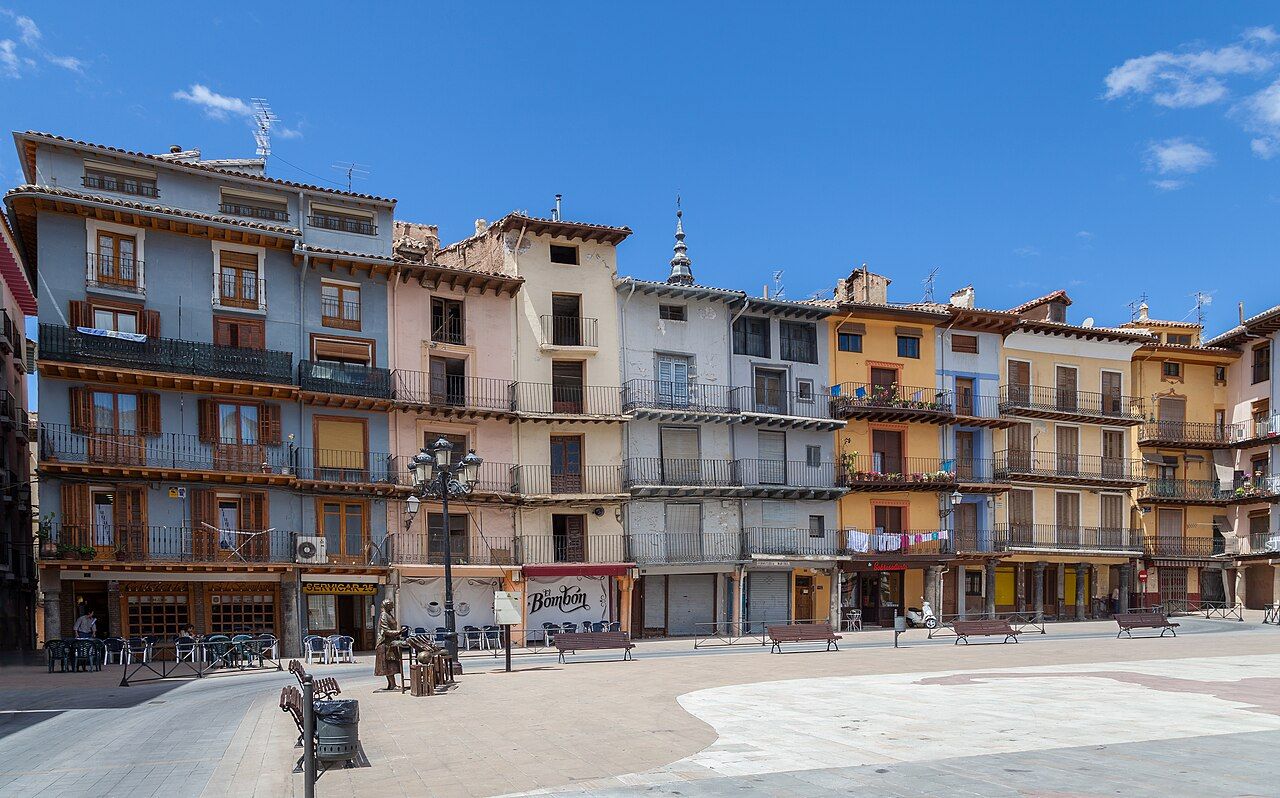
The Plaza de España square is striking for its vibrant colors and the sloping buildings; it’s impossible to find a single one that’s straight. The current houses, with their columned arcades, date back to the 16C. The columns were brought from the ruins of Bilbilis. There are also several 17C Aragonese-style manor houses. In addition to the daily market, formerly an Arab souk, all kinds of social events and gatherings were also held here: festivals, rallies, and bullfighting celebrations with the classic bullfights, etc.
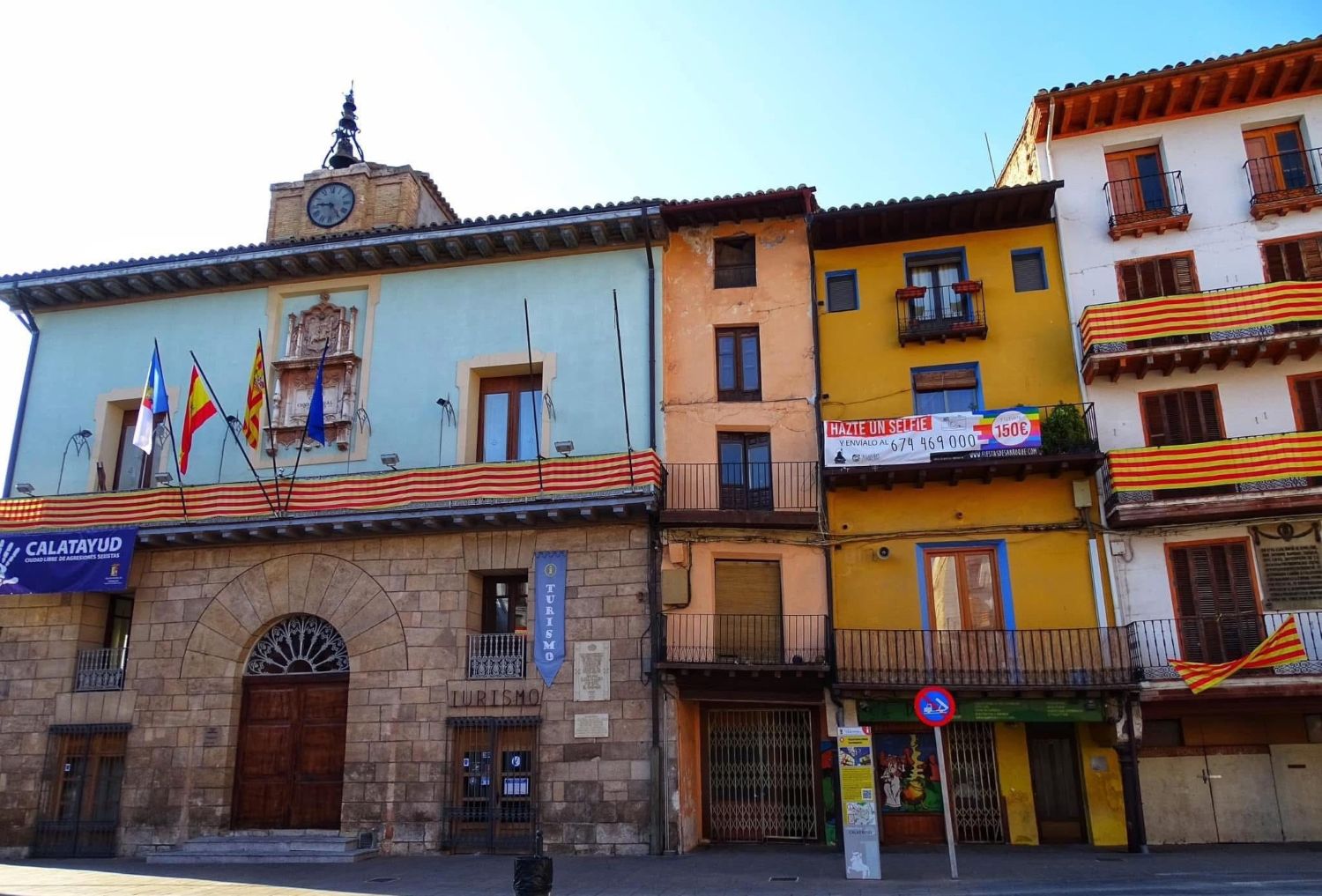
The former City/ Town Hall building is located in Plaza de España, aka Plaza del Mercado. Formerly the Lonja (exchange), it ceased functioning as the City/town hall a few years ago and, after renovations, became the Tourist Information Office. It is a Renaissance building, with the lower part dating from the 16C and the second floor from the 18C, although the entire complex was extensively modified in the 19C. At the entrance is the famous alleyway of La Flecha, which is said to have supplied contraband to the shops in the square. The upper part dates from the 18C, including the city’s coat of arms, carved in alabaster, and the carillon clock. The offices of the Government of Aragon were located on the ground floor, while the Plenary Hall, which also houses the Gallery of Illustrious Citizens of Calatayud, is located on the upper floor, A historic event took place in this building: the first democratically elected city council in Spain was established here. This occurred because His Majesty..Juan Carlos I ,the King visited the Calatayud Polytechnic Institute on April 19, 1977, coinciding with the formation of the new Municipal Corporation. Thus, with the agreement of the elected councilors, the new city council was officially constituted on April 18, 1979, at 20h, one day earlier than the rest of the country. Today, there is the tourist office.
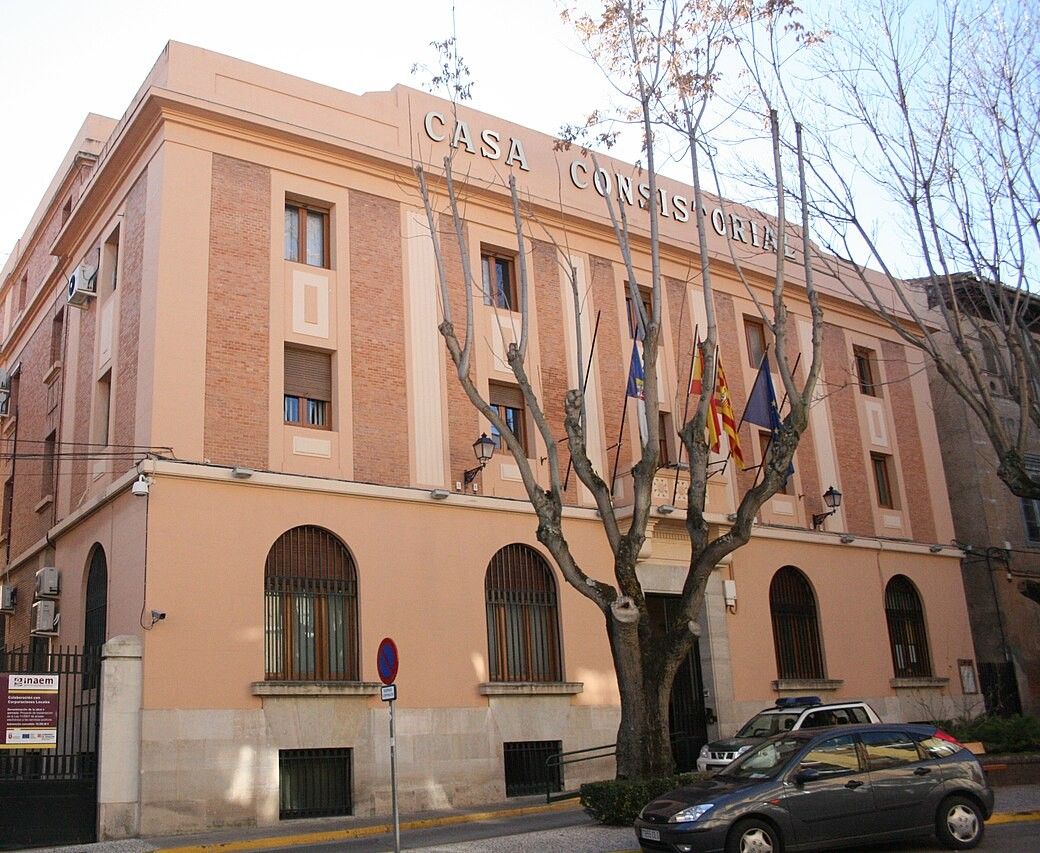
The current ayuntamiento or City/town Hall is located in the Plaza de Joaquín Costa,that is 268 meters long. It was originally built between 1930 and 1932 as the headquarters of the Bank of Spain, it later ceased to serve this purpose and housed the Municipal Archives, which are still located in its basements. It also served as a cultural center with the Municipal Library and the headquarters of the Center for Bilbilitan Studies. In 1992, the Calatayud City Council moved into these premises.
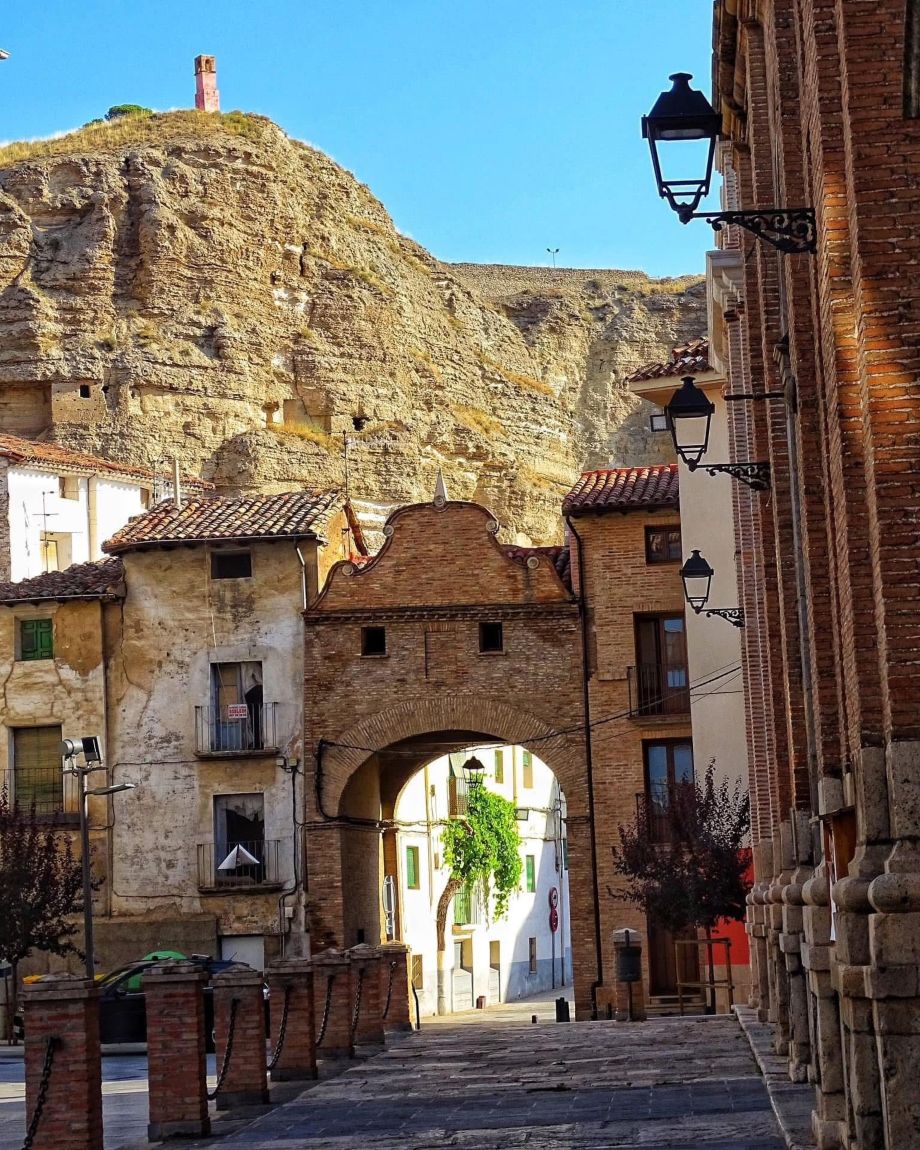
Another of the city’s preserved gates is the Puerta de Zaragoza Gate, formerly called the Somajas or Somalías Gate, Its picturesque appearance is noteworthy; it was commissioned in 1818. The name Zaragoza Gate recalls the old road that, from here, via the Tablada Bridge, led to Zaragoza, ascending the Cavero Pass. The Zaragoza Gate is part of the Calatayud city wall. This gate is flanked by two square towers. Its location near the Collegiate Church of the Holy Sepulchre gives the ensemble a picturesque appearance. You can afar on the hill the Peirón de San Vicente el Alto, a mozabique tower of defense only remnant remaining.
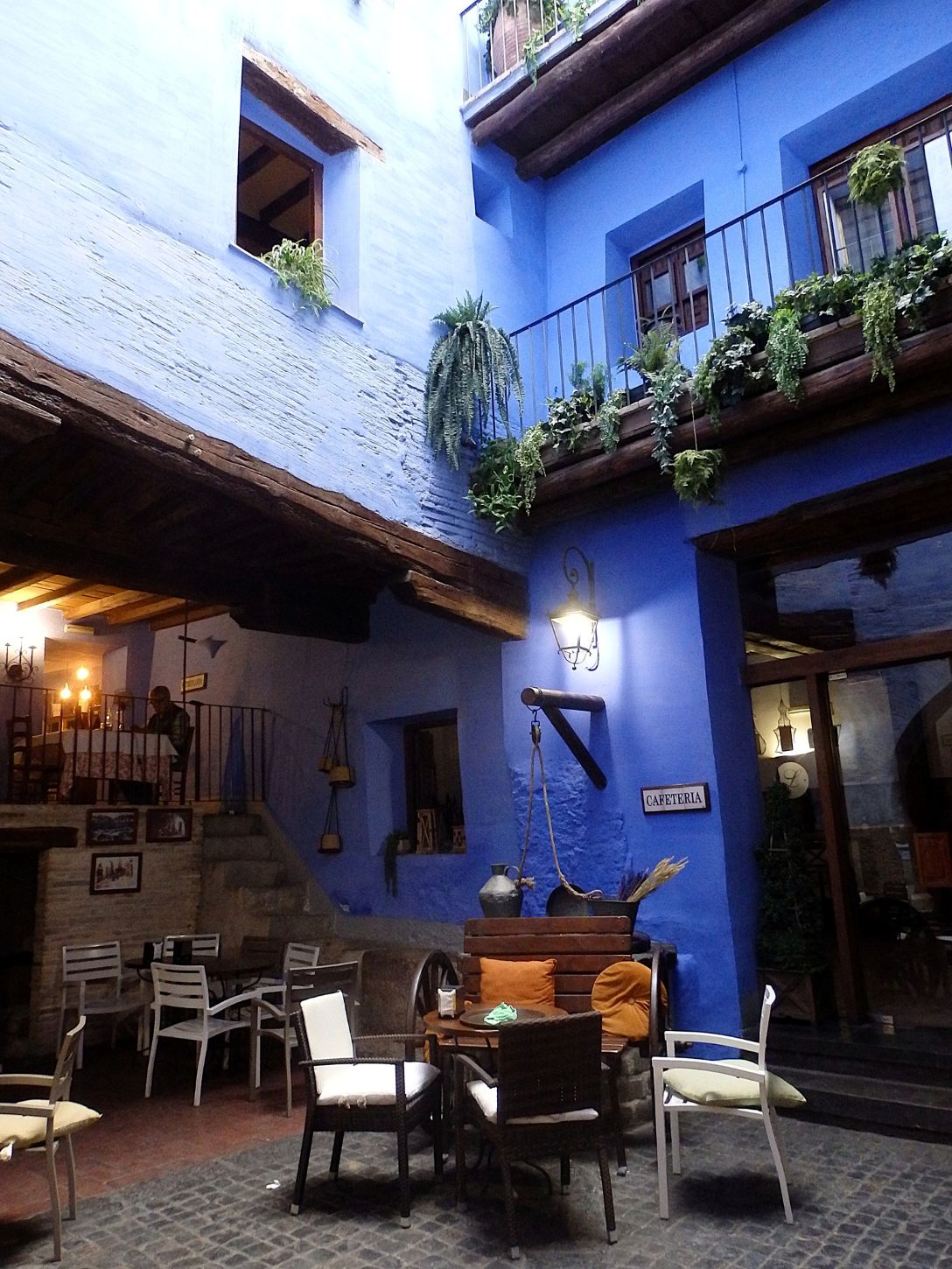
The Mesón de la Dolores is a restaurant and hostel housed in a Gothic building with several dining rooms and a terrace. It displays traditional Aragonese tools and household objects from various periods, reflecting daily life in the region’s past. The building dates back to the 15C and served as an important stop for travelers and merchants on the route between Madrid and Barcelona. Its location made it a well-known landmark in the area. The establishment features a rooftop bar with city views and free parking for visitors. The kitchen prepares dishes using traditional Aragonese recipes and techniques.
The city of Calatayud on the church San Pedro de los Francos: https://www.calatayud.es/contenido/iglesia-san-pedro-de-los-francos
The city of Calatayud on the Church San Juan el Real : https://www.calatayud.es/turismo/ficha_visitar/iglesia-de-san-juan-el-real
The city of Calatayud on the Plaza del Mercado or España : https://www.calatayud.es/turismo/ficha_visitar/plaza-del-mercado
The city of Calatayud on the old town section : https://www.calatayud.es/turismo/ficha_visitar/casco-historico-de-calatayud
The official Méson de la Dolores of Calatayud : https://www.mesonladolores.com/EN/restaurant.html
The province of Zaragoza on Calatayud: https://www.turismodezaragoza.es/provincia/comarcas/comarca-calatayud.html
The Aragon region tourist office on Calatayud : https://www.turismodearagon.com/en/ficha/calatayud/
The Spain National Tourist Office on Calatayud: https://www.spain.info/en/destination/calatayud/
There you go another jewel in my memorable Calatayud, yes indeed. We shall meet again if you are going by Calatayud ,eventually, This is worth the detour, me think, Again, hope you enjoy this post on curiosities of Calatayud ,part II !!! as I
And remember, happy travels, good health, and many cheers to all !!!


