
Well this is another masterpiece in wonderful architecturally and historically stunning little Saint Savin sur Gartempe. We are glad to stop by and even more to have found me pictures in my cd rom vault to share in my blog with you and me , I was just passing near and decided to stop , now worth the detour me think. Therefore, here is my take on this is Saint Savin sur Gartempe !!! Hope you enjoy the post as I.
The town of Saint-Savin, aka Saint-Savin-sur-Gartempe, is located in the Vienne department no, 86, in the Nouvelle-Aquitaine region of my belle France. The main road here is the N151 or D951 which passes through the town, It is 45 km from Poitiers , Châtellerault , 120 km from Tours , 75 km from Châteauroux , 100 km from Limoges
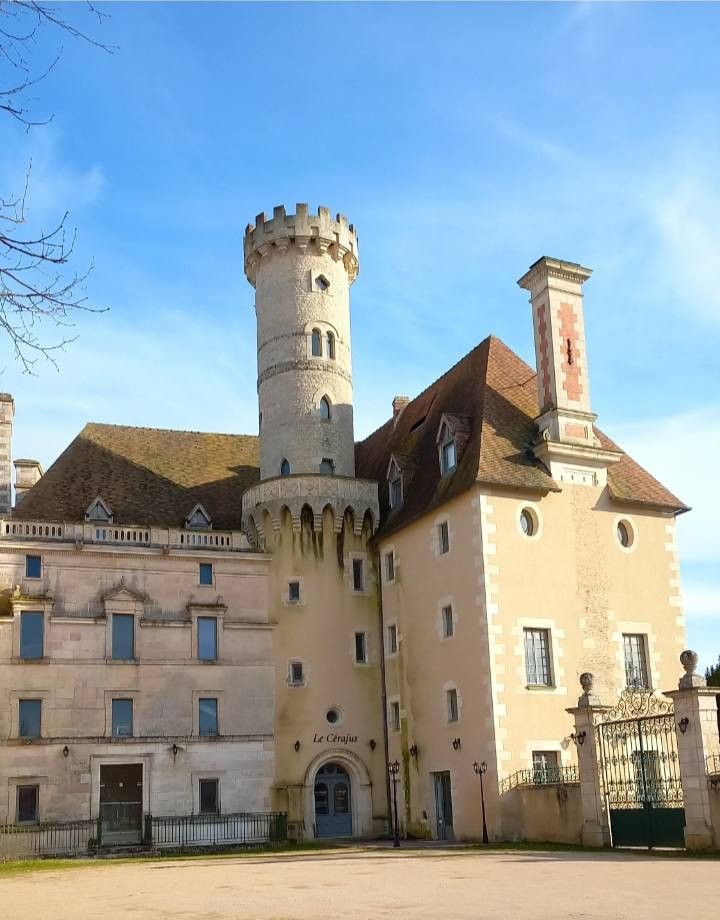
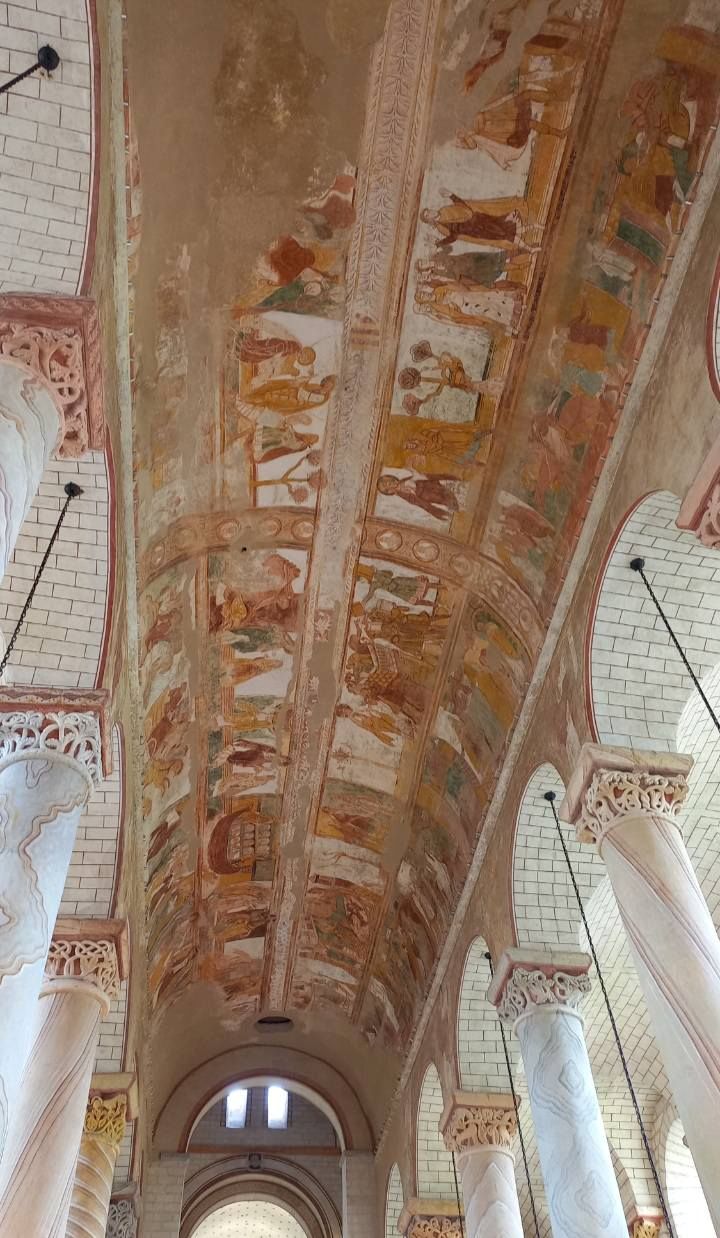
The Abbaye Church Saint Savin sur Gartempe dates back to the 11C with three phases of construction ,the first in the first half of the 11C, saw the construction of the transept and then the choir; a second phase at the end of the 11C involved the construction of the first three bays on the west side; and a final phase around 1090 saw the building of the bell tower-porch and then the last six bays of the nave. The church is built according to a Latin cross plan, which was the standard for Romanesque churches. The cross faces east to indicate to the faithful the rising sun and the light, symbols of Christ. The Abbey of Saint-Savin-sur-Gartempe ;Church Notre-Dame is known for its murals, but it is also an architectural landmark with a nave designed for magnificence. It creates a symbiosis between architecture and mural painting, capitals and altars,characteristic of Romanesque churches. The murals depict only scenes from the Old Testament, taken from the first two books of the Pentateuch: Genesis and Exodus. They are read like a large book. Two registers of painting unfold on either side of a frieze that divides the vault along its entire length. There is now a restaurant le Cérajus inside the abbey.
The Abbey of Saint-Savin-sur-Gartempe, whose founding charter was lost during the Wars of Religion in 1598, remains uncertain, but it was established under Charlemagne at the beginning of the 9C. It was built in honor of Saints Savin and Cyprien, about whom much remains unknown. According to tradition, in the 5C, two brothers, Savin and Cyprien, fleeing Macedonia where they were persecuted for being Christians, were finally overtaken on the banks of the Gartempe river. There, they were martyred and beheaded. Savin was buried by priests not far from the present-day town, in a place called Cerisier (Cherry Tree), hence his nickname “Savin of Cerisier.” Three centuries later, the relics of the two martyrs having been found at the site of their massacre, Badillus, a cleric at Charlemagne’s court, decided to found an abbey church there to house the precious relics. In 821, Saint Benedict of Aniane implemented the Rule of Saint Benedict and established a community of about twenty monks. He appointed Abbot Eudes I, who built the first church. The Hundred Years’ War marked the end of the monastery’s prosperity, and it changed hands several times (English, French, the Black Prince). In 1371, the Black Prince of Wales sacked and burned the monastery. It was also in 1640 that the king’s installation of monks from the Congregation of Saint-Maur, who came from the Abbey of Nouaillé, brought an end to this long period of destruction. In 1792, the abbey church became a parish church, and the last four monks left the abbey. The convent buildings served as a schoolteacher’s residence, then as a gendarmerie until 1971, and the cloister became the site of revolutionary celebrations. From 1967 to 1974, restoration work was carried out on the nave vault and its paintings, in the crypts, the choir, and the gallery. The abbey church was inscribed on UNESCO’s World Heritage List in 1983.
Other things to see here is a 13C bridge spans the Gartempe river almost opposite the abbey. It is extended by the Grand Rue, which crosses the oldest part of the town. Further on, this street intersects the Rue des Bans, bordered by a 17C coaching inn. The old town was surrounded by ramparts, some of whose towers still remain on the Rue des Murailles and the Rue des Tanneries.
A bit of history tell us that the town of Saint-Savin developed around the Benedictine monastery and the veneration of the two brothers who founded it: Saint Savin and Saint Cyprien. The monastery benefited from significant donations, including one at the beginning of the 10C from Countess Aumode, wife of William V, Count of Poitou and Duke of Aquitaine. It is believed that these donations enabled the monastery to be rebuilt, including a commissioned painted program inspired by the Bible, which called upon the finest medieval fresco painters. The town continued to grow alongside the abbey. On one side were the Benedictine monks, living safely behind the walls of the abbey enclosure known as the “abbey fort.” On the other side were the lay inhabitants. The town’s growth is also linked to its location on the road between Poitiers and Bourges, which crosses the Gartempe river via its 13C medieval bridge. At the end of the Middle Ages, during the Hundred Years’ War (14-15C), the outer wall, known as the “town fort,” was built and expanded over time to encompass the “new town” and the area around the Grand’Rue, which was then a major thoroughfare. Saint-Savin‘s growth was halted by the Wars of Religion in the 16C. It would take until the Classical period (17-18C) for a new chapter in its history to begin. This was the period when the abbey was taken over by the Congregation of Saint Maur, and the convent buildings were rebuilt. These buildings now house the visitor experience offered by the EPCC (Public Establishment for Cultural Cooperation). Then, in the 19C, came the opening of communication routes: the imperial road, the construction of the new bridge, and the engineering works related to the railway. Prominent figures emerged, such as Léon Édoux, a native of the town, an engineer who coined the term “ascenseur” (elevator) and worked with Gustave Eiffel, with whom he had been a student at the École Centrale. He lived in the abbey’s residence, which now houses a gourmet restaurant, Le Cérajus. Along the Gartempe river, mills had been numerous since the Middle Ages. Several mills still bear witness to this long period of prosperity; among them, the Moulin de la Gassotte, and the Moulin Rose operated all along the Gartempe Valley, producing flour, electricity, and other goods using water power. Saint-Savin welcomed the advances of the French revolution, The town continued to grow, and the 20C saw the development of commerce. Many beautiful houses still stand as testaments to the prosperity of this era. Today, the town is showcasing its tourism ambitions by highlighting its historical heritage,
The town of Saint Savin on its heritage: https://www.saint-savin.fr/ma-commune/pages/827-page-1
The official Abbaye Saint Savin: https://www.abbaye-saint-savin.fr/en
The UNESCO world heritage sites on the abbey: https://whc.unesco.org/en/list/230/
The Vienne dept 86 tourist office on the abbey: https://www.tourisme-vienne.com/en/webzines/abbaye-saint-savin/
There you go folks, another dandy from my belle France. A wonderful opportunity to see architecture and history in my road warrior trails, again, glad stop by in Saint Savin and its splendid abbey! Again, hope you enjoy the post on this is Saint Savin sur Gartempe !!! as I
And remember, happy travels, good health, and many cheers to all !!!


