
I take you back to my dear Spain again !! love it !! We have come by car mostly and once by plane over the last several years, We took time to see new areas and old repeat with some of them as introduction to my sons and our dog Rex ! I like to continue the saga of our new road warrior experiences even if now with less in our family, For reference, the City of Zamora is located in the Province of Zamora, in the autonomous community of Castilla y Léon and in the kingdom of Spain, This post is due to finding me again pictures in my cd rom vault that should be in my blog for you and me. Therefore, let me tell you about the Catedral Iglesia Santa del Salvador of Zamora !!! Hope you enjoy the post as I.
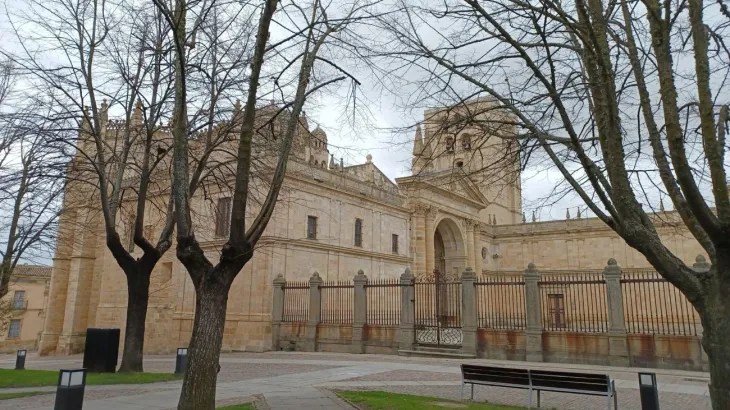
The Catedral Iglesia Santa del Salvador or Holy Cathedral Church of the Savior, which dates from the 12C. The Holy Cathedral Church of the Savior, has had four main altarpieces. The original Romanesque one was replaced by one in the Hispano-Flemish Gothic style, created between 1490 and 1494. This altarpiece was subsequently sold in 1715 to the parish of the nearby town of Arcenillas. The replacement for the Gothic altarpiece was a Baroque altar, had a short lifespan, as it was damaged by the earthquake that devastated Lisbon on November 1, 1755. As a result, it was dismantled in 1758 and sold off cheaply the following year, thus losing what, according to available information, was the masterpiece of its creator. It was replaced by the current altarpiece, made of marble and gilded bronze, designed in the Neoclassical style. Even before the panels of the main altar, the cathedral had commissioned to create another altarpiece for the Chapel of San Ildefonso in the late 1470s, and is still in situ,. The choir, built between 1512 and 1516 should also be noted. The Romanesque cathedral has a three-aisled plan, originally featuring three apses, and were replaced in the 15C by the current Gothic ones. The transepts are covered with pointed barrel vaults, the side aisles with ribbed vaults, and the central nave with a late Romanesque or proto-Gothic ribbed vault. Above the transept, supported internally, rises the lantern tower, a drum pierced by 16 windows, upon which rise two domes: an inner, semicircular, ribbed dome, and an outer, slightly pointed dome. It has a Latin cross plan, with three aisles of four bays and three apses that were replaced by a Gothic chancel in the 16C. Between 1503 and 1506, the choir stalls formed a very important sculptural ensemble in the Cathedral due to their scale and richness.
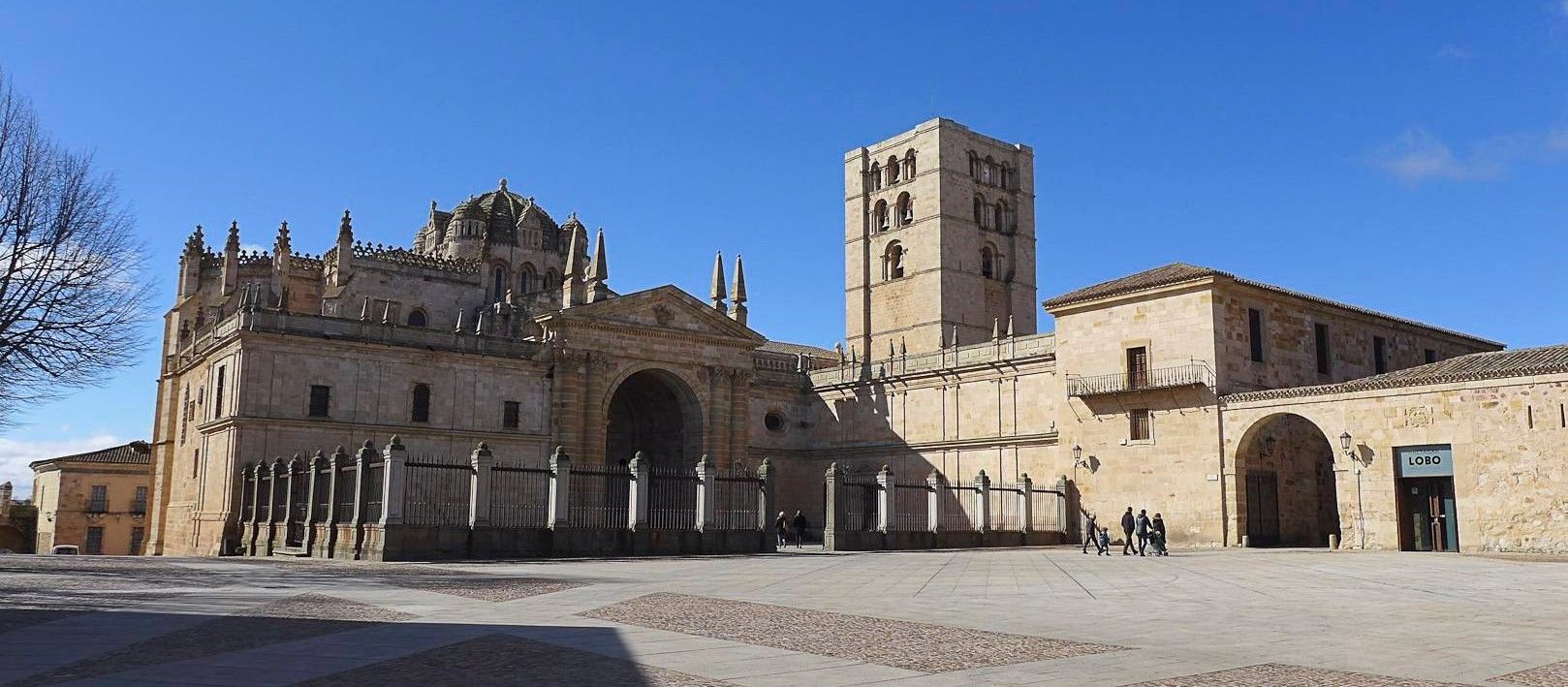
The 45-meter-high tower of El Salvador was built throughout the 13C, although its style is Romanesque. It is believed that it originally also served a defensive function, for which it must have been equipped with battlements, which would have added several meters to its height. Until the Lisbon earthquake of 1755, it served as the Cathedral Chapter’s prison. . The cathedral has had four main altarpieces. The original Romanesque altarpiece was replaced by one in the Hispano-Flemish Gothic style, created between 1490 and 1494. The Gothic altarpiece was replaced by a short-lived Baroque altar, as it was damaged by the earthquake that devastated Lisbon on November 1, 1755, and was consequently dismantled in 1758. The choir stalls are made of walnut wood and are arranged in a rectangular, open shape, divided into three sections: western, northern, and southern. The Bishop’s Chair divides the choir stalls into two parts: the Dean’s Choir on the left and the Precentor’s Choir on the right. The most prominent religious figures represent the history of salvation, biblical figures, and the history of the Church, and include others of pagan origin, which in the Hispanic world were beginning to appear. The Chapel of San Bernardo, which emerged thanks to Renaissance humanism, was founded in the mid-14C as a private pantheon. Since 1835, the chapel has housed the image of Christ of the Insults, which came to the cathedral from the now-vanished Monastery of San Jerónimo in Zamora. The Bishop’s Portal is the only one of the three original portals that remains complete. Along with the dome, it is the most valuable Romanesque element of Zamora Cathedral, constituting an example of architectural decoration with very little sculpture. Along with the lantern tower, it is the most valuable piece of Romanesque architecture in Zamora Cathedral, constituting an example of architectural decoration with hardly any sculpture. Its lantern tower, with 16 double arches, supports the scale-like dome, which is the symbol of the city of Zamora and distinguishes it from other cathedrals. It has a single square bell tower. It is divided into three sections, which are in turn divided into two levels. The lower levels contain two small arches with some of the finest examples of Romanesque sculpture from Zamora: one depicting Saint John and Saint Paul, and the other a Virgin Theotokos. The upper level features only a blind arcade.
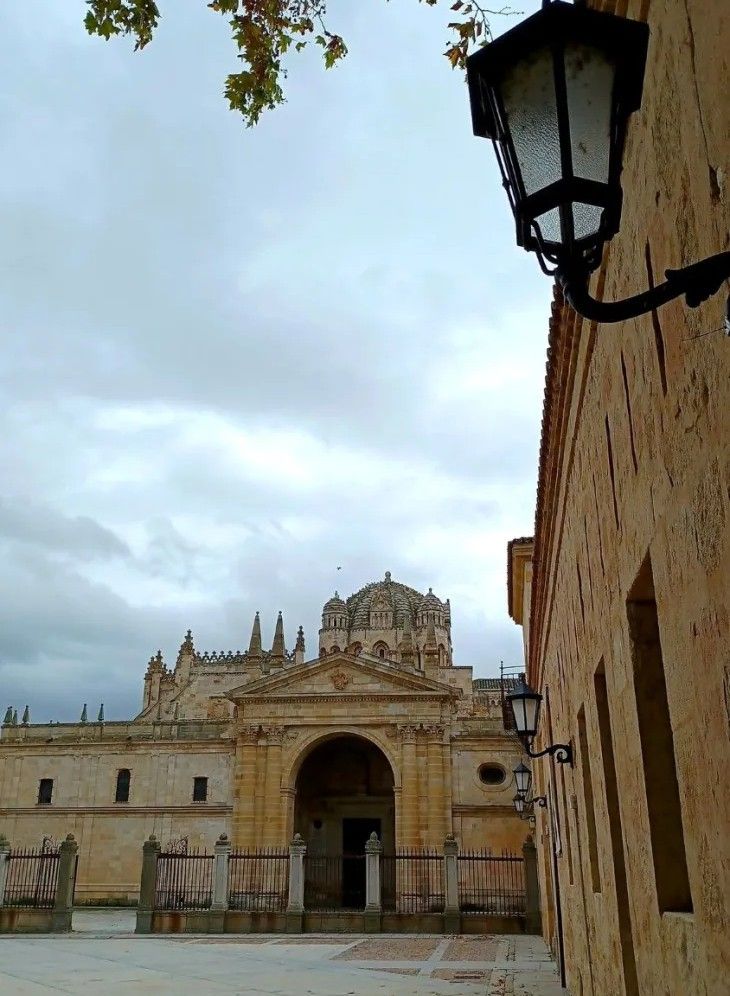
The Cathedral Museum, which houses, among other things, an important collection of tapestries, is accessed from the cloister ; which features an extraordinary collection of Franco-Flemish tapestries from the 15C to the 17C, the most outstanding being those of the series dedicated to the Trojan War. This one we did not see in my road warrior runs,
A bit of history I like tell us that following the Muslim invasion, the city of Zamora was abandoned until 893, when it was recovered, rebuilt, and repopulated by Christian vassals of Alfonso III, who came from the Christian north and Al-Andalus: Mozarabs from Toledo, Mérida, and Coria. This resistance was only broken by the raids of Almanzor, who conquered and destroyed it in 986. During the reign of Fernando I of León , the frontier was definitively consolidated. During the reigns of Alfonso VI and Alfonso VII, the repopulation outside the city walls was consolidated, which definitively contributed to the progressive rise of the city of Zamora. This growth created the need for a cathedral befitting the rank and importance the city had acquired, an idea that received its final impetus when the Diocese of Zamora finally obtained its own See in 1120, with the election of Bernard of Périgord, a monk of Sahagún and precentor of Toledo, as bishop. During the reign of Alfonso VII, the church that served as the seat of the cathedral, San Salvador, likely built on the same site as the present-day cathedral, appears to have been inadequate. This led the king, in 1135, to donate the church of Santo Tomás to serve as a temporary cathedral. Between 1150 and 1160, significant bequests to the cathedral are documented, and nine years later, in 1169, there is documentation confirming the existence of a Romanesque church. Recent and meticulous analyses of the existing documentation have confirmed that construction, at least the foundations, was already underway in 1139. The cathedral was consecrated in 1174, although this consecration did not mark its completion. Work continued, and the transept and the nave were built, while the cloister and tower were under construction in the first third of the 13C.
The Official Catedral of Zamora : https://catedralzamora.com/
The Zamora tourist office on the Cathedral : https://turismo-zamora.com/catedral-de-zamora.html
The Province of Zamora on the City heritage : https://turismoenzamora.es/patrimonio-artistico/zamora/
The Castilla y Léon regional tourist office on the Zamora Cathedral :https://www.turismocastillayleon.com/en/heritage-culture/cathedral-zamora
There you go folks , another wonderful nostalgic, sentimental trip to my dear Spain, Do not know when we will be back, we sure will have this trip in our hearts forever, Again, hope you enjoy this post on the Catedral Iglesia Santa del Salvador of Zamora !!! as I
And remember, happy travels, good health, and many cheers to all !!!


